

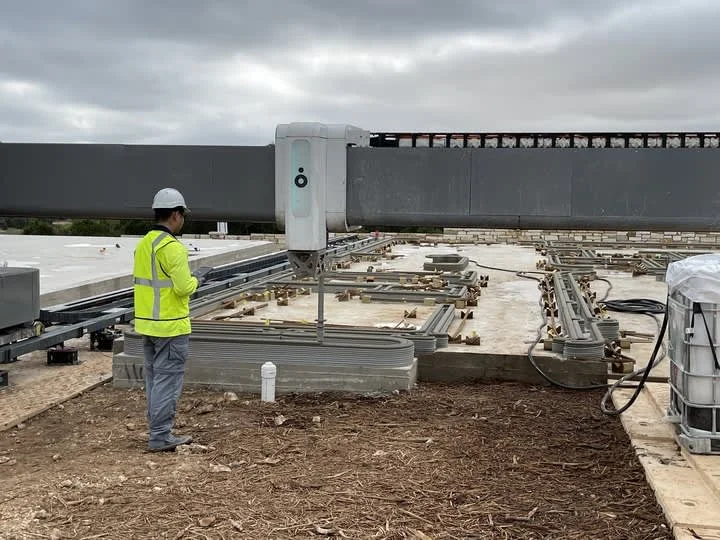
In a landmark development set to significantly reshape the landscape of residential construction and home financing, Wells Fargo, one of the United States’ preeminent mortgage lenders, has announced a strategic partnership with Icon, a pioneering force in 3D construction technology. This collaboration marks a pivotal moment, as Wells Fargo will now not only provide traditional mortgage financing for homes built using Icon’s advanced 3D printing technology but will also offer an attractive incentive: a 50 basis point lender credit to qualifying buyers. This move is poised to bridge a critical financing gap that has historically hampered the mainstream adoption of 3D-printed homes, signaling a robust institutional endorsement of this innovative construction method.
The announcement represents a culmination of growing interest and investment in 3D printing as a viable, efficient, and potentially more affordable solution to the nation’s persistent housing crisis. For years, while the technology promised faster build times, reduced material waste, and lower labor costs, securing traditional financing proved to be a significant hurdle. Lenders often expressed concerns regarding the nascent technology’s long-term viability, potential property value appreciation, and the market’s readiness for resale and insurance of such unconventional homes. Wells Fargo’s decision to become Icon’s preferred lender for 3D-printed homes directly addresses these apprehensions, injecting much-needed confidence into the sector.
Addressing the Housing Affordability Crisis: A Critical Juncture
The United States, like many developed nations, has been grappling with a severe housing affordability crisis for over a decade. A confluence of factors has contributed to this predicament, including a chronic undersupply of housing units, rapidly escalating material costs, a persistent shortage of skilled construction labor, and increasingly complex regulatory environments that slow down development. According to the National Association of Home Builders (NAHB), the median price of a new home has surged, placing homeownership out of reach for a significant portion of the population. This has led to a widening gap between housing demand and supply, exacerbating homelessness and increasing housing insecurity.
Traditional construction methods, while proven, are often slow, labor-intensive, and susceptible to supply chain disruptions and volatile material prices. The average time to construct a single-family home can span several months, sometimes exceeding a year, depending on various factors. This inherent slowness makes it challenging for the industry to respond rapidly to demand fluctuations or to quickly replace housing stock lost due to natural disasters. Furthermore, the construction industry faces an aging workforce and a dwindling pool of new talent, further constraining its capacity. These systemic issues have created an urgent imperative to explore and adopt innovative solutions that can accelerate construction, reduce costs, and enhance efficiency without compromising quality or safety.
Icon’s Pioneering Journey in 3D Construction
Icon, founded in 2017 in Austin, Texas, emerged with a bold vision: to revolutionize homebuilding through advanced robotics, software, and materials. The company’s mission extends beyond merely building houses; it aims to make dignified, resilient, and affordable housing accessible to everyone, everywhere. From its inception, Icon has been at the forefront of pushing the boundaries of what 3D printing can achieve in construction.
A significant milestone in Icon’s journey was the completion of the first permitted 3D-printed home in the United States in 2018. This initial success, achieved in collaboration with the nonprofit New Story, demonstrated the practical application of their Vulcan construction system. Since then, Icon has systematically scaled its operations and technological capabilities. Key achievements include the development of a proprietary concrete-based material called "Lavacrete," which offers superior strength, insulation, and durability compared to traditional building materials. This material, combined with their robotic printers, allows for the rapid fabrication of structural walls layer by layer, significantly reducing waste and construction time.
Icon’s commitment to social impact is also notable. For several years, the company has partnered with the Wells Fargo Foundation, the philanthropic arm of Wells Fargo, on projects aimed at addressing housing insecurity. This collaboration has seen the development of 3D-printed communities for individuals experiencing homelessness, demonstrating the technology’s potential to provide low-cost, high-quality shelter. These early successes, particularly with a major financial institution’s foundation, laid crucial groundwork for the broader partnership announced today. The experience gained from these philanthropic endeavors provided Wells Fargo with first-hand insight into the reliability and structural integrity of Icon’s technology, helping to assuage some of the initial doubts surrounding 3D-printed homes.
Wells Fargo’s Strategic Rationale: Bridging the Financing Divide
Historically, obtaining traditional mortgage financing for 3D-printed homes presented a labyrinth of challenges. Mainstream lenders, accustomed to well-established appraisal methodologies and market comparables for conventional stick-built or modular homes, viewed 3D-printed structures with caution. Concerns revolved around several key areas:
- Technological Viability: Skepticism about the long-term structural integrity and longevity of printed concrete structures.
- Appraisal and Valuation: Difficulty in appraising homes built with novel methods due to a lack of comparable sales data, potentially leading to lower valuations or difficulty securing loan-to-value ratios.
- Resale Market: Uncertainty about whether future buyers would accept or value 3D-printed homes at par with conventional homes, impacting future liquidity.
- Insurability: Questions regarding whether insurance providers would offer standard coverage and premiums for these innovative structures.
An illustrative example of this challenge was seen in Icon’s new Lennar community in Georgetown, Texas, completed last year. While the homes were built quickly and sold out rapidly, Lennar’s own mortgage arm handled all the financing, highlighting the initial reluctance of independent, third-party lenders to underwrite such loans.
Wells Fargo’s entry into this space represents a monumental shift. Serhat Oztop, CEO of home lending at Wells Fargo, articulated the bank’s strategic vision: "We think the technology that Icon has built has the potential to lower construction costs and to speed up homebuilding at a time when we are seeing broader challenges in housing affordability and access to homeownership." He further emphasized, "Through this partnership Wells Fargo is bridging the gap between this new technology and access to homeownership." This statement underscores the bank’s belief in 3D printing not just as a niche innovation but as a scalable solution to a pressing societal problem.

The offering of a 50 basis point lender credit is a significant incentive designed to attract buyers and demonstrate Wells Fargo’s commitment. For a buyer taking out a $300,000 mortgage, a 50 basis point credit translates to a $1,500 reduction in closing costs, making these homes more financially accessible. Beyond the direct financial benefit, the "preferred lender" status means Icon’s customers will have a streamlined, trusted pathway to financing, removing a major psychological and practical barrier to purchase.
Market Validation and Shifting Perceptions
The partnership between Wells Fargo and Icon serves as a powerful validation of 3D printing technology for residential construction. For years, a significant concern among potential homeowners and investors was whether 3D-printed homes would appreciate at the same rate as traditionally built houses. This uncertainty often deterred buyers and made lenders hesitant. However, early market performance has begun to dispel these fears. The first Lennar-Icon 3D-printed community, for instance, saw its homes sell quickly, indicating strong consumer demand and acceptance. Another, larger community is already underway, signaling sustained developer confidence.
Jason Ballard, founder and CEO of Icon, articulated the profound impact of Wells Fargo’s endorsement: "Even though our testing and our results are all in the books, having one of the big banking players make such a strong and pointed announcement that, ‘We like these houses, we’re excited about these houses, in fact, we’re going to give preferential treatment to these houses,’ helps people believe and understand that this technology, and the houses it produces are ready for primetime." This statement highlights the psychological shift the partnership instigates, transforming 3D-printed homes from experimental curiosities into legitimate, bank-backed assets.
Oztop reiterated this confidence from a financial perspective, stating, "We don’t have any reason to believe that the long-term value for these homes will be any different from homes that are built based on traditional construction technologies." This sentiment, coming from a leading mortgage executive, is crucial for establishing market parity and reassuring future buyers and appraisers. Industry analysts widely agree that this partnership is likely to set a precedent. Other financial institutions, observing Wells Fargo’s move and the successful market integration of Icon homes, are expected to follow suit, further normalizing mortgage options for 3D-printed properties. This broader acceptance will de-risk the technology for developers, making it a more attractive investment.
Expanding the Ecosystem: The "Titan" Printer and Builder Financing
Icon’s long-term strategy extends beyond merely building homes; it aims to empower the broader construction industry. Since its founding, the company’s goal has been to become the "toolmakers," putting its advanced 3D printing technology into the hands of builders and developers worldwide. This vision seeks to enable a "revolution of higher speed, lower cost, higher quality housing."
To this end, Icon is now making its new generation of 3D printers, dubbed "Titan," available for purchase by developers. The Titan printer represents a significant technological leap, capable of printing multi-story structures—a capability that earlier versions lacked. This advancement dramatically expands the potential applications and scale of 3D-printed construction. The price tag for a Titan printer is $899,000, a substantial investment for any construction firm.
Recognizing that the cost of entry for this cutting-edge technology could be a barrier, Wells Fargo is extending its partnership to offer financing options to builders interested in acquiring these Titan printers. This move is a powerful signal of institutional confidence not just in the homes themselves, but in the entire alternative construction ecosystem that Icon is building. By facilitating the acquisition of these printers, Wells Fargo is directly accelerating the adoption of 3D printing technology across the construction industry.
Ballard emphasized the transformative impact of this financing: "With Wells Fargo now, I think it just gives these builders and developers who want to put this tool into their quiver or into their toolbelt, so to speak — it just gives them confidence that, ‘I’m going to be delivering a product that the market is ready for, that I’m not going to run into unforeseen hurdles.’" This confidence is critical for an industry often characterized by risk aversion and reliance on established practices.
The demand for the Titan printers has already exceeded Icon’s internal projections, with hundreds reportedly reserved. While the company acknowledges that producing hundreds simultaneously will "take us a minute," the strong initial interest underscores the industry’s readiness to embrace this innovation. Icon is also offering leasing options and requires buyers to complete a comprehensive training program, ensuring that builders are well-equipped to operate the advanced machinery effectively and safely.
Broader Implications and Future Outlook
The partnership between Wells Fargo and Icon carries profound implications for the future of housing, construction, and sustainable development.
- Increased Housing Supply: Widespread adoption of 3D printing could significantly accelerate the rate of home construction, directly addressing the housing supply deficit in many regions. This could lead to more stable housing markets and potentially more affordable options for consumers.
- Enhanced Affordability: By reducing construction timelines, minimizing labor costs, and optimizing material use, 3D printing offers a clear pathway to building homes more affordably. This could particularly benefit first-time homebuyers and underserved communities.
- Sustainability and Efficiency: 3D printing is inherently more sustainable. It generates significantly less construction waste compared to traditional methods, and the precise, on-demand nature of printing can reduce material transport and energy consumption. Icon’s Lavacrete material is designed for durability and thermal efficiency, contributing to lower energy bills for homeowners.
- Economic Impact: The growth of 3D printing in construction will foster new job opportunities, requiring skills in robotics, software operation, and specialized material science. It could also stimulate innovation in related fields, such as automation, sustainable materials, and modular construction.
- Regulatory Evolution: As 3D-printed homes gain mainstream acceptance, building codes and regulatory frameworks will need to adapt. This partnership provides a strong impetus for jurisdictions to update their standards, ensuring safety and quality while facilitating innovation. Similarly, the insurance industry will likely develop more standardized policies and underwriting processes for these structures.
- Resilience and Disaster Relief: The speed and efficiency of 3D printing make it an ideal solution for rapid rebuilding efforts following natural disasters, offering resilient and quickly deployable housing solutions.
The integration of 3D printing into the mainstream mortgage market, spearheaded by a major player like Wells Fargo, marks a critical inflection point. It de-risks the technology for both consumers and developers, paving the way for wider adoption and investment. While challenges remain in scaling production, standardizing processes, and educating the broader public, the collaborative efforts between financial institutions and technological innovators like Icon are poised to redefine what is possible in home construction, ultimately contributing to a more sustainable, efficient, and equitable housing future. The insights and opportunities stemming from such advancements are precisely what the CNBC Property Play newsletter, which covers new and evolving opportunities for real estate investors, aims to highlight, making this partnership a cornerstone event for the industry.
