

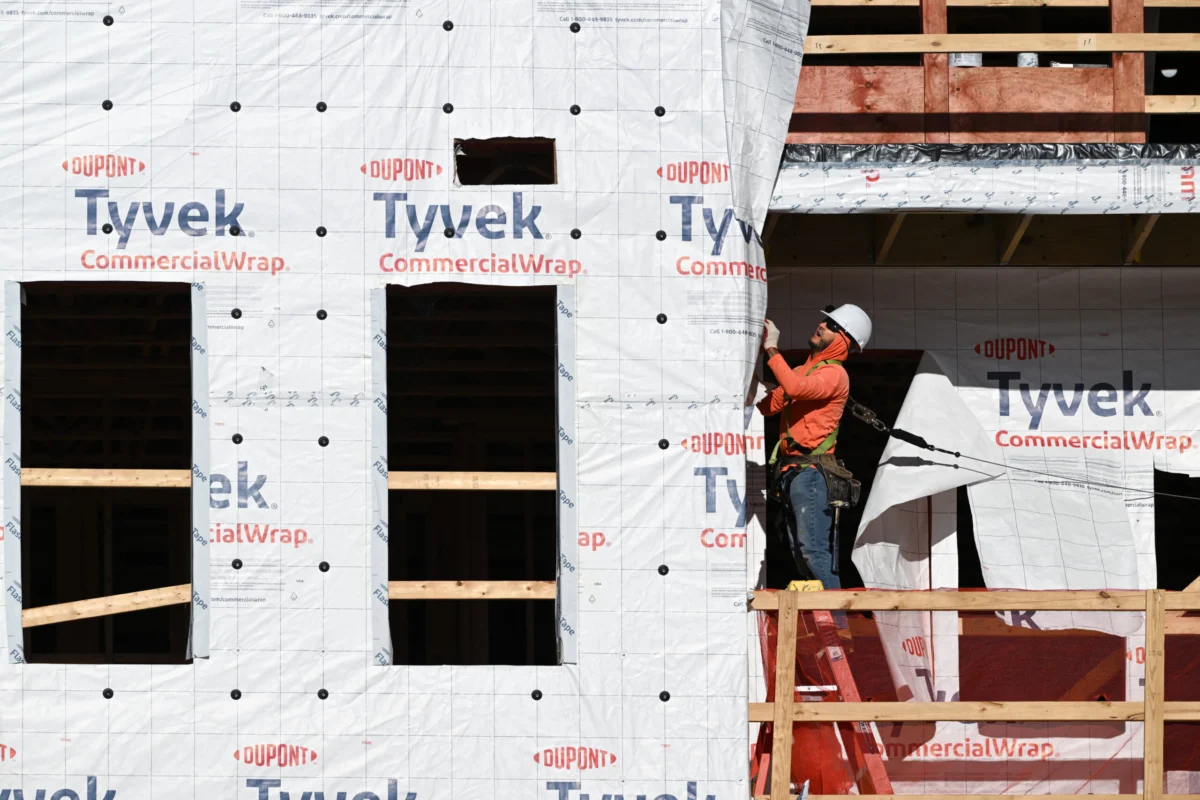
Homeowners across the United States are grappling with a dramatic surge in insurance premiums, a trend that is not only emptying wallets but also signaling deeper shifts within the housing market and the nation’s financial system. A construction worker at a new house being built in Alhambra, California, on March 19, 2026, symbolizes the ongoing activity in a sector increasingly impacted by these rising costs. This pervasive issue is compelling policyholders, industry experts, and policymakers alike to confront a complex web of economic, environmental, and regulatory factors.
The Escalating Burden on American Homeowners
The financial strain on homeowners is undeniable and widespread. Recent findings from a Pew Research Center survey, conducted from March 16 to 22, revealed that a striking 71% of U.S. homeowners have experienced an increase in their insurance costs over the past few years. Alarmingly, 42% reported that these costs have gone up "a lot," indicating a significant and noticeable burden on household budgets. This perception is not anecdotal; it is firmly supported by empirical data tracking premium adjustments across the nation.
According to a comprehensive report published last year by the Consumer Federation of America (CFA), a prominent consumer advocacy group, average insurance premiums witnessed a substantial jump of $648, or 24%, rising from $2,655 in 2021 to $3,303 per year by 2024. This rapid escalation far outpaces general inflation rates. The U.S. Treasury Department, in its most exhaustive analysis of the homeowners insurance market to date, corroborated this trend, stating that average premiums per policy increased 8.7% faster than the rate of inflation between 2018 and 2022. These figures paint a clear picture of an insurance market under immense pressure, with the costs invariably passed on to the consumer.
The necessity of homeowners insurance cannot be overstated. Beyond serving as a critical financial safeguard against unexpected physical damage to one’s most significant asset, it is often a mandatory requirement for securing a mortgage loan. This interdependence means that rising insurance costs directly influence housing affordability and access to homeownership, particularly for first-time buyers and those in lower-income brackets.
Geographic Disparities and Universal Impact
While the premium hikes are a national phenomenon, their intensity varies significantly by region. The Consumer Federation of America’s analysis highlighted that consumers in a third of U.S. ZIP codes endured premium increases exceeding 30% from 2021 to 2024. Certain states have become epicenters of these sharp increases, with Utah experiencing a staggering 59% rise, followed by Illinois at 50%, Arizona at 48%, and Pennsylvania at 44%. These figures underscore how diverse factors, including local regulatory environments and specific regional risks, contribute to the differentiated impact.
Despite these regional hotspots, the problem is remarkably pervasive. The CFA found that premiums increased in an astounding 95% of U.S. ZIP codes during the 2021-2024 period. This broad reach led Amy Bach, co-founder and executive director of United Policyholders, another consumer advocacy group, to describe it as "definitely a pervasive issue." She added, "At this point, rates have been going up by so much, it just feels unfair," capturing the sentiment of countless homeowners struggling to absorb these escalating costs.

A Multifaceted Crisis: Unpacking the Drivers of Rising Premiums
The dramatic run-up in homeowners insurance premiums is not attributable to a single cause but rather a confluence of interconnected factors that have converged in recent years. Understanding these drivers is crucial for grasping the complexity of the current market conditions.
1. Inflationary Pressures and Rebuilding Costs:
A primary driver has been the general inflationary environment impacting the U.S. economy, particularly the construction sector. When homes are damaged, insurers pay out claims based on the cost of repair or replacement. These costs have soared. The Treasury report noted that replacement costs for property and casualty-related losses jumped by an average of 45% between 2020 and 2023. This increase is largely due to higher material costs—lumber, concrete, roofing materials—and significant hikes in labor expenses. The cost of employing workers for single-family residential construction, for instance, surged 37% between 2018 and 2022 and 45% from 2014 to 2023.
The COVID-19 pandemic exacerbated these pressures by disrupting global supply chains, leading to shortages and further driving up prices. As Amy Bach pointed out, "Covid is kind of a little bit of a hidden driver of a lot of this." Insurers, facing higher payouts, inevitably pass these increased operational costs onto policyholders through higher premiums, ensuring their financial solvency.
2. The Escalating Threat of Climate Change:
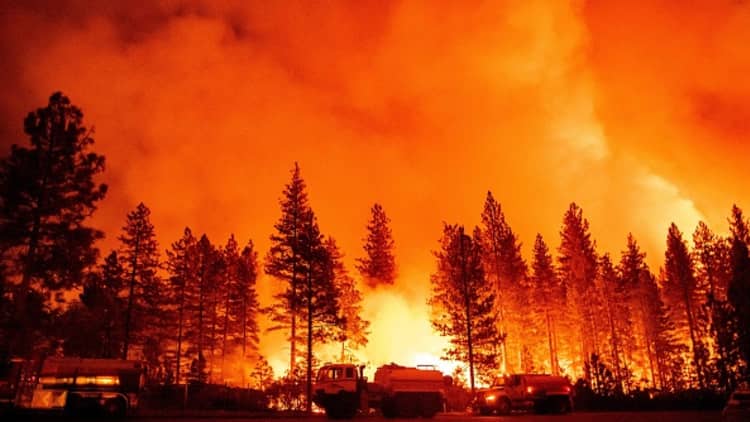
Perhaps the most significant long-term driver is the escalating frequency and severity of climate-related extreme weather events. The U.S. has witnessed a marked increase in wildfires, hurricanes, droughts, floods, and severe convective storms (e.g., tornadoes, hail storms). These events directly translate into a higher likelihood of policyholders filing claims, and often for much larger amounts.
Peter Kochenburger, an insurance expert and visiting professor of law at Southern University Law Center, unequivocally states that climate change is the "primary reason" for the uptick in insurance premiums. "The frequency and severity of storms are going up – and that means your rates are going up, and they’re not likely to go down," he warned.
Data from the Treasury Department, citing NOAA and FEMA, highlights this alarming trend: the number of weather and climate disasters causing over $1 billion in damage (adjusted for inflation) increased more than fivefold from 2018 through 2022 compared to the 1980s. Furthermore, the average number of major disaster declarations for climate-related events has nearly doubled when compared to the average for the 50 years between 1960 and 2010. Homeowners in the 20% of ZIP codes with the highest expected annual losses from climate-related perils paid premiums that were 82% higher than those in the 20% of ZIP codes with the lowest climate risk between 2018 and 2022. States like Florida, Louisiana, and California, frequently hit by hurricanes, floods, and wildfires respectively, exemplify this heightened risk, though the impact is felt nationwide. A firefighter rolling up a hose at the Max Road Miramar fire in Pembroke Pines, Florida, on May 11, 2026, visually underscores the ongoing battle against these escalating natural threats.
3. The Role of Reinsurance Markets:
Insurers themselves purchase insurance, known as reinsurance, to protect against catastrophic losses that could otherwise bankrupt them. This financial backstop is crucial for maintaining the stability of the insurance industry. However, the reinsurance market has recently entered a "hard market" phase, characterized by reinsurers tightening their terms and conditions, significantly raising rates, and requiring primary insurers to retain more risk. These increased costs for insurers are, in turn, passed on to policyholders. The global nature of reinsurance means that major catastrophe losses anywhere in the world can affect reinsurance pricing for U.S. insurers, further contributing to domestic premium increases.
4. Demographic Shifts and Movement into Riskier Areas:
Compounding the climate change factor is the observable trend of people choosing to build and reside in areas historically prone to natural disasters. The Treasury report indicated that nearly 1 million new homes were constructed in high-risk areas between 2018 and 2022. This phenomenon, driven by factors such as affordability in previously undeveloped regions or lifestyle preferences, exacerbates the potential for losses. Increased demand in these areas also inflates property values, meaning that when a disaster strikes, the financial cost of damage and rebuilding is even higher. A construction worker at a condo development in Miami, Florida, on Feb. 10, 2025, represents this ongoing development in climate-vulnerable zones.

5. State Regulation and Market Dynamics:
The insurance market in the U.S. is heavily regulated at the state level, with each state balancing the competing objectives of ensuring affordable premiums for consumers, maintaining the availability of coverage, and preserving the financial solvency of insurers. However, these varying regulatory approaches can lead to market distortions. Research from Arizona State University, Columbia Business School, and Harvard Business School published in 2025 found that homeowners insurance rates tend to rise in less-regulated states partly due to insurance losses in highly regulated states. This suggests that households in less-regulated markets may inadvertently be "in-part bearing the risks of households in highly regulated states." Insurers typically file requests for premium increases with state insurance agencies annually, and the approval process can vary widely, influencing the pace and extent of rate hikes. As Amy Bach noted, "We don’t really know what insurers really do need" in some regulatory environments.
6. Advancements in Insurance Technology and Risk Assessment:
The methods insurers use to assess risk have also evolved, contributing to premium changes. Insurers are moving from traditional underwriting based on historical data to more sophisticated predictive models. These models leverage vast datasets and advanced analytics to forecast future risks, marking a "big shift," according to Bach. This means pricing reflects what experts think might happen, rather than solely what has happened.
Furthermore, insurers are increasingly utilizing technologies like drone surveillance, satellite imagery, and extensive data mining to identify specific property characteristics that influence risk. This can include details about a home’s age, roof condition, plumbing, wiring, and proximity to wildfire zones or floodplains. Homeowners with a less favorable "risk score" based on these assessments may find fewer insurers willing to cover them, or face significantly higher premiums as a result of reduced competition.
Broader Economic and Social Implications
The ramifications of rapidly rising homeowners insurance premiums extend far beyond individual household budgets, impacting the broader U.S. economy and financial system.
Impact on Homeowners and Affordability: For many Americans, a home represents their largest financial asset and a primary vehicle for building wealth and intergenerational equity. The increased cost and, in some cases, reduced availability of homeowners insurance directly affect both housing expenses and home values. As Steve Koller, a postdoctoral fellow in climate and housing at the Harvard University Joint Center for Housing Studies, stated, "Insurance helps make homeownership possible and preserves hard-earned home equity when hazards strike."
Higher-income households may be able to absorb premium hikes or invest in home fortifications to mitigate risks. However, for low earners and disadvantaged groups, soaring insurance costs can narrow "the viability of homeownership as a pathway to upward economic mobility," as Manann Donoghoe, a fellow at the Brookings Institution, highlighted in April. This can lead to underinsurance, where homeowners opt for lower coverage to save money, leaving them vulnerable to devastating financial losses if a disaster occurs. In extreme cases, it can lead to a "protection gap," where coverage becomes unavailable or unaffordable, forcing homeowners to go without essential financial protection.
Housing Market and Local Economies: The stability of the housing market is intrinsically linked to insurance availability and cost. If insurance becomes too expensive or unobtainable in certain areas, it can depress property values, making homes harder to sell and reducing the equity of existing homeowners. This, in turn, has significant consequences for local governments, which depend heavily on property values for tax revenue. A decline in property values can lead to reduced public services and infrastructure investment.
Furthermore, real estate lenders and investors in mortgage-backed securities rely on homeowners insurance for loss protection. A weakening insurance market introduces systemic risk, potentially impacting the broader financial system if defaults increase due to uninsured property losses.
The Path Forward: Challenges and Potential Solutions
Addressing the homeowners insurance crisis requires a multi-pronged approach involving collaboration among insurers, policymakers, and communities.
For Insurers: The industry must continue to innovate in risk assessment and mitigation. This includes investing in technologies that can help homeowners reduce their risk exposure, such as smart home devices for leak detection or wildfire-resistant building materials. Developing more granular, risk-based pricing, while controversial for its potential to increase costs in vulnerable areas, is seen by some as necessary for market stability.
For Policymakers: State regulators face the delicate task of balancing affordability and availability with insurer solvency. This might involve exploring regulatory reforms that allow for more flexible pricing models, while also establishing state-backed insurance programs as "insurers of last resort" in areas where private coverage is retreating. Incentives for homeowners to harden their homes against climate risks (e.g., grants, tax credits) could also play a crucial role. A construction worker at a housing development in Alexandria, Virginia, on April 8, 2026, might be building homes incorporating these new resilient standards.
For Communities: Urban planning and zoning regulations can discourage new construction in the highest-risk areas and promote resilient building codes. Public education campaigns can also raise awareness about individual mitigation efforts and the importance of adequate coverage.
The escalating cost of homeowners insurance is more than just a financial inconvenience; it is a profound indicator of systemic challenges posed by inflation, climate change, and evolving market dynamics. Its resolution will require concerted effort and innovative solutions to ensure that homeownership remains an achievable and secure aspiration for all Americans.
