

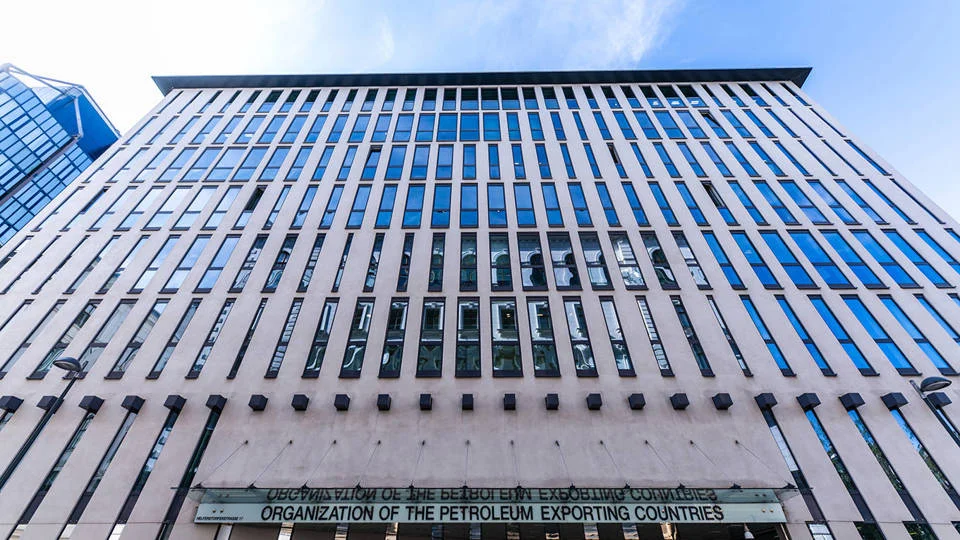
The United Arab Emirates’ (UAE) recent decision to withdraw from the Organization of the Petroleum Exporting Countries (OPEC) and its expanded group, OPEC+, marks a seismic shift in global energy politics and a clear assertion of its ambition to chart an independent course, potentially signaling a more fragmented and volatile Middle East. This move, after nearly six decades of membership, deals a significant structural blow to the cartel, diminishing its capacity to manage global oil supply and stabilize prices. The implications extend far beyond the energy markets, pointing towards a reshaping of regional alliances and an intensification of rivalries among Gulf powers, with the potential for widening proxy conflicts and chronic instability.
A Strategic Departure: The UAE’s Assertion of Sovereignty
For decades, OPEC has served as a crucial platform for oil-producing nations to coordinate their production levels and influence global crude prices. The UAE, as the cartel’s third-largest producer with the capacity to pump nearly five million barrels per day and significant ambitions for further expansion, has been a pivotal member. Its departure fundamentally alters the dynamics within the organization.
The UAE’s stated reasons for leaving have been framed around its desire to prioritize its own national production targets and maximize its oil and gas revenue streams. However, analysts widely interpret this decision as a deliberate strategic move to break free from the Saudi-led regional order that has largely dictated OPEC’s direction. The UAE has increasingly sought to carve out its own distinct foreign policy and economic path, a trend underscored by its recent diplomatic overtures and a growing assertiveness on the international stage. This exit can be seen as the culmination of a gradual divergence from Saudi Arabia’s hegemonic influence in the region.
The Unraveling of OPEC: Implications for Global Oil Markets
The departure of a producer of the UAE’s magnitude will undoubtedly make it more challenging for OPEC and OPEC+ to effectively manage supply and maintain price stability. Without the UAE’s commitment to production quotas, the bloc’s ability to exert influence over the market is diminished.
Supporting Data: Historically, OPEC members have adhered to agreed-upon production cuts or increases to respond to market conditions. The UAE’s independent production strategy, especially as its capacity grows, could lead to an oversupply of crude. While specific production targets are often confidential, the UAE’s existing capacity and its stated ambitions to increase it through investments in its national oil company, ADNOC, suggest a significant potential for additional barrels entering the market. This could exert downward pressure on global oil prices, potentially benefiting importing nations but creating financial challenges for other oil-dependent economies.
Analysis of Implications: The UAE’s newfound freedom to produce at will, particularly once potential geopolitical shifts or infrastructure developments allow for unimpeded access through key shipping lanes like the Strait of Hormuz, is likely to introduce greater volatility into crude oil markets. This volatility can have ripple effects across the global economy, impacting inflation, transportation costs, and industrial production. The loss of a major player also weakens OPEC’s leverage in its dealings with major consuming nations and other non-OPEC producers.
A Broader Geopolitical Reconfiguration: The Rise of Gulf Rivalries
The UAE’s decision to leave OPEC is not solely an economic calculation; it is deeply intertwined with its evolving geopolitical ambitions and its desire to assert its influence independently of Saudi Arabia. This move signals a potential acceleration of a broader trend towards a more fragmented Middle East, characterized by intensified rivalries among the Gulf powers.
Background Context: For years, the UAE has been building its own diplomatic, economic, and military capabilities, often pursuing interests that do not perfectly align with those of Saudi Arabia. While both nations share a common interest in countering Iranian influence and promoting regional stability (on their terms), their approaches and priorities have sometimes diverged. The UAE’s more active engagement in Africa, its establishment of independent defense partnerships, and its pursuit of diverse economic sectors beyond oil and gas illustrate its ambition to be a global player in its own right.
Timeline/Chronology of Divergence (Inferred):
- Early 2010s: The UAE begins to significantly diversify its economy and expand its foreign policy reach, investing heavily in infrastructure, tourism, and logistics.
- Mid-2010s: Growing assertiveness in regional security affairs, including interventions in Yemen and engagement in North Africa, showcasing a willingness to act independently.
- Late 2010s – Early 2020s: Diplomatic maneuvers, including the Abraham Accords, signaling a willingness to forge new alliances and reshape regional dynamics outside traditional frameworks. This period also sees increasing competition with Saudi Arabia for regional leadership and economic influence.
- 2023-2024: Whispers of UAE’s potential exit from OPEC begin to circulate as the country prioritizes its own energy development strategies and seeks greater flexibility.
- May 2026: The official announcement of the UAE’s departure from OPEC and OPEC+.
Analysis of Implications: The weakening of OPEC as a cohesive bloc could embolden other Gulf states to pursue more independent energy policies, further fragmenting the region’s oil producers. This could lead to increased competition for market share and a decline in collective bargaining power. Furthermore, as regional powers increasingly prioritize their own national interests, the potential for proxy conflicts and heightened tensions in existing hotspots could increase. The UAE’s assertion of autonomy might also encourage other regional actors to reassess their allegiances and strategic alignments.
Official Responses and International Reactions (Inferred)
While official statements from OPEC and its member states are likely to be carefully worded, the underlying sentiment would be one of concern and a call for continued cooperation.
Inferred Statements:
- OPEC Secretariat: Likely to express regret over the UAE’s decision but emphasize the continued importance of dialogue and cooperation among all oil-producing nations to ensure market stability. They might highlight that OPEC+ remains a flexible framework and that individual members’ participation can evolve.
- Saudi Arabia: May issue a statement reaffirming its commitment to OPEC and its role in ensuring global energy security, while subtly emphasizing its continued leadership within the alliance. There could be veiled commentary on the importance of solidarity in challenging times.
- Other OPEC+ Members: Reactions might vary, with some smaller producers potentially feeling more vulnerable without the UAE’s participation and larger producers like Russia likely to assess the impact on their own strategic objectives.
- Major Consuming Nations (e.g., U.S., EU, China): Likely to express concern over potential market volatility and instability. They might call for increased transparency and a commitment from all major producers to ensure a stable and affordable energy supply. Some might see an opportunity to engage directly with the UAE on energy matters.
Analysis of Implications: The international community, particularly energy-importing nations, will be closely watching how this situation unfolds. A more fractured OPEC could lead to a less predictable energy landscape, requiring greater diplomatic efforts to ensure global energy security. The UAE’s move could also spur a re-evaluation of energy alliances and a push for greater diversification of energy sources by consuming nations.
The Path Ahead: A New Order in the Gulf?
The UAE’s departure from OPEC is more than just an organizational reshuffling; it represents a fundamental shift in the regional power balance and the global energy order. It is a bold statement of intent from a nation that is increasingly defining its own destiny and asserting its influence on the world stage.
The coming years will likely witness a period of recalibration in the Middle East. The fragmentation of the oil cartel could accelerate existing rivalries and create new fault lines. The UAE’s move underscores the growing multipolarity of the region, where individual states are increasingly prioritizing their own national interests and strategic autonomy. For global energy markets, this signals a future of heightened volatility and a diminished ability of traditional cartels to dictate terms. The world will be watching to see how this new, more complex, and potentially more unstable Middle Eastern order takes shape.
