

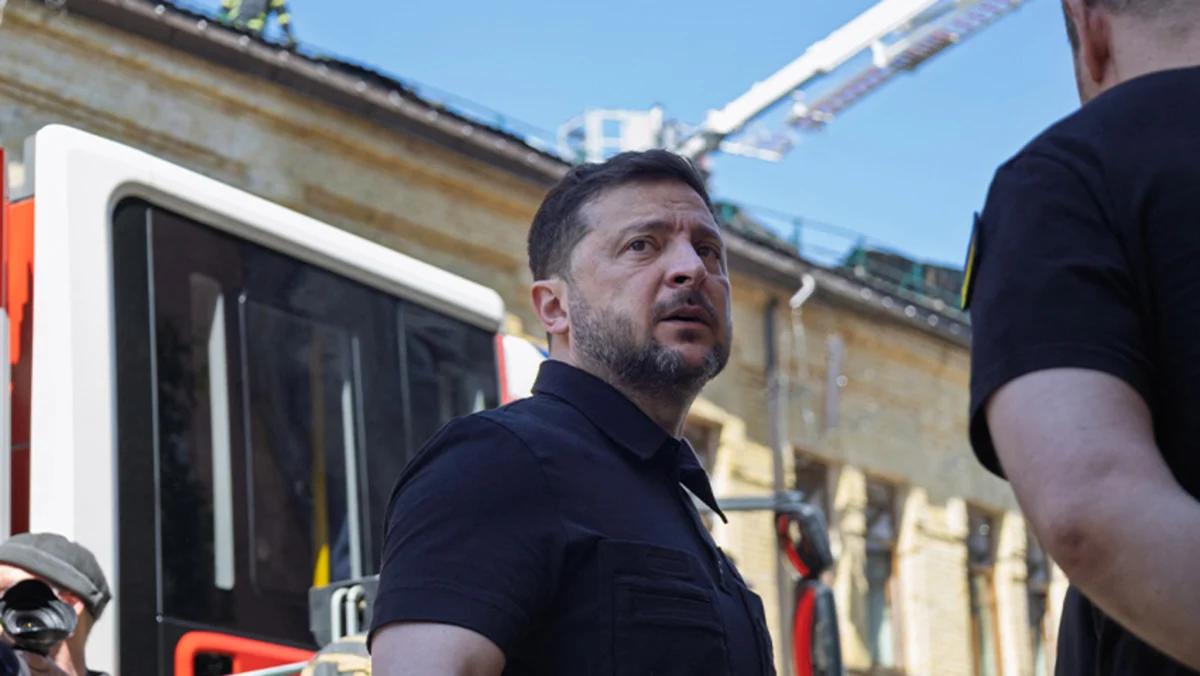
Kyiv, Ukraine – In the pre-dawn hours of May 24, 2026, Ukraine experienced one of the most intense and extensive aerial assaults since the full-scale Russian invasion began in February 2022. The capital, Kyiv, bore the brunt of a massive overnight barrage involving hundreds of drones and missiles launched by Russian forces, targeting civilian infrastructure and residential areas across the nation. President Volodymyr Zelenskyy, speaking to Al Jazeera from a severely damaged site in Kyiv, vehemently condemned the strikes, labelling them as acts of terror against the Ukrainian populace, and reiterated Ukraine’s unwavering resolve for retaliation.
Chronology of a Night of Terror
The coordinated assault commenced late on May 23, with initial reports of waves of Shahed-type uncrewed aerial vehicles (UAVs) entering Ukrainian airspace from multiple directions, primarily from the south and east. Air raid alerts began sounding across eastern and central regions shortly after midnight, gradually extending westward to encompass almost the entire country. Kyiv, a frequent target, found itself under particular scrutiny as its sophisticated air defense systems prepared for what proved to be an overwhelming challenge.
Around 02:00 AM local time on May 24, the drone attacks intensified, followed by the launch of a significant number of cruise missiles, reportedly including Kh-101/Kh-555 missiles from strategic bombers and Kalibr missiles from naval platforms in the Black Sea. Ballistic missiles, potentially Iskander-K or S-400 derivatives, were also believed to have been used against critical targets. Residents across Kyiv reported multiple explosions as air defense units engaged incoming threats, creating a cacophony of sirens, anti-aircraft fire, and the distinctive whirring of drones before impact.
Emergency services were immediately dispatched to dozens of locations across the capital and other affected regions. Firefighters battled blazes in residential buildings, commercial properties, and critical infrastructure sites. Medical personnel attended to the wounded, while rescue teams began sifting through rubble in search of survivors. The scale of the destruction became increasingly apparent with the first light of dawn, revealing charred remains of buildings, shattered windows, and debris strewn across streets.
President Zelenskyy’s Condemnation and On-Site Visit
By mid-morning, President Zelenskyy was on the ground, personally assessing the damage in Kyiv. His visit to one of the most severely hit areas, believed to be a residential district, underscored the gravity of the situation and served as a powerful message of defiance. Surrounded by the devastation, with emergency workers still active in the background, he addressed Al Jazeera, his voice firm despite the grim surroundings.
"This is not just an attack on our cities; it is an attack on our humanity, on our way of life, on innocent civilians," President Zelenskyy stated, gesturing towards the wreckage. "Russia continues its criminal targeting of civilian infrastructure, trying to break our spirit, to plunge us into darkness. But they will not succeed." He highlighted the deliberate nature of the strikes, emphasizing that many of the targeted sites had no military significance, serving only to inflict terror and suffering upon ordinary Ukrainians. "Every missile, every drone that hits our homes, our schools, our hospitals, is a testament to Russia’s barbarity and a stark reminder of why the civilized world must stand united against this aggression." The President’s direct engagement with international media from the scene reinforced Ukraine’s narrative of being a victim of unprovoked aggression and underscored the urgent need for continued international support, particularly in the realm of advanced air defense systems.
Scale and Impact of the Attack
Initial reports from Ukrainian military intelligence and local authorities indicated that over 120 drones and approximately 70 missiles of various types were launched during the overnight assault. While Ukrainian air defenses claimed a high interception rate for both drones and missiles, the sheer volume of the attack meant that a significant number managed to penetrate, causing widespread damage. Kyiv’s Shevchenkivskyi, Solomianskyi, and Dniprovskyi districts were among the hardest hit, experiencing fires, structural collapses, and power outages.
Beyond Kyiv, cities such as Kharkiv, Lviv, Odesa, and Zaporizhzhia also reported explosions and damage, although the capital remained the primary focus of the Russian onslaught. Energy infrastructure, a recurring target in Russia’s strategy to destabilize Ukraine, suffered considerable damage, leading to rolling blackouts in several regions. Residential buildings, including multi-story apartment blocks, bore the brunt of impacts from falling debris and direct hits, resulting in civilian casualties. While precise figures were still being compiled, preliminary reports indicated several fatalities and dozens of injuries across the affected areas. Emergency services worked tirelessly to evacuate residents, provide first aid, and restore essential services.
Ukrainian Response and Defense Efforts
Ukraine’s Ministry of Defense and the General Staff of the Armed Forces promptly released statements detailing the success of their air defense forces. Lieutenant General Mykola Oleshchuk, Commander of the Air Force of Ukraine, reported that a substantial percentage of the incoming threats, including a majority of the cruise missiles and Shahed drones, were successfully intercepted. He credited the effectiveness of Western-supplied air defense systems, such as the Patriot, NASAMS, and IRIS-T, which have significantly bolstered Ukraine’s capabilities against sophisticated aerial threats. However, he also reiterated the continuous need for more such systems to cover the vast territory of Ukraine and protect its critical infrastructure comprehensively.
The vow of retaliation issued by President Zelenskyy and other Ukrainian officials signals a continued commitment to offensive operations against Russian targets, both within occupied Ukrainian territories and potentially deeper into Russian Federation territory. Ukraine has previously demonstrated its capacity for retaliatory strikes, often targeting military infrastructure, logistics hubs, and airfields within Russia or Russian-occupied Crimea. This latest escalation is likely to intensify these efforts, as Ukraine seeks to demonstrate that such attacks will not go unanswered.
Background and Context of Escalation
The full-scale invasion launched by Russia in February 2022 marked a dramatic escalation of the conflict that began in 2014. Since then, Russia has employed a strategy that includes systematic targeting of Ukrainian energy infrastructure, particularly during colder months, aiming to cripple the country’s economy and break the will of its population. While the intensity of aerial bombardments has fluctuated, large-scale combined drone and missile attacks have become a grim feature of the conflict.
The attack on May 24, 2026, occurred amidst ongoing trench warfare along the sprawling front lines in eastern and southern Ukraine, and just weeks after Ukrainian forces had launched several successful drone attacks against Russian oil refineries and military installations. Analysts suggest this massive Russian aerial assault could be a retaliatory measure for those Ukrainian operations, or a renewed attempt to degrade Ukraine’s military-industrial capacity and infrastructure ahead of potential future offensives or in anticipation of increased Western military aid. The strategic timing, outside the traditional winter energy campaign, indicates a broader intent to inflict damage and disruption year-round.
International Reactions and Calls for Support
The international community was swift to condemn the latest wave of Russian attacks. United Nations Secretary-General António Guterres issued a statement expressing grave concern over the targeting of civilian areas and reiterated the UN’s call for an immediate cessation of hostilities and respect for international humanitarian law.
NATO Secretary General Jens Stoltenberg condemned the "barbaric acts" and reaffirmed the alliance’s unwavering support for Ukraine’s sovereignty and territorial integrity. He emphasized the urgent need for NATO member states to accelerate the delivery of air defense systems and ammunition to Ukraine, highlighting that such attacks underscore the critical importance of robust aerial protection.
From Washington, the White House spokesperson denounced the attacks as "senseless acts of violence" and pledged continued military and financial assistance to Ukraine. European Union leaders, meeting in Brussels, issued a joint statement condemning the "unjustifiable aggression" and discussing further sanctions against Russia, as well as additional military aid packages for Kyiv. British Prime Minister, French President, and German Chancellor also voiced strong condemnations, reiterating their commitment to supporting Ukraine and holding Russia accountable for its actions. These statements collectively underscored a united front among Western allies in supporting Ukraine’s defense efforts, even as the protracted conflict continues to test international resolve.
Humanitarian Impact and Recovery Efforts
Beyond the immediate physical damage, the psychological toll on the Ukrainian population remains profound. Constant air raid alerts, the fear of bombardment, and the loss of homes and loved ones have created widespread trauma. Humanitarian organizations, both domestic and international, are working tirelessly to provide aid, including shelter, food, medical supplies, and psychological support to those affected. Local authorities in Kyiv and other cities have activated emergency response protocols, establishing temporary shelters, distributing essential supplies, and coordinating with utility companies to restore power, gas, and water services. The resilience of the Ukrainian people, often seen assisting neighbors and clearing debris, has been a consistent theme throughout the conflict. However, the recurring nature of these attacks places an immense strain on resources and human endurance.
Strategic Implications and Future Outlook
This latest large-scale attack carries significant strategic implications. For Russia, it demonstrates a continued capacity to launch sophisticated, multi-pronged aerial assaults, aiming to exhaust Ukrainian air defenses and degrade critical infrastructure. It also serves as a projection of force, intended to undermine Ukrainian morale and signal Russia’s unwavering commitment to its objectives.
For Ukraine, the attack underscores the persistent vulnerability to aerial threats and the critical importance of securing more advanced air defense systems and interceptor missiles from its Western partners. The effectiveness of Ukrainian air defenses, while commendable, is constantly challenged by the scale and sophistication of Russian attacks. The incident is likely to intensify Ukraine’s pleas for F-16 fighter jets and other modern aircraft, which could enhance its ability to intercept Russian bombers before they launch their missiles.
The ongoing cycle of attacks and counter-attacks further complicates any prospects for a peaceful resolution. Russia shows no signs of de-escalation, and Ukraine remains resolute in defending its sovereignty and expelling Russian forces from its territory. The May 24, 2026, attack serves as a grim reminder that the war in Ukraine, even after years, remains a brutal and devastating conflict with profound humanitarian consequences and far-reaching geopolitical implications. The international community’s sustained support for Ukraine, particularly in strengthening its air defense capabilities, will be crucial in mitigating the impact of such relentless aggression and protecting civilian lives.
