

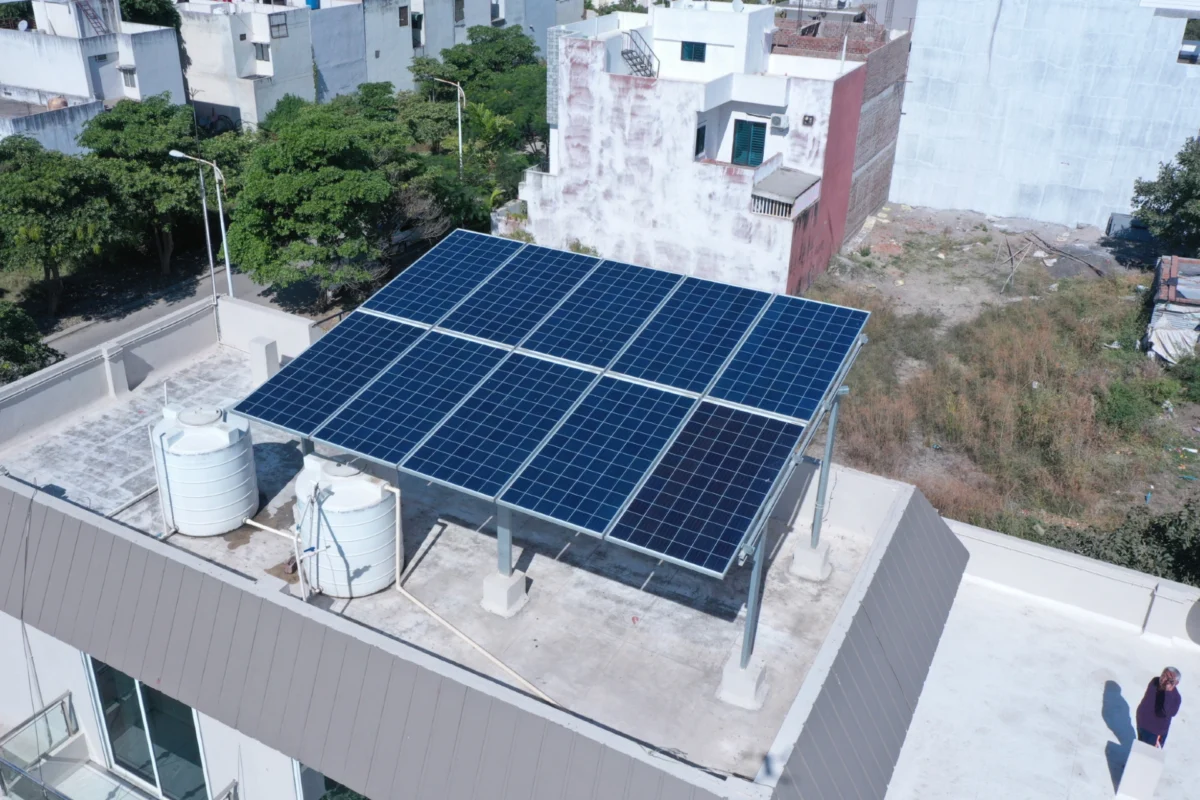
SolarSquare, a prominent Mumbai-based rooftop solar startup, is reportedly in the final stages of securing a significant fresh capital infusion that could more than double its valuation in less than two years. According to sources familiar with the development, the company is negotiating a Series C funding round expected to bring in between $55 million and $60 million. This latest round of financing is set to be co-led by B Capital and existing investor Lightspeed Venture Partners, valuing the startup at a post-money valuation ranging from $450 million to $500 million. This surge in valuation—up from approximately $200 million during its Series B round in late 2024—underscores the rapidly intensifying investor interest in India’s burgeoning residential renewable energy sector.
The proposed deal comes on the heels of SolarSquare’s record-breaking $40 million Series B round, which was finalized in December 2024. For this upcoming round, Lightspeed is expected to deploy capital from its dedicated growth fund, a vehicle typically reserved for late-stage companies with proven scale and market leadership. By tapping into its growth fund, Lightspeed joins an elite group of investors backing India’s high-growth tech ecosystem, following similar investments in household names such as the digital payments giant Razorpay and the quick-commerce unicorn Zepto. Elevation Capital, another early backer of SolarSquare, is also slated to participate in the Series C round, further consolidating the startup’s cap table as it prepares for its next phase of expansion.
A Strategic Shift to the Residential Frontier
Founded in 2015, SolarSquare initially operated across various segments of the solar market, including commercial and industrial (C&I) projects. However, in recent years, the company has executed a deliberate strategic pivot toward the residential market. This shift was motivated by the high fragmentation of the Indian residential solar space and the higher margins associated with decentralized energy solutions. Unlike large-scale industrial projects, which often involve razor-thin margins and intense bidding wars, the residential sector offers an opportunity for a "full-stack" service provider to build brand loyalty and offer comprehensive end-to-end solutions.
SolarSquare’s business model is designed to address the specific pain points of individual homeowners and housing societies—the large apartment complexes and gated communities that characterize urban living in India. The company manages the entire lifecycle of a solar installation, from initial site assessment and design to government subsidy processing, installation, and long-term maintenance. This integrated approach has allowed SolarSquare to distinguish itself from the thousands of small, local "mom-and-pop" installers and dealer networks that currently dominate the market.
To date, SolarSquare has powered approximately 50,000 individual homes and nearly 400 housing societies. Its cumulative installed capacity has surpassed 150 megawatts (MW), and the company maintains an active presence in 29 cities across nine Indian states. Beyond the residential sector, SolarSquare has also provided rooftop solutions for major corporate clients like Swiggy and iD Fresh Food, though its primary growth engine remains the consumer segment.
Financial Performance and Market Momentum
The startup’s financial trajectory reflects the aggressive adoption of solar technology across Indian middle-class households. SolarSquare has recently crossed an annualized revenue run rate (ARR) of more than ₹10 billion (approximately $104 million). This milestone is particularly significant given the capital-intensive nature of the hardware installation business. The company has set an ambitious target to reach a residential solar portfolio of 200 MW within the current calendar year.
The timing of this funding round is critical, as it coincides with a period of unprecedented government support for rooftop solar. The Indian government has recently intensified its push for domestic energy independence through schemes like the "PM Surya Ghar: Muft Bijli Yojana." This initiative aims to provide free electricity to households by incentivizing the installation of rooftop solar systems through substantial subsidies and low-interest financing. Such policies have significantly lowered the entry barrier for the average Indian consumer, transforming solar from a luxury "green" choice into a pragmatic financial investment with a clear return on investment (ROI).
The Broader Context of India’s Renewable Energy Ambitions
India’s energy landscape is undergoing a profound transformation. The nation has committed to achieving a non-fossil fuel energy capacity of 500 gigawatts (GW) by 2030, a goal that requires a massive scaling up of solar infrastructure. As of 2025, India surpassed several European nations to become the world’s third-largest solar power producer, trailing only the United States and China.
The growth has been exponential. In 2014, India’s cumulative solar capacity stood at a mere 3 GW. By 2026, that figure is projected to exceed 150 GW. While large-scale solar parks account for a significant portion of this capacity, the government is increasingly looking toward rooftop solar to reduce the burden on the national grid and minimize transmission losses. The residential segment, which remained underserved for decades, is now viewed as the "next frontier" for renewable energy deployment.
However, the market remains competitive and complex. SolarSquare faces competition not only from local contractors but also from established industrial giants that are expanding their consumer-facing divisions. Companies such as Tata Power Solar, Waaree Energies, Luminous Power Technologies (backed by Schneider Electric), and Exide Industries are all vying for a share of the rooftop market. These incumbents possess vast distribution networks and decades of brand trust, forcing startups like SolarSquare to innovate through technology, superior customer service, and integrated financing options.
Investment Climate and Sector Analysis
The interest from B Capital and Lightspeed signals a broader trend in the venture capital world: the rise of "Climate Tech" as a preferred asset class. While the wider startup ecosystem in India has faced a "funding winter" characterized by increased scrutiny of unit economics and slower deal cycles, companies operating in the sustainability and energy transition space have remained relatively resilient.
Investors are drawn to SolarSquare’s ability to scale in a fragmented market while maintaining a clear path to profitability. The residential solar sector in India is estimated to be a multi-billion-dollar opportunity, yet it is only in the early stages of penetration. With rising electricity tariffs in several Indian states and the decreasing cost of photovoltaic (PV) modules, the economic argument for solar has never been stronger.
"SolarSquare is operating at the intersection of consumer tech and infrastructure," noted an industry analyst who requested anonymity. "By solving the trust deficit in the installation process and handling the bureaucratic hurdles of government subsidies, they have created a moat that is difficult for smaller players to replicate. The participation of growth funds suggests that the market is ready for a national leader to emerge."
Timeline of Growth and Funding
SolarSquare’s journey from a boutique solar firm to a high-valuation startup has been marked by several key milestones:
- 2015: Founded in Mumbai with a focus on commercial and industrial solar installations.
- 2020-2021: Pivoted toward the residential sector, identifying a gap in quality service for individual homeowners.
- Early 2022: Secured seed and early-stage funding to expand operations beyond Maharashtra.
- December 2024: Closed a $40 million Series B round led by Lightspeed Venture Partners, bringing total equity raised to $61.1 million.
- Mid-2025: Reached an ARR of $104 million and surpassed 150 MW in total installations.
- Late 2025 (Projected): Finalization of the $55M-$60M Series C round, propelling the company toward a half-billion-dollar valuation.
Implications for the Future
As SolarSquare prepares to close its Series C round, the focus will likely shift toward geographic expansion and technological integration. The company currently operates in nine states, but India’s diverse geography and varying state-level solar policies present both a challenge and an opportunity for further growth. States like Gujarat, Rajasthan, and Karnataka have been early adopters, but there remains significant untapped potential in the northern and eastern regions of the country.
Furthermore, the integration of energy storage solutions—such as home battery systems—is expected to be the next major evolution in the residential market. As battery costs continue to decline, SolarSquare could evolve from a solar installer into a comprehensive home energy management company, allowing users to not only generate their own power but also store and optimize it.
The success of SolarSquare’s fundraising efforts will be closely watched by the broader startup community. It serves as a litmus test for the viability of capital-heavy, hardware-centric businesses in an era where software often dominates investor portfolios. If SolarSquare can successfully navigate the complexities of the Indian residential market while scaling its operations, it may well become the blueprint for future renewable energy ventures in emerging economies.
While SolarSquare, B Capital, and Lightspeed have declined to officially comment on the ongoing negotiations, the momentum behind the deal suggests that an official announcement could be forthcoming as early as next month. For now, the startup remains focused on its mission to put a solar plant on every Indian roof, contributing to a cleaner, more sustainable energy future for the world’s most populous nation.
