

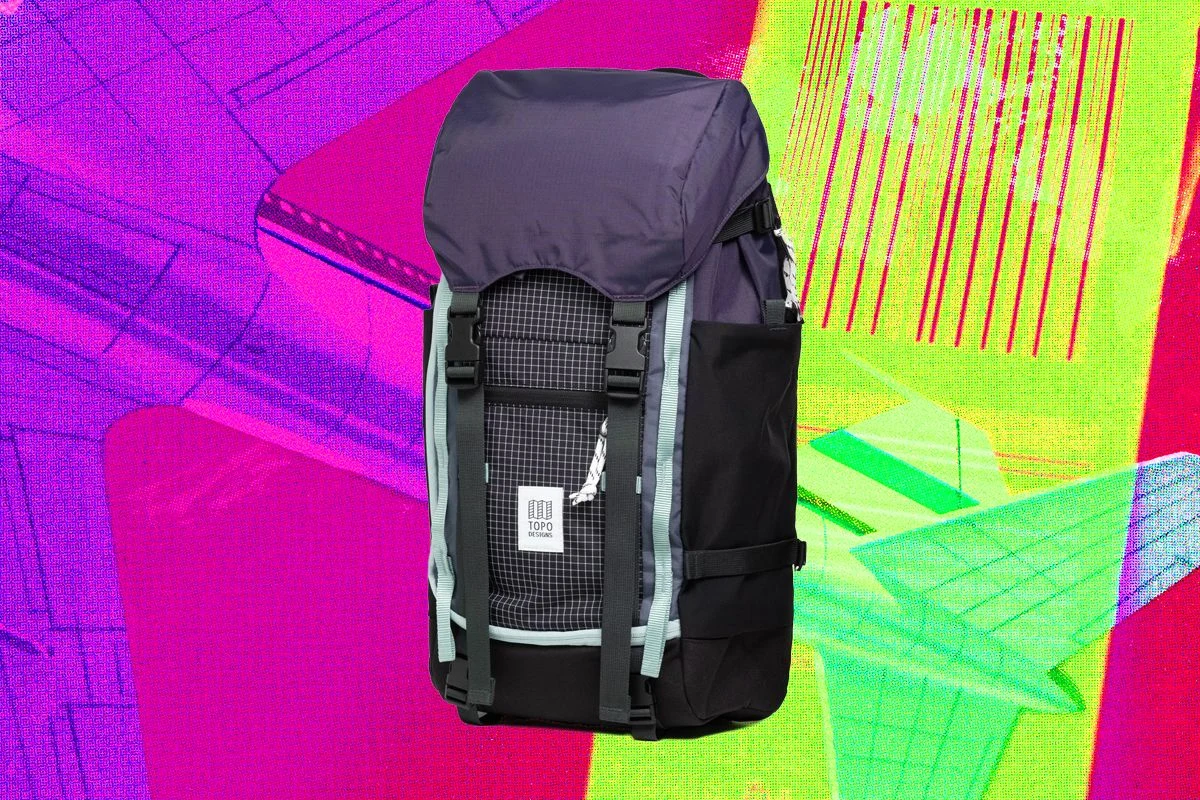
The Rise of Topo Designs and the Gorpcore Aesthetic
Founded in 2008 by Jedd Rose and Mark Hansen, Topo Designs began in a basement in Fort Collins, Colorado. The founders’ initial goal was to recreate the classic gear they grew up with—equipment that was simple, functional, and durable, but with a modern sense of color and style. Over the last decade and a half, the brand has moved from a niche Colorado favorite to a global player in the premium bag market.
The brand’s success is inextricably linked to the rise of "gorpcore," a term coined in 2017 to describe the trend of wearing high-performance hiking and camping gear in non-wilderness settings. Market analysts suggest that the global outdoor apparel market, valued at approximately $35 billion in 2023, has been significantly bolstered by consumers who prioritize "buy it for life" (BIFL) quality. Topo Designs caters to this demographic by utilizing high-denier fabrics, heavy-duty hardware, and a design language that feels equally at home on a mountain trail or a metropolitan subway.
Chronology of a Field Test: Ten Days Across the North Atlantic
To truly assess the capabilities of a 22-liter pack, it must be removed from the controlled environment of a showroom and subjected to the logistical pressures of international travel. A recent ten-day evaluation involving a journey through Ireland and Scotland provided a comprehensive look at the Rover Trail Pack’s performance under duress.
The testing itinerary was grueling, consisting of seven flights and stays at eight different hotels over a 240-hour period. In this scenario, the Rover Trail Pack served as the "personal item" alongside a standard carry-on roller bag. This specific travel configuration is increasingly popular among modern travelers looking to avoid checked baggage fees and the risks associated with lost luggage.
.jpg)
Days 1-3: Transit and Accessibility
The initial phase of the trip focused on airport navigation. The Rover Trail Pack’s top-loading rucksack design, secured by a drawstring and a buckled flap, proved essential for security checkpoints. However, it was the secondary access points that distinguished the bag. A J-shaped zipper running the length of the main compartment allowed the tester to access items at the very bottom of the pack—such as a travel pillow or a neck cushion—without disturbing the items packed on top, such as toiletries or extra layers of clothing.
Days 4-7: Durability in Variable Weather
During the middle of the excursion, the pack was exposed to the notoriously unpredictable weather of the Scottish Highlands. While not fully waterproof, the heavy-duty nylon construction provided sufficient water resistance to protect electronic devices and travel documents during brief transitions between transit hubs and accommodations. The spandex-reinforced side pockets were also tested, demonstrating an ability to hold various container sizes, from standard 1-liter water bottles to smaller beverage cans, without losing elasticity.
Days 8-10: Ergonomics and Final Assessment
The final days of the trip involved long periods of wear during urban exploration in Dublin and Edinburgh. The pack’s stowable waist belt and padded back panel were evaluated for comfort. Testers noted that the ability to tuck the waist belt behind the foam backing allowed the bag to transition from a technical hiking pack to a streamlined city bag in seconds. By the conclusion of the tenth day, the bag showed no signs of frayed stitching or mechanical zipper failure, despite being opened and closed dozens of times daily.
Engineering and Design Analysis
The Rover Trail Pack’s 22-liter capacity is often cited by gear enthusiasts as the "sweet spot" for day-to-day use. It is large enough to hold a 15-inch laptop, a light jacket, and daily essentials, yet small enough to fit under most commercial airline seats.
Material Integrity
Topo Designs typically utilizes 1000D recycled nylon for its exterior shells, a material known for its high abrasion resistance. This choice reflects a broader industry shift toward sustainable manufacturing. According to the brand’s "MAP Guarantee" (Maintenance, Action, Protection), the focus is on repairing gear rather than replacing it, a stance that resonates with environmentally conscious consumers.

Compartmentalization Strategy
One of the standout features identified during testing is the top zipped compartment. Unlike standard "brain" pockets on hiking packs, this compartment includes an internal key clip and an additional zipped mesh sleeve. This "double-bagging" feature provides a secure location for high-value items like passports and car keys, ensuring they do not accidentally fall out when the main flap is opened.
Furthermore, the inclusion of a dedicated side-access laptop sleeve allows users to bypass the main compartment entirely when retrieving technology. This separation of "work" and "life" gear is a hallmark of modern EDC design.
Market Context and Competitive Landscape
The premium backpack market is currently dominated by a few key players, including Patagonia, Osprey, and Peak Design. However, Topo Designs occupies a unique territory by leaning into a "retro-tech" aesthetic that avoids the overly tactical look of many competitors.
| Feature | Topo Rover Trail Pack | Standard Daypack Competitor |
|---|---|---|
| Capacity | 22 Liters | 18-24 Liters |
| Main Access | Top-load + J-Zip | Panel-load (Clamshell) |
| Material | 1000D Recycled Nylon | 210D – 420D Polyester/Nylon |
| Waist Belt | Stowable / Lightly Padded | Fixed or None |
| Laptop Access | External Side Zip | Internal Sleeve |
Industry data suggests that consumers are increasingly moving away from specialized bags (one for hiking, one for the office) toward "hybrid" solutions. The Rover Trail Pack’s inclusion of daisy-chain nylon loops for external attachments allows it to function as a technical gear hauler, while its clean silhouette remains appropriate for professional environments.
Broader Implications for the Travel Gear Industry
The success of versatile packs like the Rover Trail indicates a permanent shift in consumer behavior. As airline regulations regarding baggage size become more stringent and fees more expensive, the "one-bag" or "one-and-a-half-bag" travel philosophy has moved from the fringe to the mainstream.

Manufacturers are now under pressure to create products that are lightweight yet indestructible. The use of recycled materials, once a marketing gimmick, is now a baseline requirement for many shoppers. Topo Designs’ ability to maintain a manufacturing standard that permits a lifetime warranty is a significant competitive advantage in a "fast fashion" world.
Expert analysis of the Rover Trail Pack suggests that its success is not due to a single revolutionary feature, but rather the refinement of existing rucksack tropes. By solving the common "bottom of the bag" accessibility issue with the J-zip and addressing security concerns with the internal mesh pocket, Topo Designs has addressed the primary pain points of the modern traveler.
Conclusion and Future Outlook
As the outdoor industry continues to merge with the fashion and tech sectors, the Topo Designs Rover Trail Pack stands as a benchmark for functional design. Its performance during a high-intensity ten-day international trip confirms its utility for both the "gorpcore" enthusiast and the practical commuter.
Looking forward, the trend toward modularity and sustainability will likely see Topo Designs expanding this line. With a retail price point of approximately $169, the pack sits in the mid-to-high range of the market, justified by its durability and the brand’s repair-focused business model. For the consumer seeking a "gateway" into high-quality carryall gear, the Rover Trail Pack offers a compelling combination of style, security, and versatility that is difficult to match in the current marketplace. Through thoughtful engineering and a commitment to rugged simplicity, Topo Designs has managed to create a product that feels less like a temporary accessory and more like a permanent piece of travel infrastructure.
