

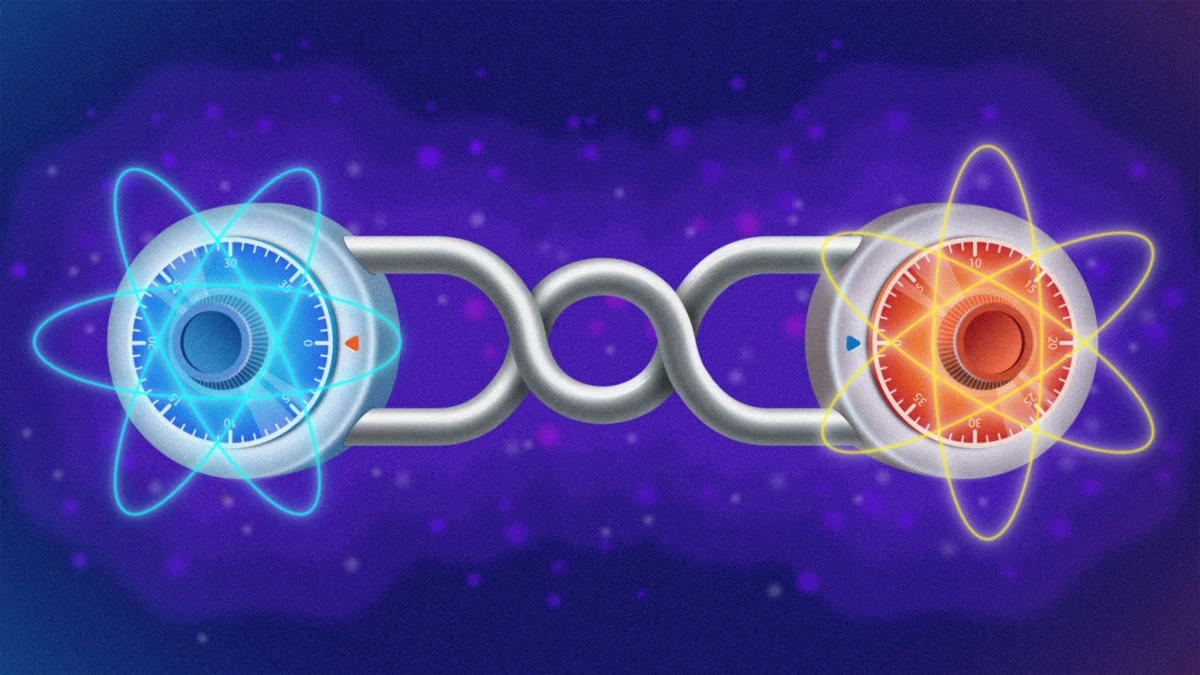
The rapid evolution of quantum computing technology has placed the global community at a critical crossroads regarding digital security. For several decades, the mathematical foundations of modern encryption—specifically RSA and Elliptic Curve Cryptography—have been recognized as vulnerable to the immense processing power of future quantum systems. In response, a dual-track effort has emerged: the development of post-quantum cryptography (PQC) based on hard mathematical problems, and the advancement of quantum key distribution (QKD), which leverages the laws of physics themselves to secure data. However, a new theoretical challenge known as "quantum jamming" is forcing researchers to look beyond the current understanding of quantum mechanics. This inquiry explores whether the security of our future communications rests on quantum theory as we know it, or if it must be anchored in even more fundamental laws of nature that would survive a paradigm shift in physics.
The Vulnerability of Modern Digital Infrastructure
The urgency of this research stems from a well-documented threat: Shor’s algorithm. Formulated in 1994 by mathematician Peter Shor, this algorithm demonstrates that a sufficiently powerful quantum computer could factor large integers exponentially faster than any classical supercomputer. Since the security of the modern internet—including banking, state secrets, and private communications—relies on the difficulty of such factoring, the arrival of a "cryptographically relevant quantum computer" (CRQC) would render current protections obsolete.
National security agencies and private enterprises have adopted a "store now, decrypt later" strategy, where adversaries collect encrypted data today in the hopes of unlocking it once quantum hardware matures. This has led to the NIST (National Institute of Standards and Technology) process of standardizing quantum-resistant algorithms. Yet, even these mathematical defenses are essentially "classical" in nature. They are based on the assumption that certain problems remain difficult for quantum computers. To achieve "provable" security, many theorists have turned to quantum mechanics, specifically the principle of entanglement.
Entanglement and the Monogamy Principle
Quantum Key Distribution (QKD) offers a method of sharing cryptographic keys where the security is guaranteed by the laws of physics rather than mathematical complexity. The most robust forms of QKD utilize quantum entanglement, a phenomenon where two particles become linked such that the state of one instantly correlates with the state of the other, regardless of the distance separating them.
A cornerstone of this security is the "monogamy of entanglement." In quantum mechanics, if two particles, A and B, are maximally entangled, it is mathematically impossible for either to be entangled with a third particle, C. This ensures that if a sender (Alice) and a receiver (Bob) share a perfectly entangled pair of particles to generate a key, any attempt by an eavesdropper (Eve) to intercept or measure the particles will inevitably break the entanglement. This disruption acts as a "tripwire," alerting Alice and Bob that their communication channel is compromised.
The Concept of Quantum Jamming
Despite the apparent perfection of quantum security, researchers like Ravishankar Ramanathan of the University of Hong Kong and Michał Eckstein of the Jagiellonian University are investigating a subtle loophole: quantum jamming. Quantum jamming refers to a scenario where an adversary can manipulate the correlations between particles without being detected by standard quantum protocols.
This threat becomes particularly relevant in a "post-quantum" world. History has shown that scientific theories are often superseded; just as Newtonian mechanics was revealed to be a low-energy approximation of general relativity and quantum mechanics, it is possible that quantum mechanics itself is an approximation of a more profound theory. If this future theory allows for correlations that are not "monogamous" in the way quantum mechanics predicts, an adversary could potentially "jam" the communication.
In this context, jamming is not merely the introduction of noise, but a sophisticated form of sabotage. If Alice and Bob do not have absolute control over the internal workings of their devices—a common concern in "device-independent" cryptography—an outsider could exploit unknown physical laws to influence the outcome of measurements. This would allow an eavesdropper to gain information about the key while maintaining the appearance of a secure, entangled connection.
The Evolution of Quantum Theory: A Chronology of Discovery
The quest to understand these limits is the latest chapter in a century-long effort to define the boundaries of reality:
- 1900–1927: The foundation of quantum mechanics is laid by Planck, Einstein, Bohr, and Heisenberg, introducing the concept of the wave function and superposition.
- 1935: Albert Einstein, Boris Podolsky, and Nathan Rosen publish the EPR paper, arguing that quantum mechanics is "incomplete" due to the "spooky action at a distance" (entanglement).
- 1964: John Bell formulates Bell’s Theorem, providing a mathematical way to test whether the universe follows local realism or the non-local predictions of quantum mechanics.
- 1984: Charles Bennett and Gilles Brassard propose BB84, the first protocol for quantum cryptography.
- 1991: Artur Ekert proposes E91, a QKD protocol based on Bell’s Theorem and entanglement.
- 1994: Peter Shor reveals that quantum computers can break RSA encryption, sparking the modern race for quantum-secure communications.
- 2015: The first "loophole-free" Bell tests are conducted, confirming that the correlations predicted by quantum mechanics cannot be explained by classical "hidden variables."
- 2020s: Theorists begin exploring Generalized Probabilistic Theories (GPTs) to identify what laws must exist if quantum mechanics is eventually replaced.
The Magician’s Analogy: Jim the Jammer
To illustrate the mechanics of jamming, Michał Eckstein uses the story of Alice, Bob, and a magician named Jim. In a typical quantum setup, Jim (representing the source of particles) provides Alice and Bob with two balls. In the quantum world, these balls are entangled: if Alice observes her ball is white, Bob’s must be black, and vice versa.
In a "jamming" scenario, Jim the Jammer might have access to a more fundamental set of rules than Alice and Bob. While Alice and Bob use quantum tests to verify their entanglement, Jim could be using "post-quantum" correlations to link the balls. If Alice and Bob’s theory of the world (quantum mechanics) is limited, they might conclude their balls are perfectly entangled and secure, while Jim actually retains a "backdoor" influence over the results.
"In terms of these cryptographic protocols, it’s good to be paranoid," Ramanathan notes. This paranoia is the driving force behind the search for "device-independent" security, which aims to prove security based on the observed outputs of a device, regardless of whether the device’s internal physics are quantum or something more exotic.
Searching for Universal Principles
The scientific community is now digging deeper than quantum mechanics, looking for principles of "causality" that must hold true in any physical theory. One such principle is "no-signaling," which dictates that information cannot travel faster than the speed of light. Another is "local tomography," the idea that one can understand a complex system by observing its individual parts.
By building cryptographic protocols on these "ultra-fundamental" principles, scientists hope to create security that is "future-proof." If a protocol is secure based solely on the fact that cause must precede effect, it would remain secure even if a new theory of "quantum gravity" replaces standard quantum mechanics next century.
Research into jamming also helps physicists identify the "boundaries" of quantum mechanics. By determining exactly what conditions allow jamming to occur, they can work backward to see which specific axioms of quantum theory prevent it. This helps clarify why our universe appears to be quantum rather than following some other mathematically possible, but physically absent, set of rules.
Global Implications and Expert Perspectives
The implications of this research extend far beyond theoretical physics. As governments and corporations invest billions in quantum infrastructure, the "durability" of these investments is a primary concern.
"Let’s suppose that at some future date people realize that quantum mechanics is not the ultimate theory of nature," Ramanathan suggests. If that happens, the multi-billion dollar QKD networks currently being built across Europe, China, and the United States could have hidden vulnerabilities.
However, many in the field remain optimistic. The fact that jamming is so difficult to theorize without violating basic causality suggests that quantum mechanics—or whatever theory succeeds it—is remarkably robust. The search for jamming is, in many ways, a search for the "cracks" in the universe. If no cracks are found, it reinforces the belief that quantum-based security is the ultimate form of protection.
Conclusion: The Future of Trust in a Post-Quantum World
The study of quantum jamming represents the pinnacle of "defensive" science. It is an attempt to anticipate a scientific revolution before it happens. By questioning the finality of quantum mechanics, cryptographers are ensuring that the digital foundations of the future are not built on shifting sands.
As the world transitions toward quantum-capable technologies, the focus will likely shift from simply "being quantum" to being "principled." Security will be defined not just by the particles we use, but by our understanding of causality, information flow, and the absolute limits of what any observer, in any version of physics, can possibly know. Whether or not "Jim the Jammer" can ever exist in reality remains an open question, but the effort to thwart him is already making our understanding of the universe—and our digital secrets—more secure.
