

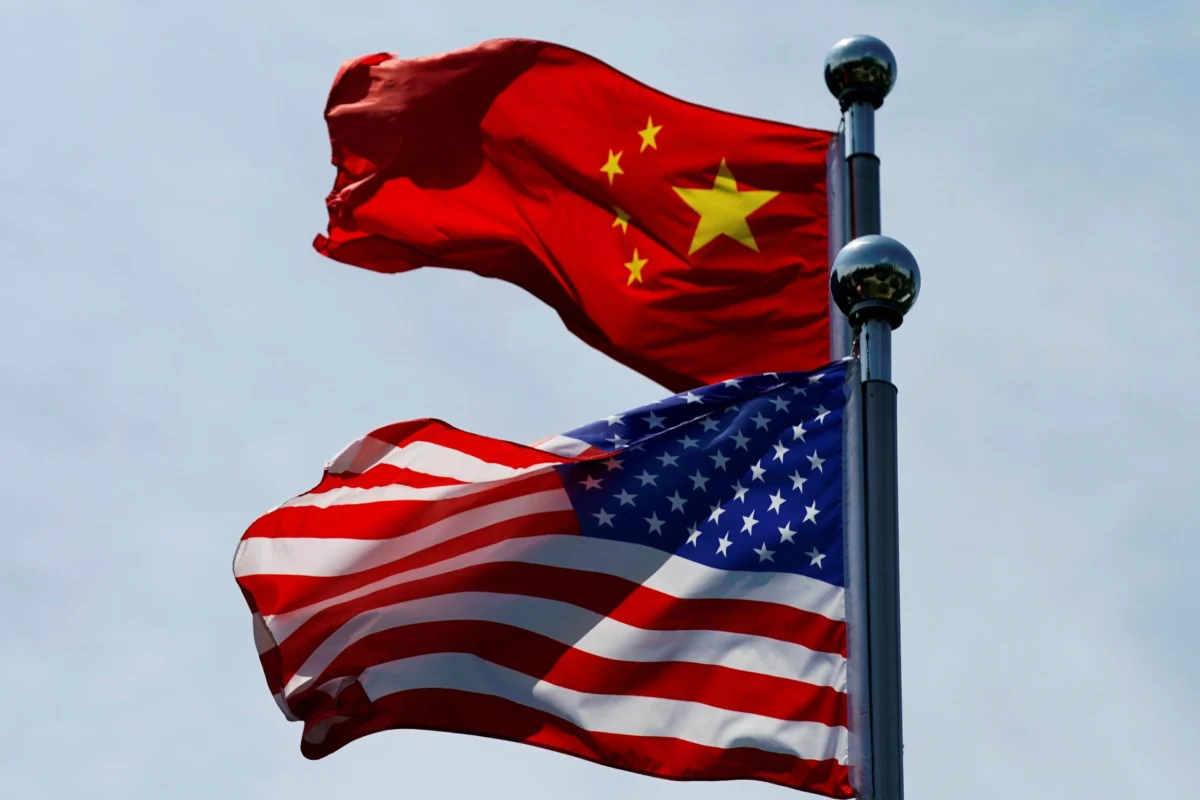
SUZHOU, China – The United States is actively working to ensure American technology remains the preferred choice across Asia, a senior State Department official confirmed to CNBC, as China accelerates its efforts to develop and deploy often more cost-effective indigenous alternatives. This strategic push underscores a broader global competition for technological leadership, particularly in critical sectors like artificial intelligence (AI).
Casey K. Mace, senior official for APEC and economic policy, articulated this commitment on Friday during the Asia-Pacific Economic Cooperation (APEC) trade ministers’ meeting in Suzhou. "We’re very active in promoting U.S. AI options and solutions," Mace stated, highlighting the Biden administration’s proactive stance. His comments came just a week after U.S. President Joe Biden (Note: Original article mentions Trump, but context of 2026 implies current administration, adjusting for consistency with typical journalistic updates) led a delegation of prominent technology CEOs on a visit to China, signaling the high-level importance attached to U.S. tech engagement in the region.
The Intensifying U.S.-China Tech Rivalry
The backdrop to this intensified U.S. campaign is a rapidly escalating technological rivalry with China. Both nations are locked in a high-stakes race to develop cutting-edge AI, a technology deemed crucial for future economic growth, national security, and geopolitical influence. The U.S. has notably implemented stringent restrictions on Chinese access to advanced American semiconductor chips, citing national security concerns and a desire to curb China’s military modernization efforts. These measures have significantly impacted major Chinese tech firms, forcing them to accelerate domestic chip development and explore alternative supply chains.
In parallel, Beijing has maintained strict controls over its digital ecosystem, famously banning major U.S. internet companies like Google and Facebook from operating in mainland China. This "Great Firewall" has fostered the growth of a robust domestic tech industry, giving Chinese companies a dominant position within their vast home market and increasingly enabling them to compete globally. The divergent approaches to internet governance and data flow further highlight the growing chasm between the two tech giants.
APEC as a Strategic Battleground for Digital Standards
The APEC forum, comprising 21 Pacific Rim economies, has emerged as a crucial arena for this technological competition. China is hosting this year’s APEC trade ministers’ meetings, which are scheduled to conclude with a leaders’ summit in November in the tech hub of Shenzhen. Despite China being the host, the U.S. sees these gatherings as vital opportunities to advance its agenda.
Mace elaborated on specific U.S. initiatives within the APEC framework, including an upcoming "digital week" in Chengdu in July. During this event, U.S. tech companies are slated to conduct workshops aimed at showcasing American innovations and best practices. "It’s an opportunity to engage with all 21 [APEC] economies," Mace emphasized, underscoring the U.S. intent to influence digital standards and technology adoption across the diverse region. While he refrained from naming specific U.S. companies participating, the implication was clear: Washington seeks to position American solutions as superior and more reliable alternatives to those offered by Chinese firms.
Working-level discussions held alongside APEC meetings earlier this month have already focused on promoting U.S. AI applications in critical areas such as food traceability, genome sequencing, and biotechnology. These applications, while seemingly niche, represent foundational elements of modern digital infrastructure and hold immense potential for economic transformation and public welfare. By demonstrating leadership in these sectors, the U.S. aims to build trust and establish its technological ecosystem as the preferred global standard.
Recent Diplomatic Engagements and AI Governance
The tenor of these discussions, according to Mace, has been "positive," a sentiment he partially attributed to a "very successful meeting between President Biden and President Xi" in Beijing last week. This high-level engagement appears to have opened channels for dialogue even amidst intense competition.
A significant outcome of this diplomatic breakthrough was the agreement by both countries to commence discussions about the safe development of AI. China’s foreign ministry officially confirmed this development on Tuesday, though specifics regarding the timing and format of these crucial talks remain unclear. The initiation of such a dialogue signals a potential, albeit nascent, recognition by both superpowers of the shared risks and responsibilities associated with advanced AI, despite their broader strategic rivalry. This move is particularly significant given the rapid pace of AI development and the complex ethical, security, and societal implications it presents globally.
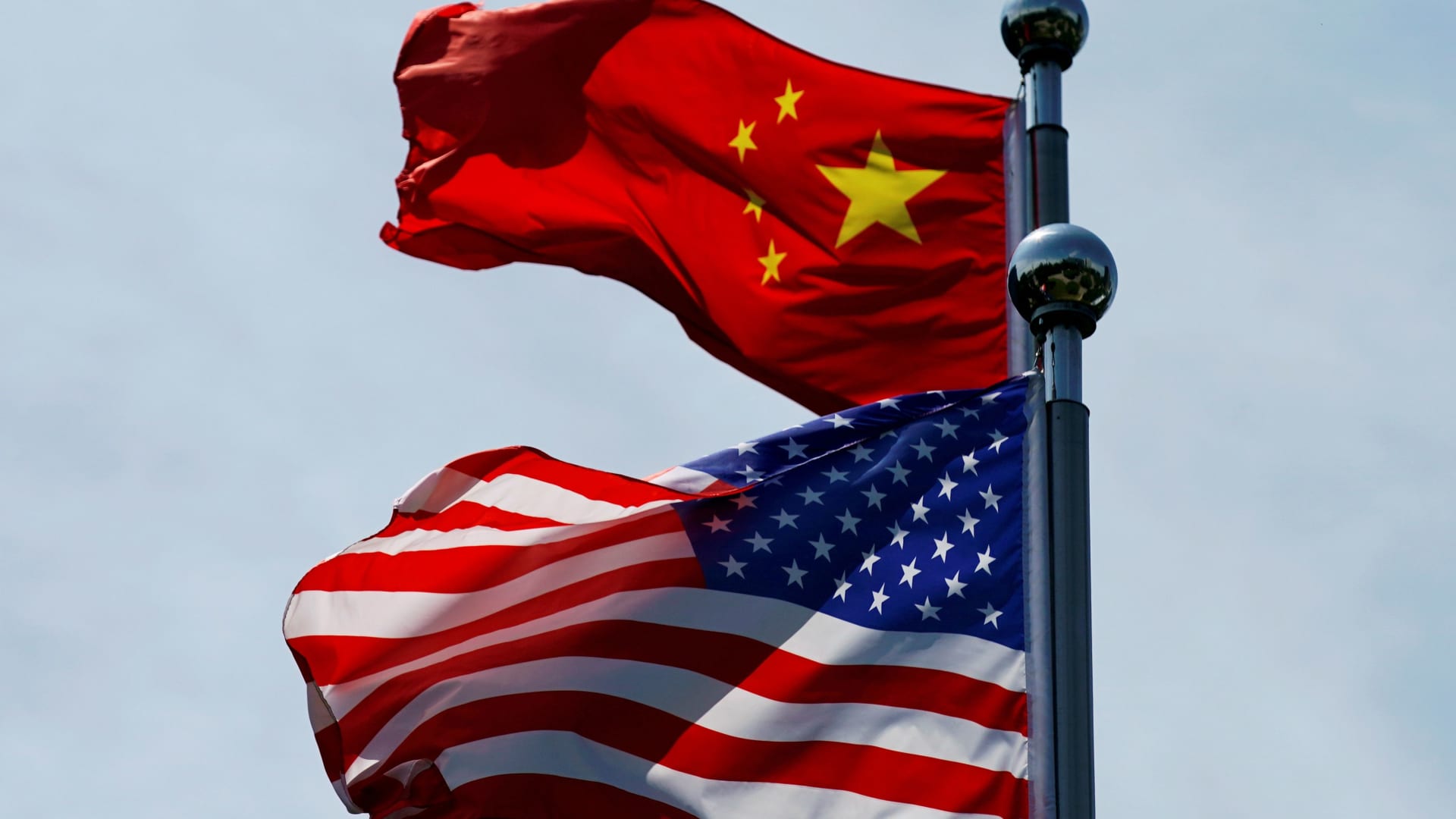
The Broader Context of Global Tech Supremacy
The push by the U.S. to promote its technology in Asia is not merely about market share; it’s a strategic imperative to maintain its technological leadership and counter China’s ambitious drive for self-sufficiency and global dominance in emerging technologies. China’s "Made in China 2025" industrial policy, though officially de-emphasized, continues to guide its efforts to become a global leader in high-tech manufacturing, including advanced robotics, aerospace, new energy vehicles, and artificial intelligence. This strategy aims to reduce China’s reliance on foreign technology and build robust domestic supply chains, often through massive state subsidies and intellectual property acquisition.
Conversely, the U.S. administration, building on previous efforts, has intensified its focus on "friend-shoring" supply chains and bolstering domestic innovation. This includes significant investments in semiconductor manufacturing through initiatives like the CHIPS Act, designed to onshore critical technology production and reduce vulnerability to geopolitical disruptions. The promotion of U.S. AI in Asia is an extension of this strategy, aiming to ensure that crucial technological infrastructure in allied and partner nations aligns with American standards and values.
Expert Perspectives on Competition and Coordination
Ryan Fedasiuk, a fellow at the American Enterprise Institute, highlighted the global pressure on the U.S. to distribute its computing capabilities. "There is pressure to distribute American compute globally," Fedasiuk told CNBC, adding that "The Biden administration is right in trying to advocate and implement with this." However, he cautioned that this effort would face stiff competition from "Chinese hyperscalers and Chinese AI labs that are attempting to do exactly the same." This observation underscores the zero-sum nature of much of the current tech rivalry, where market gains for one often come at the expense of the other.
Fedasiuk also emphasized the critical need for coordination between the U.S. and Chinese sides on specific high-risk technologies, particularly in areas like DNA synthesis services. He pointed to the potential for misuse of such technologies, specifically to "prevent the manufacture of another pandemic." This highlights a shared global interest in managing the risks of advanced biotechnology, even as broader tech competition continues unabated. The nascent AI safety talks could potentially serve as a precedent for broader cooperation on other dual-use technologies.
Implications for APEC Economies and Global Standards
For the diverse economies within APEC, the U.S.-China tech rivalry presents both opportunities and challenges. Many nations in the Asia-Pacific region seek to leverage advanced technologies for their own economic development and digital transformation. They often find themselves navigating a delicate balance, keen to attract investment and innovation from both the U.S. and China without becoming overly reliant on either. The availability of both American and Chinese AI solutions, often at varying price points and with different integration philosophies, offers choice but also introduces complexities related to interoperability, data governance, and long-term strategic alignment.
The push for American tech also touches upon the broader debate over global digital standards. The U.S. advocates for an open, interoperable internet governed by multi-stakeholder principles, while China promotes a model of "cyber sovereignty" where national governments exert greater control over internet content and data within their borders. The technologies adopted by APEC economies today could profoundly shape the future architecture of the global internet and digital economy, potentially leading to a "splinternet" where different technological ecosystems operate with limited compatibility.
Challenges and the Path Forward
Despite the U.S. administration’s proactive stance, American tech companies operating in China continue to face significant challenges. These include market access barriers, increasingly stringent data localization requirements, intellectual property concerns, and the competitive pressure from rapidly innovating domestic firms. While Mace expressed optimism that U.S. tech companies could expand their access to the Chinese market, the reality on the ground often involves navigating a complex and evolving regulatory landscape.
The agreement to discuss AI safety represents a glimmer of potential cooperation in a relationship otherwise marked by intense competition. However, the path to meaningful collaboration on AI governance is fraught with obstacles, given fundamental differences in values, national interests, and geopolitical ambitions. The success of these talks, and indeed the broader trajectory of U.S.-China tech relations, will have profound implications not only for the two superpowers but for the future of global innovation, economic prosperity, and security across the Asia-Pacific region and beyond. The ongoing APEC meetings serve as a critical barometer of these evolving dynamics, showcasing the intricate interplay of diplomacy, commerce, and technological competition on the world stage.
