

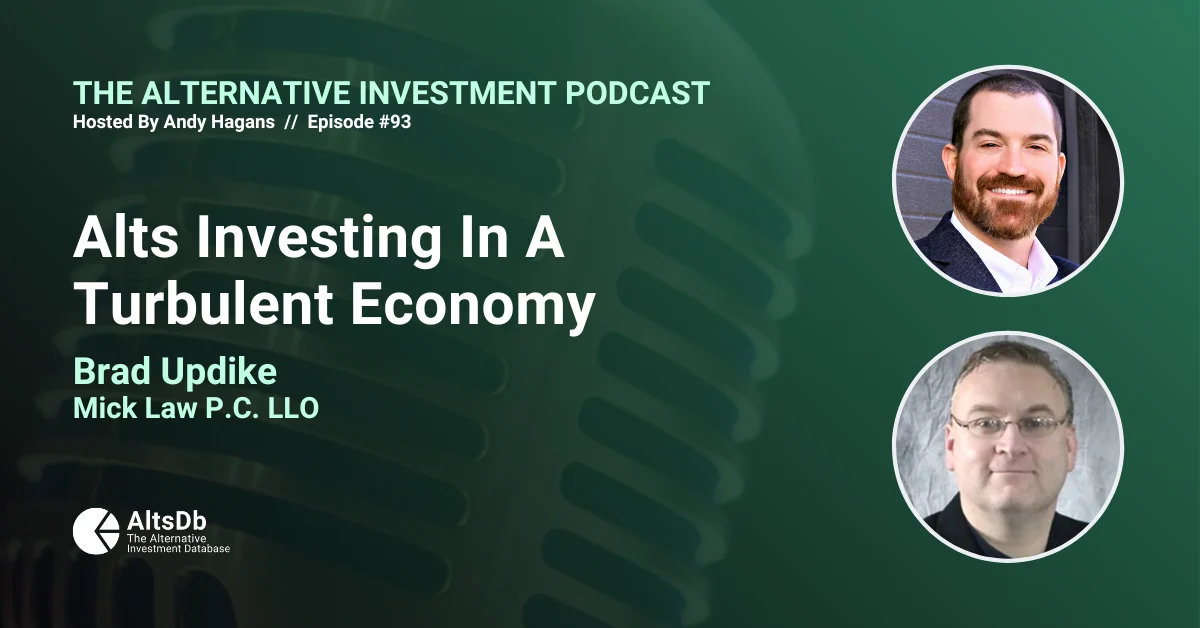
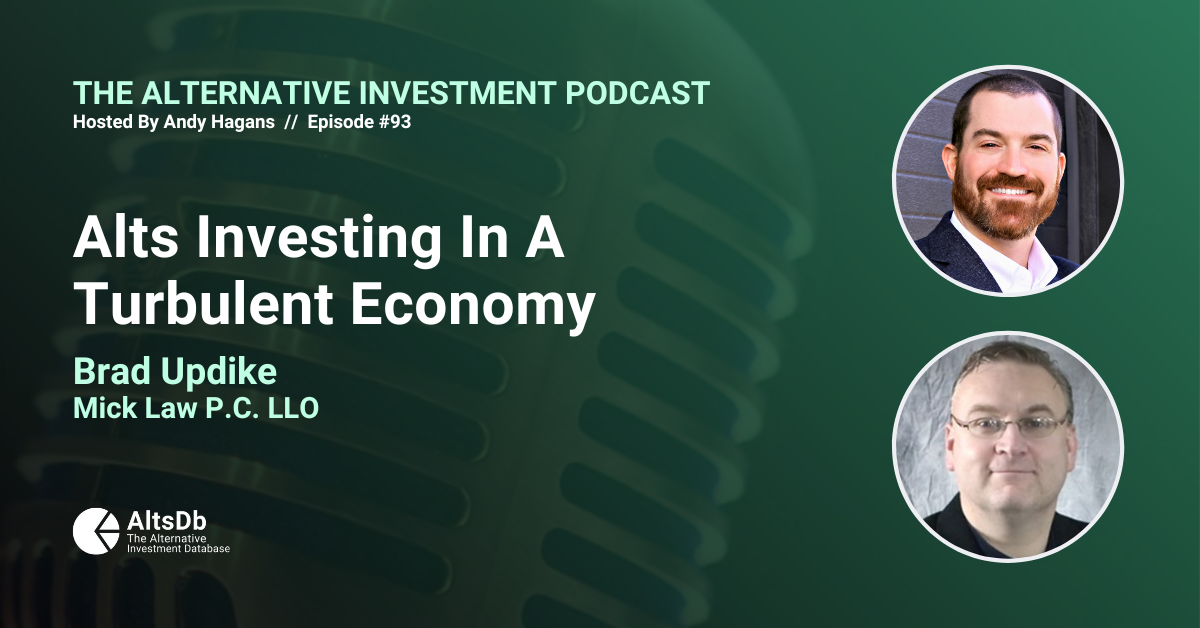
The realm of alternative investments, encompassing private equity, venture capital, real estate, and more, has become an increasingly vital component of diversified investment portfolios. However, for financial advisors tasked with allocating client funds into these less traditional assets, the current economic climate presents a complex and challenging environment. The rapid evolution of the alternative investment landscape, coupled with significant macroeconomic volatility, has amplified the importance of rigorous due diligence. To shed light on these critical issues, Brad Updike, an attorney at Mick Law P.C. LLO, joined "The Alternative Investment Podcast" to discuss the intricacies of due diligence and navigating alts investing amidst economic turbulence.
The Dual Worlds of Securities and the Imperative for Due Diligence
Brad Updike, based in Omaha, Nebraska, with a team of nine lawyers, leads a firm that provides essential underwriting and due diligence support to a broad network of approximately 300 broker-dealers, investment advisors, and family offices. Their expertise lies in supporting entities that raise capital within the non-traded alternative investment sector, including debt and equity offerings.
Updike began by delineating the two distinct worlds of securities products: the public markets and the non-traded alternative sector. Publicly traded companies, with their highly capitalized debt and equity accessible on major exchanges like the New York Stock Exchange, benefit from a robust regulatory framework and a high degree of market transparency. In contrast, the alternative investment space, where Mick Law primarily operates, includes products like 1031 exchanges structured as DSTs (Delaware Statutory Trusts), real estate LLCs and LPs, Qualified Opportunity Funds, oil and gas programs, and various registered non-traded products such as REITs (Real Estate Investment Trusts) and BDCs (Business Development Companies).
The sheer volume of activity in the alternative space, while smaller than the public markets, is far from insignificant. Annually, there are approximately 20,000 Form D filings made by companies seeking capital, with aggregate amounts often reaching around $1 trillion. While not all sought capital is ultimately raised, this figure underscores the substantial flow of funds into private placements and other non-traded securities. Updike noted that roughly 15% to 20% of these filings involve FINRA-registered firms, indicating that a considerable portion of these offerings are ultimately distributed through broker-dealers and investment advisors.
Growth and Resilience in Key Alternative Sectors
Despite broader economic headwinds, certain alternative investment sectors have demonstrated remarkable growth and resilience. Updike highlighted that in the DST sector alone, $9.2 billion was raised from 40 different sponsors in the previous year, representing a 30% year-over-year increase compared to 2021. The oil and gas sector also experienced substantial growth, with approximately $1.1 billion raised by a dozen companies covered by Mick Law, a 100% increase from 2021 levels.
Furthermore, Qualified Opportunity Funds, despite the phasing out of certain tax benefits, continue to hold appeal due to their remaining tax advantages, including capital gains deferral through 2026 and a potential fair market value basis step-up after ten years. This demonstrates that even in a shifting regulatory environment, the underlying investment thesis for certain alternative structures can remain compelling.
The Legal Framework for Due Diligence
The emphasis on professional due diligence in the alternative space stems from fundamental legal and regulatory requirements. For broker-dealers, FINRA Rule 2111 mandates that they perform sufficient due diligence and research to ensure an investment is suitable for at least one type of investor. This is further reinforced by Regulation Best Interest (Reg BI), which requires FINRA member firms to understand and mitigate conflicts of interest, thoroughly analyze fees, risks, and costs associated with securities, and engage in comparative analysis of different investment opportunities.
While Registered Investment Advisors (RIAs) are not directly subject to FINRA rules, they operate under a fiduciary duty to act in their clients’ best interests. Updike argued that this fiduciary standard effectively necessitates a level of due diligence comparable to that of broker-dealers. The core principle remains consistent: advisors must possess a deep understanding of the investments they recommend to ensure they align with client needs and risk tolerances.
Differentiating Public and Private Placement Due Diligence
The due diligence process for publicly traded securities differs significantly from that of private placements. Public companies are subject to periodic SEC filings (quarterly and annual reports), and their securities are typically underwritten by investment banking firms that conduct extensive research, risk assessment, and valuation. This established infrastructure provides a degree of oversight and transparency.
In the private placement arena, the absence of such periodic filings and traditional underwriters places a greater onus on the broker-dealer and investment advisor to conduct thorough due diligence. This is where firms like Mick Law play a crucial role, effectively performing an underwriting function to help advisors assess the viability and appropriateness of these offerings for their clients.
Sponsor vs. Offering Due Diligence: A Two-Pronged Approach
A critical aspect of alternative investment due diligence involves evaluating both the sponsor (the entity managing the investment) and the offering itself (the specific investment product). Updike stressed that both are of paramount importance and require distinct yet complementary analytical processes.
Sponsor-level analysis focuses on the operational and financial capability of the management team to guide a program to a successful conclusion. This involves investigating their track record, management structure, financial stability, and overall operational integrity. Program-level analysis, on the other hand, scrutinizes the offering’s terms, asset quality, risk disclosures, and fairness to investors relative to the potential returns.
Even highly capitalized and experienced sponsors can face challenges, as demonstrated by the economic cycles and unforeseen events like the COVID-19 pandemic, which significantly impacted various real estate sectors. Therefore, a reliance on a sponsor’s established reputation alone is insufficient. Advisors must continually assess both the sponsor’s ongoing capabilities and the specific merits of each individual offering.
The Lifecycle of Sponsor Due Diligence
The shelf life of a sponsor-level review typically spans two to four years. However, this timeframe is not absolute. Mick Law, for instance, will re-examine financial statements and performance data within product reviews. Significant changes in a sponsor’s operations, financial health, or future prospects may necessitate more frequent sponsor-level due diligence, potentially every 12 to 18 months, depending on the specific circumstances. This dynamic approach ensures that the assessment remains current and relevant.
A Universal Framework for Due Diligence
Despite variations across sectors, a core framework underpins Mick Law’s due diligence process. This framework encompasses:
- Risk of Execution Failure: Assessing the likelihood of the sponsor failing to execute the investment strategy effectively.
- Reward Potential: Evaluating the projected returns under realistic and conservative assumptions.
- Quality of the Asset: Analyzing the underlying assets (e.g., real estate, oil reserves) and their potential to generate returns.
- Fairness of Offering Terms: Determining if the investment terms adequately reflect the risks undertaken by investors.
- Material Risk Disclosure: Verifying that all significant risks are clearly and accurately disclosed in offering documents, such as the Private Placement Memorandum (PPM) and prospectus.
- Investor Treatment: Ensuring investors have fair access to financial information and appropriate voting rights.
The Alignment of Interest Test
A key analytical tool employed by Mick Law is the "Alignment of Interest Test," developed by firm founder Brian Mick. This straightforward yet powerful test assesses three core questions: Who is putting money into the deal? Who is taking money out? Is the sponsor’s compensation performance-based? By analyzing these elements, one can gain a clear understanding of whether the interests of investors are aligned with those of the sponsor and the issuer.
Financial and Investment Analysis Beyond Legal Review
Due diligence in alternative investments extends beyond purely legal considerations. It requires a robust financial and investment analysis. Mick Law utilizes independent appraisers and reservoir engineers to assess asset quality and return potential. While sponsor-provided pro forma statements serve as a foundational piece of information, they are not solely relied upon. Mick Law develops its own independent underwriting and pro forma analyses, considering revenues, anticipated costs, sponsor compensation, and loads, to arrive at a more objective assessment.
The deviation between a sponsor’s pro forma and Mick Law’s independent analysis can vary. For experienced sponsors with a deep understanding of their operational focus, the difference might be as low as 5% to 10%. However, in cases where sponsors may be "cherry-picking" best-case outcomes or where the underlying assets are less robust, the divergence can be significantly larger, potentially revealing a material difference in projected returns.
Sector-Specific Due Diligence Nuances
While the general framework remains consistent, sector-specific expertise is crucial. In oil and gas investments, Mick Law engages reservoir engineers and geologists to analyze field characteristics, operating conditions, and probable production outcomes. For real estate, they rely on accredited appraisers and individuals with designations like CCIM (Certified Commercial Investment Member) to evaluate market conditions and asset quality.
The time required for due diligence can also vary. While DST and 1031 products might be underwritten within five to seven days due to their relatively standardized nature and the availability of data, oil and gas deals can take longer, often four to five weeks, due to the complexity of geological assessments and the need for specialized engineering reports.
Navigating Headwinds in the Current Economic Climate
The current economic landscape presents several significant headwinds that impact alternative investments and the due diligence process:
- Increased Borrowing Costs: Prime lending rates have risen dramatically, from around 3.25% a couple of years ago to approximately 7.5% today. This 450-basis-point increase in the cost of capital directly affects leveraged investments.
- Persistent Inflation: With inflation rates hovering around 6.5%, the ability of investments to generate Net Operating Income (NOI) and support distributions becomes more challenging.
- Shrinking Yields: As a consequence of rising costs and inflation, the cash-on-cash returns for certain products, such as DSTs, have compressed. For example, average year-one cash-on-cash returns across all 1031 products were around 3.99% in Q4 2022, a noticeable decrease from the 5% to 6.5% observed in prior years.
When assessing these shrinking yields, advisors must consider both the absolute performance and the relative performance within the peer group, as mandated by regulations like Reg BI. The due diligence must ensure that the marketed yield is achievable and that the investment has the potential to return capital within its intended timeframe.
Rewarding Aspects of Due Diligence
Despite the demanding nature of due diligence, certain aspects of the work can be particularly rewarding. Brad Updike highlighted the value of site visits, which offer an invaluable on-the-ground perspective of a company’s operations, staff morale, and management alignment with its mission. Furthermore, conducting interviews with bankers, contract vendors, and suppliers can yield critical, often unvarnished, insights into a sponsor’s reputation and operational stability. These conversations, while sometimes uncomfortable for the sponsor, are essential for a comprehensive understanding.
Common Pitfalls and Best Practices for Advisors
Advisors can learn from historical mistakes made in the due diligence of alternative investments. Key errors include:
- Paying Yield on Non-Yielding Businesses: Recommending investments based solely on attractive stated yields without a sound business plan or underlying asset capacity to support those distributions.
- Over-reliance on Outsourced Services (Energy Sector): In oil and gas, vertically integrated sponsors that directly supervise field operations tend to outperform those that heavily rely on external geological and drilling services.
- Misunderstanding Prior Performance: Failing to ascertain if a sponsor’s prior successful outcomes are relevant to current strategies, fields, or asset classes.
- Lack of Transparency and Accountability: Investors being denied access to audits, quarterly financials, appraisals, or reserve reports that detail asset quality and upside potential.
- Ignoring Voting Rights: Overlooking the importance of investor voting rights in governance and decision-making processes.
Conversely, successful advisors and RIAs often exhibit common threads and best practices:
- Ongoing Due Diligence: Conducting regular and ongoing due diligence, particularly updating sponsor-level assessments.
- Product Knowledge and Education: Thoroughly understanding the investment products being offered and their differences from competing alternatives. Mick Law’s due diligence reports serve as a valuable resource for this product education.
- Client Suitability: Prioritizing a deep understanding of their clients and ensuring that investments are genuinely appropriate for their individual circumstances.
- Leveraging Expert Resources: Partnering with specialized firms like Mick Law to supplement their internal knowledge and capacity for rigorous due diligence.
The Evolving Alternative Investment Landscape
The alternative investment industry has matured significantly, moving beyond niche markets to become a substantial force in wealth management. The increasing complexity and volume of these investments necessitate a sophisticated approach to due diligence. Firms like Mick Law P.C. LLO are at the forefront, providing the essential expertise and analytical rigor that financial advisors need to navigate this dynamic environment responsibly.
For advisors seeking to deepen their understanding of alternative investment due diligence and strategies, attending industry conferences such as those organized by ADISA (Alternative & Direct Investment Securities Association) and TNDTA (The Non-Traded Direct Investment Association), as well as specialized conferences hosted by third-party providers like Mick Law, is highly recommended. These events offer valuable educational content and networking opportunities. Mick Law hosts two annual conferences, one with an energy focus in May and another with a real estate focus in October, both designed to equip advisors with best practices for screening and evaluating alternative investment products.
Ultimately, the success of alternative investment allocation hinges on a commitment to thorough, ongoing due diligence, a deep understanding of the underlying assets and sponsors, and a steadfast dedication to acting in the best interests of clients.
