

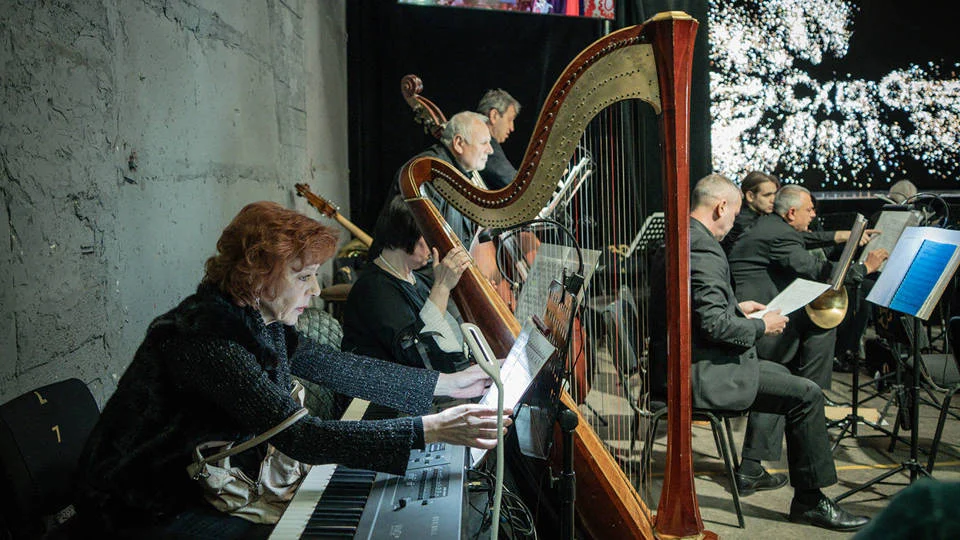
The enduring spirit of Ukraine, forged in the crucible of a four-year full-scale invasion by Russia, has transformed the nation into an unparalleled proving ground for defense innovations and a stark testament to the indispensable role of cultural identity in safeguarding national security.
By Tetyana Berezhna and David Stephenson
May 22, 2026
The traditional paradigm of national resilience has historically centered on the quantifiable metrics of military might and defense expenditure. However, a significant and evolving understanding is emerging within policy circles: culture, often perceived as a softer aspect of national life, is in fact a critical pillar of domestic security for democratic nations, particularly in the face of existential threats. Ukraine, under the relentless pressure of a protracted conflict, is providing a compelling, real-world case study demonstrating this profound linkage.
The Evolving Definition of National Security
For decades, the international discourse on national security has been dominated by discussions of military alliances, arms proliferation, economic sanctions, and the strategic deployment of armed forces. The post-World War II era saw the establishment of robust defense pacts and the development of sophisticated intelligence apparatuses, all geared towards deterring and responding to overt military aggression. This focus, while crucial, often relegated cultural factors to the periphery, viewing them as secondary to the tangible instruments of power.
However, the persistent and multifaceted nature of modern conflicts, particularly those fueled by ideological narratives and information warfare, has begun to challenge this established doctrine. The Russian Federation’s full-scale invasion of Ukraine, commencing in February 2022, represents a watershed moment in this evolving understanding. Beyond the kinetic battlefield, Ukraine has been engaged in a broader struggle for its very identity, a struggle where cultural preservation and assertion have emerged as vital components of its defense.
Ukraine as a Crucible of Innovation and Resilience
Since the escalation of hostilities, Ukraine has not only been defending its territorial integrity but has also become a dynamic laboratory for defense technologies and strategic adaptations. Innovations in drone warfare, cyber defense, intelligence gathering, and battlefield medical care are being rapidly developed and tested in real-time combat scenarios. These advancements, born out of necessity and ingenuity, have the potential to significantly bolster European resilience against future threats. For instance, the widespread and sophisticated use of commercial drones for reconnaissance, artillery spotting, and even direct attack has revolutionized asymmetrical warfare, forcing a re-evaluation of military doctrines globally. Ukraine’s experience has rapidly accelerated the integration of artificial intelligence in battlefield decision-making and the development of agile, decentralized command structures.
But the significance of Ukraine’s experience extends far beyond its military-technological contributions. The nation’s ability to withstand the onslaught is inextricably linked to its profound sense of national identity and its unwavering commitment to its cultural heritage. This cultural cohesion, far from being a mere byproduct of the conflict, has become an active force in its defense.
The Cultural Frontline: Identity as a Defense Mechanism
Russia’s invasion has been characterized not only by military aggression but also by a deliberate attempt to erase Ukrainian identity, language, and history. This has spurred a powerful counter-response, where the assertion of Ukrainian culture has become a crucial act of resistance. From the widespread display of national symbols to the unwavering use of the Ukrainian language in public life, and the active preservation of historical sites and traditions, the Ukrainian people have demonstrated that cultural identity is a potent source of collective strength.
This phenomenon is not entirely new. Throughout history, nations facing existential threats have often found solace and strength in their shared cultural heritage. However, Ukraine’s experience is particularly salient in the 21st century, highlighting how cultural resilience can be a critical determinant of a nation’s ability to endure and ultimately prevail against an aggressor seeking to subjugate its very existence.
Data Insights:
- Linguistic Resilience: Pre-invasion surveys indicated a significant and growing proportion of the Ukrainian population using Ukrainian as their primary language. Post-invasion data, while still emerging, strongly suggests an acceleration of this trend, with many former Russian-speakers actively adopting Ukrainian as a symbol of national unity and defiance. Organizations like the Ukrainian Language Society have reported unprecedented interest in language courses and resources.
- Cultural Heritage Preservation Efforts: UNESCO has documented a substantial increase in efforts to protect Ukraine’s cultural heritage sites. While tragically, numerous sites have suffered damage or destruction, the dedication to their preservation and restoration, even amidst active conflict, underscores the deep-seated importance placed on cultural continuity. Reports indicate that thousands of volunteers and international organizations are actively involved in documenting, safeguarding, and initiating repair work on at-risk heritage.
- Artistic and Creative Output: A surge in Ukrainian artistic, literary, and musical production directly addressing the conflict and national identity has been observed. Online platforms and cultural festivals have become crucial avenues for expressing this creative resilience, reaching both domestic and international audiences and fostering solidarity.
Chronology of Evolving Perceptions
The initial phase of the full-scale invasion, beginning in February 2022, was characterized by a global focus on the military response and humanitarian crisis. Diplomatic efforts were primarily geared towards condemning the aggression and providing military aid.
- Early 2022: The world watches as Ukraine mounts a fierce defense, exceeding initial expectations. The rapid mobilization of the Ukrainian population and their fierce resistance are noted, but the cultural dimension of this resilience is often discussed in terms of patriotic fervor rather than a strategic security component.
- Late 2022 – Early 2023: As the conflict grinds on and Russia adapts its tactics, including information warfare, the importance of Ukraine’s cultural identity begins to gain more traction in international analysis. The resilience of Ukrainian society, beyond its military capacity, becomes a subject of increasing academic and policy discussion.
- Mid-2023 – Early 2024: Major international conferences and think tanks begin to incorporate cultural resilience into discussions on national security strategy. Ukraine’s experience is frequently cited as a prime example of how cultural cohesion can bolster a nation’s ability to withstand prolonged pressure and maintain popular support for a protracted defense.
- 2025 – Present: The concept of "cultural security" is becoming increasingly integrated into defense planning and international aid frameworks, particularly for nations facing hybrid threats. Ukraine’s ongoing struggle serves as a constant reminder of this evolving security landscape.
Official Responses and International Recognition
Initially, many international bodies and governments focused on providing humanitarian and military assistance to Ukraine, a crucial and necessary response. However, as the nature of the conflict revealed its multifaceted dimensions, there has been a gradual but significant shift towards recognizing the importance of cultural resilience.
- European Union: The EU has increasingly emphasized the importance of supporting Ukraine’s cultural sector as part of its broader strategy to bolster Ukrainian resilience and counter Russian disinformation. This includes funding for cultural preservation, support for Ukrainian artists and cultural institutions, and initiatives to promote Ukrainian culture internationally. Statements from EU officials have acknowledged that cultural identity is a vital element in a nation’s ability to resist external pressures and maintain its sovereignty.
- NATO: While NATO’s primary focus remains on collective defense, discussions within the alliance have begun to acknowledge the broader spectrum of security challenges, including those posed by cultural erosion and disinformation campaigns. Experts within NATO-affiliated research institutes have published analyses highlighting the strategic implications of cultural cohesion for member states and partners.
- United Nations: Through bodies like UNESCO, the UN has been actively involved in documenting and attempting to protect Ukraine’s rich cultural heritage. The repeated condemnations of attacks on cultural sites by UN officials underscore the international community’s growing awareness of culture’s role in national identity and security.
Broader Implications and Future Outlook
The lessons learned from Ukraine’s experience have profound implications for the future of national security. It suggests that for democratic nations facing sophisticated hybrid threats, a robust national identity, underpinned by a strong cultural fabric, is as vital as a well-equipped military.
The strategic implications are far-reaching:
- Rethinking Defense Strategies: Future defense planning must integrate cultural preservation and promotion as integral components of national security. This involves investing in cultural education, supporting artistic expression, and actively countering disinformation that seeks to undermine national identity.
- Strengthening Democratic Societies: For democracies, cultural resilience acts as a bulwark against authoritarianism and external manipulation. A shared sense of identity and purpose can foster greater social cohesion, making societies less susceptible to divisive tactics.
- International Cooperation: The international community needs to develop frameworks for supporting cultural resilience in vulnerable nations, recognizing it not just as a humanitarian concern but as a strategic imperative for global stability. This could involve joint initiatives for cultural heritage protection, media literacy programs, and exchanges that foster intercultural understanding.
Ukraine’s ongoing struggle serves as a stark and invaluable lesson. It demonstrates that while tanks and missiles can inflict physical damage, it is the intangible strength of a people’s shared identity and cultural heritage that ultimately provides the most enduring foundation for national survival and sovereignty. The world is watching, learning, and beginning to adapt to this new understanding of what truly constitutes national security in the 21st century. The defense laboratory that Ukraine has become is not just about military hardware; it is profoundly about the unbreakable spirit of a people, deeply rooted in their culture.
