

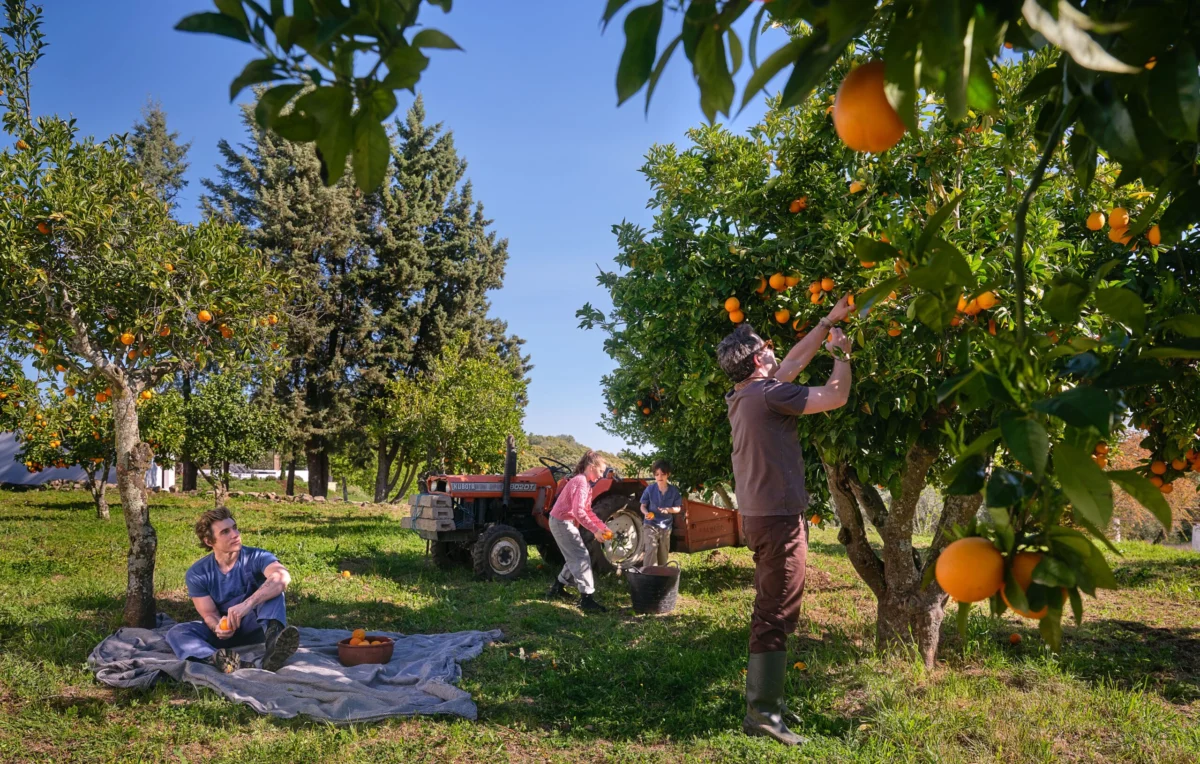
On a soft spring afternoon in the rugged Alentejo region of Portugal, the air carries the scent of citrus as temperatures climb toward the seasonal peak. For most, this balmy atmosphere would signal a time for rest, but for the Brent-Berkus family, the day is defined by the ongoing stewardship of an 18-acre estate situated on a remote stretch of land less than half an hour from the Spanish border. Jeremiah Brent, the AD100 designer and recent star of the final season of Queer Eye, operates a vintage orange Kubota tractor, transporting soil and flora for a nascent vegetable garden. Simultaneously, Nate Berkus, the internationally recognized design authority and longtime collaborator of Oprah Winfrey, works to harvest "Laranja-da-Bahia" oranges from the property’s extensive orchards.
The couple’s children, eight-year-old Oskar and 11-year-old Poppy, have integrated into the rural lifestyle with a mixture of play and responsibility. Oskar frequents a checkerboard marble pool—a creative reimagining of a former irrigation water tank—while Poppy traverses fields of French lavender equipped with a walkie-talkie. The property also serves as a multi-generational residence, with Brent’s mother, Gwen, living on-site in a meticulously restored auxiliary building. This Portuguese retreat represents a significant departure from the family’s well-documented residences in Greenwich Village and Montauk, marking a five-year journey from a set of ruins to a private sanctuary.
The Alentejo Context: A Shift Toward Rural Preservation
The Alentejo region, often referred to as the "breadbasket of Portugal," is characterized by its rolling plains, cork oak forests, and ancient olive groves. Historically an agrarian powerhouse, the area has recently seen an influx of international interest from high-profile individuals seeking "slow living" and architectural authenticity. For Berkus and Brent, the decision to establish a footprint here was not merely a real estate investment but a deeply personal endeavor rooted in Brent’s ancestral history.
Brent’s grandmother, Arline, emigrated from Portugal to California’s Central Valley. Her influence on Brent’s aesthetic and work ethic was profound. "She was fascinating, so tough but so sweet to me," Brent noted, gesturing toward a hummingbird tattoo on his arm dedicated to her memory. This familial connection spurred the desire to return to his roots, eventually leading to the relocation of his mother, a former police officer and paralegal, from Chicago to the Alentejo countryside.
The catalyst for the purchase was the couple’s friend, art dealer André Viana. After Viana moved from New York City to a secluded corner of the Alentejo, Brent observed a transformative change in his friend’s demeanor. The sense of balance and tranquility Viana achieved prompted Berkus and Brent to enlist his help in finding a suitable property. Viana eventually identified a centuries-old farm that had belonged to a prominent family of landowners, featuring a complex of ruins including a chapel, a traditional bread bakery, and a two-story farmhouse where inhabitants once lived above the livestock stables.
Chronology of a Five-Year Restoration
The acquisition of the estate was followed by a period of intense logistical and creative challenges. The property, located at the end of a two-mile entry road, presented a daunting scope of work. Initial visits were characterized by a sense of being overwhelmed, as the couple struggled to reconcile their American design sensibilities with the realities of Portuguese rural infrastructure.

2019–2020: The Assessment Phase
During the first two years, the focus remained on the land rather than the interiors. The designers faced the realization that they lacked the specific regional knowledge required to manage a farm of this scale. They pivoted from a top-down design approach to one rooted in local expertise, enlisting architect Cristina Guerra and landscape architect Joana Bizarro. This phase involved repairing antique aqueducts that snake through the fields and assessing soil conditions for the orchards.
2021–2022: Infrastructure and the Bakery Renovation
The first structural priority was the restoration of the old bakery. This building was converted into a self-contained residence for Brent’s mother and her husband. The renovation served as a testing ground for the couple’s ability to balance historical preservation with modern amenities. Simultaneously, the family began learning the nuances of local agriculture, including the tending of sheep and the maintenance of silvery ancient olive groves.
2023–2024: The Main Residence and Interior Curation
The final stages of the project focused on the primary farmhouse. The designers sought to preserve the original architectural integrity while introducing 21st-century comforts, such as climate control and modern laundry facilities. The interior design became a synthesis of the property’s existing treasures—including Robert Mallet-Stevens kitchen chairs and an antique hunting tapestry—and pieces sourced from European auctions and the couple’s own furniture collections.
Design Philosophy: Maximalism and Local Integration
While Berkus and Brent are known for their sophisticated, often monochromatic palettes in urban settings, the Portugal estate embraces a "soothing maximalism." The design incorporates a heavy emphasis on "smalls"—bird sculptures, local Portuguese ceramics, and a library of books shipped from New York.
The property came with a trove of furniture that the designers chose to retain and refurbish. Poppy’s room features an iron bed and armoire found on-site, while the upstairs parlor is anchored by a centuries-old tapestry. To this foundation, they added contemporary pieces from their own lines, such as the "Neue Keyhole" dining armchairs and "Inicio" table lamps. The result is an environment that Brent describes as the most maximalist place they have ever lived, yet one that remains inherently comfortable.
Supporting Data: The Rise of International Real Estate in Portugal
The Brent-Berkus project aligns with broader economic and real estate trends in Portugal. According to data from the Portuguese National Institute of Statistics (INE), real estate investment by foreigners has seen a steady increase over the last decade, with North Americans becoming one of the fastest-growing demographics of buyers.
| Metric | Detail |
|---|---|
| Region | Alentejo, Portugal |
| Property Size | 18 Acres |
| Renovation Duration | 5 Years |
| Key Architectural Elements | 18th-century ruins, marble checkerboard pool, antique aqueducts |
| Local Economy Impact | Utilization of regional builders, architects, and agricultural specialists |
The Alentejo region, in particular, has benefited from a "quality over quantity" tourism model. Unlike the densely developed Algarve coast, Alentejo has maintained strict zoning laws that favor the restoration of existing ruins over new builds. This regulatory environment ensures the preservation of the "bucolic homestead" aesthetic that drew Berkus and Brent to the region initially.

Official Responses and Regional Impact
The project has garnered praise from the local community and design peers alike. Architect Cristina Guerra noted that the designers’ willingness to defer to local building methods was crucial to the project’s success. By utilizing regional materials like granite for the cavernous fireplaces and local marble for the pool, the estate feels like a natural extension of the landscape rather than an imposition upon it.
Writer Michael Hainey, a close friend of the family who recently visited the estate, remarked on the "magic" of the restoration. "They’ve brought the place back to life and beauty," Hainey observed. "More than anything, the family makes it special. The love among the four of them radiates through the house."
The presence of high-profile designers like Berkus and Brent also brings international attention to Portuguese craftsmanship. By showcasing Portuguese ceramics and traditional agricultural layouts in major publications like Architectural Digest, they provide a platform for regional artisans and sustainable farming practices.
Broader Implications and Future Outlook
While New York City remains the professional base for Berkus and Brent, the Portugal estate is intended to be a long-term family anchor. The couple plans to spend up to four months a year in Alentejo, aligning with their children’s school breaks. This shift reflects a broader trend among global creative professionals who are increasingly prioritizing multi-generational living and ecological stewardship over traditional luxury.
The transition from "go, go, go" urbanites to part-time Alentejo farmers has also impacted their professional output. Brent’s recent collections reflect a more organic, textured approach, likely influenced by the raw beauty of the Portuguese landscape. For Berkus, the experience of prioritizing "trees over houses"—a philosophy he attributes to Oprah Winfrey—has redefined his understanding of luxury.
As the family settles into the rhythm of the Alentejo—marked by moonlit walks under "inky skies" and the sound of children running down pea-gravel paths—the five-year restoration stands as a testament to the power of heritage and the pursuit of balance. The Brent-Berkus homestead is no longer just a project for the AD100; it is a lived-in reality that honors the past while providing a sustainable sanctuary for the future.
