

The landscape of the Pokémon Trading Card Game (TCG) has undergone a radical transformation, evolving from a nostalgic schoolyard pastime into a high-stakes global commodity market. In early 2026, the scenes surrounding product releases more closely resemble the frenzy of a limited-edition sneaker drop or a volatile stock market opening than a children’s hobby. Outside toy retailers like Smyths in the United Kingdom and major outlets in the United States, hundreds of individuals now wait in predawn queues, coordinated via encrypted Discord servers and social media alerts. This shift marks the culmination of a decade-long financialization of the franchise, where cardboard rectangles featuring pocket monsters are now being traded with the same fervor—and often the same capital—as cryptocurrencies and precious metals.
The Historical Evolution of a Global Phenomenon
To understand the current market volatility, one must look back at the three-decade trajectory of the Pokémon franchise. Launched by Nintendo for the Game Boy in 1996, Pokémon (Pocket Monsters) quickly expanded into a multimedia empire, including a wildly successful anime series and the Trading Card Game. In the late 1990s, the "Catch ’em all" philosophy drove a global craze, but the market was primarily driven by children and casual collectors.
The popularity of the TCG saw a relative plateau during the mid-2000s and early 2010s, maintaining a dedicated but niche competitive community. However, the release of the augmented reality mobile game "Pokémon Go" in 2016 acted as a primary catalyst for a cultural "renaissance." This was followed by the 2017 launch of the Nintendo Switch, which brought classic RPG mechanics to a new generation while reigniting the nostalgia of millennials who had grown up with the original 151 creatures.
The most significant shift occurred during the 2020 global pandemic. As lockdowns limited physical entertainment and stimulus measures increased disposable income, many adults returned to their childhood hobbies. This period saw the entry of high-profile influencers and "nouveau riche" investors who viewed the cards not as game pieces, but as alternative assets.
Quantifying the Market Surge: Data and Valuation
The financial metrics of the Pokémon TCG market are staggering when compared to traditional investment vehicles. According to an index compiled by Collectors—the parent company of the Professional Sports Authenticator (PSA) grading agency—Pokémon card prices rose by a steady 282% between 2004 and 2020. However, the post-2020 era saw an explosion in valuation, with the same index reporting an incredible 1,350% increase in prices over the last six years.
This exponential growth has outperformed the S&P 500 and many traditional commodities, attracting ultra-high-net-worth individuals (UHNWIs) seeking to diversify their portfolios. The market is now divided into two distinct tiers: the modern retail market and the vintage "blue-chip" market.

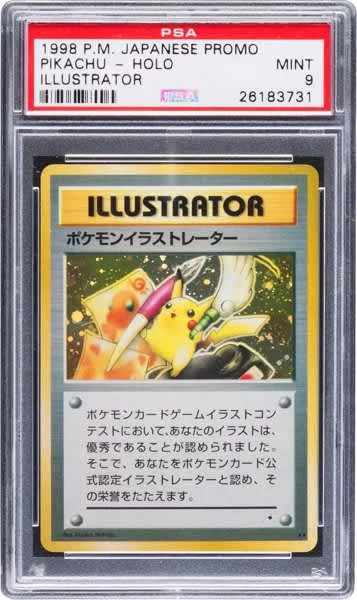
In the vintage sector, the "Pikachu Illustrator" card remains the gold standard of value. In early 2026, a high-grade specimen of this card was sold by influencer Logan Paul for over $16 million, a massive leap from its $5 million valuation in 2021. Other "Holy Grail" cards, such as the 1st Edition Shadowless holographic Charizard, frequently command six-figure prices at auction houses like Stanley Gibbons Baldwin’s and Heritage Auctions.
The Crypto Connection and Investor Profiles
Market analysts note a significant overlap between the cryptocurrency community and the high-end trading card market. Roy Raftery, a trading card expert at Stanley Gibbons Baldwin’s, observes that many buyers are not "genuine collectors" in the traditional sense. Instead, they are individuals who have accumulated wealth through digital assets and are looking for tangible, high-growth alternatives.
On social media platforms like X (formerly Twitter), the discourse surrounding Pokémon cards has shifted toward financial terminology. Users discuss "market corrections," "floor prices," and "liquidity," treating the acquisition of a card similar to the purchase of an NFT or a tech stock. This "investor-first" mindset has led to a surge in demand for professional grading services. A card’s value is no longer determined solely by its rarity, but by its "grade"—a numerical score from 1 to 10 provided by third-party authenticators that assesses the card’s physical condition. A "PSA 10" (Gem Mint) card can often sell for ten times the price of a "PSA 9" version of the same card.
The Rise of the Scalper and Retail Instability
The commercialization of the hobby has created a supply-and-demand crisis at the retail level. A new class of market participants known as "scalpers" has emerged. These individuals use automated software (bots) to monitor and purchase stock from online retailers like Argos and John Lewis the millisecond it becomes available.
When physical restocks occur, the results are often chaotic. Reports have surfaced of stampedes in big-box stores and "smash-and-grab" thefts specifically targeting Pokémon inventory. In the U.K., products like the "Mega Evolution Ascended Heroes Elite Trainer Box," which retails for £54.99 ($74.50), are frequently found on secondary markets like eBay within hours of release, priced at £300 or more.
This retail pressure has created a "supply crunch" that feeds into consumer panic. Stephanie Farnsworth, a lecturer in media and communications at the University of Sunderland, notes that scalpers create a sense of artificial volatility. This forces genuine fans to pay inflated prices out of fear that they will never have another opportunity to purchase the product at MSRP (Manufacturer’s Suggested Retail Price).
The Collector’s Perspective Amidst the Hype
Despite the heavy presence of speculators, a core demographic of traditional collectors remains active. These individuals are often motivated by "set completion"—the desire to own every card in a specific expansion—or by a personal affinity for certain characters.

Recent academic observations by clinical pharmacologist Johannes Heck suggest that even "uncommon" and "common" vintage cards are seeing increased liquidity. Heck’s research into the eBay market indicates that as the most famous "rare" cards become priced out for the average person, collectors are pivoting to lower-tier cards to recapture their childhood experiences.
David Bellinger, a senior equity analyst at Mizuho, suggests that the "local card show" culture is actually thriving because of this. While the multi-million dollar sales grab the headlines, thousands of smaller transactions happen weekly at community meet-ups, where the focus remains on the joy of the game rather than the return on investment.
Institutional and Economic Implications
The transformation of Pokémon cards into an asset class has broader economic implications. The market is currently described by some analysts as "frothy" or "bubbly." The rapid influx of capital from "crypto-wealth" and speculative investors has raised concerns about long-term sustainability. If the "hype" cycle cools, or if the Pokémon Company increases print runs significantly to meet demand, the market could face a sharp correction.
However, the Pokémon Company has been strategic in its release schedule. By leaning into nostalgia—releasing sets that feature original 1990s characters like the "Scarlet & Violet 151" expansion—they have successfully bridged the gap between the original millennial fan base and the new generation of Gen Z and Gen Alpha players. The upcoming 30th anniversary of the franchise in 2026 is expected to drive even more "renaissance" products, likely sustaining the current market heat for the foreseeable future.
Conclusion: A Permanent Shift in the Hobby Landscape
The Pokémon TCG has moved far beyond the boundaries of a simple game. It is now a complex ecosystem involving international auction houses, sophisticated botting software, professional grading corporations, and global investment strategies. While the "renaissance" has brought unprecedented wealth to some and a renewed sense of nostalgia to many, it has also fundamentally altered the accessibility of the hobby.
As the market continues to mature, the tension between the "collector" and the "investor" will likely define the next decade of the franchise. Whether the current valuations represent a sustainable new normal or a speculative bubble remains to be seen, but for now, the pursuit of "catching ’em all" requires not just a deck of cards, but a significant capital investment and a keen eye for market trends. The parking lot lines and the multi-million dollar auctions are no longer anomalies; they are the new standard for a global cultural icon that has successfully turned childhood wonder into a trillion-dollar asset class.
