

At the 20th annual Embryos on Snow event in Colorado, the traditional imagery of the American West—cowboy hats, dusty boots, and rugged landscapes—converged with the cutting-edge frontier of genomic science. Amidst cow-shaped ice sculptures, an elite group of cattle producers and investors gathered to bid on the genetic blueprints of the future. The auction, a cornerstone of the National Western Stock Show, serves as a high-stakes marketplace for frozen embryos, high-value semen, and even guaranteed pregnancies. This event highlights a rapidly accelerating shift within the livestock industry toward assisted reproductive technologies (ART), a sector that is fundamentally redefining the biological limits of animal production.
During the most recent iteration of this premier event, the financial scale of the genetic market was on full display. Cattle embryos sold for an average of US$2,760, with elite lots reaching as high as $26,000. The market for bull semen was even more lucrative, averaging nearly $10,000 per unit, while the highest-valued lot commanded a staggering $200,000. These figures underscore a broader trend: the cattle industry is no longer merely about raising livestock; it is about the precision engineering of biological assets.
The Technological Foundation of Modern Breeding
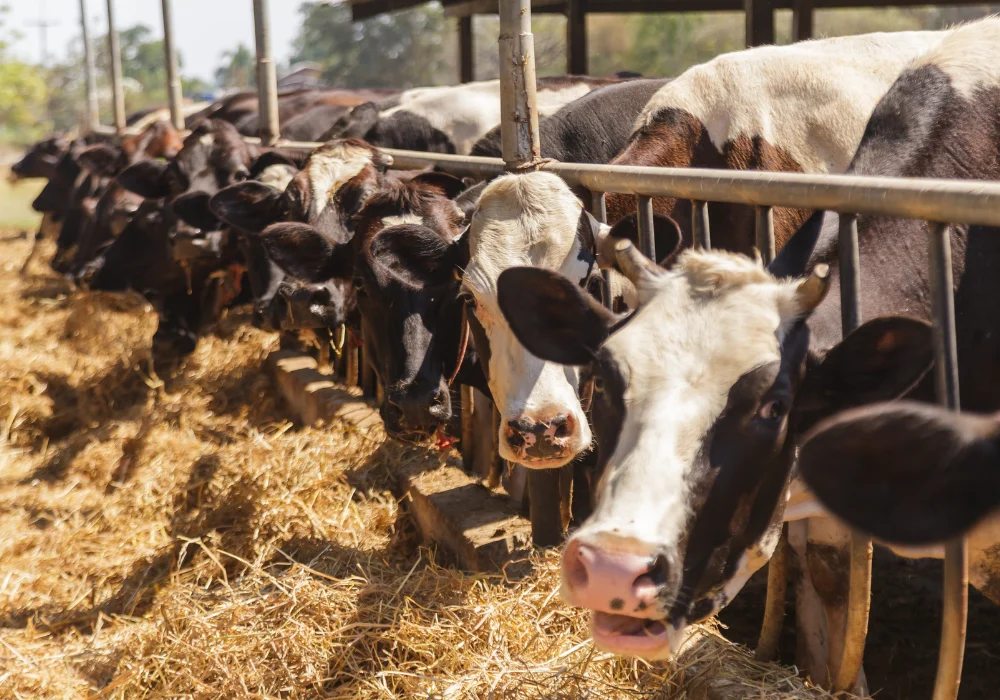
The "naturalness" often associated with meat and dairy marketing in the United States stands in stark contrast to the industrial reality of the 21st century. While consumer advertisements frequently feature cows grazing in open pastures, the genetic makeup of these animals is increasingly the product of intensive laboratory intervention. Three primary technologies dominate this landscape: artificial insemination (AI), in vitro fertilization (IVF), and embryo transfer (ET).
Artificial insemination is the most established of these methods, with more than 60% of dairy cows in the United States currently bred using this technique. It allows a single high-value bull to sire thousands of offspring across the globe without ever coming into physical contact with a female. Beyond AI, the industry has embraced more complex interventions. In vitro fertilization involves harvesting eggs from a "donor" cow, fertilizing them in a laboratory setting, and then implanting the resulting embryos into surrogate mothers.
Embryo transfer further amplifies the reproductive capacity of "elite" females. In this process, a donor cow is hormonally stimulated to produce multiple eggs, which are then fertilized via AI. These embryos are "flushed" from the donor’s uterus and transferred into lower-value surrogate cows that carry the calves to term. This allows a single high-quality cow to produce dozens of offspring in a single year, far exceeding the natural limit of one calf per year. At the Embryos on Snow event, flushed embryos from top-tier donors reached prices as high as $50,000, reflecting the immense value placed on concentrated genetic traits.
Market Growth and Economic Implications
The global bovine genetics market is experiencing a period of unprecedented expansion. Valued at approximately US$3.9 billion in 2025, the sector is projected to reach $6.7 billion by 2033, growing at a compound annual growth rate (CAGR) that reflects the increasing industrialization of agriculture in developing nations and the continued refinement of tech in established markets. North America currently dominates this sector, holding a 40% market share, with the United States serving as the primary hub for innovation and sales.
This economic boom is driven by the demand for "elite genetics"—traits that translate directly into higher profit margins for farmers. These traits include increased milk volume, higher protein and fat content in dairy, faster growth rates in beef cattle, and improved "feed efficiency," which refers to the animal’s ability to convert feed into body mass. Proponents, such as Alison Van Eenennaam, an animal biotechnology and genomics specialist at the University of California, Davis, argue that these technologies allow for the rapid multiplication of an animal’s best traits. By amplifying elite genetics, the industry can theoretically produce the same amount of food using fewer animals, thereby increasing the overall efficiency of the supply chain.
The Sustainability Narrative and Environmental Impact
The adoption of ART is frequently framed within the context of environmental sustainability. As the global agricultural sector faces mounting pressure to reduce its carbon footprint, breeding for efficiency has become a primary strategy for mitigation. Research conducted on California dairy farms provides a data-driven basis for this argument, showing that producing a glass of milk in 2014 resulted in roughly half the greenhouse gas emissions compared to 1964. This reduction is attributed largely to genetic improvements that have allowed cows to become significantly more productive.
Andrew Hunt, founder of the dairy industry publication The Bullvine, notes that embryo transfer and other technologies offer advantages beyond simple productivity. These tools can improve breeding success in challenging climates—such as high-heat environments where natural conception rates drop—and allow for the global distribution of genetics without the biosecurity risks and carbon costs associated with transporting live animals. By shipping frozen embryos or semen instead of live cattle, the industry reduces the risk of disease transmission and minimizes the logistical footprint of herd improvement.
Animal Welfare and the Ethics of Biological Manipulation
Despite the economic and environmental arguments in favor of high-tech breeding, a growing chorus of bioethicists and animal welfare advocates expresses concern over the long-term implications for the animals themselves. The primary critique is that the industry’s focus on economically viable traits often comes at the expense of the animal’s biological well-being.
Koen Kramer, a bioethicist at Utrecht University, suggests that it is difficult to reconcile the "nice words" of industry proponents with the lived reality of the animals. In a 2021 research paper published in the Journal of Agricultural and Environmental Ethics, Kramer and co-author F.L.B. Meijboom argued that ART may facilitate more intensive confinement systems by "speeding up selective breeding for economically viable traits that affect welfare negatively."
One of the most significant biological risks associated with IVF in cattle is Large Offspring Syndrome (LOS). This condition involves abnormal fetal overgrowth, organ enlargement, and congenital defects, which can lead to difficult births (dystocia) and low survival rates for both the calf and the mother. Furthermore, the reliance on a narrow pool of "elite" genetics can lead to a reduction in genetic diversity, potentially making herds more vulnerable to emerging diseases or genetic disorders.
The Debate Over "Natural" Behavior and Bodily Integrity
Beyond the physical health risks, there are philosophical and ethical questions regarding the "de-animalization" of livestock. Critics argue that by treating cows as "biological factories" or "milestone producers," the industry strips them of their status as sentient beings. Activist and author Carol J. Adams, known for her work on the sexual politics of meat, argues that these technologies represent a "scientific manipulation of reproduction in the service of profit." Adams contends that the invasive nature of these procedures—including the hormonal manipulation of the cow’s cycle and the manual insertion of embryos—ignores the animal’s bodily integrity.
There is also the issue of "species-typical" behavior. For instance, some breeding programs now focus on producing "polled" (naturally hornless) cattle to eliminate the need for disbudding—a painful process where a calf’s horn buds are removed to prevent injury to humans and other cows. While this may reduce physical pain, research indicates that horns play a vital role in bovine social hierarchies. Polled animals may struggle to establish stable social relationships, leading to increased physical aggression as they attempt to navigate their environment without their natural social signaling tools.
Net Merit and the Commodification of Life
The industry responds to these ethical concerns by pointing to "Net Merit" indices. These are complex formulas used to rank animals based on a combination of traits, including fertility, udder health, disease resistance, and longevity, alongside production metrics. Proponents argue that because a healthy cow is a more profitable cow, the economic interests of the farmer are naturally aligned with the welfare of the animal.
However, the language used in the industry continues to reflect a view of animals as industrial components. At genetics sales across the country, auctioneers use terms like "proven factory," "milestone producer," and "high-value donor" to describe living creatures. Van Eenennaam acknowledges the eugenic nature of the practice but frames it as the logical conclusion of all animal breeding. "You could say it’s eugenics, and I would argue, well, that’s kind of what animal breeding is," she notes, suggesting that the goal has always been the discrete selection of the "best" animals to propagate the species.
Future Outlook and Broader Implications
As the livestock industry continues to integrate assisted reproductive technologies, the gap between public perception and industrial practice is likely to widen. The success of events like Embryos on Snow demonstrates a robust and growing demand for genetic precision, fueled by a global need for food security and the economic pressures of a competitive market.
The future of this sector will likely be defined by the tension between three competing forces: the drive for maximum economic efficiency, the need for environmental sustainability, and the evolving ethical standards of society regarding animal welfare. While technology offers the promise of "doing more with less," it also requires a fundamental reckoning with what it means to manage the life cycles of sentient beings in a high-tech age. As the global market for bovine genetics marches toward its projected $6.7 billion valuation, the "Cosmic Cowboys" of the modern era will continue to build the herds of the future, one frozen embryo at a time.
