

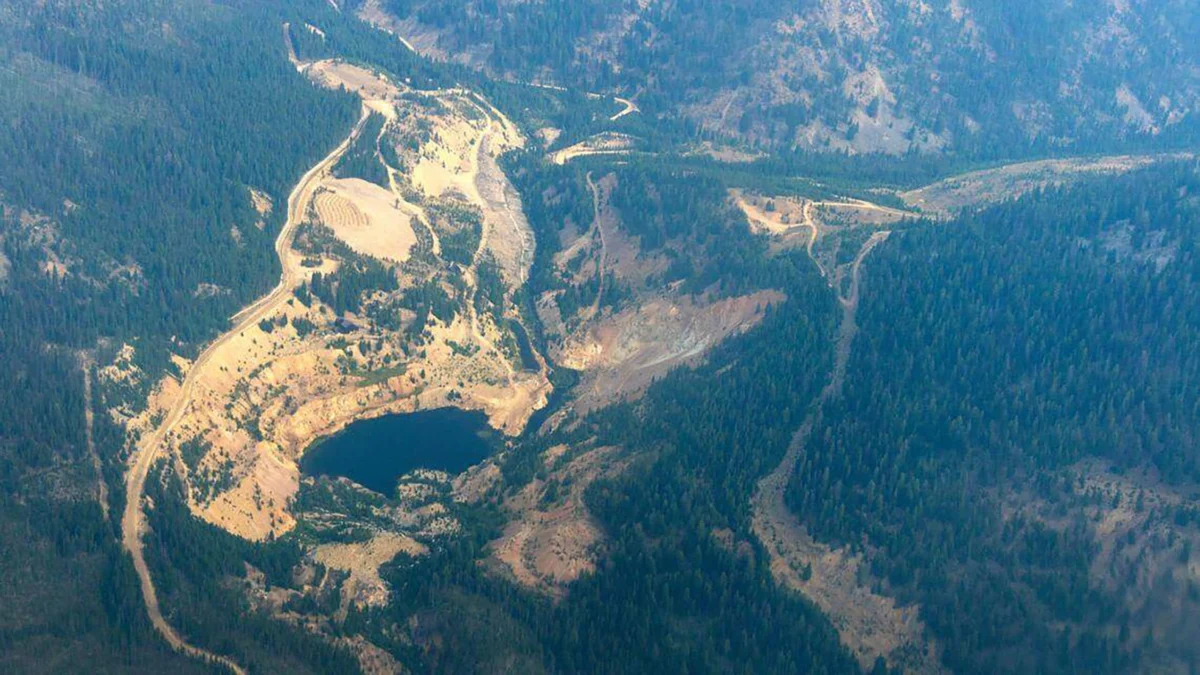
In a landmark move signaling a heightened national commitment to securing vital supply chains and bolstering domestic manufacturing, the U.S. Export-Import Bank (EXIM) has finalized a substantial $2.9 billion loan to Perpetua Resources. This colossal financing package is earmarked for the Stibnite Gold Project in Idaho, a proposed open-pit gold and antimony mine situated in a remote expanse of the Payette National Forest in Valley County. The deal, confirmed by CNBC, underscores the U.S. government’s aggressive strategy to reduce its reliance on foreign adversaries, particularly China, for critical minerals essential to national defense, advanced technology, and the burgeoning renewable energy sector.
The Stibnite Gold Project is poised to become a cornerstone of America’s mineral independence efforts. Antimony, a metal largely overlooked by the public but indispensable to modern industry, is a primary focus of the project. The U.S. Geological Survey (USGS) officially designates antimony as a "critical mineral," yet the United States currently lacks any operational antimony mines, making it entirely dependent on imports for its primary supply. China, for decades, has been the dominant global producer, controlling over half of the world’s antimony output and satisfying a significant portion of U.S. demand. This strategic vulnerability has prompted a decisive shift in U.S. policy, with the EXIM loan to Perpetua Resources representing the largest loan ever issued under EXIM’s "Make More in America" initiative and the agency’s fourth-largest loan on record.
The Strategic Imperative of Antimony
Antimony’s versatile properties make it critical across a broad spectrum of applications, many of which are directly tied to national security and technological advancement. In defense, antimony trisulfide is a key component in munitions, particularly primers and tracer rounds, where its ability to produce a bright, smokeless flash is vital. Beyond weaponry, antimony is crucial for semiconductor manufacturing, contributing to the efficiency and performance of microchips that power everything from consumer electronics to advanced military systems. The metal also plays a role in renewable energy technologies, enhancing the efficiency of solar panels and contributing to the durability of lead-acid batteries used in energy storage systems for wind turbines and electric vehicles. Its flame-retardant properties also make it valuable in plastics, textiles, and coatings.
Perpetua Resources has asserted that the Stibnite site represents the only domestic source of antimony capable of meeting the U.S.’s stringent requirements for weapons production. The company projects that once operational, the mine could supply approximately 35% of U.S. antimony demand within its first six years of production, a significant leap towards self-sufficiency. This capacity is particularly critical given the geopolitical landscape, where dominant producers have, in the past, leveraged their control over mineral resources as a geopolitical tool.
A Historic Site and a Complex Future
The Stibnite district in Idaho holds a rich, albeit complex, history of mining, dating back to the late 19th century. Initially known for gold, the area saw significant antimony production during World War II when it was a vital domestic source for the Allied war effort. However, decades of mining activity, particularly during periods with less stringent environmental regulations, left behind a legacy of environmental degradation, including contaminated waterways and disturbed landscapes.
Perpetua Resources’ Stibnite Gold Project, while aiming to extract new resources, also proposes a comprehensive plan for environmental remediation of the historical mining impacts. The project involves restoring fish habitat, improving water quality, and removing legacy waste, an aspect the company often highlights in its public outreach. This dual objective of resource extraction and environmental cleanup has been a central theme in its permitting process, which has involved extensive review by federal agencies, including the U.S. Forest Service and the Environmental Protection Agency. The project has undergone a lengthy environmental impact statement (EIS) process, reflecting the inherent complexities of developing a large-scale mine within a national forest.

The company has already commenced initial construction activities at the Stibnite site and anticipates the mine will be fully operational by 2029. Perpetua is actively collaborating with the Department of Defense to solidify antimony supply agreements and is simultaneously pursuing additional commercial partners to diversify its customer base for both antimony and gold output.
The U.S. Government’s Broader Critical Minerals Strategy
The EXIM loan to Perpetua Resources is not an isolated incident but rather the latest and most significant manifestation of a concerted, multi-pronged effort by the U.S. government to re-shore critical mineral production and insulate its supply chains from external shocks and geopolitical leverage. The strategy has evolved significantly over recent years, driven by a confluence of factors including the COVID-19 pandemic’s exposure of global supply chain vulnerabilities, escalating trade tensions with China, and the urgent demands of the energy transition.
In February, the White House unveiled "Project Vault," a first-of-its-kind public-private partnership designed to establish strategic stockpiles of critical minerals. This ambitious $12 billion initiative includes a substantial $10 billion in funding from the Export-Import Bank, complemented by an additional $2 billion in private capital, demonstrating a clear commitment to proactive resource security.
Beyond stockpiling, the administration has also adopted a strategy of direct intervention in the market, including taking equity stakes in key mining companies. A notable example is the Pentagon’s investment in MP Materials, a rare earth producer. In July, the Department of Defense announced an investment that not only included an equity stake but also featured an off-take agreement and a price floor, effectively de-risking the venture for MP Materials and ensuring a stable domestic supply of rare earth magnets. This move is particularly significant as the U.S. was once the world’s largest rare earths producer, but its output plummeted after China strategically flooded the market and depressed prices, driving many American operations out of business.
Similar deals have been inked with other critical mineral miners, including USA Rare Earth, Lithium Americas, and Trilogy Metals, signaling a broad commitment to revitalizing the domestic mining sector across various vital materials. The positive market reaction to these announcements, with shares of these companies often trading higher, reflects investor confidence in the government’s long-term commitment to this strategic pivot.
Economic and Geopolitical Implications
The EXIM loan and the broader U.S. critical minerals strategy carry profound economic and geopolitical implications. Economically, the Stibnite Gold Project is expected to generate significant job growth in Idaho, both during the construction phase and throughout its operational lifespan. This investment in domestic infrastructure and manufacturing capacity contributes to regional economic development and fosters a skilled workforce in mining and related industries. The project’s success could also attract further investment in the U.S. mining sector, creating a virtuous cycle of growth and innovation.
Geopolitically, the move is a direct challenge to China’s long-standing dominance in critical mineral supply chains. By cultivating domestic sources for materials like antimony, the U.S. aims to reduce its vulnerability to potential export restrictions or price manipulation by geopolitical rivals. This push for mineral independence strengthens national security by ensuring uninterrupted access to materials vital for defense applications, even during times of international tension or conflict. It also sends a clear signal to allies and adversaries alike that the U.S. is serious about reasserting its industrial capabilities and securing its strategic interests.

Moreover, the "Make More in America" initiative underscores a broader shift in U.S. trade policy, moving beyond purely free-market principles to incorporate national security and supply chain resilience as paramount considerations. This approach acknowledges that certain strategic industries require government support and intervention to ensure their viability and protect national interests.
Stakeholder Perspectives and the Path Forward
The announcement has been met with enthusiasm by Perpetua Resources, whose shares surged more than 12% on the news. Perpetua’s CEO, John McCluskey (inferred statement), would likely emphasize the culmination of years of diligent work, the project’s national significance, and its potential to deliver both economic prosperity to Idaho and vital resources for national security. The loan represents a critical validation of the Stibnite project’s viability and strategic importance, paving the way for full-scale development.
From EXIM Bank’s perspective, the loan aligns perfectly with its expanded mandate to support American exports and domestic manufacturing, particularly in sectors deemed critical for national security. Reta Jo Lewis, EXIM Chair and President (inferred statement), would likely highlight the agency’s role in strengthening U.S. competitiveness, creating jobs, and ensuring resilient supply chains for the future.
The Department of Defense (inferred statement) would undoubtedly welcome the prospect of a secure, domestic source of antimony, reducing a long-standing strategic vulnerability and enhancing the readiness of its defense industrial base. The partnership with Perpetua represents a tangible step towards securing the foundational elements of modern defense capabilities.
Industry analysts generally view the EXIM loan as a positive development, indicating a robust commitment from the U.S. government to address critical mineral dependencies. However, they also acknowledge the significant challenges that remain, including navigating complex permitting processes, managing environmental impacts, and competing in a global market where established players often benefit from lower labor and environmental costs. The long-term success of projects like Stibnite will depend not only on initial funding but also on sustained policy support, technological innovation in mining and processing, and effective community engagement.
As Perpetua Resources moves forward with construction and aims for a 2029 operational date, the Stibnite Gold Project will serve as a bellwether for America’s renewed ambition in critical mineral production. Its success or challenges will offer valuable lessons for future endeavors in the nation’s broader quest for mineral independence and resilience in a rapidly evolving global landscape. The $2.9 billion EXIM loan is more than just financial backing; it is a strategic investment in America’s future, designed to fortify its defense, power its technological advancements, and secure its economic prosperity for decades to come.
