

The United States Department of Agriculture (USDA) recently initiated a sweeping reorganization of the U.S. Forest Service, a move that includes relocating the agency’s national headquarters and fundamentally altering its management structure. Announced by U.S. Secretary of Agriculture Brooke L. Rollins, the plan involves moving the Forest Service’s primary operations from Washington, D.C., to Salt Lake City, Utah, while transitioning to a "state-based organizational model." While the administration frames the overhaul as a "common-sense" measure to increase efficiency and support the domestic lumber industry, it has ignited a firestorm of criticism from environmental groups, scientific organizations, and a multi-billion-dollar outdoor recreation industry that views the move as a calculated effort to dismantle federal land protections.
The reorganization arrives at a volatile time for the agency, which manages 193 million acres of public land, including 154 national forests and 20 grasslands. Unlike the National Park Service, which focuses primarily on preservation, the Forest Service operates under a "multi-use" mandate that balances conservation, recreation, and resource extraction. However, critics argue the new directives prioritize timber harvesting and industrial development at the expense of ecological health and public access, potentially reversing decades of conservation progress.
Structural Changes and the Shift to Salt Lake City
Under the new plan, the USDA will relocate approximately 260 leadership positions from the nation’s capital to Salt Lake City. Secretary Rollins defended the relocation, stating that moving the agency "closer to the forests we manage" would improve core missions and save taxpayer dollars. A central component of the justification is the promotion of the domestic timber industry. According to Rollins, proper management must ensure a "healthy and productive forest system that provides affordable, quality lumber to build homes right here in America."
Beyond the physical relocation, the plan replaces nine existing regional offices with 15 new state-level director positions. These state directors will oversee operations within their respective jurisdictions, supported by small teams focused on legislative affairs and intergovernmental coordination. This shift is intended to grant state governments greater influence over federal land management—a perennial goal of Western conservative lawmakers but a point of deep concern for conservationists who fear state priorities may favor short-term economic gain over long-term environmental stewardship.
The choice of Utah as the new administrative hub is particularly symbolic and controversial. Utah has long been the epicenter of the "land transfer movement," an effort to shift control of federal lands to state authorities. This movement is often supported by organizations like the American Legislative Exchange Council (ALEC) and has, in extreme cases, been championed by armed activists seeking to challenge federal jurisdiction. By centering the Forest Service in Salt Lake City, critics argue the administration is signaling its alignment with interests that seek to privatize or industrialize public assets.

A Chronology of Attrition and Previous Relocations
The current reorganization is not an isolated event but the latest in a series of actions that have thinned the Forest Service’s ranks. Over the past year, the agency’s workforce was reduced by an estimated 16 percent—approximately 5,900 employees—following aggressive budget-cutting measures. These losses have already resulted in documented shortfalls in essential services, including trail maintenance and wildfire mitigation.
Skeptics of the Salt Lake City move point to the 2019 relocation of the Bureau of Land Management (BLM) headquarters to Grand Junction, Colorado, as a cautionary tale. During that transition, nearly 90 percent of the affected D.C.-based staff chose to resign or retire rather than move across the country. While the Biden administration eventually reversed the BLM move in 2021, the loss of institutional knowledge was profound. Tracy Stone-Manning, who led the BLM under President Biden, recently characterized such relocations as a "ticking time bomb" designed to "cripple the agency."
Conservationists fear a similar "mass purge" is the true objective of the current USDA plan. By forcing experienced professionals to relocate or quit, the administration creates vacancies that can be filled by new recruits more aligned with a pro-extraction agenda. This strategy, critics say, effectively bypasses the civil service protections intended to keep federal agencies objective and non-partisan.
The Impact on Scientific Research and Fire Mitigation
One of the most significant yet less publicized aspects of the overhaul is the drastic reduction in the Forest Service’s research capabilities. The plan calls for closing 57 of the agency’s 77 local research offices, consolidating remaining operations into a single facility in Fort Collins, Colorado. In testimony before Congress, Forest Service Chief Tom Schultz admitted that this consolidation could result in the elimination of up to 1,100 research positions.
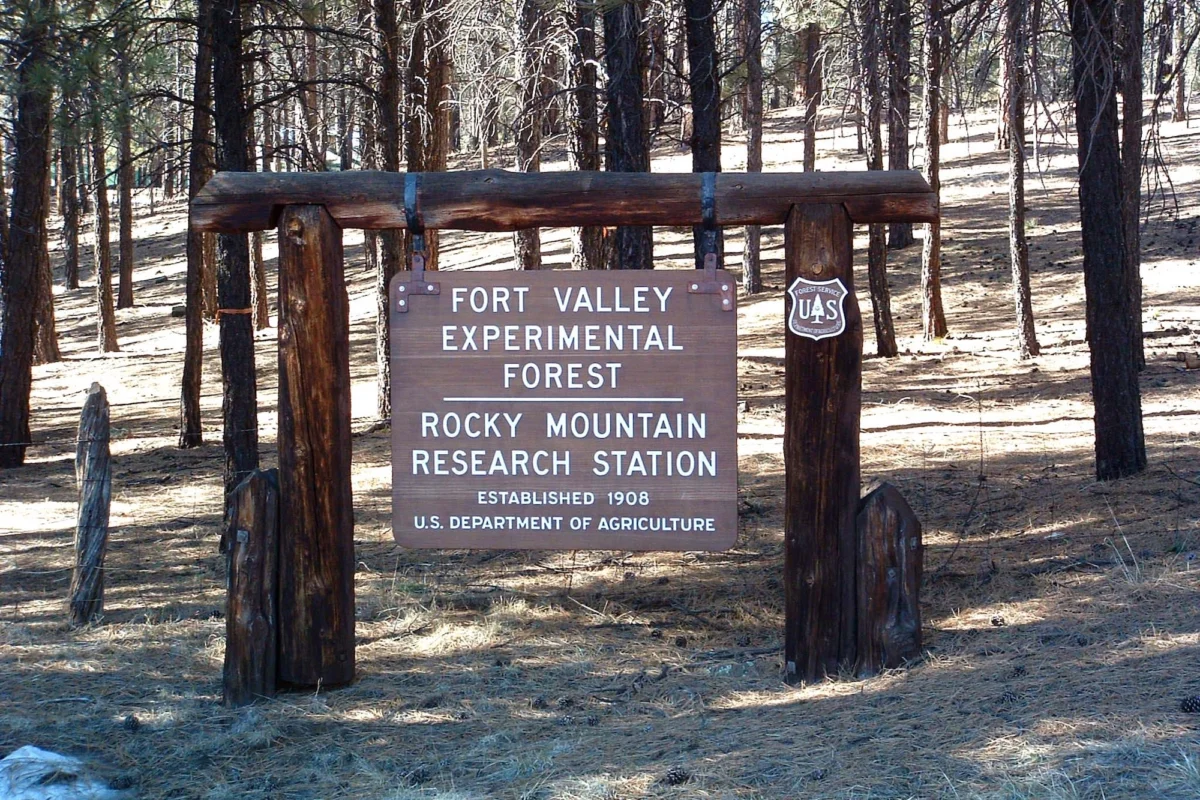
This reduction targets the very scientists responsible for studying climate change, pest control, and forest resilience. For example, the Fort Valley Experimental Forest in Arizona—the nation’s first Forest Service research facility—has provided over a century of data on how logging affects ponderosa pine ecosystems. Such facilities are vital for developing strategies to combat the increasing frequency and intensity of wildfires.
The Union of Concerned Scientists has denounced the plan as "irreversibly destructive." Julian Reyes, the organization’s Chief of Staff, noted that gutting research programs during a climate crisis undermines the agency’s ability to protect communities from natural disasters. The move coincides with other administration actions, such as the recent dismissal of the National Science Foundation’s board, reinforcing perceptions of a broader "war on science."

Economic Implications: Timber vs. Recreation
The USDA’s emphasis on the lumber industry highlights a fundamental tension in land use economics. While the administration argues that increased logging will lower housing costs, opponents point to the massive economic contribution of the outdoor recreation sector. According to data from the Bureau of Economic Analysis (BEA), the outdoor recreation economy accounts for approximately $1.1 trillion in annual gross economic output and supports nearly 5 million jobs.
In many Western communities, the "amenity economy"—driven by hiking, fishing, skiing, and hunting—has surpassed traditional extraction industries like logging and mining in terms of job creation and revenue. Outdoor recreation businesses argue that the USDA’s plan threatens the very "natural capital" their industry relies upon.
This economic concern has led to an unprecedented alliance between corporate leaders and environmental activists. More than 70 major outdoor brands, including Patagonia, Columbia Sportswear, REI Co-op, and Orvis, signed a joint letter through The Conservation Alliance. These companies argue that eliminating public participation requirements and rescinding environmental protections, such as the Roadless Rule, will degrade the public lands that serve as the foundation of their businesses.
Political and Legal Hurdles
The legality of the USDA’s unilateral action remains a subject of intense debate on Capitol Hill. Several members of Congress have pointed out that major structural changes to federal agencies typically require congressional approval and public comment periods. Rollins, however, has indicated an intent to proceed regardless of these hurdles, framing the move as an executive prerogative.
Opposition is not strictly partisan. While many Republican lawmakers support the goal of increased timber production, some have voiced skepticism regarding the logistical costs and the potential loss of local expertise. Meanwhile, Democratic representatives have vowed to use legislative and budgetary tools to block the reorganization, arguing that it violates the National Environmental Policy Act (NEPA) by bypassing environmental reviews.
The appointment of Michael Boren as the USDA Under Secretary for Natural Resources and Environment has added further fuel to the political fire. Boren, a billionaire landowner from Idaho, has a history of legal clashes with the Forest Service over unauthorized construction on public lands. His leadership of the very agency he once fought in court has been described by critics as a "walking conflict of interest."

Broader Implications for Public Land Management
The Forest Service overhaul represents a pivotal shift in the philosophy of American land management. For over a century, the agency has operated under the principle of "the greatest good for the greatest number in the long run," a phrase popularized by its first chief, Gifford Pinchot. The current administration’s focus on "state-based models" and "industrial productivity" suggests a move toward a more transactional view of public resources.
If the reorganization proceeds, the landscape of the American West could change significantly. The rescinding of the Roadless Rule alone could open millions of acres of pristine forest to road construction and commercial logging. Furthermore, the loss of public participation requirements means that local communities may have less say in projects occurring in their own backyards.
As the legal and political battles unfold, the future of the Forest Service remains uncertain. For the millions of Americans who utilize national forests for recreation, and for the ecosystems that depend on scientific management, the stakes could not be higher. The coming months will determine whether the agency remains a steward of the public trust or becomes a facilitator for industrial extraction. Regardless of the outcome, the fierce response from the outdoor industry and conservationists ensures that any changes to the management of America’s "Great Outdoors" will not go unchallenged.
