

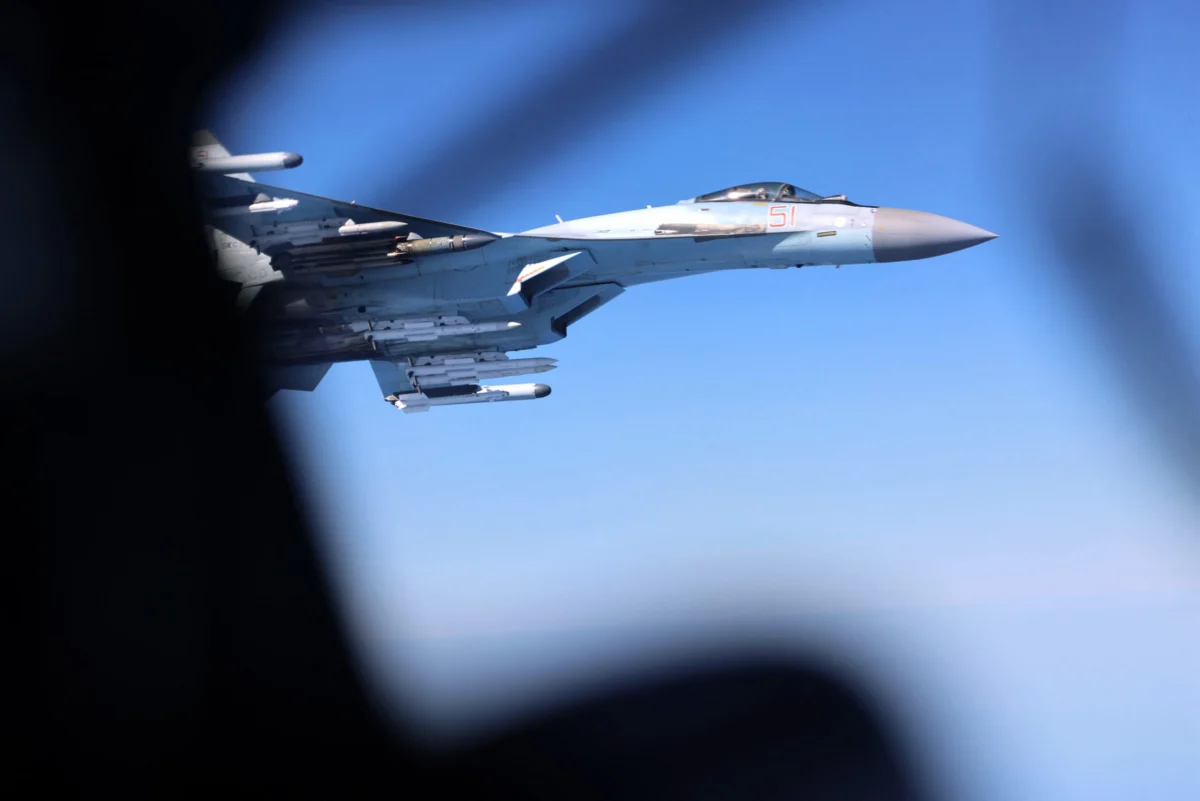
Two Russian military jets engaged in a series of "repeatedly and dangerously" close intercepts of a British Royal Air Force surveillance aircraft over the Black Sea in April, the United Kingdom’s Ministry of Defence disclosed in a statement released on Wednesday. The incident, which occurred last month, involved an unarmed RC-135 Rivet Joint reconnaissance plane conducting routine surveillance in international airspace, a mission critical to securing NATO’s eastern flank. This aggressive maneuver has been formally condemned by the UK, which has lodged a complaint with the Russian embassy, highlighting the escalating risks of such interactions in a volatile geopolitical climate.
Details of the Perilous Encounter
According to the British Ministry of Defence (MoD), the unarmed Rivet Joint aircraft was operating within international airspace, fulfilling its mandate to monitor activities and contribute to the security of NATO’s strategically vital eastern flank. The incident saw two distinct Russian aircraft engage the British plane. One, a Russian Su-35 fighter jet, reportedly intercepted the Rivet Joint multiple times, flying so close as to trigger emergency systems aboard the British aircraft. This level of proximity indicates a severe breach of international safety protocols for air operations, placing the crew and the aircraft in immediate danger.
Even more alarmingly, a Russian Su-27 fighter jet conducted six separate passes, at one point flying a mere six metres (less than 20 feet) from the nose of the Rivet Joint. Such a dangerously close maneuver not only demonstrates a reckless disregard for international aviation safety standards but also represents a deliberate act of intimidation. The speed and maneuverability of a fighter jet like the Su-27, combined with its proximity to a larger, less agile surveillance aircraft, create a significant risk of collision, with potentially catastrophic consequences.
Defence Minister John Healey, in the official statement, unequivocally condemned the actions: "This incident is another example of dangerous and unacceptable behaviour by Russian pilots, towards an unarmed aircraft operating in international airspace. These actions create a serious risk of accidents and potential escalation." His remarks underscore the gravity of the situation and the inherent dangers posed by such aggressive intercepts.
The Rivet Joint: A Critical Intelligence Asset
The RC-135 Rivet Joint is a highly sophisticated signals intelligence (SIGINT) reconnaissance aircraft, an invaluable asset for NATO and its allies. Operated by the Royal Air Force’s 51 Squadron, these aircraft are modified Boeing 707s, extensively equipped with a suite of sensors that allow them to detect, identify, and geolocate signals across the electromagnetic spectrum. Their missions typically involve gathering electronic intelligence, intercepting communications, and monitoring adversary activities from a safe distance in international airspace.
Being unarmed is standard for such intelligence-gathering platforms, as their purpose is observation, not combat. Their presence in regions like the Black Sea is purely for defensive intelligence collection, providing critical situational awareness for NATO forces and contributing to regional stability by monitoring potential threats. The fact that an unarmed aircraft was targeted with such aggressive tactics further highlights the provocative nature of the Russian pilots’ actions. The triggering of emergency systems on the British plane indicates a critical threshold of danger was reached, likely involving evasive maneuvers or system warnings due to the proximity of the Russian jets.
A Pattern of Aggression and Escalation
This latest incident is not an isolated event but fits into a broader pattern of increasingly aggressive and risky behavior by Russian military forces in international airspace, particularly in the vicinity of NATO’s eastern flank. The UK Ministry of Defence explicitly stated that this was the most dangerous Russian action against a UK surveillance plane since October 2022.
In that prior incident, a Russian Su-27 fighter jet released a missile near another British Rivet Joint aircraft also operating over the Black Sea. Moscow subsequently attributed that event to a "technical malfunction," a claim that was met with skepticism by Western officials. Such an explanation, even if true, points to a severe lack of operational discipline and safety standards within the Russian air force, or, more cynically, serves as a convenient diplomatic cover for a deliberate act of aggression. The proximity of a live missile release to an allied aircraft represents an extraordinary level of danger, far surpassing even the close intercepts reported this month.
Beyond these specific incidents involving British aircraft, Russian military jets have a documented history of dangerous intercepts with various NATO aircraft, including those from the United States, France, and other nations, across multiple operational theatres, including the Baltic Sea, the North Sea, and the Pacific. These encounters frequently involve maneuvers such as flying within dangerously close proximity, performing aggressive turns, or even dumping fuel on intercepting aircraft, all in violation of international air safety norms. This pattern suggests a deliberate strategy to test NATO’s resolve, gather intelligence on allied response protocols, and assert Russian claims over contested or strategically important international airspace.
The Black Sea: A Geopolitical Hotbed
The Black Sea region has become a focal point of heightened geopolitical tension, particularly since Russia’s annexation of Crimea in 2014 and its full-scale invasion of Ukraine in February 2022. The Black Sea is strategically vital, providing Russia with access to the Mediterranean and beyond, and serving as a crucial trade route for Ukraine. NATO’s eastern flank, which includes member states bordering the Black Sea like Romania, Bulgaria, and Turkey, has seen a significant increase in allied military presence and surveillance activities since the onset of the conflict in Ukraine.
NATO’s enhanced vigilance in the region involves continuous air policing, naval patrols, and reconnaissance missions like those undertaken by the Rivet Joint. These operations are designed to deter potential aggression, monitor Russian military movements, and reassure allied nations of NATO’s collective defense commitment under Article 5. Russian intercepts of allied aircraft in this airspace are therefore not merely routine "scrambles" but direct challenges to NATO’s presence and international norms.
Connecting Incidents: Air and Sea Provocations
The recent aerial interception comes just days after Defence Minister John Healey publicly announced another significant Russian provocation – the tracking and "seeing off" of three Russian submarines by the Royal Navy. These submarines were allegedly engaged in a month-long "covert operation" in Atlantic waters north of the UK, in close proximity to vital undersea cables and pipelines. Healey made details of this monitoring operation public on April 9.
This coordinated pattern of Russian activity, involving both air and naval assets operating aggressively near critical infrastructure and international airspace, paints a clear picture of an ongoing, multi-domain "grey zone" conflict. Such actions fall below the threshold of open warfare but are designed to exert pressure, gather intelligence, and test the readiness and response capabilities of NATO members. The simultaneous nature of these revelations suggests a deliberate decision by the UK to highlight the breadth of Russia’s provocative actions. The monitoring mission against the submarines involved approximately 500 personnel and saw UK aircraft fly over 450 hours, while a navy frigate covered several thousand nautical miles, underscoring the significant resources dedicated to counter-surveillance operations.
Official Responses and Diplomatic Fallout
The UK’s Defence and Foreign Ministry officials formally complained to the Russian embassy in London this week regarding the air incident. This diplomatic démarche is a standard procedure to formally register protest and demand adherence to international norms. While specific details of the diplomatic exchange were not disclosed, such complaints typically involve reiterating the unacceptability of the actions, emphasizing the risks involved, and calling for a cessation of such dangerous maneuvers.
Defence Minister Healey’s robust statement served as a direct warning to Moscow: "Let me be very clear: This incident will not deter the UK’s commitment to defend NATO, our allies and our interests from Russian aggression." This declaration reaffirms the UK’s unwavering resolve and signals that such provocations will not succeed in intimidating or deterring allied operations in international airspace or waters. It reinforces the message that NATO will continue its surveillance and defensive missions despite Russian attempts at intimidation.
International Law and Air Safety
Operating in international airspace is governed by a framework of international law and conventions, primarily the Chicago Convention on International Civil Aviation and customary international law. These principles mandate safe and responsible conduct in international airspace, requiring states to avoid actions that could endanger aircraft or create unnecessary risks. Dangerous intercepts, such as those described by the UK MoD, clearly violate these established norms. The International Civil Aviation Organization (ICAO) provides guidelines for air safety, which include maintaining safe distances between aircraft. The close proximity maneuvers by the Russian jets, especially the six-meter pass, represent a severe disregard for these universally accepted safety standards.
Implications for Regional Stability and NATO
The implications of this incident are multifaceted. Firstly, it underscores the persistent and growing risk of miscalculation or accident in an already tense region. A collision between military aircraft, even if accidental, could rapidly escalate into a serious international crisis, especially given the current state of Russia-NATO relations. Secondly, it highlights Russia’s continued willingness to challenge international norms and exert its presence aggressively, even in international airspace. This behavior serves as a constant reminder of the "immediate and pressing" threat Russia poses, a conclusion drawn by a UK defence review last year.
For NATO, such incidents reinforce the necessity of enhanced vigilance and robust defensive postures. They validate the alliance’s ongoing efforts to strengthen its eastern flank and invest in advanced surveillance and air defense capabilities. The collective response to these provocations, both diplomatically and operationally, is crucial for maintaining deterrence and upholding the rules-based international order. NATO member states are likely to view this incident as further evidence of Russia’s destabilizing actions, potentially leading to increased coordination in surveillance missions and stronger calls for de-escalation from Moscow.
The UK’s Steadfast Resolve
The UK’s firm response, from the immediate complaint to the strong statements from the Defence Minister, signals its unwavering commitment to international law and the security of its allies. The comprehensive monitoring mission against the Russian submarines and the continued presence of surveillance aircraft in the Black Sea demonstrate that the UK is actively countering Russian aggression across multiple domains. This incident, rather than deterring the UK, appears to have solidified its resolve to defend NATO’s interests and uphold regional stability against an assertive Russia. The continuous monitoring and reporting of such incidents are essential for transparency and holding states accountable for their actions in the international arena.
