

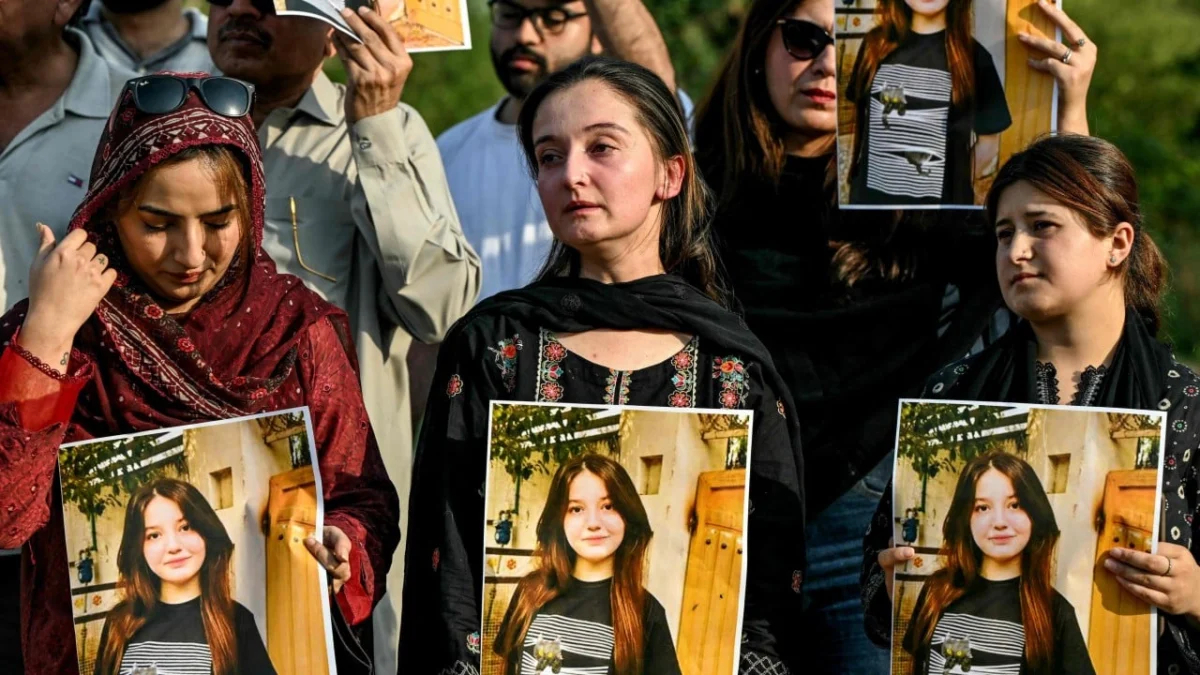
In a landmark ruling that has resonated across Pakistan’s legal and social landscape, a district and sessions court in Islamabad has delivered a capital sentence to 22-year-old Umar Hayat for the premeditated murder of Sana Yousaf, a 17-year-old social media personality. The verdict, delivered on Tuesday afternoon in a courtroom crowded with family members, legal counsel, and human rights observers, marks a significant moment in the country’s ongoing struggle to address gender-based violence and the specific vulnerabilities faced by women in the digital age. In addition to the death penalty, the presiding judge imposed a fine of approximately US$7,200 (2 million Pakistani Rupees) on the convict, intended as compensation for the victim’s family.
The case of Sana Yousaf, whose life was cut short in June of last year, has become a flashpoint for national debate. Yousaf was a rising star on platforms like TikTok and Instagram, where she cultivated an audience of over one million followers. Her content, which spanned lifestyle, fashion, and skincare, was notable for its occasional foray into the complexities of romantic relationships—a subject often deemed taboo in the deeply conservative socio-cultural fabric of Pakistan. It was this visibility, combined with her refusal to succumb to the unwanted advances of Umar Hayat, that ultimately led to her death.
The Circumstances of the Crime
The tragedy unfolded at Yousaf’s family residence in Islamabad. According to police reports and court testimony, Umar Hayat had developed an obsession with the teenager, frequently attempting to contact her and pressuring her into a relationship. Yousaf, supported by her family, had consistently rejected his overtures. On the day of the murder in June, Hayat forcibly entered the premises and, in a fit of rage fueled by her final refusal, opened fire. Yousaf sustained fatal gunshot wounds and was pronounced dead shortly after, leaving her family and her vast online community in a state of shock.
The investigation that followed was swift, aided by the high-profile nature of the victim and the immediate identification of the suspect by witnesses. Hayat was apprehended shortly after the shooting. During the trial, the prosecution presented forensic evidence, eyewitness accounts from family members who were present at the scene, and digital records illustrating the persistent harassment Yousaf had faced prior to the attack.
A Chronology of the Case and Trial
The timeline of the Sana Yousaf case reflects a judicial process that, while faster than many similar cases in Pakistan, still took over a year to reach a conclusion:
- June of Previous Year: Sana Yousaf is shot and killed in her home in Islamabad. The news spreads rapidly across social media, sparking the hashtag #JusticeForSana.
- Late June: Islamabad police arrest Umar Hayat and recover the murder weapon. He is charged under Section 302 of the Pakistan Penal Code (PPC), which pertains to intentional murder.
- July – September: The investigative phase concludes with a formal challan (charge sheet) submitted to the court. Protests are held in major cities including Lahore and Karachi, demanding safety for female content creators.
- October – March: The trial proceeds in the Islamabad District Court. The defense argues for leniency, citing the defendant’s age and claiming a "crime of passion," while the prosecution maintains that the act was a calculated response to rejection.
- May: Final arguments are heard. The judge reserves the verdict.
- Tuesday: The court announces the death sentence and the financial penalty, citing the "brutal and cold-blooded" nature of the crime.
Broader Context: Gender-Based Violence in Pakistan
The sentencing of Umar Hayat occurs against a backdrop of increasing scrutiny regarding the safety of women in Pakistan. According to data from the Human Rights Commission of Pakistan (HRCP), hundreds of women are murdered every year in cases involving domestic disputes, "honor" killings, or instances of stalking and harassment. While the government has introduced various pieces of legislation, such as the Anti-Rape (Investigation and Trial) Act and the Punjab Protection of Women against Violence Act, implementation remains a challenge due to systemic barriers and societal attitudes.
The Yousaf case bears a striking resemblance to the 2016 murder of Qandeel Baloch, another social media star who was killed by her brother in a high-profile "honor" killing. While Baloch’s death led to legislative changes intended to prevent killers from being pardoned by family members, the safety of women who occupy public or digital spaces remains precarious. For many, Sana Yousaf represented a new generation of Pakistani women who were using digital platforms to claim their own narratives and financial independence—actions that often provoke a violent backlash from those adhering to traditional patriarchal norms.
Official Responses and Public Sentiment
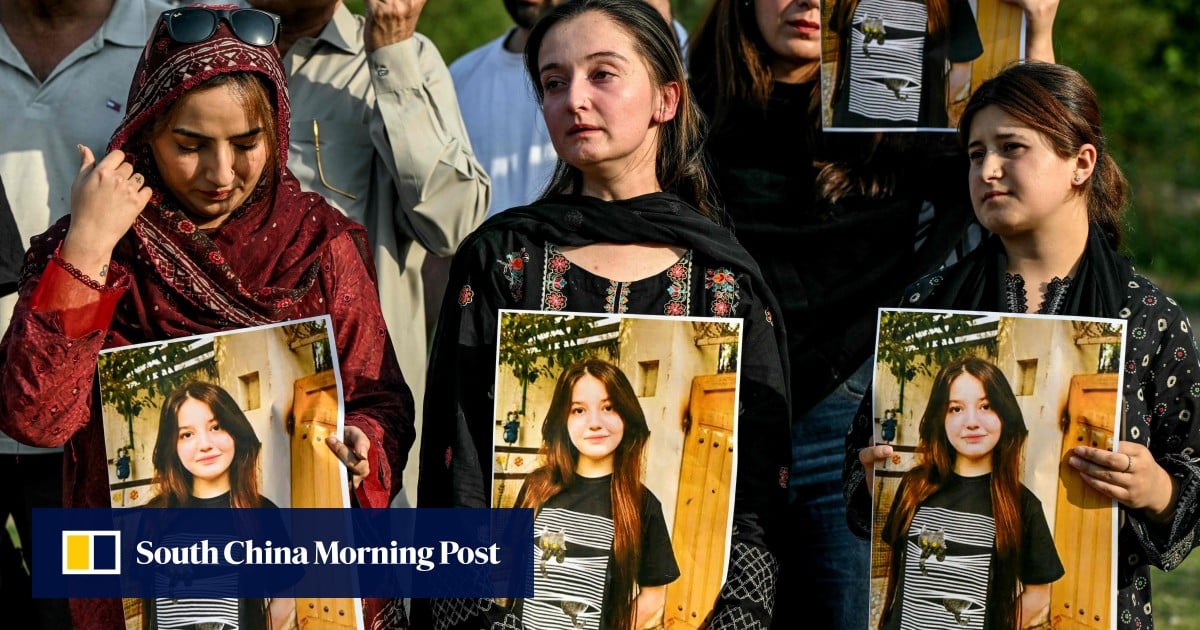
The verdict was met with a mixture of relief and somber reflection outside the courtroom. Speaking to a group of journalists, Sana Yousaf’s father, flanked by her grieving mother, expressed a sense of closure. “This verdict is a lesson for anyone who commits such acts, showing that they should never be repeated,” he stated. He emphasized that while the court’s decision could not bring his daughter back, it served as a necessary deterrent against the culture of entitlement that leads men to believe they can resort to violence when rejected.
Human rights activists have also weighed in, noting that while the death penalty is a severe punishment, the conviction itself is a win for the rule of law. "Often, in cases involving the murder of women, the legal process is hindered by pressure on the family to ‘forgive’ the perpetrator or by a lack of rigorous evidence gathering," said a representative from a local women’s rights NGO. "In this instance, the clarity of the evidence and the public pressure for justice ensured that the perpetrator was held accountable."
However, the case also highlighted a darker side of public sentiment. In the wake of Yousaf’s murder, social media platforms were flooded with a polarized mix of condolences and victim-blaming. Some users argued that her choice of profession—being a TikToker—and her willingness to discuss "taboo" topics like relationships contributed to her fate. This "moral policing" of victims is a recurring theme in Pakistan, often used to deflect responsibility from the perpetrator and onto the conduct of the woman.
The Digital Frontier and Cyber-Harassment
The murder of Sana Yousaf underscores the specific dangers faced by female influencers in Pakistan. As the digital economy grows, more women are finding empowerment through social media, yet they are also becoming targets for cyber-stalking and physical violence. The Prevention of Electronic Crimes Act (PECA) was designed to address online harassment, but many activists argue that the law is more frequently used to stifle political dissent than to protect women from digital predators.
The stalking that preceded Yousaf’s murder is a common experience for many female content creators. Analysts suggest that the transition from online harassment to physical violence is a critical gap that law enforcement agencies struggle to bridge. "There is often a failure to take ‘online’ threats seriously until they manifest in the physical world," noted a digital rights expert. "Sana’s case shows that rejection in the digital or romantic sphere can have lethal consequences when the state fails to provide a robust protective framework for those being harassed."
Legal Implications and the Path Forward
The death sentence handed to Umar Hayat is subject to appeal in the High Court and subsequently the Supreme Court of Pakistan. While Pakistan maintains the death penalty on its statutes, executions have been relatively rare in recent years, often reserved for cases of terrorism or particularly heinous crimes. Whether Hayat will eventually face the gallows or have his sentence commuted to life imprisonment remains to be seen through the appeals process.
The financial penalty of US$7,200 is also a significant component of the ruling. Under Pakistani law, such fines often serve as "Diyat" or blood money, though in this case, it was imposed alongside the maximum criminal sentence rather than as a substitute for it.
The legacy of Sana Yousaf is likely to endure in the ongoing conversation about women’s rights in Pakistan. Her death has forced a confrontation with the reality of femicide and the urgent need for a societal shift in how male rejection and female autonomy are handled. As the country moves forward, the verdict in the Islamabad courtroom serves as a stern reminder that the life of a young woman, regardless of her profession or her presence on social media, is protected by the law, and that those who seek to extinguish that life will face the ultimate weight of the justice system.
