

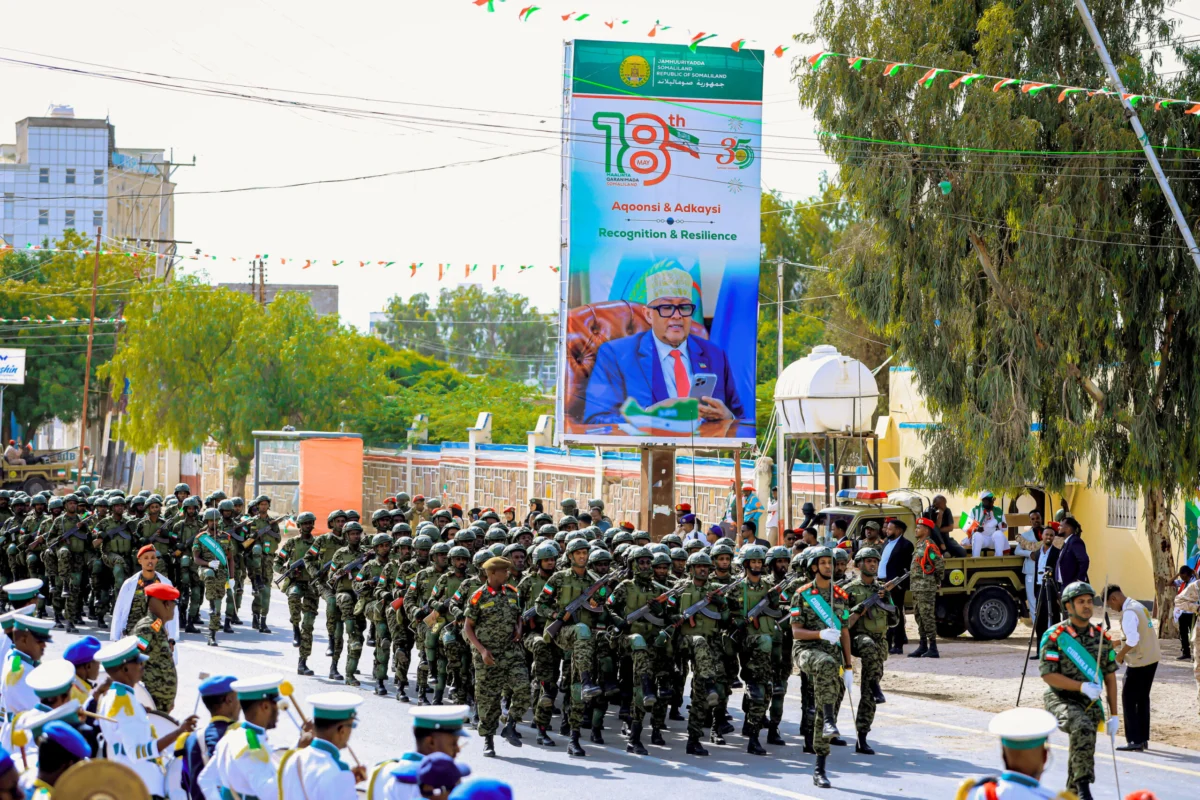
Hargeisa, Somaliland – Somaliland has recently commemorated its first year of de facto independence, a milestone marked by a groundbreaking recognition from Israel. This diplomatic breakthrough, while celebrated by many in the self-declared nation, has simultaneously exposed deep internal divisions and ignited a complex web of geopolitical challenges for the breakaway region of Somalia. The celebrations in the capital Hargeisa, characterized by military parades and traditional dances, underscored a resilient national identity, yet underlying anxieties about the new alliance and ongoing territorial disputes cast a long shadow over the future.
The Genesis of a Nation: Somaliland’s Quest for Sovereignty
Somaliland’s journey to its current status began over three decades ago. On May 18, 1991, the former British protectorate declared its independence from Somalia, just months after the collapse of Siad Barre’s regime plunged Somalia into a protracted civil war. This declaration was rooted in a distinct historical trajectory, having briefly gained independence as the State of Somaliland in June 1960 before voluntarily uniting with the Trust Territory of Somaliland (formerly Italian Somaliland) to form the Somali Republic. Decades of marginalization, political oppression, and brutal military campaigns under Barre’s rule, culminating in the Isaaq genocide in the late 1980s, fueled the region’s determination to reclaim its sovereignty.
Since 1991, Somaliland has painstakingly built its own governance structures, including a multi-party democratic system, a functioning judiciary, and a security apparatus. Unlike its southern neighbor, which has grappled with persistent instability, clan warfare, and Islamist insurgencies, Somaliland has maintained relative peace and fostered a burgeoning economy, largely driven by livestock exports, remittances from its diaspora, and the strategic port of Berbera. Despite these achievements, its independence has remained largely unrecognized by the international community, including the African Union, which fears that formal recognition could embolden other separatist movements across the continent and further destabilize existing national borders.
The Israeli Breakthrough: A Diplomatic Game-Changer?
The landscape of Somaliland’s international relations shifted dramatically in December, when Israel formally recognized its independence. This decision marked a significant departure from global consensus, making Israel the first country to acknowledge Somaliland’s self-governance since its 1991 declaration. The announcement injected a palpable surge of excitement into the anniversary celebrations in Hargeisa.
President Abdirahman Mohamed Abdullahi, addressing thousands of jubilant citizens, articulated Somaliland’s long-standing plea for international acceptance. "Somaliland has fulfilled all the requirements of a responsible, peaceful, law-abiding and democratic nation," he declared, his voice resonating across the crowd. "The question Somaliland asks the world is no longer whether we deserve recognition, but when." This statement encapsulated the nation’s frustration with the global community’s reluctance to acknowledge its stable, democratic existence.
The timing and motivations behind Israel’s recognition are subject to various interpretations. It aligns with Israel’s broader strategic interests in the Red Sea region, a critical maritime corridor for global trade and energy supplies. Somaliland’s strategic location on the Gulf of Aden, close to key shipping lanes and the conflict-torn Yemen, makes it an attractive potential partner for maritime security and intelligence sharing. Some analysts suggest the move could also be seen in the context of the Abraham Accords, which saw several Arab nations normalize relations with Israel, potentially opening doors for similar engagements in other parts of Africa. For Israel, establishing a foothold or a strong alliance in the Horn of Africa could enhance its regional influence and provide an additional layer of security against emerging threats, including those from Iran-backed groups.
Geopolitical Chessboard: Somaliland’s Strategic Value
Somaliland’s leaders have consistently emphasized the territory’s strategic importance as a key military and trading hub. Its 850-kilometer coastline along the Gulf of Aden offers significant maritime advantages, particularly with the expanding port of Berbera, which has seen considerable investment, notably from DP World. The port provides a vital gateway for landlocked Ethiopia and positions Somaliland as a potential regional logistics hub.
The Red Sea and Gulf of Aden have become increasingly militarized and strategically contested zones, especially given recent attacks on shipping by Yemen’s Houthi rebels. Control over or influence in this region is crucial for global powers. Somaliland’s stability, in stark contrast to the volatile dynamics of Somalia and Yemen, presents a unique opportunity for international partners seeking reliable allies in a critical geostrategic location. This strategic value is precisely what Somaliland hopes will eventually persuade other major players, including the United States, the United Arab Emirates, and Ethiopia, to follow Israel’s lead and grant formal recognition. However, as of now, this broader recognition has not materialized, leaving Somaliland in a delicate diplomatic limbo.
The Broader International Response: Caution and Concerns
The international community’s reluctance to recognize Somaliland stems primarily from a deeply entrenched principle of preserving existing state borders, a legacy of the colonial era. The African Union, in particular, remains staunchly opposed to formal secession, fearing that it could unleash a Pandora’s box of separatist movements across a continent already grappling with numerous internal conflicts and border disputes. Countries like Nigeria, Sudan, and the Democratic Republic of Congo, among others, face their own internal separatist pressures and view any recognition of Somaliland as setting a dangerous precedent.
Somalia vehemently rejects Somaliland’s claim to independence, viewing it as an integral part of its territory. Any move towards international recognition is seen by Mogadishu as a direct assault on its sovereignty and territorial integrity. This persistent opposition from Somalia is a major impediment, as international law generally favors recognition only with the consent of the parent state or under exceptional circumstances, such as widespread atrocities or a clear mandate from a UN-backed process. Neither of these conditions has been met to the international community’s satisfaction regarding Somaliland.
The United States, while maintaining unofficial diplomatic ties and providing developmental assistance to Somaliland, has consistently reiterated its support for Somalia’s territorial integrity. The UAE, a significant investor in Berbera port, and Ethiopia, a close economic partner, also walk a fine line, engaging with Somaliland pragmatically while avoiding official recognition that would antagonize Mogadishu. This cautious approach reflects a broader international desire to avoid further destabilizing the Horn of Africa.
Internal Divisions and the Shadow of Gaza
While the Israeli recognition brought a wave of national pride to many, it has simultaneously exposed significant internal divisions within Somaliland, particularly among its almost entirely Muslim population. In some areas, the new relationship has been embraced with enthusiasm, symbolized by the appearance of Israeli flags in homes and businesses. This segment often views the alliance as a pragmatic step towards securing the elusive international recognition and the economic benefits that could follow.
However, a vocal segment of the population views the alliance with deep suspicion and outright opposition. This sentiment is profoundly shaped by the ongoing conflict in Gaza, where Israel’s military actions have drawn widespread condemnation in many Muslim-majority nations. For many Somalilanders, solidarity with Palestinians is a strong moral and religious imperative, making an alliance with Israel highly contentious. Local activists report that dozens of individuals, including religious scholars and young men carrying Palestinian flags, have been arrested during protests against the new ties, highlighting the depth of this opposition. The dichotomy underscores a complex interplay between national self-interest and deeply held religious and ethical convictions. Resident Dahir Omar Bile, 42, articulated this sentiment, expressing fears that Israel’s conduct in Gaza would damage Somaliland’s broader search for recognition. "Somaliland fought hard for its independence but I can’t trust [Israeli Prime Minister Benjamin] Netanyahu. He’s killed children the same age as my own," he stated, reflecting a widespread public outcry.
Territorial Disputes and Ongoing Conflict: The Las Anod Quagmire
Somaliland’s claim to full territorial control is also far from settled, presenting another significant challenge to its stability and recognition aspirations. The eastern regions of Sool, Sanaag, and Cayn (SSC) are hotly contested, with the newly formed North East State of Somalia, also known as SSC-Khaatumo, asserting authority over these areas, particularly around the city of Las Anod.
The conflict in Las Anod escalated dramatically in 2023, leading to intense fighting between Somaliland forces and local clan militias aligned with SSC-Khaatumo. The clashes resulted in devastating consequences for the civilian population. Amnesty International reported that hundreds, possibly thousands, were killed or wounded, and approximately 200,000 people were displaced. The fighting saw the shelling of vital civilian infrastructure, including hospitals, schools, mosques, and residential areas, a clear violation of international humanitarian law.
Ahmed Ali Shire, a North East State member of parliament from Las Anod, warned that the "conflict will reignite," expressing deep concern that Israel’s involvement could exacerbate the situation. He drew parallels to the foreign interference that fueled Somalia’s devastating civil war in the 1980s, suggesting that a new external actor could further complicate an already volatile internal dispute. This territorial dispute not only diverts crucial resources from development but also undermines Somaliland’s claim of being a fully stable and unified entity, a key criterion for international recognition. The unresolved conflict in the east complicates its image as a beacon of peace in the Horn of Africa.
Regional Security Concerns: The Shadow of Houthi Threats
The geopolitical implications of the Israeli-Somaliland alliance extend beyond internal dissent and territorial disputes. Yemen’s Houthi rebels, backed by Iran, have issued explicit threats to strike Somaliland if Israel establishes an expected military presence there. The Houthis, who control significant parts of Yemen and have been actively targeting international shipping in the Red Sea, view any Israeli military presence in the region as a direct threat to their interests and a violation of regional sovereignty.
These threats are not taken lightly in Somaliland. Resident Dahir Omar Bile articulated a widespread fear, stating, "The Houthi threats have many people scared." The potential for Somaliland to be drawn into the broader regional proxy conflicts, particularly those involving Iran and its allies, adds a dangerous dimension to its new diplomatic alignment. A Houthi attack, even if symbolic, could severely disrupt Somaliland’s maritime trade, deter foreign investment, and compromise its hard-won stability. It forces Somaliland to weigh the benefits of Israeli recognition against the tangible security risks posed by powerful, non-state actors in its immediate neighborhood.
Economic Outlook and Development Aspirations
Despite the political and security challenges, Somaliland maintains ambitious economic development goals. The expansion of Berbera port, coupled with the Berbera Corridor road project connecting it to Ethiopia, aims to transform the region into a crucial trade artery. The government has also been exploring opportunities in oil and gas exploration, though progress has been slow due to the lack of recognition and the associated investment risks. Remittances from the diaspora remain a vital component of the economy, alongside livestock exports, which constitute a significant portion of its GDP.
The hope is that Israeli recognition, even if not immediately followed by others, could unlock new avenues for investment, technology transfer, and trade, particularly in sectors like agriculture, water management, and cybersecurity, where Israel has advanced expertise. However, the ongoing conflicts and regional instability could deter potential investors, underscoring the delicate balance between diplomatic gains and practical economic realities.
The Path Ahead: A Fragile Future
Somaliland’s first year of independence under Israeli recognition is a testament to its enduring aspiration for statehood, yet it also highlights the multifaceted challenges it faces. The path to full international recognition remains arduous, complicated by regional political sensitivities, internal divisions over the Israeli alliance, and unresolved territorial disputes. The strategic location that makes Somaliland attractive to some also places it squarely in the crosshairs of regional power struggles, risking its hard-won peace.
For President Abdullahi and his administration, the immediate future involves navigating these complex dynamics. They must balance the pursuit of wider international acceptance with addressing domestic concerns, safeguarding national security against external threats, and resolving internal conflicts peacefully. The coming years will determine whether Israel’s bold recognition becomes a catalyst for Somaliland’s integration into the global community or if it merely deepens its isolation in an increasingly volatile region. The question "when" for recognition, as posed by President Abdullahi, continues to hang heavy in the air, awaiting an answer from a world grappling with its own complex geopolitical calculations.
