

The Republic of Sudan has entered a period of profound instability as the conflict between the Sudanese Armed Forces (SAF) and the paramilitary Rapid Support Forces (RSF) enters its third week, pushing the nation toward what the United Nations describes as a humanitarian "breaking point." Despite the announcement of a 72-hour ceasefire extension on April 30, 2023, the capital city of Khartoum remains a theater of active warfare, characterized by heavy artillery, airstrikes, and systematic looting. As foreign governments conclude their complex evacuation operations, the millions of Sudanese citizens left behind face a rapidly deteriorating landscape of scarcity, violence, and collapsed infrastructure.
The violence, which erupted on April 15, 2023, stems from a deep-seated power struggle between General Abdel Fattah al-Burhan, the head of the SAF, and General Mohamed Hamdan Dagalo, better known as Hemedti, who leads the RSF. What began as a dispute over the integration of the RSF into the regular military under a planned transition to civilian rule has devolved into a full-scale war for control of the third-largest country in Africa. According to the Sudanese Health Ministry, the death toll has climbed to at least 528, with over 4,500 wounded, though international observers and medical groups on the ground suggest the actual figures are likely significantly higher due to the inability of many to reach hospitals.
The Reality of a Fragile Ceasefire
The 72-hour extension of the humanitarian truce, brokered through intense international pressure, has largely failed to silence the guns. On Monday morning, residents of Khartoum reported the continued roar of fighter jets and the staccato of anti-aircraft fire. The SAF has increasingly relied on its air superiority, deploying drones and fighter jets to strike RSF positions embedded within residential neighborhoods. In response, the RSF, which lacks an air force but possesses highly mobile ground units, has fanned out across the city’s suburbs, using civilian homes as shields and checkpoints.
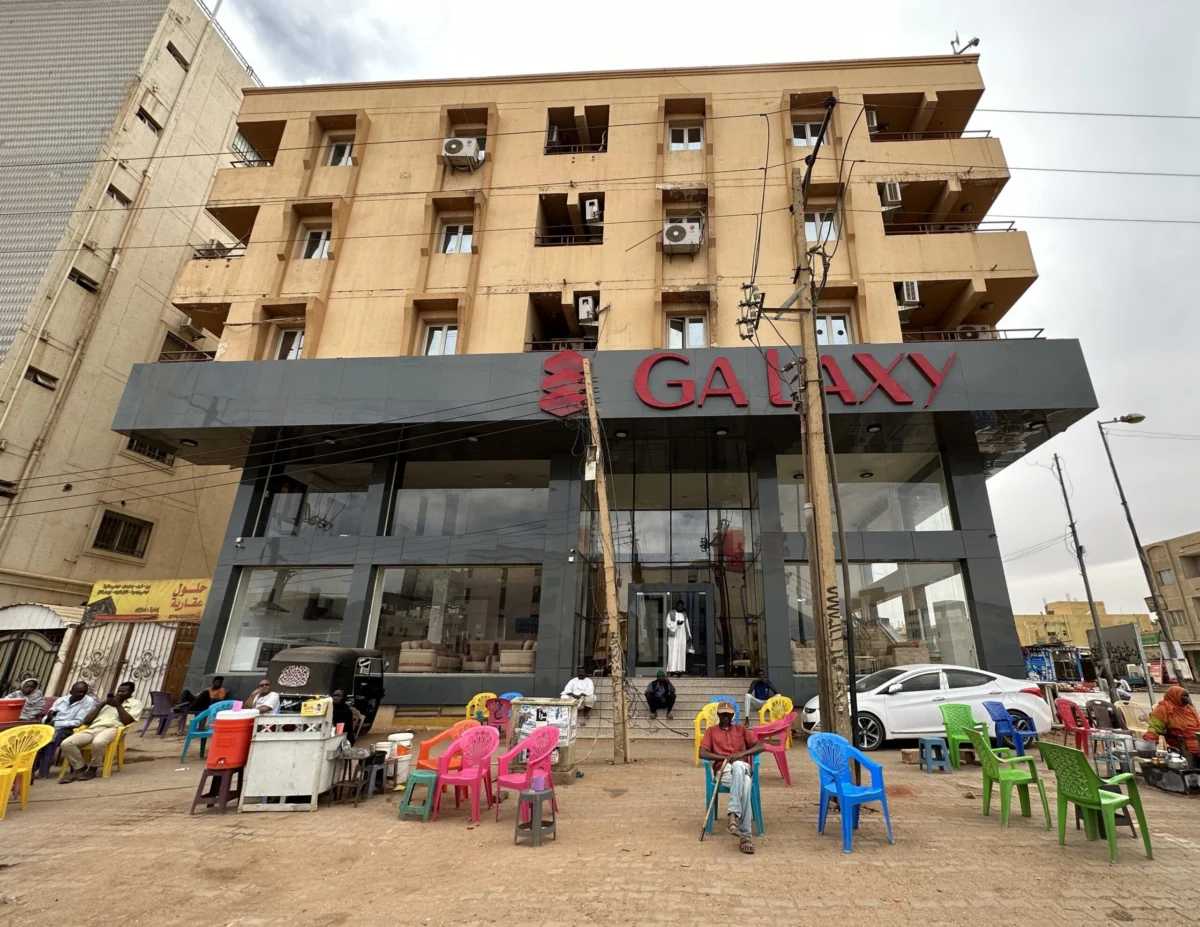
The tactical nature of the fighting has transformed Khartoum, a city of five million people, into a hollowed-out battlefield. Residents who have attempted to venture out for supplies describe a scene of utter devastation. Mohamed Ezzeldin, a resident who briefly returned to the capital, noted that industrial zones have been stripped bare by looters. "We saw dead bodies. An industrial area that was all looted. We saw people carrying TVs on their backs and big sacks looted from factories," he reported. This breakdown of law and order has exacerbated the fears of a population already traumatized by the constant bombardment.
Humanitarian Catastrophe and the Breaking Point
The United Nations has issued increasingly dire warnings regarding the sustainability of life in the conflict zones. Martin Griffiths, the UN Under-Secretary-General for Humanitarian Affairs, emphasized that the "scale and speed" of the crisis are unprecedented in Sudan’s modern history. Before the conflict began, roughly one-third of the population—approximately 15 million people—already required some form of humanitarian assistance. That number is expected to skyrocket as supply chains fail and basic services evaporate.
In Khartoum and the surrounding areas, the infrastructure of daily life has effectively ceased to function. Power and water supplies are intermittent at best, leaving millions without clean drinking water or refrigeration for food. The healthcare system is on the verge of total collapse; the World Health Organization (WHO) reports that a vast majority of hospitals in the conflict zones are either out of service due to damage or have been occupied by military forces. For those that remain open, a critical shortage of medical supplies, oxygen, and fuel for generators means that even basic life-saving procedures are becoming impossible.
The economic impact is equally devastating. Small business owners, such as Abdelbagi, a barber in the capital, face the impossible choice between safety and survival. "I show up to work for two or three hours then I close up because it’s not safe," he said, noting that the skyrocketing prices of basic goods force him to risk his life daily. For many, the cost of transport out of the city has become prohibitive, effectively trapping the most vulnerable residents in a war zone.
A Chronology of Escalation: April 15 to April 30
The current crisis did not emerge in a vacuum but is the result of years of political volatility following the 2019 ousting of longtime dictator Omar al-Bashir.
- April 15: Heavy fighting breaks out in Khartoum and other cities after weeks of tension regarding the RSF’s integration into the army. Both sides blame each other for the initial spark.
- April 16–18: The conflict spreads to the Darfur region, reigniting old ethnic tensions. International calls for a ceasefire begin, but initial 24-hour truces are immediately violated.
- April 21–23: As the Eid al-Fitr holiday begins, a temporary lull allows for some residents to flee. Foreign nations begin planning the evacuation of diplomatic staff.
- April 25: A US-Saudi brokered 72-hour ceasefire is announced. While it allows for a massive exodus of foreigners, fighting continues in key strategic areas like the presidential palace and the army headquarters.
- April 27–29: The ceasefire is extended, yet reports of heavy artillery and airstrikes persist. The humanitarian situation in Darfur, particularly in El Geneina, becomes critical with reports of mass civilian casualties.
- April 30: A second 72-hour extension is agreed upon, even as the UN warns of a "breaking point" and the last major foreign evacuation flights depart.
The Exodus: Refugees and Foreign Evacuations
As the security situation remains "highly precarious," the international community has shifted its focus from mediation to extraction. Over the past week, a massive logistical operation has seen thousands of foreign nationals evacuated via Port Sudan on the Red Sea, or through military airlifts from airfields near Khartoum. The United Kingdom, Germany, France, and several other European and Middle Eastern nations have largely completed their operations. Britain’s final evacuation flight was scheduled for Monday, signaling the end of a direct Western presence in the capital.
However, for the Sudanese people, the options for escape are far more perilous. The UN Refugee Agency (UNHCR) estimates that at least 50,000 people have already crossed into neighboring Chad, Egypt, South Sudan, and Ethiopia. Many of these nations are themselves grappling with internal instability and resource scarcity, leading to fears of a wider regional crisis. The journey to the borders is fraught with danger, involving long treks through desert heat, numerous military checkpoints, and the constant threat of banditry.
Background: The Roots of the Rivalry
To understand the current conflict, one must look at the transition period following the 2021 military coup. General al-Burhan and Hemedti were once allies who cooperated to sideline civilian politicians and consolidate military control over the state. However, the partnership was one of convenience rather than shared vision.
The RSF grew out of the Janjaweed militias used by the Bashir government to suppress the insurgency in Darfur in the early 2000s. Under Hemedti’s leadership, the RSF evolved into a powerful, semi-autonomous paramilitary force with its own sources of funding, including gold mining interests. General al-Burhan and the traditional military establishment viewed the RSF’s independence as a threat to the state’s monopoly on force. The breaking point was the "Framework Agreement" supported by the international community, which required the RSF to be integrated into the SAF within two years—a timeline Hemedti resisted, fearing his personal power would be neutralized.
Official Responses and Tactical Stalemates
Both military leaders have adopted uncompromising stances, suggesting a protracted conflict. General al-Burhan has stated he will not negotiate with Hemedti, whom he labels a "rebel leader." Conversely, Hemedti has conditioned any talks on the cessation of SAF airstrikes. On Monday, the SAF claimed to have reduced the RSF’s combat effectiveness by half, while the RSF maintained that it still controls the majority of Khartoum’s strategic hubs and is successfully repelling army reinforcements.
The international response has been characterized by a mix of diplomatic pressure and humanitarian mobilization. The World Food Programme (WFP), which suspended operations after three of its staff members were killed in the early days of the war, announced it would resume work in safer regions of Sudan. WFP head Cindy McCain emphasized that while the security situation is "highly precarious," the need for food aid is too great to ignore.
Broader Implications and Future Outlook
The implications of the Sudan conflict extend far beyond its borders. Sudan occupies a geostrategic position bordering seven countries and the Red Sea, a vital corridor for global trade. A prolonged civil war could destabilize the entire Horn of Africa, creating a vacuum that might be exploited by extremist groups or lead to a massive, long-term refugee crisis.
Furthermore, the revival of conflict in Darfur is a chilling development. The region, which was the site of a genocide in the early 2000s, is seeing a return to communal violence. In El Geneina, the capital of West Darfur, the breakdown of central authority has allowed for the resurgence of ethnic militias, leading to widespread arson and the destruction of displacement camps.
As the international community watches the ceasefire extensions fail one after another, the focus is shifting toward establishing a permanent humanitarian corridor. Aid agencies are attempting to use Port Sudan as a logistics hub, but the 800-kilometer journey to Khartoum remains blocked by active combat zones. For civilians like Victoria, a tea seller in Khartoum, the political maneuvers of generals mean little compared to the daily struggle for bread. "Being scared doesn’t help," she said, summarizing the stoic desperation of a nation caught in the crossfire. "I risk my life to try to work… just sitting useless doesn’t help."
Without a significant breakthrough in negotiations or a decisive military victory—neither of which appears imminent—Sudan faces the grim prospect of a fragmented state, a collapsed economy, and a humanitarian disaster that could resonate for generations.
