

The annual media presentations known as the "upfronts" have long been the exclusive domain of Hollywood royalty, where broadcast networks and cable giants showcase their upcoming fall slates to secure billions in advertising commitments. However, the 2026 season in New York City has signaled a seismic shift in the industry’s hierarchy. While live sports and high-budget scripted dramas once commanded the spotlight, this year’s events saw "creator content"—videos produced by independent digital stars—sharing the stage with traditional studio offerings. From YouTube’s massive Brandcast event at Lincoln Center to the presentations of legacy giants like Fox and Warner Bros. Discovery (WBD), the message to advertisers was clear: the line between professional studio production and creator-led digital content has effectively vanished.
The Economic Engine: A $44 Billion Shift in Advertising
The rise of creator content is not merely a cultural trend but a massive economic pivot. According to a landmark report from the Interactive Advertising Bureau (IAB), advertiser spending on creator-led content reached $37 billion in 2025. This figure is projected to climb to $44 billion by the end of 2026, representing one of the fastest-growing segments in the media landscape. As traditional linear television viewership continues to contract, brands are aggressively reallocating budgets toward platforms where audiences are most engaged.
"They are this generation’s storytellers, tastemakers, and stars, producing the most relevant and engaging programming on the planet," said Brian Albert, managing director of YouTube Solutions, during the Brandcast presentation. Albert emphasized that creators have moved beyond "influencer" status to become media moguls in their own right. The appeal for advertisers lies in the "trust" and "community" these personalities have built. Unlike a traditional sitcom character, a creator like Jesse "Jesser" Riedel or Alex Cooper maintains a direct, daily dialogue with their audience, creating a level of brand loyalty that traditional 30-second commercials struggle to replicate.
Chronology of a Transformative Week: From Fox to YouTube
The 2026 upfronts week followed a timeline that illustrated the total integration of digital and traditional media. The week began on Monday with Fox Corporation’s presentation, which traditionally focuses on the NFL and prime-time animation. However, the star power on stage included not just NFL legend Tom Brady, but also culinary icon Gordon Ramsay, who utilized the platform to tout "Fox Creator Studios." This new division is designed specifically to develop digital-first formats, bridging the gap between Ramsay’s television hits and his massive social media presence.
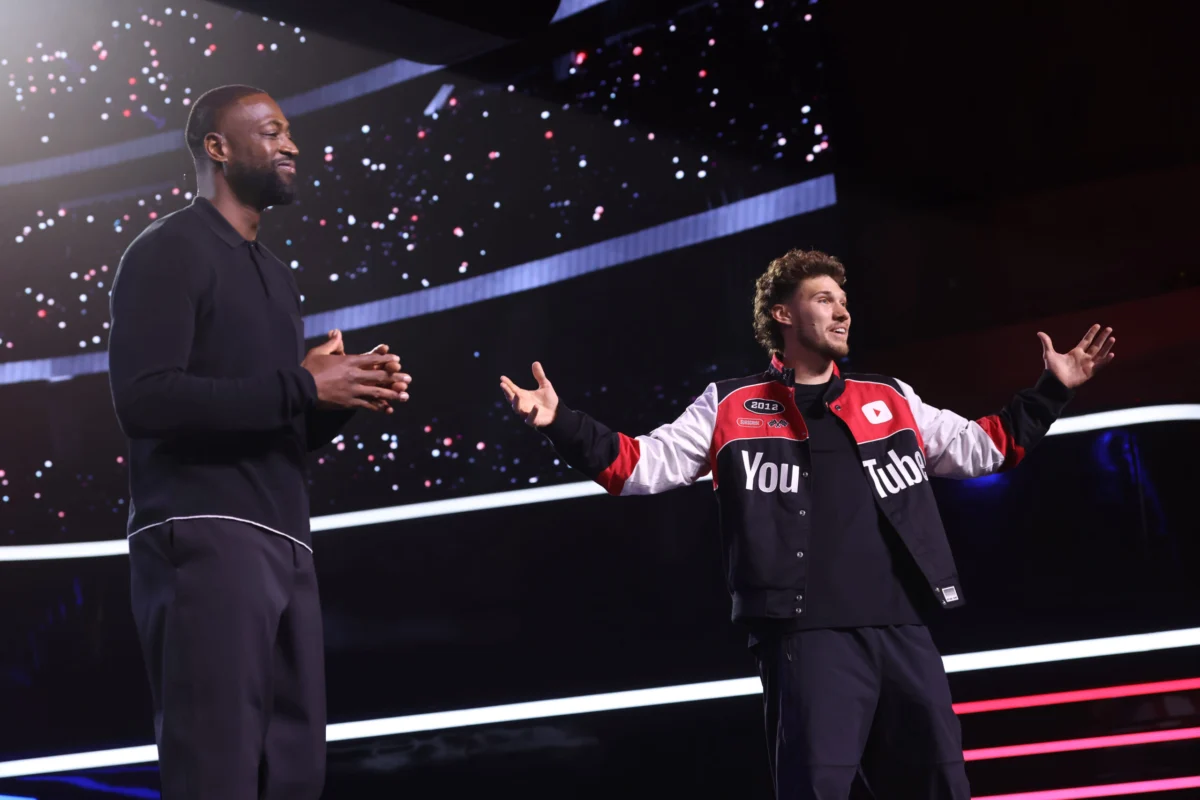
By mid-week, the focus shifted to the Lincoln Center, where YouTube hosted its Brandcast event. The presentation featured a mix of sports icons like Dwyane Wade and digital powerhouses such as Jesse Riedel and comedian Trevor Noah. The event served as a victory lap for YouTube, which continues to dominate the streaming landscape.
Simultaneously, Warner Bros. Discovery held its presentation, where the narrative focused on how legacy brands like The Food Network and HGTV are being revitalized through "creator-led" social strategies. The week concluded with Amazon Prime Video’s showcase, which highlighted a major multiyear deal with Oprah Winfrey for "The Oprah Podcast," illustrating that even the most established names in media are adopting the "360-degree" content model pioneered by digital creators.
The Streaming Dominance and Nielsen’s "The Gauge"
The pivot toward creators is supported by hard data regarding consumer behavior. Nielsen’s monthly "The Gauge" reports, which track total television consumption in the United States, have consistently placed YouTube at the top of the streaming leaderboard. As of February 2026, YouTube accounted for 12.7% of all streaming viewership, comfortably ahead of Netflix’s 8.4%.
This dominance is driven by the shift from mobile screens to the "big screen" in the living room. Industry executives noted that a significant portion of creator content is now consumed via Connected TV (CTV) apps. This transition allows creators to compete directly with traditional television shows for the same advertising "inventory."
The economics of streaming have forced media companies to find ways to provide more "bang for the buck." While live sports—particularly the NFL—continue to command the highest ad rates, the cost of acquiring those rights has reached "hefty premiums." In contrast, creator content offers a cost-effective alternative. Whether it is a video podcast or specialized children’s programming like the "Ms. Rachel" phenomenon, these shows offer high engagement at a fraction of the production cost of a live sporting event or a scripted drama.

Legacy Media’s Strategic Adaptation: Fox and WBD
Traditional media companies are not standing idly by as digital platforms claim market share; instead, they are absorbing the creator model into their own ecosystems. Warner Bros. Discovery has been a frontrunner in this integration. Karen Bronzo, WBD’s chief global marketing officer for U.S. networks and news, noted that the company has been working with influencers for years, but the scale has now changed.
"When you’re experiencing the content from a creator, you do feel it is personal. It is a much more, sort of, one-to-one relationship and a different kind of connection," Bronzo stated. WBD’s strategy involves expanding its social media channels into hubs for original series. For example, The Food Network is launching a new YouTube-original series featuring chef Esther Choi, while HGTV and the annual "Puppy Bowl" are being used as engines for creator-led digital content.
Fox Corp has taken a similar path with its free, ad-supported streaming service, Tubi. Recognizing that Gen Z and younger Millennials are increasingly "cord-never" households, Fox launched "Tubi for Creators." This initiative provides a pathway for YouTube personalities to bring their existing followings to a more traditional streaming environment. Tubi’s strategy has been successful in attracting the "elusive" younger demographic that advertisers crave. Earlier this year, Tubi announced an exclusive soccer-focused series led by Jesse Riedel, specifically designed to leverage his massive digital fanbase.
The "360-Degree" Content Model: Amazon and Oprah
Amazon Prime Video’s approach highlights the evolution of the "video podcast" as a cornerstone of the creator economy. Angie More, head of creator advertising partnerships at Amazon, noted that podcasting has become a "360-degree" medium. "You get some of your content watching long-form on video platforms, and then a lot of people are starting to consume more short and mid-form on social platforms," she explained.
The signing of Oprah Winfrey to a multiyear deal for "The Oprah Podcast" is a prime example of this. The deal includes not just audio rights, but video distribution and access to her extensive library. By treating a legacy star like a modern digital creator—distributing content across multiple formats and platforms—Amazon is attempting to capture the same cross-platform engagement that fuels the success of younger digital stars.
Analysis: The Implications of a Singular View
The merging of studio-led and creator-led content marks a fundamental change in how the media industry is structured. Julie Clark, a senior vice president at TransUnion and a veteran ad industry executive, observed that the "distinct difference" between these two worlds is evaporating into a "singular view."
"If you look at the rise of things like long-form video podcasts to quick-hitting tutorials, there is an understanding that the content landscape has shifted dramatically," Clark said. "This is absolutely changing how upfronts are contemplated and activated."
For advertisers, this shift presents both an opportunity and a challenge. The opportunity lies in the ability to target niche communities with high precision and to benefit from the "halo effect" of a trusted creator. The challenge involves measuring the effectiveness of these ads across fragmented platforms. Unlike the centralized ratings of the linear TV era, the modern advertiser must navigate a complex web of YouTube metrics, streaming data, and social media engagement.
Future Outlook: The New Standard for Media Buying
As the 2026 upfronts conclude, the industry is looking toward a future where "creator" is no longer a sub-category of entertainment but the standard. The $44 billion projected spend is likely just the beginning, as more traditional celebrities adopt creator-style distribution and more digital creators gain access to Hollywood-level production resources.
The success of platforms like Tubi and YouTube in capturing Gen Z audiences suggests that the "upfronts" of the future will continue to move away from the "broadcast season" model and toward a year-round, platform-agnostic approach. For the media giants of the past, survival now depends on their ability to embrace the stars of the present—personalities who may have started in a bedroom with a webcam but who now command the attention of millions and the budgets of the world’s largest brands.
