

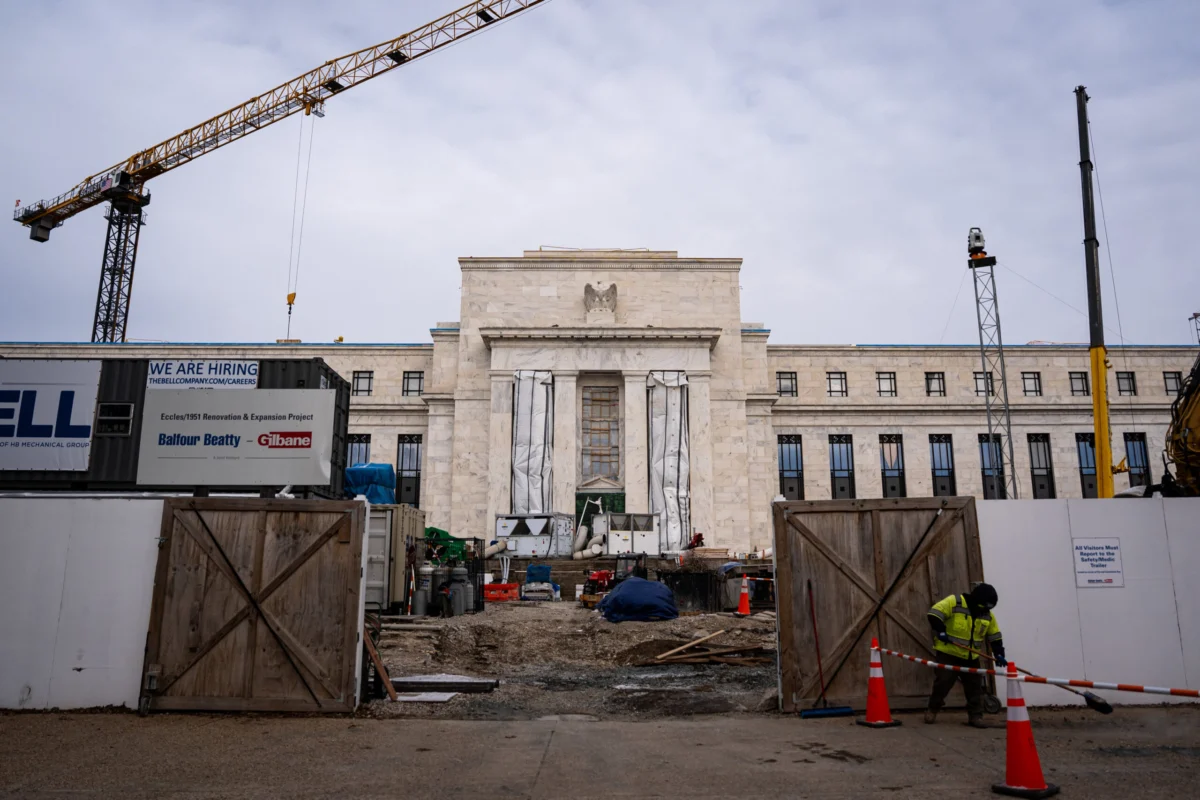
Markets are signaling a significant shift in Federal Reserve policy, with traders now pricing in an interest rate hike as the central bank’s next move for the first time in the current monetary policy cycle. This dramatic reassessment follows a barrage of surprisingly high inflation readings over the past week, prompting a rapid repricing of expectations for the Federal Open Market Committee (FOMC).
Inflationary Pressures Mount, Reshaping Market Expectations
The latest data paints a stark picture of accelerating inflation across multiple fronts. Both consumer and wholesale inflation figures for April 2026 posted multiyear highs, exceeding economists’ forecasts and raising concerns about the persistence of price pressures. The Consumer Price Index (CPI), a key measure of inflation, showed a significant uptick, driven by rising costs for essential goods and services. Simultaneously, the Producer Price Index (PPI), which tracks inflation at the wholesale level, also registered substantial gains, indicating that businesses are facing higher input costs that are likely to be passed on to consumers.
Adding to these concerns, import and export prices have also surged to levels not seen since the last significant inflation spike. This trend suggests that global supply chain disruptions and currency fluctuations are contributing to domestic price increases. The historical parallel to the period that prompted aggressive Fed rate hikes, beginning with four consecutive 75-basis-point increases in 2022, is not lost on market participants.
FedWatch Tool Reflects Growing Probability of Rate Hikes
The CME Group’s FedWatch tool, which analyzes prices of 30-day federal funds futures contracts to gauge market expectations for the Fed’s future actions, now indicates a growing probability of an interest rate increase. As of Monday, December 15, 2025, traders are assigning a nearly 51% probability to a rate hike in December. The likelihood of a move higher by January 2026 rises to approximately 60%, and by March 2026, the probability exceeds 71%. This represents a significant departure from previous market sentiment, which had largely anticipated a period of stable or even declining interest rates.
This recalibration of market expectations is a direct response to the recent inflation data. For months, the Federal Reserve had maintained a stance of holding interest rates steady, with the expectation that inflationary pressures would gradually abate. However, the persistence and acceleration of price increases have forced a reevaluation of this outlook.
New Fed Leadership and Divergent Views
The shift in market sentiment coincides with a change in leadership at the Federal Reserve. Kevin Warsh officially took the helm as the new Federal Reserve Chair as of Friday, May 15, 2026. Warsh, a former Fed Governor, has previously expressed a view that the central bank might be able to lower interest rates even in the current economic environment. This perspective, however, appears to be increasingly at odds with the prevailing inflation data and market expectations.
Adding further complexity to the Fed’s policy outlook, three members of the FOMC dissented from the recent vote to hold benchmark rates steady. These dissenters voiced their disagreement with language in the FOMC statement that hinted at a future rate cut. Their objections underscore a growing divergence of opinion within the Federal Reserve regarding the appropriate path forward for monetary policy. While the majority of the committee may have favored a cautious approach, the dissenting voices suggest that a hawkish faction is gaining traction, particularly in light of the renewed inflation concerns.
Economists Project Elevated Inflation
The broader economic consensus also reflects heightened inflation worries. Economists participating in the Survey of Professional Forecasters, as reported on Friday, May 15, 2026, project that second-quarter inflation will reach a peak of 6%. This forecast represents a substantial upward revision from previous estimates and signals a significant challenge for the Federal Reserve in achieving its price stability mandate. Such a high inflation rate would necessitate a robust policy response to prevent it from becoming entrenched in the economy.
Background and Chronology of Recent Events
The current market sentiment has been shaped by a series of key events:
- Early 2025: The Federal Reserve maintained its benchmark interest rate at a stable level, with market participants largely anticipating a period of steady rates or even potential cuts later in the year, contingent on inflation moderating.
- Late 2025 – Early 2026: Inflationary pressures began to show signs of unexpected resilience, with several key economic indicators deviating from forecasts.
- April 2026 FOMC Meeting: The FOMC voted to hold interest rates steady. However, three members dissented, expressing concerns about the forward guidance and advocating for a more aggressive stance against inflation.
- Mid-May 2026: A series of stark inflation reports were released, including multiyear highs in both CPI and PPI for April. Import and export prices also surged.
- May 15, 2026: Kevin Warsh officially assumes the role of Federal Reserve Chair.
- May 15, 2026: The Survey of Professional Forecasters releases its updated inflation projections, forecasting a second-quarter peak of 6%.
- Mid-December 2025 (Projected): Based on current FedWatch data, markets are pricing in a significant probability of an interest rate hike.
Supporting Data and Analysis
The recent inflation data provides critical context for the market’s pivot:
- Consumer Price Index (CPI): While specific figures for April 2026 are not detailed in the provided text, the article states they posted "multiyear highs." For reference, in previous inflation cycles, sustained CPI increases above 3-4% have often prompted central bank action. A 6% projection for the second quarter of 2026 would represent a significant acceleration from the Fed’s long-term target of 2%.
- Producer Price Index (PPI): Similar to CPI, the PPI also reached "multiyear highs." Historically, a widening gap between PPI and CPI can indicate that businesses are absorbing some costs, but eventually, these pressures are passed on. The current surge suggests this buffer is diminishing.
- Import and Export Prices: The mention of these prices reaching levels not seen since the last inflation spike highlights the global dimension of current price pressures. This could be due to factors like commodity price volatility, supply chain bottlenecks, or currency depreciation, all of which can feed into domestic inflation.
- Fed Funds Futures: The CME FedWatch tool’s probabilities are derived from the pricing of short-term interest rate futures. A 51% probability of a December hike, for instance, means that the market is effectively betting that the FOMC will raise the target range for the federal funds rate by 25 basis points at its December meeting.
Broader Implications and Potential Impact
The market’s shift in expectation has several significant implications:
- Economic Growth: An interest rate hike, especially if it follows a period of prolonged low rates, can act as a brake on economic growth. Higher borrowing costs can dampen consumer spending and business investment, potentially leading to a slowdown. The Fed will need to carefully balance its commitment to price stability with the risk of tipping the economy into recession.
- Asset Markets: The prospect of higher interest rates can negatively impact asset valuations, particularly for equities and bonds. Bond prices typically move inversely to interest rates, so rising rates can lead to capital losses for bondholders. Stock markets may face pressure as borrowing costs increase and future earnings are discounted at a higher rate.
- Borrowing Costs: Consumers and businesses will likely face higher borrowing costs for mortgages, car loans, credit cards, and business loans. This can affect affordability and investment decisions.
- Federal Reserve Credibility: The Fed’s ability to manage inflation expectations is crucial for its credibility. If inflation remains persistently high, the central bank may need to implement more aggressive measures, potentially at a greater economic cost. The current situation will be a significant test for the new Fed Chair.
- Global Financial Markets: As the U.S. Federal Reserve is the world’s most influential central bank, any significant policy shift can have ripple effects across global financial markets, influencing currency exchange rates, capital flows, and borrowing costs in other countries.
The coming months will be critical for the Federal Reserve as it navigates these complex economic crosscurrents. The renewed focus on inflation and the market’s expectation of rate hikes suggest a more hawkish stance may be on the horizon, marking a pivotal moment in the current monetary policy cycle. The challenge for Chair Warsh and the FOMC will be to rein in inflation without causing undue damage to economic growth.
