

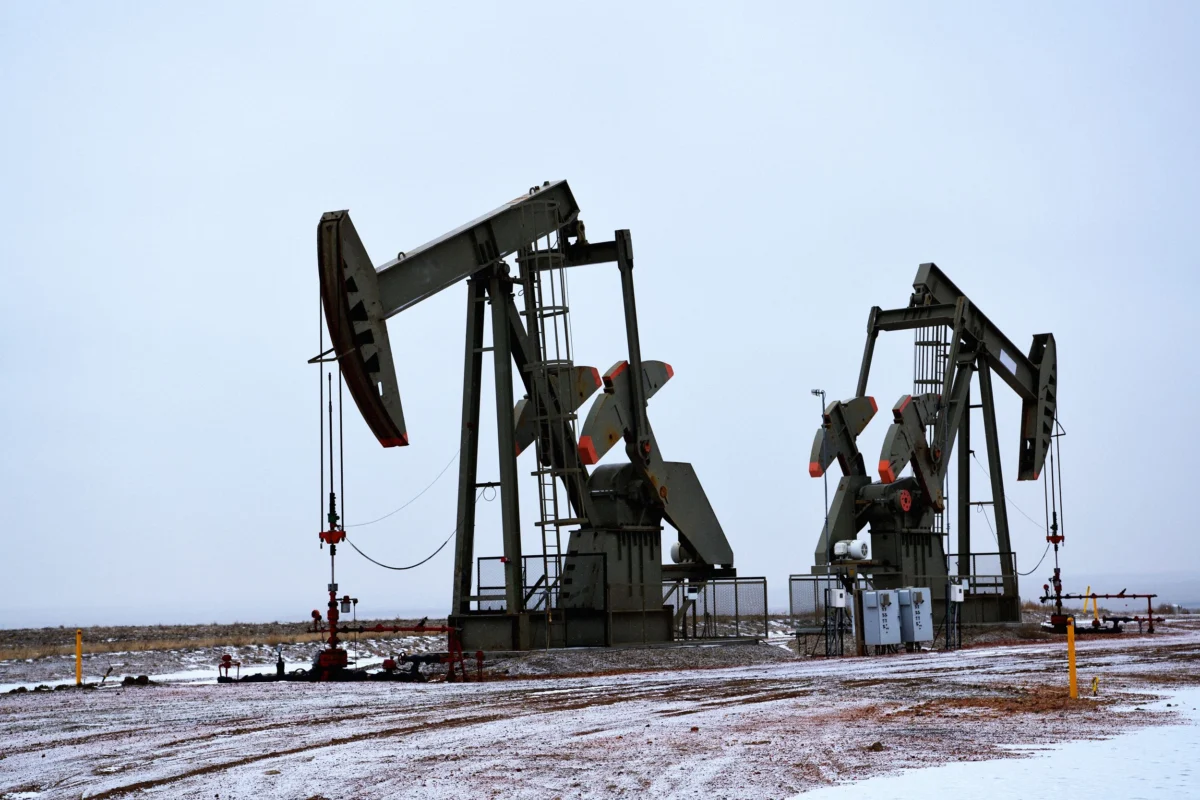
As states across the American landscape grapple with the dual challenges of meeting rising electricity demands and fulfilling decarbonization goals, an unconventional solution is emerging from the relics of the fossil fuel era. Millions of abandoned and inactive oil and gas wells, long considered environmental hazards and financial liabilities, are being re-evaluated as potential conduits for geothermal energy. This transition from "orphan wells" to clean energy assets represents a burgeoning frontier in the renewable energy sector, blending historical geological data with modern thermal extraction technology.
The scale of the issue is immense. According to estimates from the Environmental Protection Agency (EPA), there are between 2 million and 3.2 million abandoned oil and gas wells scattered across the United States. Many of these sites lack a documented owner, leaving state and federal governments to manage the environmental fallout. These wells are notorious for leaking methane—a greenhouse gas significantly more potent than carbon dioxide in the short term—and contaminating local groundwater. Until recently, the primary policy focus has been on "plugging" these wells with cement, a process that is both costly and provides no economic return. However, a new bipartisan consensus is forming around the idea that these pre-drilled holes could serve as the foundation for a national geothermal expansion.
The Economic and Environmental Stakes of Orphan Wells
The financial burden of managing abandoned wells is a primary driver for the shift toward geothermal conversion. In Oklahoma alone, state regulators have identified more than 20,000 abandoned wells. Estimates suggest that plugging these sites would require an investment of several hundred million dollars and take over two centuries to complete at current rates of progress. The cost of properly sealing a single well can range from $75,000 to over $150,000, depending on the depth, location, and level of structural decay.
By converting these wells into geothermal heat sources or underground energy storage facilities, policymakers hope to flip the economic script. Instead of a sunk cost, the wells become revenue-generating infrastructure. This approach not only mitigates the leak of methane by sealing the well for a new purpose but also leverages the existing "sunk costs" of the original drilling. Because the holes are already in the ground, geothermal developers can bypass the most expensive and risky phase of project development: the initial drilling, which often accounts for 50% or more of a geothermal project’s total capital expenditure.
A Chronology of State-Level Legislative Action
The movement to formalize well conversion has gained significant momentum over the last 24 months, with several states passing landmark legislation to clarify ownership and regulatory oversight.
In 2023, New Mexico emerged as a leader in this space by adopting a law specifically designed to address its 2,000-plus orphan wells. This legislation provided a framework for the state to transfer the liability of abandoned wells to geothermal developers, provided they could demonstrate a viable plan for energy production.
Following New Mexico’s lead, the Oklahoma House of Representatives passed the "Well Repurposing Act" in March 2024. Currently under consideration by the state Senate, the bill aims to create a streamlined process for companies to purchase abandoned wells for geothermal energy or compressed-air energy storage. Dave Tragethon, communications director for the Well Done Foundation, noted that the bill recognizes these wells as potential assets. "If there’s value, that means there’s more of a willingness to address them and more of an opportunity to raise funding," Tragethon stated.
In early 2024, Alabama joined the movement. Legislators passed a law authorizing state agencies to approve and regulate the conversion of oil and gas wells for alternative energy resources. Simultaneously, North Dakota initiated a formal legislative study to determine the technical and economic feasibility of using nonproductive wells for geothermal power generation. Colorado has also launched a technical study through its state agencies to evaluate the intersection of well repurposing, geothermal development, and carbon capture and sequestration (CCS).
Technical Challenges: The Heat and Volume Gap
Despite the legislative enthusiasm, the transition from fossil fuel extraction to geothermal production is fraught with technical hurdles. The most significant challenge is the "enthalpy gap." Traditional geothermal power plants, which use steam to spin turbines for electricity, typically require temperatures exceeding 150 degrees Celsius (302 degrees Fahrenheit). Many existing oil and gas wells, particularly those in the Midwest and Appalachia, reach only "low-to-medium" temperatures, often between 80 and 120 degrees Celsius.
While these temperatures are insufficient for high-efficiency electricity generation using conventional methods, they are ideal for "direct-use" geothermal applications. This includes district heating for homes, heating agricultural greenhouses, or providing industrial process heat.
Another technical constraint involves the volume of fluid. Geothermal systems require the circulation of massive amounts of water or working fluid to transport heat to the surface. Most oil and gas wells were designed for the extraction of hydrocarbons and may have narrower diameters than a purpose-built geothermal well, limiting the flow rate. Furthermore, engineers must ensure that the "working fluids" used in geothermal extraction do not mix with residual hydrocarbons or brine in the old wells, which could lead to corrosion or environmental contamination.
Research Frontiers and Pilot Projects
Academic institutions and federal agencies are currently working to bridge these technical gaps. The University of Oklahoma has been a focal point for this research, specifically through a project in the city of Tuttle. Researchers there are evaluating the conversion of four abandoned wells to provide geothermal heat for local public schools and residential areas.
The Tuttle project received a $1.7 million grant from the U.S. Department of Energy’s (DOE) "Wells of Opportunity" program in 2022. While the project faced administrative delays during shifts in federal funding priorities, it remains a critical test case for the "direct-use" model. Saeed Salehi, a former director of the project and current professor at Southern Methodist University, emphasizes that while the technology is still being refined, the advantages are clear. "Geothermal firms can avoid significant upfront drilling costs if the wells are already sufficiently deep and hot enough," Salehi explained.
At Pennsylvania State University, the Repurposing Center for Energy Transition is exploring even broader applications. Led by engineering professor Arash Dahi Taleghani, researchers are studying how Pennsylvania’s 200,000-plus abandoned wells could be used for energy storage. One concept involves "compressed air energy storage" (CAES), where excess renewable energy from wind or solar is used to pump air into old wells at high pressure. When the grid needs power, the air is released to drive a turbine. This would allow old oil wells to function essentially as massive, low-cost grid batteries.
Industry Synergy and Workforce Transition
The pivot toward geothermal is also being viewed as a lifeline for the traditional energy workforce. The skill sets required for geothermal energy—drilling, reservoir engineering, geophysics, and fluid dynamics—are almost identical to those found in the oil and gas industry.
Major oilfield service companies, possessing deep pockets and advanced subsurface data, have begun to take interest. These firms hold proprietary data on rock porosity, thermal gradients, and seismic activity collected over decades of fossil fuel exploration. This data is a goldmine for geothermal startups, which otherwise would have to spend millions of dollars on exploratory drilling to find suitable heat reservoirs.
By repurposing existing wells, the industry can facilitate a "just transition" for workers in regions where oil and gas production is declining. Instead of abandoning energy-producing communities, the geothermal pivot allows for the retention of high-skilled labor while shifting the output from carbon-intensive fuels to carbon-free heat.
Broader Implications for National Energy Policy
The bipartisan support for geothermal well conversion is a rarity in the often-polarized landscape of energy policy. Because the initiative addresses environmental remediation (plugging leaky wells) while promoting energy independence and utilizing existing industrial infrastructure, it has found favor across the political spectrum.
The federal government has signaled its support through the Bipartisan Infrastructure Law, which allocated $4.7 billion specifically for plugging and remediating orphan wells. While the majority of this funding is currently directed toward traditional decommissioning, there is growing pressure to allocate a portion of these funds toward "conversion-ready" plugging, where wells are sealed in a way that allows for future geothermal access.
As the technical studies in Colorado, North Dakota, and Pennsylvania conclude over the next few years, the industry expects a shift from theoretical research to commercial-scale deployment. The success of this movement will likely depend on whether states can continue to lower regulatory hurdles and whether the "direct-use" heat market can provide a stable enough return on investment to attract private capital.
If successful, the repurposing of abandoned wells could transform one of the greatest environmental legacies of the 20th century into a cornerstone of the 21st-century clean energy grid. By utilizing the "holes in the ground" already provided by the previous era, the United States may find a faster, cheaper path to a decarbonized future.
