

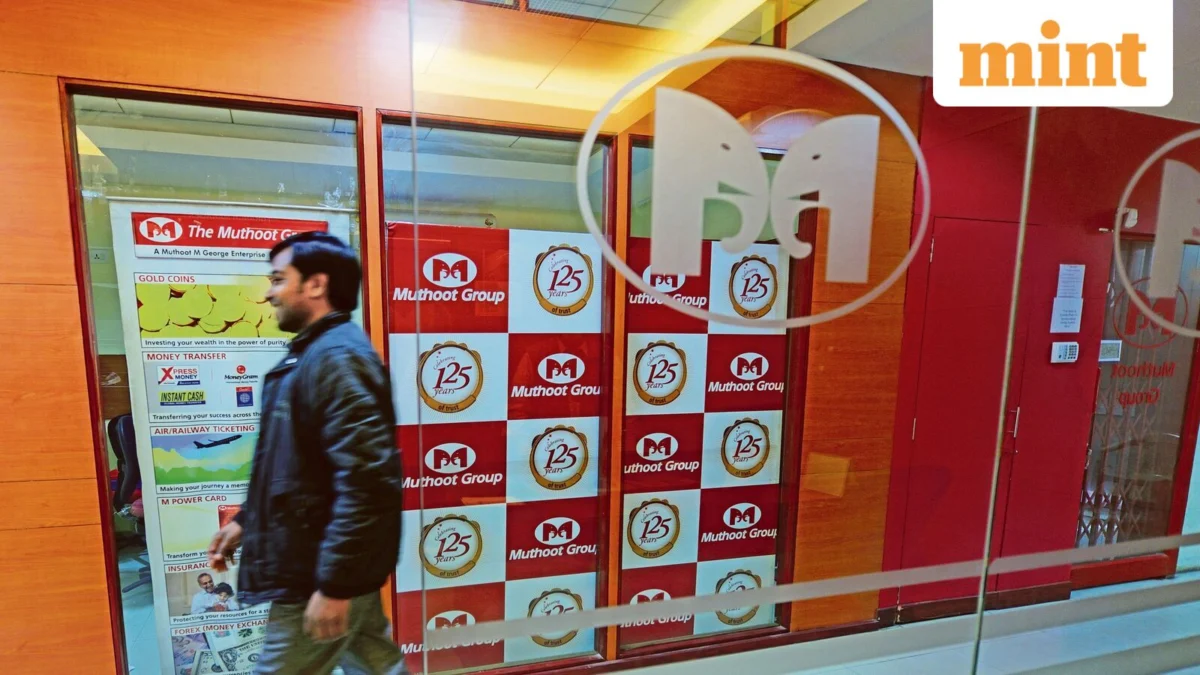
Muthoot Finance, India’s largest gold loan non-banking financial company (NBFC), has reported a staggering 135% year-on-year increase in its net profit for the fourth quarter of the financial year 2025-26. The company’s net profit for the quarter ended March 31, 2026, stood at ₹3,397 crore, a massive leap from the ₹1,444 crore recorded during the same period in the previous fiscal year. This extraordinary performance was primarily fueled by a sustained rally in global and domestic gold prices, which significantly enhanced the value of collateral held by the lender and expanded the borrowing capacity of its diverse customer base.
The company’s revenue from operations also witnessed a substantial climb, jumping 65% year-on-year to reach ₹9,288.7 crore, compared to ₹5,621.7 crore in the fourth quarter of the previous year. This revenue growth reflects the robust demand for gold-backed credit as a preferred liquidity tool for individuals and small businesses amidst a shifting macroeconomic landscape. On the operating front, the company demonstrated exceptional efficiency, with its earnings before interest, tax, depreciation, and amortization (EBITDA) growing by 90.5% to ₹7,760 crore, up from ₹4,072.5 crore in the year-ago period.
Record-Breaking Annual Performance for FY26
The fourth-quarter results served as a capstone to what has been a historic year for the Kochi-based financial giant. For the full financial year 2025-26, Muthoot Finance posted its highest-ever consolidated profit after tax (PAT) of ₹10,607 crore. This represents a nearly twofold increase—specifically a 98% rise—over the ₹5,352 crore profit reported in the prior fiscal year.
A key driver of this profitability was the unprecedented growth in the company’s loan Assets Under Management (AUM). The total loan AUM reached a new peak of ₹1,81,916 crore as of March 31, 2026. Throughout the fiscal year, the AUM grew by a record ₹59,736 crore, marking a 49% increase year-on-year. This surge in AUM indicates that despite the entry of several commercial banks and fintech players into the gold loan space, Muthoot Finance has managed to maintain its market dominance and attract a significant volume of new and repeat borrowers.
The Gold Price Catalyst and Market Dynamics
The primary tailwind for Muthoot Finance over the past twelve months has been the consistent appreciation of gold prices. As a commodity-backed lender, the company’s business model is inherently tied to the value of the yellow metal. Higher gold prices allow existing customers to borrow more against their current holdings (top-up loans) and attract new customers who can now access larger sums of capital using the same amount of gold.
Furthermore, the rise in gold prices provides a safety net for the lender by lowering the Loan-to-Value (LTV) ratios of existing loans, thereby reducing the risk of defaults and the need for auctions. In an environment where traditional unsecured personal loans have seen tightening credit standards, gold loans have emerged as the most efficient and accessible credit instrument for the Indian middle class and the MSME (Micro, Small, and Medium Enterprises) sector.
Strategic Expansion and Operational Milestones
Muthoot Finance has not relied solely on market tailwinds; it has aggressively expanded its physical and digital footprint to capture emerging demand. During the fourth quarter alone, the company added 177 new branches across its group level, further solidifying its reach in both urban centers and rural hinterlands where formal banking penetration remains limited.
George Jacob Muthoot, Chairman of Muthoot Finance, emphasized that the company’s vision is to evolve from a specialized gold lender into a comprehensive, diversified financial services group. While gold loans remain the bedrock of the business, the company has made significant strides in other segments, including:
- Affordable Housing Finance: Catering to the "Housing for All" initiative, targeting low-to-middle-income earners.
- Microfinance: Providing credit to unbanked and underbanked populations, particularly women entrepreneurs.
- Personal Loans and Small Business Lending: Offering diversified credit products to existing gold loan customers to increase the "wallet share" per household.
"We are glad to announce another year of remarkable growth and significant milestone achievement for the company," the Chairman stated in the regulatory filing. "FY27 is expected to be another year of disciplined growth and transformation."

Regulatory Environment and Sector Formalization
The gold loan industry in India has undergone significant regulatory scrutiny and refinement over the past year. The Reserve Bank of India (RBI) has introduced new guidelines aimed at enhancing transparency, improving governance, and ensuring fair practices among NBFCs.
According to George Jacob Muthoot, these regulatory shifts are a "positive step" for the industry. The Chairman noted that the new gold loan guidelines are expected to accelerate the formalization of the sector. Historically, a large portion of the Indian gold loan market was dominated by unorganized moneylenders who charged exorbitant interest rates and lacked transparency. The push toward a more regulated environment is expected to shift customer confidence toward organized players like Muthoot Finance, who offer standardized processes, secure storage, and competitive interest rates.
Digital Transformation Initiatives
To stay ahead of fintech competitors, Muthoot Finance has accelerated its digital initiatives. The company’s "Gold Loan @ Home" service and its integrated mobile application have seen increased adoption, allowing customers to manage their accounts, pay interest, and even request loan disbursements without visiting a physical branch. This hybrid model—combining a massive physical branch network with cutting-edge digital tools—has been a key differentiator in maintaining customer loyalty and operational efficiency.
Market Reaction and Shareholder Value
The equity markets reacted positively to the anticipation and eventual release of the earnings report. Shares of Muthoot Finance closed 0.70% higher at ₹3,531 per share on the day of the announcement. The stock has been a standout performer in the financial services sector, delivering a 55% return over the past year.
Long-term investors have seen even more dramatic gains. Over a three-year horizon, Muthoot Finance’s stock price has surged by 232.50%, reflecting the company’s ability to scale operations while maintaining high return on equity (ROE) and healthy net interest margins (NIMs). Analysts suggest that the company’s strong capital adequacy ratio and its status as a "AAA" rated entity allow it to borrow funds at competitive rates, further boosting its profitability.
Future Outlook and Global Uncertainties
Looking ahead to the financial year 2026-27, the management remains optimistic despite a backdrop of geopolitical shifts and global economic uncertainties. The company believes that India’s long-term structural growth story remains intact, and the demand for credit will continue to rise as the economy formalizes.
However, challenges remain. Potential volatility in gold prices could impact LTV ratios, and increasing competition from private sector banks, which have been aggressively marketing gold loans to diversify their own retail portfolios, could put pressure on margins. Nevertheless, Muthoot’s extensive branch network, which acts as a "trust-based" touchpoint for millions of Indians, remains a formidable moat that is difficult for digital-only players or traditional banks to replicate quickly.
Conclusion and Strategic Implications
The Q4FY26 results of Muthoot Finance mark a turning point for the NBFC sector in India. A 135% surge in profit and a nearly 50% growth in AUM demonstrate that gold loans are no longer just a "lender of last resort" product but a mainstream financial tool.
By successfully leveraging high gold prices, expanding its physical presence, and diversifying into housing and microfinance, Muthoot Finance has positioned itself as a diversified financial powerhouse. As the company moves into FY27, its focus on digital transformation and adherence to new regulatory standards will likely be the pillars upon which it seeks to build its next phase of growth, aiming to create sustainable value for its shareholders, employees, and the millions of borrowers who rely on its services for their financial needs.
The record-breaking performance serves as a testament to the resilience of the Indian consumer and the strategic foresight of a company that has managed to turn a traditional form of lending into a modern, high-growth engine of the Indian financial ecosystem.
