

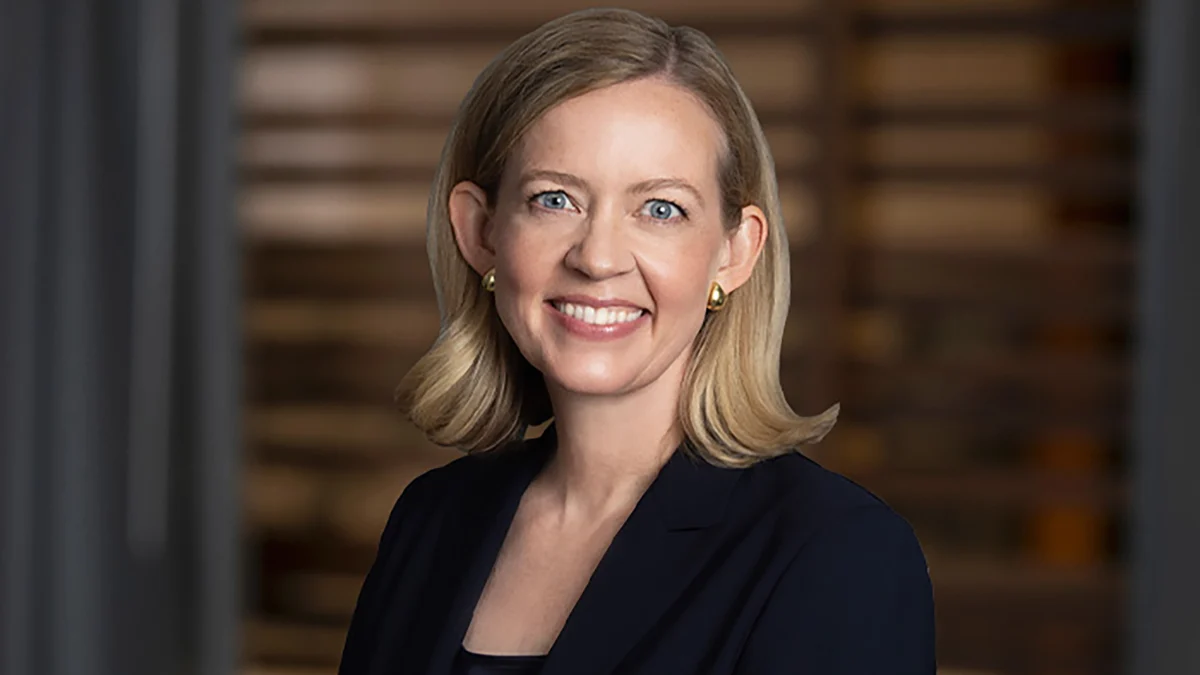
The wealth management industry is facing a critical talent deficit, not just among traditional financial advisors, but more acutely in the crucial adjacent fields of tax and accounting. This burgeoning shortage, exacerbated by declining graduation rates and an increasing demand for comprehensive services among ultra-high-net-worth (UHNW) clients, is poised to create significant opportunities for larger, scaled Registered Investment Advisors (RIAs) that can effectively cultivate and deploy specialized talent. This insight was shared by Susie Cranston, CEO of Cresset Capital, during a recent panel discussion at Goldman Sachs’ annual RIA Professional Investor Forum, hosted in New York.
The forum, a key event for leaders in the independent wealth management sector, brought together prominent RIA executives to discuss prevailing trends and challenges. While much of the industry discourse has focused on the widely reported projected shortage of financial advisors – a figure often cited from McKinsey reports suggesting a need for 100,000 additional advisors by 2034 – Cranston pointed to a more immediate and perhaps more severe crisis brewing in the support functions that underpin holistic wealth management.
The Shrinking Pipeline of Tax and Accounting Professionals
Cranston’s assertion is grounded in stark demographic data. "Many of us have probably seen the McKinsey study saying that there is going to be a shortage of 100,000 advisors," she stated, referencing the widely publicized research. "But if you look at the graduation rates of accounting schools, if you look at the number of people passing the CPA exams, those numbers have dropped by as much as 50%."
Supporting Cranston’s claims, data from the American Institute of CPAs (AICPA) has consistently indicated a multi-year decline in the number of accounting graduates with both bachelor’s and master’s degrees. This trend is further compounded by a roughly decadal decline in the number of individuals successfully obtaining Certified Public Accountant (CPA) certifications. For instance, recent AICPA reports have highlighted a shrinking pool of candidates taking and passing the CPA exam, a key indicator of the future supply of licensed accounting professionals. This reduction in the pipeline of new talent directly impacts the availability of qualified individuals for roles in tax planning, preparation, and accounting – services that are increasingly integral to serving affluent clientele.
The Growing Demand for Comprehensive Wealth Solutions
The challenge is amplified by the concurrent surge in the UHNW client segment. As more families accumulate significant wealth, their financial needs become increasingly complex, extending far beyond investment management. These individuals and their families require sophisticated advice on tax efficiency, estate planning, philanthropic endeavors, and intricate business succession strategies. The traditional model of a single advisor managing all these facets is becoming less tenable, necessitating a more integrated approach that brings together expertise from various financial disciplines.
Cranston, who leads Cresset Capital, an RIA with approximately $237 billion in assets under management and roots in the family office sector, emphasized that the increasing demand for family office-like services is "skyrocketing." This burgeoning need creates a direct correlation between the growth of UHNW wealth and the demand for specialized talent in areas like tax and accounting.
AI’s Double-Edged Sword: Efficiency vs. Training Grounds
Adding another layer to the talent equation is the rapid advancement of artificial intelligence (AI). While AI offers the potential for increased efficiency and automation in many financial tasks, it also presents challenges. Cranston noted that AI advancements are beginning to "erode the professional ‘training grounds’" that historically served as entry points for aspiring tax and accounting professionals within family offices. These entry-level roles often provided invaluable hands-on experience, shaping the next generation of specialists.
However, Cranston remains optimistic about the role of human expertise, particularly for the most complex client needs. "Even with all the talk that AI is going to remove all the jobs… I think that’s very unlikely in the ultra-high-net-worth space," she asserted. "I think you’re going to see a shortage of qualified, experienced talent, and I think that’s going to give scaled players an advantage because you’re going to really have to start thinking about how to cultivate that talent as the demand for family offices is really skyrocketing."
Scaled RIAs Poised for Advantage
The implication for the RIA landscape is significant. RIAs with the scale and resources to invest in talent development, specialized training programs, and robust recruitment strategies are better positioned to navigate this talent crunch. They can attract and retain top-tier tax and accounting professionals by offering compelling career paths, competitive compensation, and the opportunity to work with a sophisticated client base. This ability to build integrated teams of experts – encompassing financial planning, investment management, tax, legal, and estate planning – will become a key differentiator.
The trend towards RIAs developing dedicated family office divisions or acquiring existing family office firms, as observed in recent months, further underscores this point. Firms like Farther, which recently snagged a Goldman Sachs advisor to lead its new multi-family office, and Lido Advisors, with its acquisition of $1 billion Jackson Hole Capital, are actively expanding their capabilities to meet the evolving needs of affluent clients.
The Evolving Role of the Human Advisor in the Age of AI
The discussion also delved into the broader impact of AI on the advisor-client relationship. Larry Restieri, CEO of Hightower, offered a nuanced perspective, suggesting that AI might not replace human advisors but rather redefine their value proposition. "In some ways, AI will commoditize what has historically been a value add for the wealth management business," Restieri explained. "What clients are actually paying for is not so much the investment returns, but the actual advisor – the EQ of the advisor."
This perspective suggests that while AI can handle data analysis, portfolio construction, and administrative tasks, the "emotional intelligence" of an advisor – their ability to understand client psychology, build trust, and provide empathetic guidance during times of market volatility or personal upheaval – will become even more paramount. Restieri went further, arguing that the value of the best human advisors could actually increase. "I can make an argument that the price of advice for the best advisors may go up, because while they can cover more clients, they still have a limited ultimate capacity," he said, drawing an analogy to concierge doctors who command premium fees due to their expertise and limited availability.
The Unseen Force: Client Breakaways Fueling Independent Growth
Shifting the focus to client acquisition and retention, Shirl Penney, CEO of Dynasty Financial Partners, highlighted a less discussed but highly impactful trend: the "client breakaway movement." While much media attention is dedicated to financial advisors leaving large wirehouses for independent channels, Penney argued that the number of clients following suit is substantially larger.
"The breakaway client movement is four times bigger than the breakaway advisor movement," Penney stated, citing an observation that last year, approximately $400 billion in assets moved from bank brokerage accounts to the independent space, with only about $100 billion attributed to breakaway advisors. The remaining $300 billion, he contended, came from organic growth on the installed base of RIAs, driven by clients who proactively chose to move their assets to independent firms. This phenomenon, Penney expressed, is often overlooked by the press but represents a significant engine of growth for the RIA sector.
Navigating Market Volatility and Private Credit Concerns
The Goldman Sachs forum also addressed current market dynamics, including global market volatility, the disruptive potential of AI, and private credit default risk. However, many panelists offered a more tempered view than prevailing headlines might suggest.
Lindsay Rosner, Head of Multi-Sector Investing for Goldman Sachs, provided reassurance regarding private credit. She characterized it as an asset class with "underlying stability" and noted that concerns, particularly around software exposure due to AI advancements, did not appear to threaten the entire asset class. Rosner emphasized the importance of prudent portfolio construction: "It’s about sizing and diversification. Should private credit be 100% of a portfolio? Probably not, but nor should equities. … I think it comes back to how big of a sleeve is it and understanding that it is a less liquid asset class."
Jon Waldron, President and COO of Goldman Sachs, acknowledged that CIOs are increasingly inquiring about private assets, including private credit, reflecting a broader trend of increased allocation to these less liquid investments over the past decade. The current debate, he noted, centers on whether current allocations to private, illiquid assets have become excessive for certain portfolios.
Background and Context of the Forum
Goldman Sachs’ annual RIA Professional Investor Forum serves as a critical platform for dialogue and insights within the independent wealth management ecosystem. The event, held in a major financial hub like New York, typically convenes a curated group of leaders from some of the nation’s largest and most influential RIAs, asset managers, and financial technology providers. The timing of this year’s forum, occurring amidst a period of significant market flux and rapid technological change, made the discussions on talent, AI, and investment strategies particularly relevant.
The forum’s structure, featuring panel discussions moderated by industry experts, allows for in-depth exploration of topics that are shaping the present and future of wealth management. The selection of panel topics – including global market volatility, AI’s disruption, and private credit risk – reflects the immediate concerns and strategic priorities of RIA leaders. The direct engagement with these issues, often with panelists offering counterpoints to mainstream narratives, provides attendees with a more nuanced understanding of complex market dynamics.
Implications for the Future of Wealth Management
The insights shared by Cranston and other industry leaders at the Goldman Sachs forum paint a picture of an industry in transition. The talent shortage in critical support roles, coupled with the evolving demands of UHNW clients and the pervasive influence of AI, necessitates a strategic rethinking of talent acquisition, development, and service delivery models.
For RIAs, the message is clear: a proactive and strategic approach to talent management, particularly in specialized areas like tax and accounting, will be a key determinant of success. Scaled firms that can effectively cultivate expertise, integrate diverse skill sets, and leverage technology to enhance human capabilities are likely to gain a competitive edge. As the demand for comprehensive, personalized wealth solutions continues to grow, the ability to attract, train, and retain the right talent will be more valuable than ever, shaping the landscape of wealth management for years to come. The enduring importance of human connection, emotional intelligence, and specialized expertise, even in an increasingly automated world, suggests that the role of the skilled advisor and their supporting team will remain central to the client experience.
