

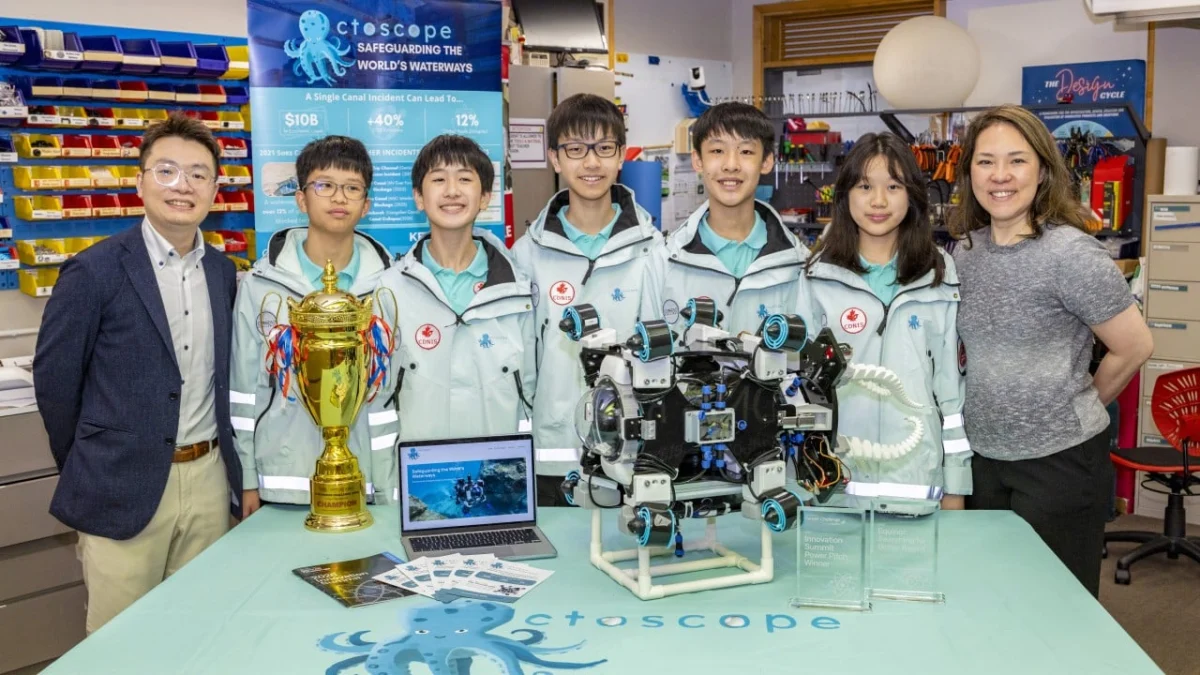
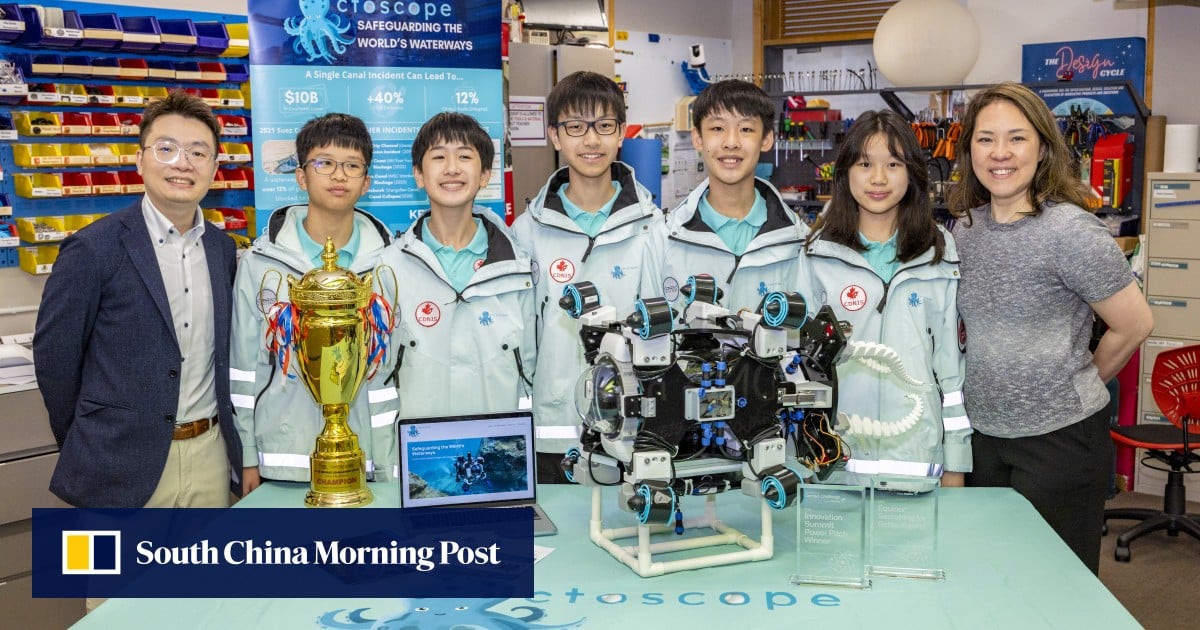
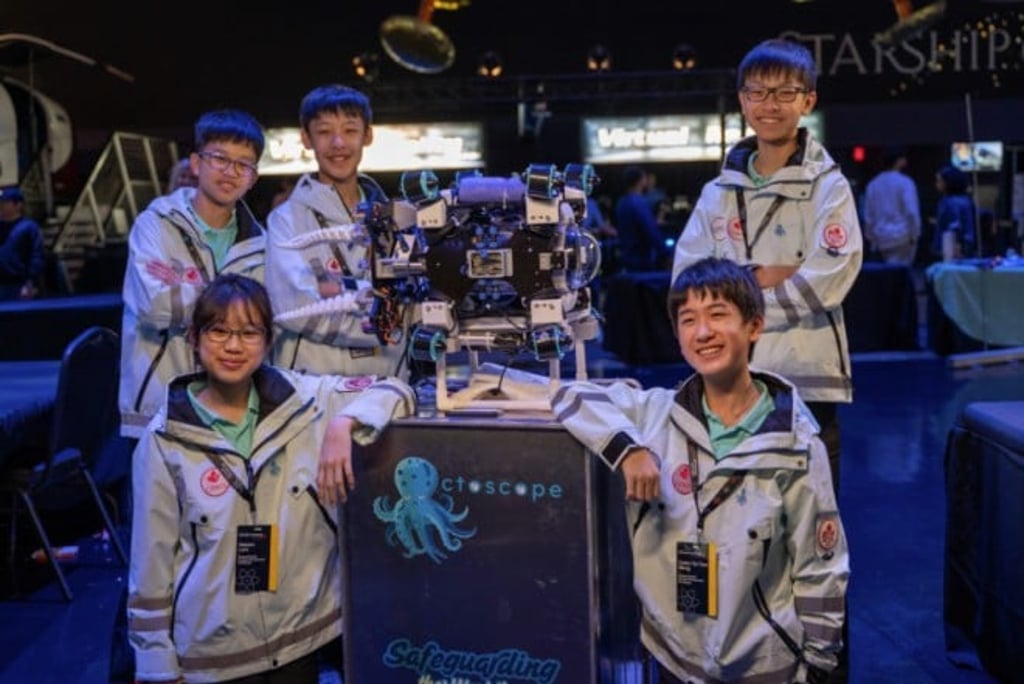
A delegation of Grade 8 students from the Canadian International School of Hong Kong (CDNIS) has achieved significant international recognition at the Conrad Challenge Global Innovation Summit held at the Space Center Houston. The team, composed of five students aged 13 and 14, secured two of the competition’s most prestigious honors: the Innovation Summit Power Pitch Award and the Equinor Searching for Better Award. These accolades recognize both the technical ingenuity of their project, an autonomous underwater vehicle (AUV) named OctoScope, and their ability to present a viable business model to a panel of global industry experts.
The Conrad Challenge, founded by Nancy Conrad in honor of her late husband, Apollo 12 astronaut Pete Conrad, is one of the world’s premier environmental and entrepreneurship competitions for youth. It encourages students to apply science, technology, engineering, and mathematics (STEM) skills to solve global sustainability challenges. This year, the CDNIS team emerged as a standout group among thousands of international entries, eventually becoming one of only 31 finalist teams selected to present in Houston. Their victory marks the second consecutive year that CDNIS has secured the Power Pitch Award, signaling the institution’s growing influence in the global arena of student-led innovation.
The Genesis of OctoScope: Solving a Multi-Billion Dollar Problem
The inspiration for OctoScope stems from a critical vulnerability in global logistics: the fragility of maritime chokepoints. The team specifically referenced the 2021 grounding of the Ever Given in the Suez Canal, a crisis that halted roughly 12 percent of global trade for six days. Economists estimated that the blockage held up approximately $9.6 billion worth of trade every day, causing a ripple effect that disrupted supply chains for months.
The students identified that while satellite monitoring is effective for surface-level traffic, the underwater environment of busy canals remains largely unmonitored in real-time. Submerged debris, shifting silt, or structural degradation of canal walls can lead to catastrophic accidents. OctoScope was envisioned as a proactive solution—a fleet of autonomous robots capable of continuous underwater surveillance and immediate debris removal.
By focusing on the "blue economy," the students targeted a sector that is often overlooked in traditional tech competitions. Their project addresses the intersection of maritime safety, environmental protection, and economic stability, providing a tool that could potentially save shipping companies and canal authorities billions in lost revenue and insurance claims.
Technical Specifications and Design Philosophy
OctoScope is not merely a conceptual model but a functional prototype engineered for the rigors of underwater operation. Lucas, the team’s Chief Technology Officer, spearheaded the development of a modular architecture that allows the vehicle to be customized based on the specific needs of the mission. This modularity ensures that the AUV remains cost-effective and adaptable to different aquatic environments, from the freshwater locks of the Panama Canal to the saltwater depths of the Strait of Malacca.
Key technical features of the OctoScope include:
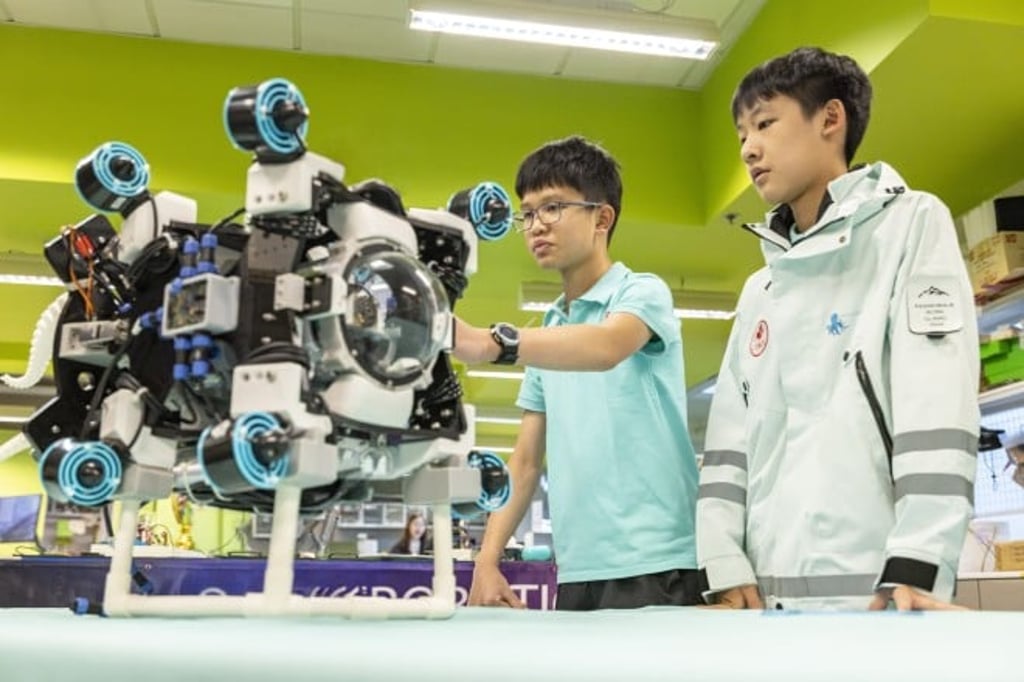
- AI-Powered Processing: The vehicle utilizes an onboard AI processor that analyzes visual data from high-definition cameras in real-time. This allows the robot to distinguish between natural marine life and hazardous debris such as discarded fishing nets, shipping containers, or metallic obstructions.
- Advanced Navigation: Because GPS signals do not penetrate water effectively, the team integrated sonar sensors and multi-directional thrusters. This configuration enables the OctoScope to navigate with high precision in "tight-fit" scenarios, such as the narrow passages beneath large cargo vessels.
- Biomimetic Gripper: One of the project’s most distinctive features is an octopus-inspired gripper. By mimicking the flexibility and suction capabilities of cephalopod tentacles, the robot can securely grasp and relocate irregularly shaped debris that traditional mechanical claws might struggle to handle.
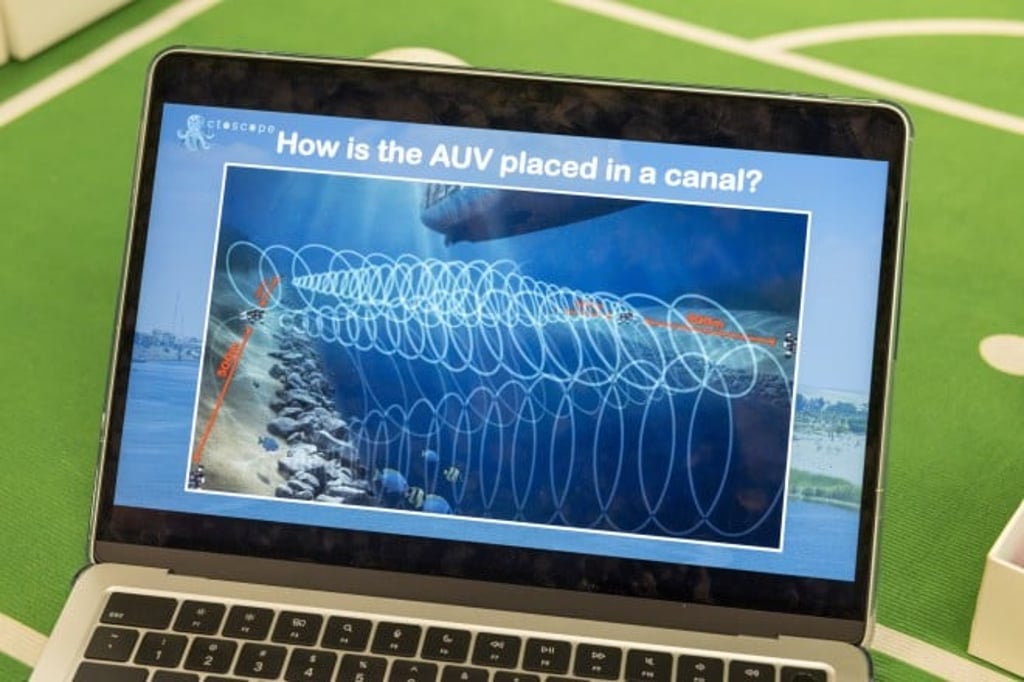
- Swarm Intelligence Potential: The team’s operational vision involves deploying multiple OctoScope units spaced approximately 500 meters apart. This creates an overlapping sensor web that provides a comprehensive, "always-on" map of the canal floor, ensuring no hazard goes undetected.
To demonstrate these capabilities to the Conrad Challenge judges, the team utilized a sophisticated presentation strategy. Max, the Chief Operating Officer, noted that the team relied on a combination of live sensor data, footage from underwater testing, and 3D simulations. This multi-media approach was essential in bridging the gap between complex engineering and practical application, a factor that was instrumental in winning the Power Pitch Award.
Commercial Viability and Market Strategy
A defining requirement of the Conrad Challenge is the "Business Prospectus," which mandates that students treat their innovation as a startup. The CDNIS team, led by Chief Executive Officer Shou Jeng and Chief Financial Officer Caden, developed a comprehensive go-to-market strategy that impressed the Equinor judges—a panel representing one of the world’s leading energy and transition companies.
The team identified three primary revenue streams:
- Canal Authorities: Providing subscription-based monitoring services to entities like the Suez Canal Authority or the Panama Canal Authority to ensure operational uptime.
- Shipping Conglomerates: Offering "on-call" debris removal and hull inspection services for major logistics firms.
- Marine Insurers: Partnering with insurance companies to lower premiums for vessels operating in canals equipped with OctoScope surveillance, as the risk of grounding would be significantly reduced.
During the "Q&A" sessions in Houston, the students faced rigorous questioning regarding market scalability. Caden defended the project’s financial model by highlighting secondary applications in fisheries management and water-quality monitoring. This adaptability suggests that OctoScope could serve a diverse range of environmental and industrial roles beyond its primary maritime safety mission.
A Chronology of Success: From Hong Kong to the Global Stage
The journey to Houston was the result of nearly a year of intensive research and development. The timeline of the project highlights the dedication required to compete at this level:
- September – November: Ideation and initial research. The team identified the maritime trade gap and began conceptualizing the AUV’s modular frame.
- December – January: Prototype development in the CDNIS makerspace. The students experimented with different thruster configurations and AI training models.
- February: Participation in the Conrad Challenge China national stage. The team won their category, outperforming high school students across the region and securing their invitation to the Global Innovation Summit.
- March – April: Refinement of the business plan and technical troubleshooting. The team consulted with mentors to polish their "Power Pitch."
- May: The Global Innovation Summit in Houston. The team presented to judges from NASA, SpaceX, and major venture capital firms.
- Future Outlook: Following their win, the team has been awarded a sponsored educational trip to Boston. This trip will include exclusive workshops and a visit to the Massachusetts Institute of Technology (MIT), where they will have the opportunity to engage with world-leading robotics experts.
Mentorship and the CDNIS Innovation Ecosystem
The success of Team OctoScope is a testament to the robust STEM and business curriculum at the Canadian International School of Hong Kong. The students were mentored by Vivian Fung, a teacher with over a decade of experience in robotics, and Kenneth Tang, a business educator. This dual mentorship ensured that the project was as commercially sound as it was technically advanced.
CDNIS has invested heavily in its "makerspace" environment—a dedicated facility where students are encouraged to engage in hands-on learning from a young age. This culture of innovation is not limited to the secondary school; younger students are frequently seen in the makerspace, looking to projects like OctoScope as benchmarks for what they can achieve.
The school’s Head of School and faculty have emphasized that the goal of such programs is not just to win awards but to foster "design thinking"—a problem-solving methodology that prioritizes empathy, ideation, and iterative testing. By encouraging students to tackle real-world problems like global trade disruptions, the school prepares them for the complexities of the modern workforce.
Broader Implications for Hong Kong’s Tech Talent Pipeline
The achievement of these Grade 8 students comes at a time when Hong Kong is striving to establish itself as a global hub for innovation and technology. The success of OctoScope highlights the potential of the city’s international school sector to contribute to this goal. With a student body representing over 40 nationalities, CDNIS provides a microcosm of the global collaboration necessary for modern scientific breakthroughs.
Furthermore, the team’s interaction with other finalists, such as a team from Panama, underscores the importance of international dialogue. Season, the team’s Chief Marketing Officer, noted that discussing their project with Panamanian peers provided invaluable validation, as those students live at the heart of one of the very chokepoints OctoScope is designed to protect.
As the team prepares for their journey to MIT, their story serves as a powerful reminder that age is not a barrier to innovation. By combining biomimetic design, artificial intelligence, and a keen understanding of global economics, these five students have moved the needle on maritime safety. The OctoScope project stands as a blueprint for how the next generation of leaders can leverage technology to create a more resilient and efficient global community.
The continued success of Hong Kong students on the world stage suggests that the city’s focus on STEAM education is yielding tangible results. For Team OctoScope, the journey is just beginning; with the feedback from the Houston summit and the upcoming opportunities in Boston, the prototype developed in a school makerspace may one day become a standard fixture in the world’s most vital waterways.
