

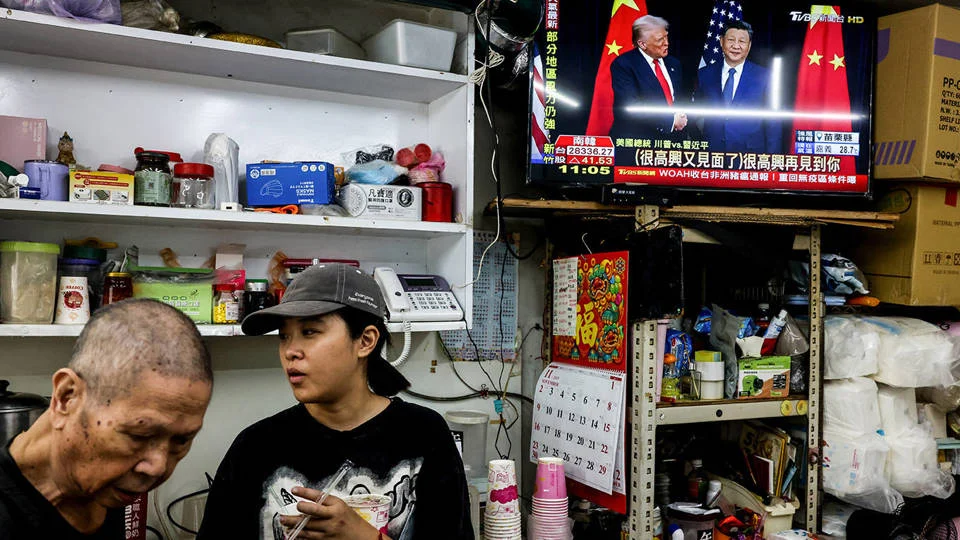
The impending summit between United States President Donald Trump and Chinese President Xi Jinping this week in Beijing marks a pivotal moment, fraught with complex challenges ranging from nuclear proliferation and artificial intelligence to trade disputes and, most critically, the future of Taiwan. The agenda for this high-stakes meeting is extensive, but the question of Taiwan’s autonomy is poised to dominate discussions, with Xi Jinping expected to reiterate Beijing’s unwavering stance on the island. The outcome of these talks could significantly shape regional stability and the broader global geopolitical landscape.
The Stakes: Taiwan at the Forefront
At the heart of the looming confrontation lies Taiwan, a self-governing democracy that Beijing considers a renegade province to be reunified with the mainland, by force if necessary. For decades, the United States has maintained a policy of strategic ambiguity regarding its defense commitments to Taiwan, a delicate balancing act designed to deter both Chinese aggression and Taiwanese moves towards formal independence. However, the nuances of this policy have been tested by evolving geopolitical realities and the assertive posture of President Xi Jinping.
President Xi, known for his strategic patience and long-term vision, has overseen a period of significant military modernization and increased assertiveness in the Indo-Pacific. His administration has consistently signaled its determination to achieve "reunification," a goal that many analysts believe has become more urgent under his leadership. This ambition is underscored by China’s rapid expansion of its military capabilities, including its navy and air force, and its increasing presence in the Taiwan Strait.
Historical Context: A Deeply Rooted Dispute
The roots of the Taiwan issue trace back to the Chinese Civil War, which concluded in 1949 with the Nationalist Party (Kuomintang) retreating to Taiwan after their defeat by the Communist Party. The People’s Republic of China (PRC) was established on the mainland, while the Republic of China (ROC) continued to govern Taiwan. Since then, the PRC has claimed sovereignty over Taiwan, while the ROC has maintained its own distinct political identity and democratic system.
For decades, a fragile status quo prevailed, managed through a combination of diplomatic maneuvering and the implicit security guarantee provided by the United States. The U.S. officially recognizes the PRC as the sole legal government of China but maintains unofficial relations with Taiwan and is bound by the Taiwan Relations Act to provide Taiwan with the means to defend itself. This complex framework has prevented outright conflict, but it remains a persistent source of tension.
Trump’s Approach and Xi’s Perception
Donald Trump’s presidency has been characterized by a more transactional and often unpredictable foreign policy. While his administration has taken steps to bolster U.S.-Taiwan relations, including arms sales and high-level engagements, his broader approach to China has been marked by a willingness to challenge existing norms and engage in direct negotiations.
The author of the original article, Eyck Freymann, suggests that Trump’s "fecklessness" could inadvertently signal to Xi that the time is ripe for decisive action regarding Taiwan. This implies a concern that Trump’s unpredictability or a perceived lack of firm commitment to established alliances might embolden Beijing. Xi, on the other hand, is widely seen as a leader who operates with a strategic calculus, carefully assessing the opportune moments to advance his objectives. His patience, honed over years of navigating complex domestic and international challenges, is a key characteristic that observers point to when analyzing his approach to Taiwan.
Broader Agendas: Beyond Taiwan
While Taiwan will undoubtedly be a focal point, the Trump-Xi summit is set to address a wide array of pressing global issues. These include:
- Iran and Nuclear Weapons: The future of Iran’s nuclear program and regional stability in the Middle East remain critical concerns. The U.S. has sought to isolate Iran through sanctions, while China has maintained economic ties and advocated for diplomatic solutions. The two leaders are likely to discuss strategies for managing Iran’s nuclear ambitions and preventing further escalation of regional tensions.
- Tariffs and Trade: The trade relationship between the U.S. and China has been a source of ongoing friction, marked by tit-for-tat tariffs imposed by both sides. While some trade deals have been reached, fundamental disagreements persist regarding trade imbalances, intellectual property rights, and market access. The summit offers an opportunity to reassess and potentially recalibrate these economic policies.
- Artificial Intelligence (AI): The rapid advancement of AI technology presents both opportunities and challenges. Both the U.S. and China are major players in AI development, and competition in this field is intense. Discussions are expected to touch upon areas of cooperation, such as ethical AI development and cybersecurity, as well as the potential for AI to exacerbate existing geopolitical rivalries.
Supporting Data and Context
The U.S. Department of Defense’s annual "Report to Congress on Military and Security Developments Involving the People’s Republic of China" consistently highlights the PRC’s growing military capabilities and its stated ambition to achieve reunification with Taiwan. For instance, the 2023 report detailed China’s expansion of its nuclear arsenal, its modernization of naval and air forces, and its increasing capacity for amphibious assaults – capabilities directly relevant to a potential Taiwan scenario.
Economic data further illustrates the interconnectedness and the friction points between the two nations. In 2022, U.S. goods and services trade deficit with China was approximately $273.6 billion, according to the Office of the United States Trade Representative. This persistent imbalance is a key driver of trade disputes.
Potential Implications and Analysis
The implications of the Trump-Xi summit are far-reaching:
- Deterrence and Escalation: The tone and substance of the discussions on Taiwan will be closely scrutinized for any signals that might strengthen or weaken deterrence. If Xi perceives a lack of U.S. resolve, it could embolden his timeline for action. Conversely, a clear and unified stance from the U.S. could reinforce the status quo.
- Global Alliances: The summit will also impact the confidence of U.S. allies in the Indo-Pacific region. Their perception of U.S. commitment to regional security is paramount, and any indication of wavering support could have significant destabilizing effects.
- Economic Ramifications: The outcomes of trade discussions will have direct consequences for global markets and supply chains. A de-escalation of trade tensions could foster greater economic stability, while an intensification could lead to further disruptions.
- Technological Competition: The approach to AI development and regulation will shape the future of this critical technology and its geopolitical implications. Cooperation or increased competition in this domain will have long-term consequences for innovation and national security.
Reactions and Statements (Inferred)
While official statements prior to the summit are likely to be carefully worded, a range of reactions can be anticipated. Taiwan’s government, led by President Tsai Ing-wen, will be closely monitoring the summit, advocating for continued international support and emphasizing its democratic values. U.S. congressional leaders from both parties have consistently called for a strong stance against Chinese aggression and a commitment to Taiwan’s security.
Beijing, through its state-controlled media, is expected to project an image of strength and resolve, reiterating its sovereignty claims over Taiwan and its commitment to national rejuvenation. European allies, while not directly involved in the summit, will be observing closely, as any escalation in the Indo-Pacific could have significant global economic and security repercussions.
Looking Ahead: A New Geopolitical Calculus
The meeting between President Trump and President Xi occurs at a time of heightened global uncertainty. The established international order is being challenged, and the relationships between major powers are undergoing a significant recalibration. The summit in Beijing is not merely a diplomatic encounter; it is a critical juncture where the strategic intentions of two of the world’s most powerful leaders will be tested, with the future of Taiwan and the broader global landscape hanging in the balance. The ability of both leaders to navigate these complex issues with pragmatism and a clear understanding of the stakes will determine whether this summit leads to de-escalation and stability or further entrenches a path towards confrontation.
