

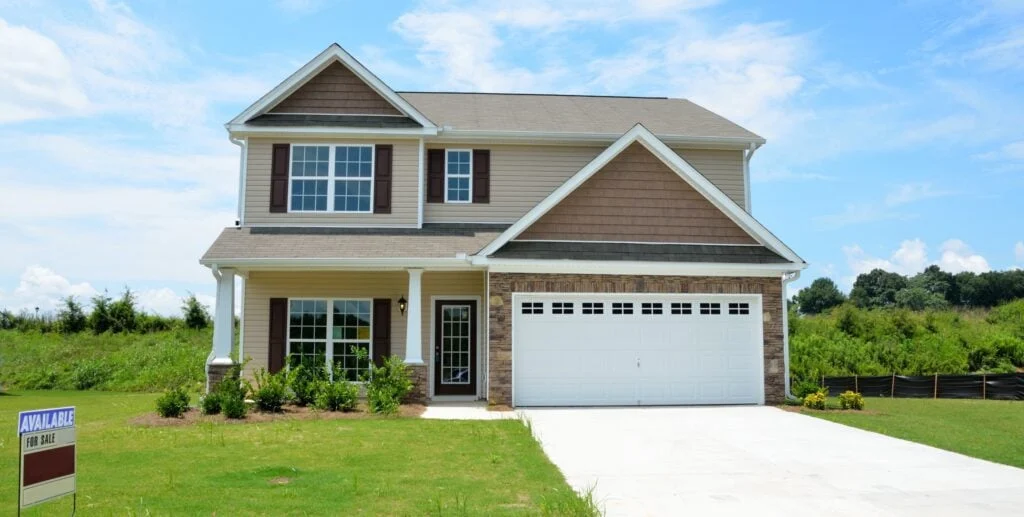
The institutional real estate landscape is facing a period of significant volatility as federal lawmakers weigh a controversial provision that could dismantle the burgeoning build-to-rent (BTR) industry. At the heart of the debate is a "seven-year sell-off" rule, a legislative mechanism designed to curb the dominance of Wall Street real estate investment trusts (REITs) and private equity firms in the single-family housing market. While proponents argue the measure is necessary to restore the American dream of homeownership, industry leaders warn that it could inadvertently stifle housing production and exacerbate the national supply crisis.
The proposed mandate is contained within Section 901 of the 21st Century ROAD to Housing Act. The legislation, which successfully passed the Senate in March and is currently undergoing reconciliation with a House version, specifically targets large-scale institutional investors—defined as entities owning 350 or more single-family homes. Under the terms of the bill, these investors would be required to sell newly constructed rental homes to individual buyers within seven years of completion. Failure to comply would result in significant financial penalties, effectively placing a "expiration date" on the long-term hold strategies that have attracted billions of dollars in institutional capital to the BTR sector over the last decade.
The Evolution of the Build-to-Rent Phenomenon
To understand the current legislative friction, one must look back at the trajectory of institutional involvement in the single-family residential market. Following the 2008 financial crisis, firms like Blackstone, Invitation Homes, and Pretium Partners recognized an opportunity to acquire distressed assets at scale. Initially, these firms focused on buying existing foreclosed homes, renovating them, and operating them as rentals. This helped stabilize a collapsing housing market but eventually drew criticism as investors began competing directly with first-time homebuyers for limited inventory.
In response to rising costs and the logistical difficulty of managing a scattered portfolio of individual homes, the industry pivoted toward the build-to-rent model. Instead of buying existing stock, REITs began partnering with developers to create entire communities of single-family homes designed specifically for the rental market. These communities often feature professional management, shared amenities, and uniform maintenance—providing a "lifestyle" product for those who prefer a house over an apartment but are not yet ready or able to buy.
By 2024, the BTR sector had transitioned from a niche experimental strategy to a major asset class. Major players like AvalonBay and Clay Residential have invested heavily in the Southeast and Sunbelt regions, viewing BTR as a stable, high-yield alternative to traditional multi-family housing. However, this success has made the sector a primary target for lawmakers who view the corporatization of housing as a barrier to middle-class wealth accumulation.
Legislative Mechanics and the Seven-Year Rule
The 21st Century ROAD to Housing Act represents a bipartisan effort to address the housing shortage, yet Section 901 remains one of its most polarizing components. The bill’s architects argue that by forcing institutional landlords to sell after seven years, the market will see a steady influx of "pre-owned" but relatively modern homes available for individual purchase. This, in theory, would create a pipeline for first-time buyers who have been priced out by institutional bidding wars.
However, the industry response has been one of alarm. Richard Ross, Chief Executive of Quinn Residences—which manages approximately 5,300 homes across the Southeast—noted that such a mandate fundamentally alters the financial viability of these projects. Institutional investors typically rely on long-term depreciation schedules and consistent rental income to justify the high cost of development. Forcing a sale within a fixed seven-year window removes the flexibility to sell when market conditions are optimal, potentially leading to fire sales that could destabilize local property values.
Regional Impacts and Concentration Data
The debate is particularly heated in the "Sunbelt" states, where institutional ownership is most concentrated. While national statistics suggest that institutional investors own only about 3% of the total single-family housing stock, those numbers are deceptive when viewed through a local lens. In metropolitan areas such as Atlanta, Phoenix, and Jacksonville, institutional ownership of rental stock can range from 15% to 30%.
This concentration has led to a perceived "crowding out" effect. A recent report from the National Association of Realtors (NAR) highlighted that the share of first-time homebuyers has fallen to historic lows. In cities where BTR communities are most prevalent, the competition for land and labor between rental developers and traditional homebuilders has driven up prices across the board. Lawmakers argue that Section 901 is a necessary intervention to ensure that "build-to-rent" does not permanently replace "build-to-own."
Economic Projections and Industry Backlash
The economic implications of the seven-year sell-off rule are a point of intense contention. A report from John Burns Research and Consulting suggests that the provision could have the opposite of its intended effect. The analysis argues that if institutional capital is forced out of the BTR space, developers will simply stop building these communities. Because many BTR projects are built on land that might not otherwise be developed for traditional housing—due to density requirements or infrastructure costs—the net result could be a decrease in the total number of new homes constructed in the United States.
Adrianne Todman, representing the National Rental Home Council, echoed these concerns, characterizing the bill as "anti-housing supply." The argument from the industry is that the U.S. is currently facing a deficit of millions of housing units; therefore, any policy that discourages the deployment of capital into new construction is counterproductive, regardless of whether those units are for rent or for sale.
The political fallout is also crossing party lines. Senator Brian Schatz (D-HI) has publicly criticized the mandate, labeling it "bizarre" and suggesting it punishes developers who are actively trying to modernize the nation’s aging rental stock. Schatz and other critics argue that the bill should focus on incentivizing supply rather than dictating the business models of private owners.
Impact on Small and Mid-Sized Investors
One of the nuances of the 21st Century ROAD to Housing Act is the 350-unit threshold. By exempting entities that own fewer than 350 homes, the bill effectively creates a protected class of "mom-and-pop" and mid-sized investors. This has led some analysts to predict a shift in market dynamics. If large REITs are restricted, smaller syndicates and individual landlords may find less competition for acquisitions, particularly in the Sunbelt markets.
However, there is also the risk of a "trickle-down" effect. If large-scale BTR projects are halted, the demand for rental housing will not disappear; instead, it will shift back to the existing single-family stock. This could increase competition between small investors and individual homebuyers for older, more affordable homes—the very outcome the legislation seeks to prevent.
Chronology of the Legislative Push
The path of the 21st Century ROAD to Housing Act reflects the growing political urgency of the housing crisis:
- Post-2020: Rapid home price appreciation leads to increased scrutiny of institutional "all-cash" buyers.
- Late 2023: Bipartisan groups in the Senate begin drafting comprehensive housing reform to address supply and affordability.
- March 2024: The Senate passes the ROAD to Housing Act, including the Section 901 provision.
- Mid-2024: Institutional groups and the Build America Caucus launch a lobbying effort to remove or amend the seven-year sell-off rule during the reconciliation process.
- Late 2024: A group of 76 House members sends a formal warning to Speaker Mike Johnson, expressing concerns that the provision could inadvertently shrink the national housing supply.
Broader Implications for the Rental Market
If the seven-year sell-off rule becomes law, the BTR asset class will likely undergo a radical transformation. Investors may seek "carve-outs" or explore alternative structures, such as fractional ownership or shorter-term development cycles. There is also the question of what happens to the tenants. If a community must be sold off house-by-house after seven years, thousands of renters could face displacement as their homes transition from the rental pool to the owner-occupied market.
Furthermore, the rule raises legal questions regarding property rights and the government’s authority to mandate the sale of private assets. Legal experts anticipate that if the bill passes in its current form, it will face immediate challenges in federal court, potentially delaying its implementation for years.
Conclusion and Future Outlook
The "seven-year sell-off" rule represents a high-stakes gamble by lawmakers. On one hand, it is a bold attempt to prioritize individual wealth creation over corporate profits and to ensure that the single-family home remains the primary vehicle for the American middle class to build equity. On the other hand, it risks alienating the very capital providers that have the scale and efficiency to build housing at a pace the market requires.
As the bill moves toward a final vote, the real estate industry is bracing for a new era of regulation. Whether the BTR phenomenon is "over" or simply entering a more regulated phase remains to be seen. What is clear, however, is that the era of unfettered institutional expansion into the single-family neighborhoods of America is facing its most significant challenge to date. Investors, developers, and prospective homeowners alike will be watching the reconciliation process closely, as the final language of the Act will likely dictate the trajectory of the American housing market for the next decade.
