

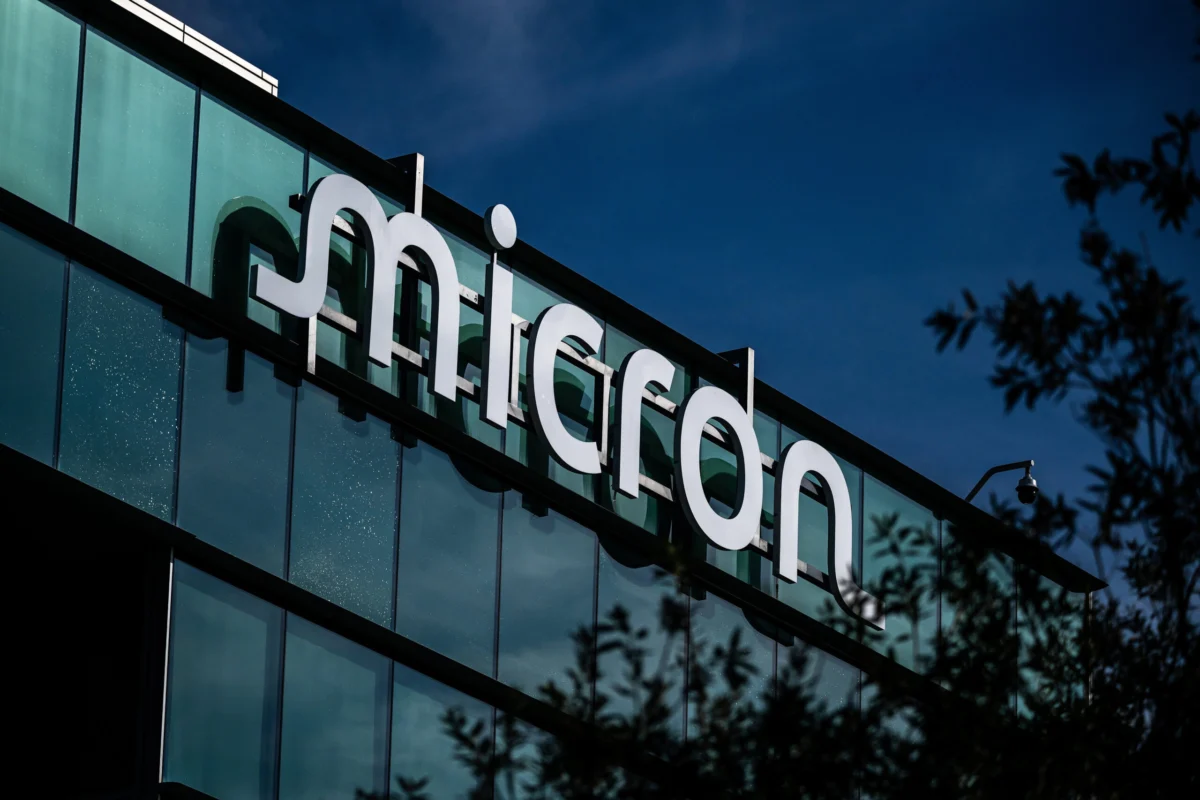
Micron Technology (NASDAQ: MU) shares have experienced an extraordinary surge this week, ignited by a burgeoning global shortage of memory chips and a groundswell of enthusiasm sweeping across the entire semiconductor sector. The Boise, Idaho-based memory giant saw its stock price climb more than 15% to close at an impressive $746.81 on Friday, capping off a remarkable week with nearly 38% gains. Over the past month, Micron’s stock has catapulted by an astounding almost 84%, signaling a profound shift in market perception and demand dynamics. This performance marks Micron’s best weekly showing since December 2008, a period when the company’s shares languished below $5 in the turbulent aftermath of the Great Recession, underscoring the magnitude of the current rally. According to data from LSEG, the company’s market capitalization now comfortably exceeds $840 billion, solidifying its position as a dominant force in the high-stakes world of advanced memory.
A New Dawn for Memory Chips: The AI Imperative
The spectacular ascent of Micron is not an isolated incident but rather a potent indicator of a broader, transformative trend gripping the technology industry: the insatiable demand for high-performance memory and storage solutions driven by the artificial intelligence (AI) revolution. For years, the spotlight in AI hardware has predominantly shone on graphics processing units (GPUs), the powerful engines responsible for parallel processing crucial to AI model training. However, the current phase of AI buildout is revealing a more nuanced and expansive hardware dependency, with memory, storage, and central processing units (CPUs) increasingly stealing the limelight.
The scale of this shift is monumental. Major hyperscalers – the titans of cloud computing like Amazon, Google, Microsoft, and Meta – are pouring unprecedented capital into expanding their AI infrastructure. Analysts from Bank of America and Evercore project that total capital expenditures from these giants could surpass $1 trillion by the end of next year, a figure that dwarfs previous investment cycles. This colossal investment is not solely for GPUs but also for the vast ecosystem of components required to support AI workloads, particularly advanced memory and storage.
The Unprecedented Surge: Micron’s Meteoric Rise in Detail
Micron’s financial trajectory has been nothing short of meteoric. The daily closing price on Friday, $746.81, reflects a consistent upward momentum that has defied conventional market fluctuations. The nearly 38% weekly gain translates to billions of dollars added to its market cap, while the almost 84% jump over the past month illustrates the accelerating pace of investor confidence. This sustained rally is fundamentally underpinned by the widening supply-demand gap in the memory chip market, a direct consequence of the escalating global AI infrastructure buildout. Investors are increasingly recognizing Micron’s critical role as one of the world’s leading producers of both Dynamic Random-Access Memory (DRAM) and NAND Flash memory, two essential components for nearly all computing, and particularly for the data-intensive demands of AI.
The comparison to December 2008 is particularly poignant. That period marked a nadir for the semiconductor industry, caught in the throes of a global financial crisis. Micron, then trading below $5 per share, faced immense challenges. Its current valuation, soaring past $840 billion, represents not just a recovery but a complete reimagining of the company’s market standing and future prospects, fueled by a technological paradigm shift on a scale unseen in decades.
Fueling the Future: AI’s Insatiable Demand for Memory
The AI revolution, characterized by massive datasets for training large language models (LLMs) and complex inference operations, places unprecedented stress on existing memory architectures. While GPUs remain central, their effectiveness is increasingly gated by the speed and capacity of the memory they can access. This is where advanced memory solutions like High-Bandwidth Memory (HBM) – a specialized type of DRAM – become indispensable, often integrated directly into GPU packages to provide lightning-fast data throughput.
DRAM and NAND are the twin pillars of modern data processing, each playing a distinct yet complementary role in the AI ecosystem. DRAM, known for its speed and volatility, is critical for active data processing and temporary storage, serving as the primary working memory for CPUs and GPUs. In AI, specialized forms of DRAM, such as HBM, are crucial for feeding data to high-performance AI accelerators at speeds that prevent processing bottlenecks. NAND Flash, on the other hand, offers non-volatile, high-density storage, making it ideal for storing the vast datasets, trained models, and persistent data required by AI applications. Enterprise-grade Solid State Drives (SSDs) built with NAND are becoming foundational components of AI data lakes and storage arrays. The current global shortage encompasses both types, driving up prices and significantly improving margins for memory manufacturers like Micron.
Hyperscalers, the primary consumers of these chips, have openly "bemoaned cost increases" for memory components. This isn’t merely a complaint about higher expenses; it reflects a strategic challenge in maintaining their aggressive AI development roadmaps and competitive cloud service offerings. The ripple effects of these increased costs can potentially impact the pricing of AI-powered end-user goods and services, underscoring the fundamental nature of memory chips in the digital economy. The anticipated $1 trillion in capital expenditures by 2027 by these tech giants signals a massive buildout of data centers, specialized AI hardware, and the underlying infrastructure necessary to support the next generation of AI.
A Sector on Fire: The Broader Semiconductor Rally
Micron’s stellar performance is emblematic of a broader, vigorous rally across the entire semiconductor sector. The "surging enthusiasm" for chip stocks is palpable, driven by the collective realization that AI’s potential is contingent upon a robust and innovative hardware foundation.
Advanced Micro Devices (AMD) has also seen a remarkable resurgence, with its shares climbing 26% on the week and reaching a new 52-week high on Friday. This surge pushed AMD’s market capitalization above $740 billion. AMD’s strategic pivot towards high-performance computing and its competitive AI accelerator offerings, such as the Instinct MI300X, have positioned it as a formidable player in the AI hardware race, challenging Nvidia’s long-standing dominance.
Intel, the venerable CPU maker, has likewise staged a widely touted comeback. Its stock jumped 25% on the week and has more than doubled over the past month. Intel’s resurgence is fueled by renewed investor confidence in its foundry business, its next-generation CPU architectures, and its entry into the AI accelerator market with its Gaudi line. This period of intense growth in chip stocks has been compared by some analysts to the frenetic activity seen during the dot-com bubble of the late 1990s. While the underlying technological drivers and market maturity are vastly different, the sheer pace of investment and the speculative fervor surrounding AI-related hardware bear some resemblance to that era’s rapid expansion.
Global Players Respond: Samsung and SK Hynix Join the Fray
The memory chip market is characterized by a tightly controlled oligopoly, with Micron, South Korea’s Samsung Electronics, and SK Hynix together producing over 90% of the world’s DRAM. This concentrated supply chain amplifies the impact of demand spikes and supply constraints. Unsurprisingly, Micron’s South Korean counterparts have also been on a tear.
Samsung Electronics, a diversified technology conglomerate and a dominant memory producer, joined the exclusive trillion-dollar valuation club this week. This places it alongside global tech behemoths like Apple, Alphabet, and Microsoft, highlighting the immense value being created in the memory and AI chip ecosystem. Samsung’s strategic focus on advanced memory, including its own HBM offerings, is a key driver of this valuation.
SK Hynix, another critical player, is reportedly fielding a host of unprecedented offers from global tech firms desperate to secure chip supplies. Reuters reported on Friday that these offers aim to invest in new, memory-dedicated production lines to ramp up output. One significant proposal involved an equipment financing deal from the company’s customers related to ultraviolet lithography (EUV) machines. EUV technology is a cutting-edge and extremely expensive process crucial for manufacturing the most advanced semiconductor nodes, underscoring the urgency and strategic importance customers are placing on securing future memory supply. These actions by tech giants reflect a broader industry-wide scramble to de-risk supply chains and ensure access to the foundational components of the AI era.
Expert Insights and Investor Sentiment
Industry analysts are closely monitoring the unfolding dynamics. Vijay Rakesh, an analyst at Mizuho, provided a bullish outlook on Micron earlier this week. In a research report, Rakesh stated, "MU remains well positioned across the memory landscape with leading edge DRAM nodes helping drive cost-downs year-over-year, while NAND sees increasing layer counts drive better costs and increase wafer capacity." This analysis points to Micron’s technological leadership in developing more efficient and higher-density memory solutions, which are crucial for maintaining profitability and market share in a capital-intensive industry. Leading-edge DRAM nodes refer to the smallest, most advanced manufacturing processes, enabling more memory to be packed into a smaller space with lower power consumption. Similarly, increasing layer counts in NAND flash technology allow for greater storage capacity per wafer, driving down per-bit costs.
Beyond institutional investment, retail investors are also playing a significant role in Micron’s momentum. According to Vanda Research, net buying of Micron shares by retail investors picked up to its highest level in two years in mid-April. Viraj Patel, a strategist with Vanda, commented to CNBC on Friday that this surge in retail interest comes even as overall stock-buying by retail investors has been slightly softer in recent months compared to previous years. "So arguably, Micron is commanding a much bigger share of retail flow and attention," Patel noted. This indicates a concentrated interest from individual investors, potentially driven by the compelling narrative of AI growth and Micron’s position as a pure-play memory leader. This surge in retail interest can contribute to higher trading volumes and amplify stock price movements.
Navigating the Future: Challenges and Opportunities
While the current trajectory for Micron and the broader semiconductor sector appears robust, the path forward is not without its challenges. The sustainability of this boom hinges on several factors. A primary concern is the potential for future oversupply if manufacturers ramp up production too aggressively, leading to a cyclical downturn in prices—a historical characteristic of the memory market. Geopolitical tensions, particularly concerning global supply chains and trade relations, also pose inherent risks. Furthermore, rapid technological shifts or an unexpected economic slowdown could temper demand.
Manufacturing advanced memory chips is an incredibly capital-intensive and complex undertaking. The lead times for building new fabs and acquiring state-of-the-art equipment, like EUV machines, can span years. Skilled labor shortages, rising raw material costs, and the continuous need for massive R&D investments to stay at the technological forefront are constant pressures. The industry is also grappling with the transition to next-generation memory technologies, such as CXL (Compute Express Link), which promises to revolutionize data center architectures by enabling more efficient memory sharing between CPUs, GPUs, and other accelerators.
Governments worldwide are increasingly recognizing the strategic importance of semiconductor manufacturing. Initiatives like the CHIPS Act in the United States, alongside similar programs in Europe and Asia, aim to boost domestic chip production and enhance supply chain resilience. These policies could provide significant tailwinds for companies like Micron by offering subsidies and incentives for localized manufacturing.
Conclusion: The Enduring Legacy of the AI Chip Boom
Micron Technology’s remarkable ascent, mirrored by the broader semiconductor industry, underscores a pivotal moment in technological history. The AI revolution is not just reshaping software; it is fundamentally transforming the hardware infrastructure upon which modern computing relies. Memory chips, once considered commodities, are now recognized as critical strategic assets, directly impacting the performance, cost, and scalability of AI systems. As the demand for processing and storing ever-larger datasets continues unabated, Micron, alongside its industry peers, stands at the vanguard of innovation, poised to capitalize on an unprecedented era of growth and technological advancement. The current rally is more than just a market fluctuation; it is a powerful testament to the enduring and increasingly vital role of semiconductors in shaping our intelligent future.
