


The ongoing legal and political crisis in Panama has become a global flashpoint for the debate surrounding investor-state dispute settlement (ISDS) provisions, highlighting a growing tension between international capital and national self-determination. In 2025, the Panamanian government found itself coerced back to the negotiating table by a staggering $20 billion lawsuit filed by the Canadian mining giant First Quantum Minerals. This legal action follows years of civil unrest and two separate rulings by Panama’s Supreme Court—in 2017 and again in 2023—that declared the company’s mining contract unconstitutional. The scale of the lawsuit, which represents nearly a quarter of Panama’s annual gross domestic product, underscores the profound power that private corporations wield over sovereign nations through international arbitration mechanisms.
The conflict centers on the Cobre Panama mine, the largest open-pit copper mine in Central America. While the facility was a significant driver of economic activity, accounting for approximately 5 percent of Panama’s GDP during its peak operation years, it also became a symbol of environmental degradation and legal overreach. The use of ISDS provisions to challenge the closure of the mine has sparked a broader international conversation among law experts, economists, and human rights advocates about whether these decades-old trade mechanisms are still fit for a world grappling with the transition to clean energy and the rising importance of social and environmental safeguards.
The Mechanics of Investor-State Dispute Settlements
Investor-state dispute settlement is a mechanism included in thousands of bilateral investment treaties (BITs) and free trade agreements worldwide. It was originally designed in the post-colonial era to protect investors from "unlawful expropriation"—the direct seizure of assets by a foreign government. Under ISDS, a foreign company can bypass the host country’s domestic legal system and sue the government in an international arbitration tribunal, such as the World Bank’s International Centre for Settlement of Investment Disputes (ICSID).
Unlike domestic courts, these tribunals are typically composed of three private arbitrators—often commercial lawyers—who decide whether a government’s actions, including the passage of new environmental laws or tax reforms, have unfairly diminished the "legitimate expectations" of the investor. Critics argue that this system has evolved far beyond its original intent. "ISDS helps investors override constitutional concerns," says Jamie Kneen, national program co-lead at MiningWatch Canada. "It essentially de-risks otherwise extremely risky investments by allowing companies to hold governments financially hostage when domestic laws are enforced."

In the case of Panama, First Quantum Minerals utilized these provisions to pressure the government after the Supreme Court ordered the mine’s closure following months of mass protests. The protesters, comprising a broad coalition of environmentalists, labor unions, and indigenous groups, argued that the mine threatened water security and biodiversity while offering insufficient financial returns to the Panamanian people.
Chronology of the Cobre Panama Conflict
The legal saga of Cobre Panama spans nearly three decades, illustrating how long-term investment projects can clash with evolving national legal standards and public sentiment.
- 1997: The Panamanian government signs Law 9, granting a 20-year concession to Petaquilla Minerals (later acquired by First Quantum) for the development of the Cobre Panama mine.
- 2017: The Supreme Court of Panama rules Law 9 unconstitutional, citing a lack of a public bidding process and insufficient environmental protections. However, the ruling is not officially published in the government gazette for several years, allowing operations to continue.
- 2019: First Quantum Minerals begins commercial production at the site, which eventually grows to produce 300,000 tons of copper annually.
- 2022: As the original contract expires, the government and the company enter protracted negotiations for a new agreement.
- October 2023: The government fast-tracks a new contract (Law 406), sparking the largest mass protests in Panama’s modern history. Protesters block major highways and ports, paralyzing the economy.
- November 2023: The Supreme Court again rules the contract unconstitutional, citing 25 separate violations of the national constitution. The government orders the mine to begin a "safe and orderly" closure.
- Early 2024: First Quantum Minerals files for international arbitration, seeking $20 billion in damages.
- 2025: Facing the threat of a catastrophic financial judgment, the Panamanian government re-opens dialogue with the company.
- June 2026: Panama is expected to make a final decision on whether the mine will be allowed to resume operations under a significantly revised framework.
Analyzing the Impact of ISDS on Foreign Direct Investment
One of the primary justifications for maintaining ISDS provisions is the belief that they are essential for attracting foreign direct investment (FDI), particularly in developing nations where legal systems may be perceived as unstable. However, empirical data suggests that the link between ISDS and investment levels is tenuous at best.
A 2020 meta-study on investor protections in international investment agreements concluded that the actual effect on foreign investment was "so small as to be considered zero." Similarly, a 2022 study by the United States International Trade Commission found that while binding ISDS provisions might result in a marginal increase in investment in specific sectors, the overall evidence in academic literature remains mixed and lacks consensus.
Analysis of countries that have moved away from ISDS suggests that investors are more concerned with market fundamentals—such as the quality of the mineral resource, infrastructure, and political stability—than with the availability of international arbitration.
Case Study: Ecuador
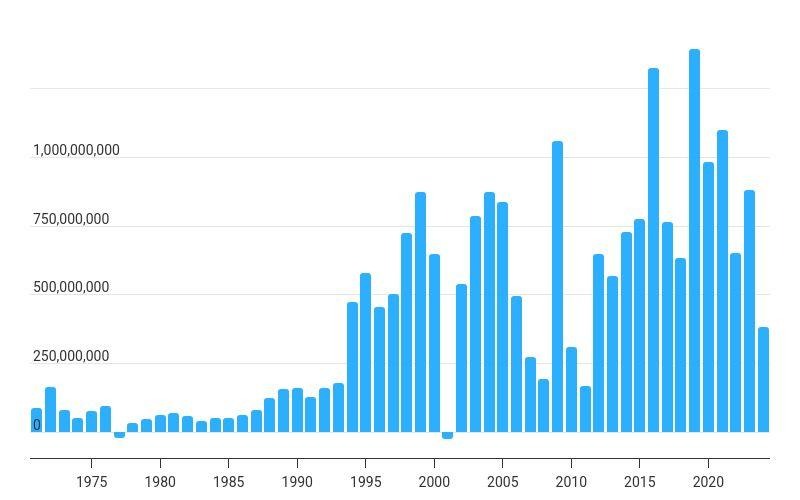
In 2017, Ecuador took the radical step of terminating 16 bilateral investment treaties after a government commission determined that the agreements had failed to deliver the promised influx of capital while exposing the state to massive legal liabilities. In the five years following the termination, Ecuador received an average of $1 billion per year in FDI, an increase from the $830 million annual average seen in the five years prior.
Case Study: South Africa
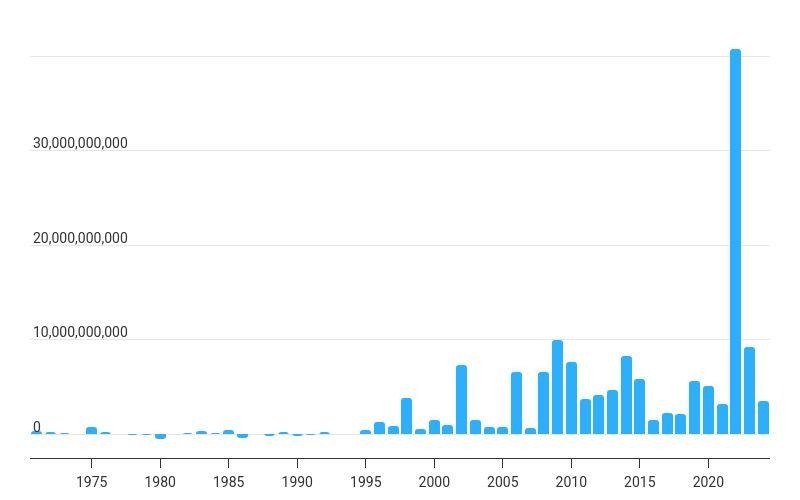
South Africa began distancing itself from ISDS in 2012, allowing several treaties with European nations to expire. The government replaced these with the Protection of Investment Act of 2018, which directs disputes to South Africa’s domestic courts. While FDI dipped during the transition period to $4.5 billion annually, it rebounded to an average of $5.1 billion after the national act was solidified, excluding one-off corporate restructurings.
Case Study: India
India terminated over 50 trade agreements in 2016 and 2017 following several high-profile losses in arbitration courts. Despite the removal of these protections, India saw a dramatic surge in FDI. Annual inflows rose from an average of $33.5 billion in the five years preceding the change to $48.3 billion in the five years following the terminations.
The "Regulatory Chill" and Environmental Implications
Beyond the direct financial costs of lawsuits, experts warn of a "regulatory chill" effect. This occurs when governments refrain from enacting necessary public interest legislation—such as climate change mitigation strategies, stricter mining taxes, or labor protections—out of fear that these actions will trigger an ISDS claim.
"The costs of ISDS—financially, legally, and politically—are significant and woefully underappreciated," says Lisa Sachs, director of the Columbia Center on Sustainable Investment. For countries rich in critical minerals like copper, lithium, and cobalt, the threat of ISDS can make it nearly impossible to update environmental standards to meet modern sustainability goals without facing multi-billion dollar penalties.
In the mining sector, where projects often last 30 to 50 years, this legal framework effectively freezes the law in time, preventing nations from evolving their social and environmental contracts with their citizens. As the world pushes for a low-carbon transition, the demand for minerals is skyrocketing, but the legal framework governing their extraction remains rooted in 20th-century colonial-era protections for capital.
Alternative Frameworks for Responsible Mining
As more countries recognize the risks associated with ISDS, international law experts and organizations like the International Institute for Sustainable Development (IISD) are proposing alternative models for foreign investment. These recommendations focus on creating "mutually beneficial" frameworks that prioritize sustainable development alongside investor security.
One proposed solution is the mandatory exhaustion of local remedies. Under this model, an investor must first seek justice through the host country’s domestic court system before a case can be elevated to a regional or international tribunal. This encourages the strengthening of national judiciaries and respects a country’s legal sovereignty. "If you decide to prioritize domestic courts, you can put in the effort to improve them and make sure they can handle this type of dispute properly," notes Suzy Nikièma, director of sustainable development at the IISD.
Another strategy involves shifting the focus from the export of raw ores to domestic processing and refining. By requiring investors to build value-added facilities within the host country, governments can ensure more localized economic benefits, job creation, and a more resilient supply chain. This approach de-risks global markets from geopolitical shocks while giving the host country a greater stake in the success of the project.
Finally, there is a growing call for "inclusivity mechanisms" that allow local communities to have a formal voice in the investment process. This includes the implementation of Free, Prior, and Informed Consent (FPIC) for indigenous populations and the creation of compliance mechanisms where communities can raise concerns about environmental impacts directly with a collaborative board of state and company representatives.

Conclusion: A New Era of Investment Law
The situation in Panama serves as a cautionary tale for the global community. The $20 billion lawsuit by First Quantum Minerals has shown that even when a project is ruled unconstitutional by a nation’s highest court and rejected by its people, international investment law can provide a backdoor for corporate interests to exert pressure.
As the demand for critical minerals grows to fuel the green energy revolution, the need to reform international investment agreements has become urgent. Replacing the adversarial and opaque ISDS system with transparent, domestic-focused, and community-inclusive legal frameworks may be the only way to ensure that the transition to a low-carbon economy does not come at the expense of human rights and national sovereignty. The decision Panama makes this summer will not only determine the fate of one mine but will also signal to the world whether the era of unchecked investor-state settlements is finally drawing to a close.
