

The tenuous cessation of hostilities between the United States, Israel, and Iran is facing its most significant challenge since its inception, as a series of coordinated drone strikes across the Persian Gulf have ignited fears of a return to full-scale regional conflict. On Sunday, Qatar, Kuwait, and the United Arab Emirates (UAE) reported a surge in hostile unmanned aerial vehicle (UAV) activity, marking a dangerous escalation that threatens the April 8 ceasefire agreement. While no casualties were reported in the latest wave of attacks, the maritime and aerial incursions have underscored the volatility of a truce that many analysts already considered a "peace in name only." The incidents come amidst a backdrop of a crippling naval blockade and a silent but deadly "tanker war" that continues to throttle the world’s most vital energy artery, the Strait of Hormuz.
Aerial and Maritime Incursions in the Gulf
The most direct escalation occurred in Qatari territorial waters, where the Ministry of Defence confirmed that a cargo vessel was struck by a drone northeast of the industrial port of Mesaieed. The freighter, which was transporting commercial goods from the UAE capital of Abu Dhabi, reported a localized fire following the impact. Qatari authorities stated that the vessel’s crew managed to bring the blaze under control, allowing the ship to proceed to its destination. The United Kingdom Maritime Trade Operations (UKMTO), which monitors regional shipping lanes, corroborated the report, noting that the bulk carrier was hit by an "unknown projectile." Crucially, the UKMTO assessment found no environmental damage or leakage, though the psychological impact on commercial shipping insurance rates was immediate.
Simultaneously, Kuwait’s Ministry of Defence reported that its radar systems detected a "number of hostile drones" entering sovereign airspace at dawn. While the Kuwaiti military did not explicitly name the point of origin, a spokesperson confirmed that the drones were "dealt with in accordance with established procedures," a phrase typically indicating interception or electronic jamming. This marks a rare instance of Kuwaiti involvement in the kinetic theater of the 2026 conflict, highlighting the expanding geographic footprint of the instability.
In the UAE, the defense ministry was more direct in its attribution. Official statements confirmed that UAE air defense systems successfully intercepted two UAVs launched from Iranian territory. The ministry’s statement on X (formerly Twitter) emphasized that the engagement was successful and that no debris caused damage to civilian infrastructure. These intercepts follow a pattern of intensified activity; just last Tuesday, the UAE reported a 48-hour window of sustained missile and drone attacks, which the Iranian Islamic Revolutionary Guard Corps (IRGC) continues to deny.
Chronology of the 2026 Conflict and the April 8 Truce
The current crisis is the latest chapter in a conflict that escalated rapidly in early 2026, drawing the United States and Israel into a direct confrontation with the Islamic Republic of Iran. The war, characterized by high-intensity missile exchanges and cyber warfare, reached a temporary stalemate in the spring.
- January – March 2026: Initial hostilities break out following a series of maritime incidents and targeted assassinations. The US deploys significant naval assets to the region, while Iran initiates a partial closure of the Strait of Hormuz.
- April 8, 2026: Following intense mediation by Qatar and Oman, a "fragile ceasefire" is signed. The agreement calls for a cessation of direct strikes on sovereign territories but leaves the status of international waters and economic blockades ambiguous.
- Late April 2026: The Trump administration clarifies that while the truce is in effect, the US will maintain a "maximum pressure" blockade on Iranian ports to prevent the export of crude oil and the import of military hardware.
- May 5-7, 2026: UAE intercepts missiles for two consecutive days. The US Navy strikes two Iranian tankers in international waters, alleging a breach of the blockade.
- May 10, 2026: Coordinated drone strikes reported in Qatar, Kuwait, and the UAE, signaling a potential collapse of the April 8 agreement.
The Strategic Chokepoint: Naval Blockade and the Strait of Hormuz
Central to the ongoing tension is the "naval battle" that has persisted despite the official ceasefire. Before the outbreak of hostilities, the Strait of Hormuz served as the transit point for approximately 21 million barrels of oil per day, or roughly 21% of global petroleum liquids consumption. Today, that volume has plummeted as Iran uses the waterway as a "pressure card." By restricting traffic and conducting aggressive patrols, Tehran has effectively countered the US-led blockade of its own ports.
The Trump administration has remained firm on its policy of maritime interdiction. On Friday, US naval forces engaged and disabled two Iranian oil tankers. The White House defended the action as a necessary enforcement of the blockade, asserting that the vessels were attempting to bypass sanctions to fund IRGC operations. Iran, however, views these interdictions as acts of piracy and a violation of the spirit of the April truce.
The IRGC Navy issued a stern warning on Sunday, reiterating its "Heavy Assault" doctrine. A spokesperson stated that any further interference with Iranian commercial interests would result in retaliatory strikes against US regional bases—such as Al Udeid in Qatar or Camp Lemonnier—and "enemy ships" regardless of their flag. Ebrahim Rezaei, spokesperson for the Iranian parliament’s foreign policy and security committee, echoed this sentiment, declaring that Tehran’s period of "strategic restraint" had reached its conclusion.
Diplomatic Deadlock and the 14-Point Proposal
While the military situation deteriorates, diplomatic channels remain open, though increasingly strained. Qatar continues to play its traditional role as a neutral mediator. On Saturday, Qatari Prime Minister Sheikh Mohammed bin Abdulrahman bin Jassim Al Thani held high-level talks with US Secretary of State Marco Rubio. The discussions centered on a 14-point proposal drafted by Washington, which serves as the current roadmap for a permanent end to the war.
Key elements of the 14-point proposal are believed to include:
- The permanent reopening of the Strait of Hormuz to all international traffic.
- The verified rollback of Iran’s advanced nuclear enrichment program.
- The establishment of a "maritime buffer zone" in the Persian Gulf.
- The release of all western detainees held in Tehran.
- A phased lifting of US sanctions in exchange for regional non-interference.
However, the "sticking points" remain formidable. Iran is demanding the immediate unfreezing of billions of dollars in overseas assets and significant war reparations for damage caused by US and Israeli airstrikes. In a phone call with Iranian Foreign Minister Abbas Araghchi, the Qatari Prime Minister warned that using the Strait of Hormuz as a geopolitical lever would only "deepen the crisis" and alienate potential regional allies.
Domestic Pressure and the Economic Quagmire
Inside Iran, the war and the subsequent blockade have created a complex social landscape. President Masoud Pezeshkian, appearing at a reconstruction summit, attempted to balance military defiance with economic pragmatism. He emphasized that negotiating with the US is not a "surrender" but a pursuit of the "rights of the Iranian people."
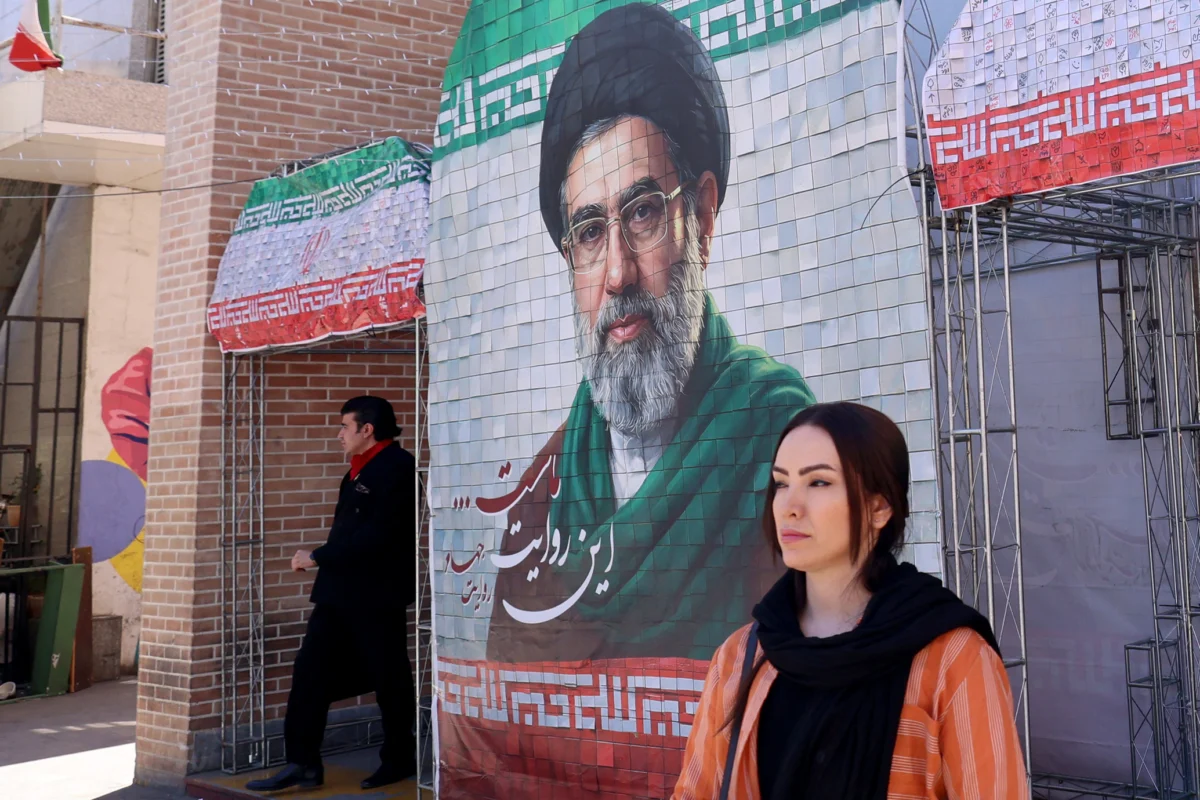
Despite the official rhetoric of national unity, the Iranian economy is in a state of distress. Reporting from Tehran, analysts note a "mixture of sentiments" among the populace. While early stages of the war sparked nationalist fervor and public displays of support for the establishment, the reality of the blockade is setting in.
- Inflation: Prices for basic commodities, including flour and medicine, have reportedly tripled since the start of the year.
- Currency Devaluation: The Iranian Rial has hit record lows against the dollar, paring back the purchasing power of the middle class.
- Infrastructure Damage: While the ceasefire has halted major urban bombings, the energy grid remains unstable due to previous strikes and a lack of spare parts.
The "quagmire," as described by Ebrahim Rezaei, is not just a military one for the United States; it is an existential economic challenge for the Iranian government, which must provide for a frustrated and impoverished population while maintaining its regional "Resistance" posture.
Implications for the Global Energy Market and Regional Order
The persistence of the drone attacks and the naval standoff has profound implications for the global economy. Market analysts warn that if the April 8 ceasefire collapses entirely, oil prices could spike toward $150 per barrel, triggering a global recession. The "new regional order" alluded to by Iranian officials suggests a shift away from US-led security architectures toward a more fragmented, multipolar Gulf where non-state actors and UAV technology can offset traditional naval power.
For the Gulf states—Qatar, the UAE, and Kuwait—the current situation is a nightmare scenario. They are caught between their security partnerships with the United States and the geographical reality of being in Iran’s immediate "strike zone." The drone hits on commercial vessels and airspace violations demonstrate that neither US Aegis systems nor regional air defenses can provide a 100% guarantee of security against low-cost, high-frequency UAV swarms.
As the clock ticks, the international community watches the Persian Gulf with bated breath. The April 8 truce, once hailed as a breakthrough, now appears to be a mere breathing space for both sides to rearm and recalibrate. Without a significant diplomatic breakthrough on the 14-point proposal, the "fragile ceasefire" may soon be remembered as the prelude to a much larger conflagration.
