

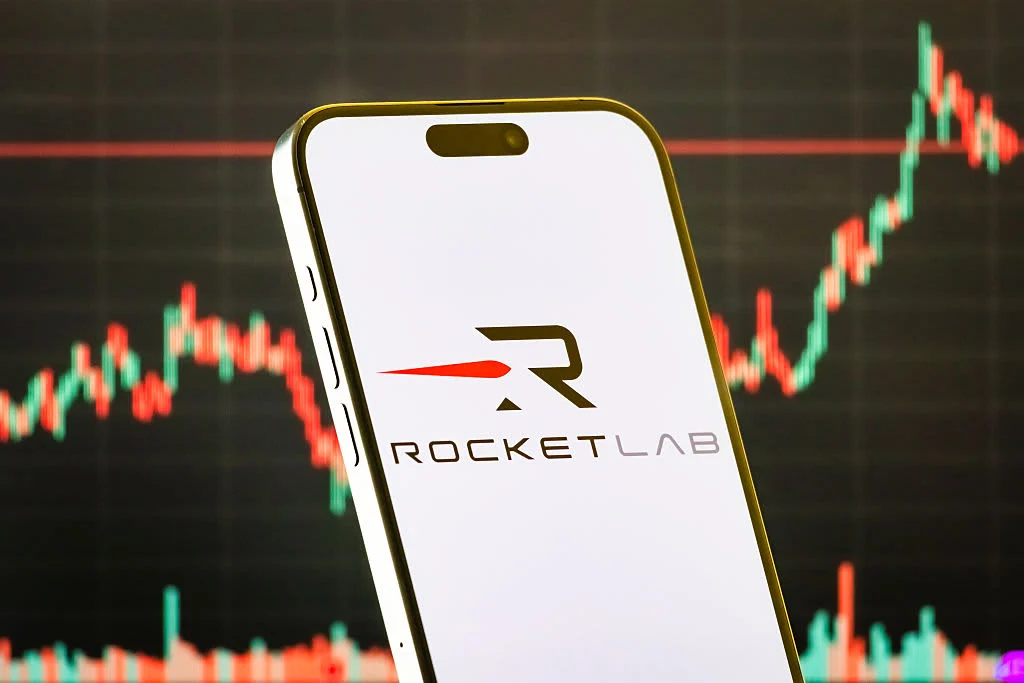
Rocket Lab USA Inc. experienced its most significant single-day trading performance in the company’s history on Wednesday, with shares catapulting 34% following the release of first-quarter 2026 financial results that exceeded Wall Street expectations across every major metric. The Long Beach, California-based aerospace manufacturer and launch service provider not only outperformed revenue estimates but also solidified its long-term growth trajectory by announcing its largest launch services agreement to date: a $190 million contract for 20 dedicated launches under its Hypersonic Accelerator Suborbital Test Electron (HASTE) program. This surge reflects a broader investor enthusiasm for the commercial space sector, which has seen valuations rise in anticipation of a potential initial public offering from SpaceX and a shift in federal defense priorities toward sophisticated satellite-based missile defense systems.
The company’s first-quarter performance was characterized by a dual-stream revenue beat. Rocket Lab reported total revenue of $200.4 million, comprising $136.7 million from its space systems business and $63.7 million from its launch segment. These figures comfortably cleared FactSet consensus estimates, which had projected $132.1 million for space systems and $59 million for launch services. Perhaps most notably for long-term investors, the company’s total backlog more than doubled over the past twelve months, reaching a record $2.2 billion. This massive accumulation of future work provides a clear revenue runway and validates Rocket Lab’s transition from a niche small-satellite launcher to a vertically integrated space powerhouse capable of providing both the "bus" (the satellite itself) and the "ride" (the launch vehicle).
Financial Performance and Forward Guidance
Rocket Lab’s financial health has become a focal point for analysts who previously viewed the company primarily as a competitor to small-launch startups. The Q1 2026 results demonstrate a maturing business model where the high-margin space systems segment—which manufactures components such as reaction wheels, star trackers, and solar panels—now accounts for more than two-thirds of total revenue. This shift has insulated the company from the inherent volatility and scheduling delays often associated with the launch industry.
The guidance provided by management further fueled the stock’s rally. For the second quarter of 2026, Rocket Lab anticipates revenue to fall between $225 million and $240 million. This outlook significantly outpaces the $207.5 million projected by LSEG analysts. The aggressive guidance is underpinned by an accelerating launch manifest for the Electron rocket and the ramping up of production for several major satellite constellation contracts. As the company scales its operations, it is also narrowing its path toward GAAP profitability, a milestone that remains a key differentiator in a sector often criticized for high burn rates.
The Landmark $190 Million HASTE Contract
The cornerstone of the quarterly announcement was the securing of a $190 million contract for 20 HASTE launches. HASTE is a suborbital version of Rocket Lab’s flagship Electron rocket, specifically modified to support hypersonic testing and research for the Department of Defense and other government agencies. This contract represents the largest single award in the company’s history and cements its leadership in the rapidly growing hypersonics market.
Hypersonic technology, which involves vehicles traveling at speeds greater than Mach 5, has become a top national security priority for the United States as it seeks to keep pace with developments in China and Russia. The HASTE vehicle allows the military to test payloads and sensors in realistic flight environments at a fraction of the cost and complexity of traditional large-scale flight tests. By securing a block buy of 20 launches, the Department of Defense is signaling a commitment to a high-cadence testing schedule, ensuring that Rocket Lab remains a critical infrastructure partner for the "Department of War" initiatives and broader national defense strategies.
The "SpaceX Effect" and Sector Tailwinds
The timing of Rocket Lab’s record-breaking day is inextricably linked to the broader market sentiment surrounding the space economy. Over the past year, Rocket Lab’s stock has more than quadrupled, a phenomenon driven in part by the "halo effect" of SpaceX’s rumored and recently filed confidential IPO. As Elon Musk’s SpaceX prepares for a record-breaking public offering later this year, institutional investors are scouring the market for liquid, publicly traded alternatives that offer exposure to the same secular growth trends.
The demand for space-based infrastructure is no longer speculative. Businesses across telecommunications, earth observation, and climate monitoring are increasingly reliant on low-Earth orbit (LEO) constellations. This "skyrocketing demand," as described by industry analysts, has benefited a select group of established players, including Rocket Lab, Firefly Aerospace, and Intuitive Machines. However, Rocket Lab’s ability to execute on its manifest—boasting over 50 successful Electron launches to date—has positioned it as the primary Western competitor to SpaceX in the small-to-medium lift category.

Geopolitical Drivers: The Golden Dome and Artemis
Beyond the commercial market, Rocket Lab is poised to benefit from significant shifts in U.S. federal policy. President Donald Trump’s administration has aggressively pursued the "Golden Dome" project, an ambitious, multi-layered missile defense system designed to protect the continental United States from sophisticated aerial threats. The architecture of the Golden Dome relies heavily on massive constellations of small satellites in LEO to provide persistent tracking and discrimination of incoming missiles. Rocket Lab’s space systems division is a natural fit for this initiative, providing the hardware and orbital maneuverability systems required for such a complex defense shield.
Simultaneously, NASA’s Artemis program is entering its most critical phase. As the agency gears up for crewed missions to the lunar surface, the need for reliable logistics and communications infrastructure in cislunar space has intensified. Rocket Lab has already demonstrated its capability in this arena with the CAPSTONE mission, where an Electron rocket and a Photon spacecraft successfully placed a satellite into a unique lunar orbit. The company’s involvement in the Artemis supply chain is expected to grow as NASA seeks to establish a sustainable human presence on the Moon, requiring frequent launches of scientific instruments and habitat components.
Strategic Evolution and the Neutron Rocket
While the Electron rocket remains the workhorse of the company, the development of the Neutron rocket is the next major catalyst for Rocket Lab. Neutron is a medium-lift, reusable launch vehicle designed to compete directly with SpaceX’s Falcon 9. With a payload capacity of approximately 13,000 kilograms to LEO, Neutron is being built specifically to deploy large-scale satellite constellations and potentially support human spaceflight.
During the earnings call, CEO Peter Beck emphasized that the company is making rapid progress on Neutron’s infrastructure, including the construction of a dedicated launch site at the Mid-Atlantic Regional Spaceport in Virginia. The successful debut of Neutron, expected in the near future, would transform Rocket Lab’s total addressable market (TAM) by allowing it to compete for heavy-lift government and commercial contracts that are currently dominated by a virtual monopoly.
Expansion into the European Market
In addition to its domestic success, Rocket Lab is looking toward Europe as its next "actionable" market. CEO Peter Beck has signaled that the European space sector is ripe for disruption, as the region seeks to end its reliance on Russian launch vehicles and navigate the delays associated with the Ariane 6 program. By offering a proven, cost-effective launch solution and a localized supply chain for satellite components, Rocket Lab aims to capture a significant share of the European Space Agency’s (ESA) upcoming contracts and the growing private space sector in the UK and EU.
This international expansion is part of a broader strategy of vertical integration. By controlling the manufacturing of the spacecraft, the software that operates it, and the rocket that launches it, Rocket Lab can offer "end-to-end" mission solutions. This model reduces costs for customers and increases margins for the company, a strategy that is clearly resonating with the investor community.
Analysis of Implications for the Space Economy
The 34% surge in Rocket Lab’s stock is more than just a reaction to a single earnings report; it is a validation of the "Space 2.0" business model. For years, critics argued that the space industry was a capital-intensive "money pit" with distant prospects for returns. Rocket Lab’s $2.2 billion backlog and its ability to beat revenue estimates suggest that the industry has reached a tipping point where space-based services are becoming essential utility-like infrastructure.
Furthermore, the concentration of contracts from the Department of Defense indicates that the "militarization" of space is providing a stable, recession-resistant floor for the industry. As global tensions rise, the demand for rapid-response launch capabilities and resilient satellite networks will only increase. Rocket Lab’s HASTE program is the personification of this trend, bridging the gap between experimental aerospace research and operational military necessity.
In conclusion, Rocket Lab’s historic day on the markets reflects a convergence of operational excellence, strategic foresight, and favorable macroeconomic conditions. With a record backlog, a landmark defense contract, and the impending launch of the Neutron rocket, the company has transitioned from a promising startup into a cornerstone of the global space economy. As the world watches SpaceX’s potential entry into the public markets, Rocket Lab has proven that it is not merely a passenger in the space race, but a leader defining its trajectory.
