

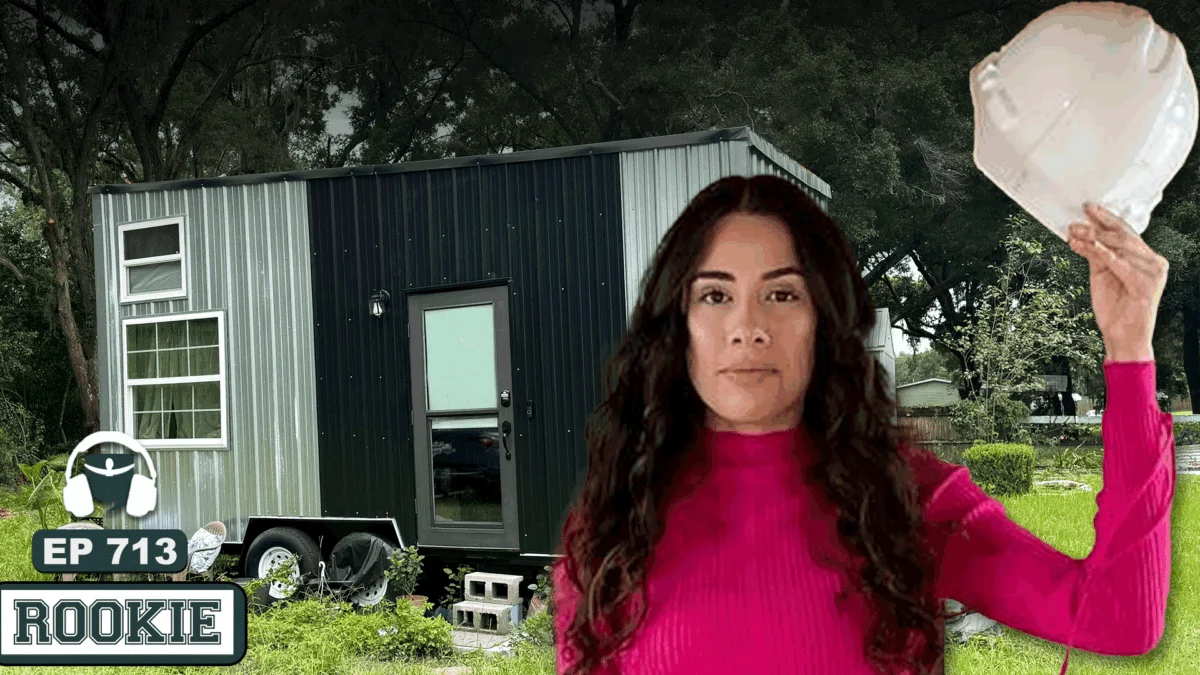
The landscape of American real estate investment is undergoing a generational shift as younger investors leverage digital tools and unconventional acquisition strategies to enter the market. Tiffany Da Silva, a Florida-based investor and founder of Beauty and the Builder, serves as a primary example of this trend. At the age of 18, immediately following her high school graduation, Da Silva utilized her entire life savings of $12,000 to acquire a vacant parcel of land through a county tax deed sale. This initial venture, which eventually yielded a property valued at $175,000, served as the catalyst for a portfolio that now includes 11 completed deals involving Real Estate Owned (REO) auctions, ground-up construction, and creative financing.
The Genesis of a Gen Z Investment Strategy
Da Silva’s entry into the real estate market coincided with the global disruptions of the COVID-19 pandemic. Deprived of a traditional high school graduation ceremony, she redirected her focus toward financial literacy and market research. Working three jobs simultaneously, she accumulated $12,000 in capital. While many of her peers were navigating the transition to higher education, Da Silva began researching the mechanics of tax deed sales, a niche area of real estate often overlooked by traditional retail buyers.
The catalyst for her first acquisition was a digital lead found on social media, which directed her to the local county tax deed auction website. In Florida, the tax deed process is a legal mechanism used by municipalities to recover unpaid property taxes. When a property owner fails to pay their assessments, the county eventually auctions the property to the highest bidder to satisfy the debt.
Da Silva identified a vacant 0.22-acre parcel located five minutes from her residence. Despite having no established credit history and limited institutional knowledge, she entered a bid of $12,100—representing her total liquid net worth plus a $100 increment suggested by her mother to overcome a competing bidder. This acquisition was a "tax deed" purchase, which differs significantly from a traditional "warranty deed" transaction, as it often comes with cloudier titles and immediate payment requirements.
Mechanics of Tax Deed Sales and Initial Development
The acquisition of the Florida parcel required Da Silva to navigate the rigid requirements of county auctions. Unlike traditional real estate transactions that offer a 30-to-60-day closing window, tax deed sales in many Florida counties require a 5% deposit at the time of the bid and the remaining balance within 24 hours. This "cash-only" environment effectively bars investors who rely on traditional mortgage financing, creating a barrier to entry that often results in lower purchase prices for those with available liquidity.
Upon securing the land, Da Silva’s original intent was a simple "land flip"—purchasing the lot for $12,100 and reselling it for its estimated market value of $20,000. However, she pivoted to a more complex development strategy after researching mobile home placement. She acquired a 2002 single-wide mobile home via an online marketplace for $12,000.
The project faced immediate logistical and financial hurdles. Moving the structure cost $13,000—more than the purchase price of the home itself—and the property was found to have a pre-existing $6,000 county lien stemming from a previous structure that had burned down. By navigating the permitting process, hand-drawing blueprints, and managing contractors for septic, well, and electrical infrastructure, Da Silva completed the project with a total investment of approximately $55,000. Amid the peak of the pandemic-era housing boom, the finished property appraised for $175,000, representing a nearly 300% return on investment and providing the capital base for future expansion.
Transitioning to REO Auctions and Institutional Platforms
Following the success of her first deal, Da Silva shifted her focus toward Real Estate Owned (REO) properties. REOs are homes that have failed to sell at a foreclosure auction and have subsequently been reclaimed by the lending institution. Banks, which are not structured to manage long-term residential assets, often seek to liquidate these properties through third-party auction platforms such as Auction.com and Hubzu.
Da Silva developed a rigorous underwriting formula for these auctions, typically targeting a purchase price of 60% to 65% of the After Repair Value (ARV). This margin is wider than the industry-standard 70% rule, a necessity she attributes to the risks associated with auction properties, which are often sold "as-is" and may not allow for interior inspections prior to bidding.
One of her notable REO successes involved a 2023 new-construction home. By monitoring the auction site over several weeks, she observed the property being relisted multiple times due to a lack of bidders meeting the bank’s undisclosed "reserve price." On the third re-auction, Da Silva secured the property at her target price of $183,000. The property later appraised for $300,000, offering immediate equity without the need for significant renovations.
Leveraging Creative Financing: Hard Money and DSCR Loans
As her portfolio grew, Da Silva moved away from using her own cash for the full purchase price, instead utilizing "Hard Money" and Debt Service Coverage Ratio (DSCR) loans. Hard money lenders, such as Kiavi, provide short-term, high-interest capital based on the value of the asset rather than the borrower’s personal income, making them ideal for rapid auction acquisitions.
For long-term holds, Da Silva utilizes DSCR loans, which qualify the borrower based on the property’s ability to generate enough rental income to cover the debt service (mortgage, taxes, and insurance). This strategy allows her to bypass the strict debt-to-income requirements of traditional Fannie Mae or Freddie Mac loans, which can be difficult for young entrepreneurs or those with multiple properties to meet.
By securing DSCR loans with no prepayment penalties, Da Silva maintains an "exit strategy" flexibility. She can either hold the property as a cash-flowing rental or sell it as a turnkey investment to another buyer if market conditions are favorable. This dual-path approach mitigates the risk of "analysis paralysis" and allows for a high "bias for action," a trait she cites as the primary driver of her success.
Ground-Up Construction and Technical Proficiency
To further verticalize her business, Da Silva expanded into ground-up construction, including the development of two tiny homes and the "studs-up" renovation of a farmhouse. This phase of her career provided her with the technical expertise to evaluate the structural integrity of auction properties more accurately.
Understanding the costs of major systems—such as HVAC, roofing, septic, and electrical—allows Da Silva to bid more aggressively on properties that others might perceive as high-risk. For instance, her knowledge that a property is only a few years old gives her the confidence to bid without an interior inspection, knowing that the most expensive "capital expenditure" items are likely still within their functional lifespan.
Broader Market Impact and the Rise of the "Rookie" Investor
Da Silva’s trajectory reflects a broader trend in the U.S. housing market where younger investors are utilizing technology to find deals that do not appear on the Multiple Listing Service (MLS). According to data from the National Association of Realtors (NAR), while the average age of a homebuyer has risen, there is a growing segment of "Gen Z" investors who view real estate as a primary vehicle for wealth creation rather than just a place of residence.
Industry analysts suggest that the success of investors like Da Silva is rooted in three factors:
- Information Accessibility: The democratization of real estate education through podcasts and social media has lowered the barrier to entry for complex strategies like tax deed investing.
- Platform Efficiency: Online auction sites have streamlined the process of buying distressed assets, which was previously reserved for local "courthouse step" insiders.
- Market Volatility: The rapid appreciation of home values in states like Florida between 2020 and 2023 allowed early-entry investors to build significant equity in a short period.
Conclusion and Future Outlook
Tiffany Da Silva’s evolution from an 18-year-old with $12,000 to a builder and investor with 11 deals underscores the viability of unconventional real estate strategies. By focusing on distressed assets, tax deeds, and REO auctions, she has demonstrated that significant capital and decades of experience are not absolute prerequisites for entry into the market.
Her "home run" deal model—seeking 3X returns through creative development and aggressive auction bidding—serves as a blueprint for a new generation of "Real Estate Rookies." As the market stabilizes in a higher-interest-rate environment, the ability to find off-market value and apply technical construction knowledge will likely remain the differentiating factor between successful investors and those sidelined by traditional market competition. Da Silva continues to operate under her "Beauty and the Builder" brand, focusing on high-margin flips and the expansion of her rental portfolio in the Florida market.
