

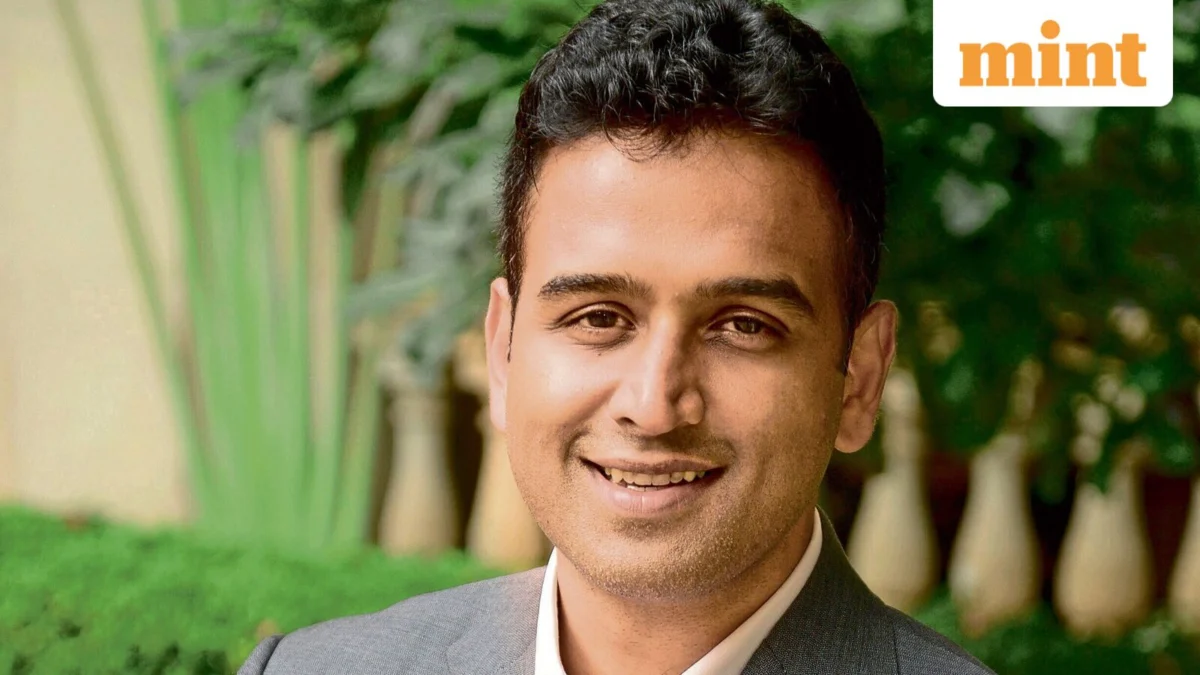
The landscape of Indian retail investing has undergone a dramatic transformation over the last decade, characterized by a massive influx of first-time investors into the capital markets. However, despite the proliferation of digital platforms and the democratization of financial information, Nithin Kamath, the co-founder and CEO of Zerodha, suggests that the fundamental behavior of investors remains plagued by repetitive and costly errors. In a series of insightful observations shared on the social media platform X, Kamath expressed concern over the continued popularity of high-cost, low-return financial products, such as Unit Linked Insurance Plans (ULIPs) and endowment policies, which he argues are fundamentally flawed for the average saver.
Kamath’s critique centers on the paradox of the modern information age: while investors have more tools than ever to conduct due diligence, many continue to succumb to traditional mis-selling tactics. He noted that the "creativity" in financial mistakes is surprisingly low, with the same suboptimal products being sold to new generations of investors despite decades of warnings from financial educators, journalists, and market veterans. This trend persists even as India’s mutual fund industry sees record-breaking Systematic Investment Plan (SIP) inflows and the number of Demat accounts continues to climb into the hundreds of millions.
The Persistence of Suboptimal Investment Products
For years, the core mantra of personal finance in India has been the separation of insurance and investment. Financial planners have consistently advocated for pure term insurance to cover life risks and diversified mutual funds or direct equity for wealth creation. Yet, Kamath points out that ULIPs and endowment plans remain a staple in the portfolios of many Indian households.
ULIPs are hybrid products that provide a combination of life insurance and investment. A portion of the premium goes toward insurance coverage, while the remainder is invested in equity or debt funds. Endowment plans, on the other hand, are traditional life insurance policies that pay out a lump sum after a specific term or upon the death of the policyholder. Kamath argues that these products are "usually a bad idea" because they lack transparency and carry high opaque charges that eat into long-term compounding.
The primary issue with these combined products is the "mortality charge" and "administrative fee" structure, which often makes them significantly more expensive than purchasing a term plan and a mutual fund separately. Furthermore, the insurance cover provided by these policies is frequently inadequate for the needs of a modern family, leaving the investor both underinsured and under-compensated in terms of returns. Despite these drawbacks, the aggressive sales machinery of traditional financial institutions ensures that these products continue to witness steady growth.
The Evolution of Financial Information and the Role of AI
One of the most striking points in Kamath’s commentary is the accessibility of data in the current era. He noted that in the contemporary environment—referencing the technological capabilities available in 2026 and beyond—there is no longer an excuse for ignorance. With the advent of sophisticated Artificial Intelligence (AI) tools like ChatGPT and Claude, investors can now perform complex financial modeling in seconds.
"You can just ask ChatGPT or Claude whether a product is a good idea, and they’ll usually show you the math," Kamath stated. This technological shift means that the "math" behind a 5% or 6% return on an endowment plan can be easily compared against the historical 12% to 15% returns of equity markets. The ability to visualize the long-term impact of high commissions and low returns is now at the fingertips of anyone with a smartphone.
However, the human element remains the greatest hurdle. Behavioral finance suggests that investors are often swayed by the "guaranteed" nature of endowment returns or the tax-saving allure of ULIPs under Section 80C of the Income Tax Act. The psychological comfort of a "guaranteed" sum, even if it fails to beat inflation, often overrides the logical conclusion provided by a spreadsheet or an AI analysis.
The Growing Complexity of Health Insurance
While Kamath was blunt about the avoidable nature of investment mistakes, he took a more nuanced and sympathetic view regarding health insurance. He acknowledged that unlike the relatively straightforward math of ULIPs versus Mutual Funds, health insurance is a "genuinely complicated" field that remains a significant challenge for the Indian middle class.
In the Indian context, health insurance policies are often riddled with technical jargon and restrictive clauses that are difficult for the average consumer to decipher. Kamath highlighted several key areas where investors often face "financial shocks" during the claims process:
- Room Rent Caps: Many policies limit the amount they will pay for a hospital room to 1% of the sum insured. If a patient chooses a room above this limit, "proportionate deductions" are applied to the entire bill, leaving the patient to pay a massive portion out-of-pocket.
- Waiting Periods: Policies often have a two-to-four-year waiting period for pre-existing diseases (PED), which many buyers fail to realize until a claim is rejected.
- Exclusions and Co-pays: Certain treatments or robotic surgeries may be excluded, or a "co-pay" clause might require the policyholder to pay a fixed percentage of every claim.
- Restoration Benefits: While marketed as a benefit, the conditions under which a sum insured is "restored" can be highly specific and restrictive.
Kamath suggested that most people only realize the limitations of their health coverage "the hard way"—at the hospital billing desk. This complexity makes health insurance a far more treacherous terrain than life insurance or equity investing, necessitating a much higher level of professional guidance and personal scrutiny.
Supporting Data: The Indian Investment Context
The concerns raised by the Zerodha co-founder are supported by broader trends in the Indian financial sector. According to data from the Association of Mutual Funds in India (AMFI), the total Assets Under Management (AUM) of the mutual fund industry has crossed the ₹60 trillion mark, reflecting a massive shift toward market-linked investments. However, the insurance sector continues to hold a dominant share of household savings.
Data from the Insurance Regulatory and Development Authority of India (IRDAI) indicates that traditional life insurance products still account for a vast majority of the new business premium (NBP) for many insurers. While the penetration of term insurance is increasing, it still lags behind the "investment-cum-insurance" models that have been the backbone of the industry for decades.
Furthermore, a study on financial literacy in India suggests that while digital access has increased, functional financial literacy—the ability to apply financial concepts to decision-making—remains low. This gap is what allows for the continued success of products that Kamath labels as "uncreative mistakes."
Chronology of the Retail Investing Boom
To understand the weight of Kamath’s warnings, one must look at the timeline of India’s retail participation:
- Pre-2014: Retail participation was largely confined to Physical Gold, Real Estate, and Fixed Deposits. The stock market was viewed with suspicion by the general public.
- 2016-2017: The "demonetization" era and the subsequent push for "financialization of savings" led to the first major spike in mutual fund inflows through the "Mutual Funds Sahi Hai" campaign.
- 2020-2021: The COVID-19 pandemic acted as a catalyst. Locked-down citizens turned to trading apps like Zerodha and Groww. Millions of new Demat accounts were opened monthly.
- 2023-2024: The rise of "Finfluencers" on YouTube and Instagram created a double-edged sword—increasing awareness but also spreading potentially biased or unverified financial advice.
- 2025-2026 (Projected/Current): The integration of AI into personal finance tools, as mentioned by Kamath, allows for real-time portfolio auditing and product comparison, yet the sales of traditional "bad" products remain resilient.
Implications and the Path Forward
The broader implications of Kamath’s critique suggest that technology alone cannot solve the problem of financial mis-selling. There is a systemic issue involving the incentive structures of financial intermediaries. Insurance agents and bank employees are often incentivized with high commissions to sell ULIPs and endowment plans, whereas the commissions on term insurance and direct mutual funds are negligible or non-existent.
For the Indian retail investor, the path forward involves a more rigorous approach to "financial due diligence." Experts, echoing Kamath’s sentiments, suggest three primary steps for every household:
First, decouple insurance from investment. Use term insurance for protection and diversified equity/debt instruments for growth. This ensures that the insurance cover is high enough to actually protect the family’s lifestyle in the event of a tragedy.
Second, embrace transparency through technology. Before signing any policy document, investors should use independent comparison portals and AI tools to run the numbers. Calculating the Internal Rate of Return (IRR) of an insurance policy usually reveals that the returns are barely above those of a savings bank account once inflation is factored in.
Third, prioritize health insurance clarity. Given the complexities Kamath highlighted, investors should look for policies with "no room rent caps" and "zero co-pay" clauses, even if they come at a slightly higher premium. Understanding the "Waiting Period" for pre-existing conditions is non-negotiable.
In conclusion, Nithin Kamath’s observations serve as a stark reminder that while the tools for wealth creation have become more sophisticated, the pitfalls remain remarkably consistent. The "retail boom" in India will only be truly successful when the growth in the number of investors is matched by a growth in financial wisdom. As the Indian economy continues its trajectory toward becoming the world’s third-largest, the ability of its citizens to avoid "uncreative mistakes" and navigate the complexities of health and life insurance will be a defining factor in the nation’s long-term financial health.
