

San Francisco’s residential real estate market, long defined by its astronomical price points and systemic lack of inventory, is currently entering a new and hyper-aggressive phase that is defying broader economic trends. While the city has grappled with headlines regarding commercial vacancies and a "doom loop" narrative in its downtown core, the luxury residential sector is telling a vastly different story. Recent transactions in the city’s most prestigious neighborhoods suggest that the upper limits of the market are being reset by a new wave of liquidity, much of it originating from the burgeoning artificial intelligence sector and a resurgence in tech-driven wealth.
The most striking evidence of this trend is found in the recent sale of a six-bedroom, 5,700-square-foot residence in Cow Hollow. Located in one of the city’s most coveted corridors, the property was listed two weeks ago for $7.95 million—a figure that would be considered high in any other American city but is standard for the neighborhood. However, the final sale price reached $15 million, nearly doubling the initial asking price. The financial trajectory of this specific property serves as a microcosm for the market’s volatility and resilience: the sellers originally purchased the home for $7.8 million in the summer of 2020. At that time, the prevailing sentiment suggested a mass exodus from urban centers due to the COVID-19 pandemic. In less than six years, the owners effectively doubled their investment, highlighting a rapid appreciation that has stunned even veteran market observers.
The Geography of the High-End Frenzy
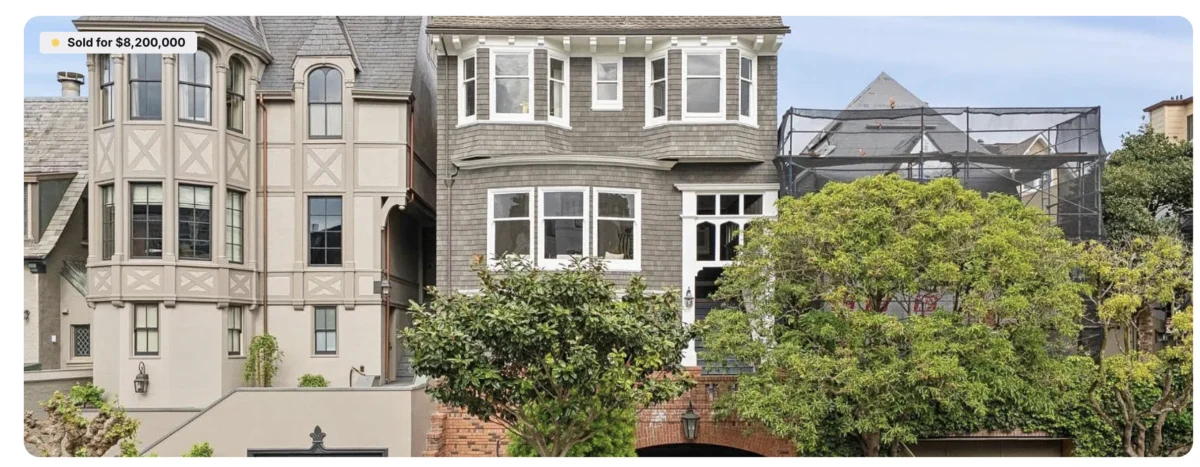
This aggressive bidding behavior is not an isolated incident but rather a pattern emerging across San Francisco’s "north-of-Panhandle" enclaves and hilltop neighborhoods. In Presidio Heights, an exclusive neighborhood known for its proximity to the Presidio national park and its historic architecture, a 4,100-square-foot home recently hit the market with an asking price of $4.4 million. Despite being described by some prospective buyers as "mediocre" in terms of its interior condition and having a view that included a neighboring fire-damaged property, the home sold within a week for $8.2 million.
The disparity between the list price and the final sale price in these instances suggests a strategic "under-pricing" by real estate agents to spark bidding wars, but the scale of the over-bidding indicates a buyer pool that is largely indifferent to traditional valuation metrics. Venture capitalist Nichole Wischoff, who publicly commented on the Presidio Heights sale, characterized the current environment as one where cash is being "lit on fire," noting that the prestige of the location often outweighs the tangible quality of the asset in the eyes of current buyers.
The frenzy has also permeated mid-tier luxury neighborhoods. In Bernal Heights, a 2,300-square-foot home recently fetched $4 million, which was $1 million over the asking price. Notably, the same property had failed to sell just two years prior when it was listed at $2.95 million. This reversal of fortune for sellers indicates a shift in buyer psychology; the hesitation seen in 2022 and early 2023, fueled by rising interest rates and tech sector layoffs, has been replaced by an urgent desire to deploy capital into fixed assets.
Statistical Divergence: Luxury vs. Non-Luxury
The current market dynamics are creating a widening gap between the ultra-high-end segment and the rest of the San Francisco housing market. According to recent data from Redfin, luxury home sales in the city surged by 22% year-over-year in March. This spike in volume is accompanied by a significant increase in the velocity of transactions. The median time a luxury home spends on the market before going under contract has plummeted to just 12 days, compared to 28 days during the same period the previous year.
Furthermore, nearly two-thirds of luxury properties are now going under contract within a two-week window. In stark contrast, the non-luxury segment—homes that do not fall into the top 5% of the market—has seen much more modest growth. Sales in this category rose by less than 4%, with prices remaining essentially flat. This suggests that the "interest rate lock-in effect," which prevents many middle-class homeowners from selling and moving, is not a factor for the luxury buyer. High-net-worth individuals are often making all-cash offers or have access to private wealth management lending products that bypass the constraints of traditional mortgage markets.
The AI Liquidity Engine
The primary catalyst for this localized economic boom is the massive influx of capital into San Francisco’s artificial intelligence ecosystem. Unlike previous tech cycles that were driven by public market performance, the current surge is being fueled by "secondary market transactions" within private companies.
San Francisco is currently the global epicenter for AI development, housing titans such as OpenAI and Anthropic. While these companies have not yet pursued an initial public offering (IPO), they have facilitated tender offers and secondary sales that allow long-term employees to sell portions of their equity to private investors. OpenAI, for instance, recently completed a deal that valued the company at $80 billion or more, providing its workforce with a path to liquidity that was previously unavailable.
When an engineer or executive at a firm like OpenAI or Anthropic cashes out $5 million to $10 million in shares, that capital frequently flows into the local real estate market. For many of these individuals, who already reside in the Bay Area, the purchase of a $10 million home in Cow Hollow or Presidio Heights represents a "lifestyle upgrade" funded by the rapid appreciation of their equity. This "new money" is competing for a shrinking pool of high-end inventory, creating a pressure cooker environment where $1 million over-asks are becoming the baseline for entry.
Historical Context and Market Chronology
To understand the current moment, one must look at the timeline of San Francisco’s post-pandemic recovery:
- 2020-2021: The Uncertainty Phase. Remote work policies led to a temporary cooling of the city’s residential market. Rents dropped, and high-end sales slowed as wealthy residents explored markets like Miami, Austin, and Lake Tahoe.
- 2022: The Correction. Rising interest rates and a downturn in the "SaaS" (Software as a Service) economy led to a period of stagnation. Homes sat on the market longer, and many sellers pulled their listings.
- 2023: The AI Pivot. The release of ChatGPT and the subsequent explosion of interest in generative AI refocused the tech world’s attention on San Francisco. Venture capital began pouring back into the city, specifically into the "Area 120" and South of Market (SoMa) districts.
- 2024: The Liquidity Event. As AI companies reached decacorn valuations ($10B+), secondary markets matured. The wealth generated in these private rounds began manifesting in the physical world, primarily through luxury real estate acquisitions.
Analysis of Implications and Future Outlook
The broader implications of this real estate surge are multifaceted. On one hand, the aggressive buying at the high end provides a significant boost to the city’s tax base through transfer taxes and reassessed property taxes. It also serves as a powerful counter-narrative to the idea that San Francisco is in a state of terminal decline. The fact that individuals are willing to spend $15 million on a single-family home suggests a long-term confidence in the city’s role as the world’s premier tech hub.
However, the decoupling of the luxury market from the reality of the average resident presents challenges. The "gentrification" of already wealthy neighborhoods continues to push the ceiling of affordability higher, making it increasingly difficult for even high-earning professionals—such as doctors, lawyers, and mid-level tech managers—to compete for housing.
Looking forward, the market may be on the cusp of an even larger explosion. Several of the most valuable private companies in the world, including SpaceX (which maintains a significant presence in California), OpenAI, and Anthropic, remain private. The conventional wisdom among financial analysts is that once the IPO window fully opens and these companies debut on public exchanges, the resulting "wealth unlock" will be unprecedented.
In previous IPO cycles, such as the Facebook debut in 2012 or the Google IPO in 2004, the influx of millionaires created a multi-year tailwind for Bay Area real estate. If the current secondary-market-driven frenzy is merely the "pre-game" for a series of massive AI public offerings, the $15 million sales currently making headlines may eventually be viewed as conservative entry points. For a city that has spent decades as the national poster child for housing unaffordability, the next chapter appears poised to test the absolute limits of the American real estate market.
