

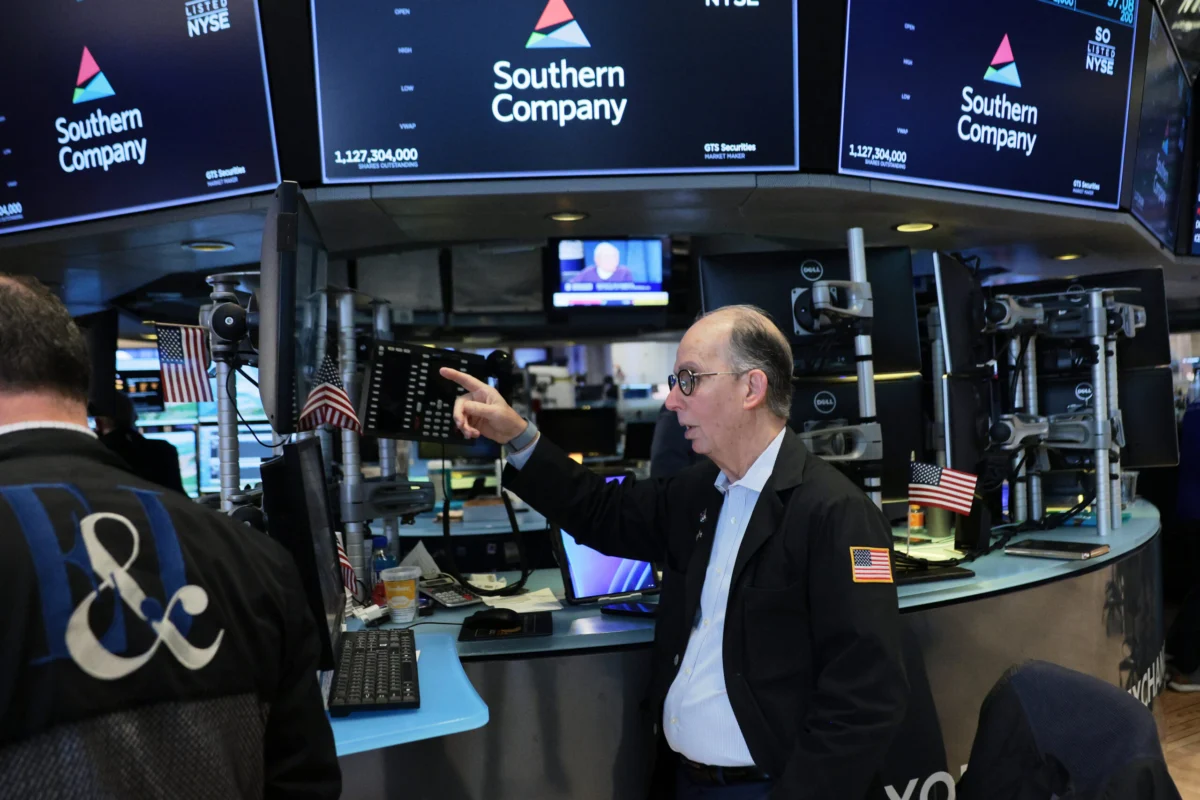
The benchmark S&P 500 index continued its remarkable upward trajectory on Friday, May 7, 2026, breaching the 7,400-point threshold for the first time in history. This significant milestone was achieved despite a backdrop of escalating geopolitical tensions, specifically headlines from Thursday, May 6, detailing exchanges between the United States and Iran in the critical Strait of Hormuz. The market’s resilience, say analysts, is primarily fueled by an insatiable appetite for artificial intelligence (AI) advancements, which appears to be overshadowing traditional geopolitical risks.
The S&P 500’s Ascent: A Detailed Look at Record Performance
The S&P 500’s latest surge marks a robust continuation of a rally that has seen the index climb more than 16% since its lows on March 30. This impressive performance builds on earlier successes, with the index having first crossed the 7,000-point mark just months prior, in January 2026. This rapid ascent underscores a profound shift in market sentiment, moving from a period of relative stagnation to one of aggressive growth, largely concentrated in specific sectors.
The broad index’s journey to 7,400 has captivated investors and analysts alike, prompting a re-evaluation of near-term market expectations. Prediction market traders on platforms like Kalshi, which allow participants to bet on future events, now assign a 59% probability that the S&P 500 will breach 8,000 points before the end of the year. Achieving this would represent an additional 8% gain from current trading levels, a testament to the prevailing bullish outlook. This sentiment is echoed by traditional financial institutions, with RBC, for instance, revising its 12-month-forward price target for the index to 7,900 in a Friday note to clients. Lori Calvasina, Head of U.S. Equity Strategy at RBC, further elaborated that the average and median of the five proprietary models used by the bank to calculate its estimate actually point towards an even higher target of 8,100, implying potential upside beyond her official forecast.
The Unstoppable Force: Artificial Intelligence as the Primary Catalyst
At the heart of the market’s seemingly unshakeable optimism is the burgeoning artificial intelligence sector. The ongoing AI buildout is described by many as "firing on all cylinders," serving as the primary engine driving corporate earnings growth and attracting significant private investment. This surge in AI-related activity is having a multi-faceted impact on the economy and stock market:
- Boosting Company Stocks: Companies deeply involved in AI research, development, and deployment – ranging from chip manufacturers and data center operators to software developers and cloud service providers – have seen their valuations soar. Investors are flocking to these names, anticipating exponential growth as AI permeates every aspect of business and daily life.
- Driving Earnings Growth: The increased adoption of AI technologies is translating into tangible financial results. Businesses are leveraging AI to optimize operations, enhance product offerings, and unlock new revenue streams, leading to robust earnings reports that consistently exceed expectations. This strong earnings performance provides fundamental justification for higher stock valuations.
- Pushing GDP Higher: The substantial private investment flowing into AI infrastructure and innovation is acting as a significant stimulant for the broader economy. Investments in advanced computing hardware, specialized software, and skilled labor are contributing directly to Gross Domestic Product (GDP) growth, creating a virtuous cycle where economic expansion further encourages technological advancement.
Peter Boockvar, chief investment officer at OnePoint BFG Wealth Partners, succinctly captured this sentiment, stating, "The AI tech trade has just become so powerful that it’s superseded anything else." This perspective highlights how the transformative potential and immediate financial impact of AI are effectively dwarfing other market concerns, including those typically considered severe.
Navigating Geopolitical Headwinds: The Strait of Hormuz Crisis
The market’s resilience is particularly noteworthy given the simultaneous escalation of tensions in the Strait of Hormuz. On Thursday, May 6, reports emerged of the United States and Iran "trading blows" in this strategically vital waterway. While the specific nature of these exchanges remained somewhat ambiguous in initial reports – potentially ranging from naval skirmishes and cyberattacks to drone incidents or targeted harassment of shipping – the implications for global energy markets are profound.
The Strait of Hormuz, a narrow choke point between the Persian Gulf and the Gulf of Oman, is arguably the world’s most important oil transit route. Approximately one-fifth of the world’s total petroleum liquids consumption, or about 21 million barrels per day, passes through this strait. Any prolonged closure or significant disruption in this passageway would have immediate and severe repercussions for the global supply of crude oil, potentially triggering a sharp spike in energy prices and introducing significant instability into the world economy. Historical precedents, such as the "Tanker War" of the 1980s, underscore the fragility of this maritime artery.
Despite these grave potential consequences, investors have largely "shrugged off" the news, choosing instead to focus on the compelling narrative of AI-driven growth. This detachment from geopolitical risk, while demonstrating market momentum, also raises questions about the sustainability of such a rally should the conflict intensify beyond minor "blows."
Expert Analysis and Market Sentiment: Momentum and Resilience
The market’s current trajectory is a complex interplay of momentum, technological optimism, and a re-evaluation of risk. Keith Lerner, chief investment officer at Truist Wealth, emphasized the importance of historical context when assessing the S&P 500’s recent gains. He noted that prior to the U.S.-Iran conflict, from late October until March, major U.S. indexes traded within an unusually narrow range. When viewed against those pre-war levels, current S&P 500 figures are closer to around 7% higher, suggesting that while impressive, the recent gains also reflect a release from a period of constrained movement. This perspective tempers some of the exuberance, grounding the rally within a broader historical context.
The "fear of missing out" (FOMO) also plays a significant role. As Boockvar explained, no one wants to be left out of a potential rally, especially if a peace agreement between the U.S. and Iran were to materialize, even though stocks have already rallied considerably since earlier ceasefire announcements. This herd mentality underscores the power of market momentum, which, as Boockvar noted, "has a life of its own." The psychological aspect of investing, where perceived upward trends attract more capital, often creates self-fulfilling prophecies, at least in the short to medium term.
Broader Economic Implications and Lingering Risks
While the AI boom is clearly bolstering corporate earnings and GDP, the broader economic landscape is not without its nuances and potential vulnerabilities. Boockvar pointed to "weakness in some consumer-facing names" as an indicator that isolated pockets of pain exist within the economy. This could stem from persistent inflation affecting consumer purchasing power, higher interest rates dampening demand for certain goods and services, or sector-specific challenges unrelated to the tech boom. Such localized distress, if it were to spread or intensify, could pose a risk to the broader market rally, potentially impacting overall consumer spending, which is a significant component of GDP.
Lerner concurred that the geopolitical risks emanating from Iran are not entirely dissipated, despite the market’s current indifference. However, he posited that the "bar is high now for it to ruin the rally." For the Iran situation to significantly derail the market’s upward trend, it would likely require a substantial escalation that pushes crude oil prices well beyond their late March highs. This implies a scenario far more severe than the current "trading blows," such as a full-scale blockade of the Strait of Hormuz, widespread destruction of oil infrastructure, or a broader regional conflict. As Lerner articulated, "It has to come back in a way that’s meaningful, otherwise people are just going to buy the market pretty quickly." This reflects a market that has become conditioned to "buy the dip" on geopolitical shocks, especially when a powerful underlying growth narrative, like AI, is perceived to be intact.
Chronology of Key Events
- Late October 2025 – March 2026: S&P 500 trades within a relatively narrow range, indicating a period of consolidation or cautious sentiment among investors.
- January 2026: The S&P 500 crosses the significant 7,000-point threshold for the first time, marking an early sign of the year’s bullish momentum.
- March 30, 2026: The S&P 500 reaches a recent low, from which it embarks on its current impressive rally, gaining over 16% in just over a month. This period likely coincided with building geopolitical tensions or other transient market concerns.
- Thursday, May 6, 2026: Headlines report "trading blows" between the U.S. and Iran in the Strait of Hormuz, sparking concerns about global oil supply and regional stability.
- Friday, May 7, 2026: Despite geopolitical anxieties, the S&P 500 continues its ascent, crossing the 7,400-point mark for the first time. RBC simultaneously raises its 12-month price target for the index to 7,900, with internal models suggesting even higher potential.
- Future Outlook (2026 Year-End): Prediction markets on Kalshi indicate a 59% chance of the S&P 500 breaching 8,000 points before the year concludes, signaling strong investor confidence in sustained growth, primarily driven by the AI sector.
Conclusion: A Dual Narrative of Innovation and Uncertainty
The current market environment presents a compelling dual narrative: a powerful technological revolution in artificial intelligence driving unprecedented growth and optimism, coexisting with persistent, yet currently discounted, geopolitical risks. The S&P 500’s surge past 7,400, while defying immediate concerns about the Strait of Hormuz, underscores the market’s current prioritization of innovation and earnings potential over traditional macroeconomic and geopolitical uncertainties.
As the AI buildout continues to attract capital and generate substantial returns, the question remains how long this insulating effect can last against a truly significant external shock. Investors are currently placing their bets on the transformative power of AI, confident that its momentum is strong enough to weather potential storms. However, the underlying risks, particularly those related to global energy supplies and broader economic health, serve as important reminders that vigilance remains crucial in an increasingly complex and interconnected world. The journey to 8,000, if it materializes, will be a testament not only to the power of technological advancement but also to the market’s evolving calculus of risk and reward in the mid-2020s.
