

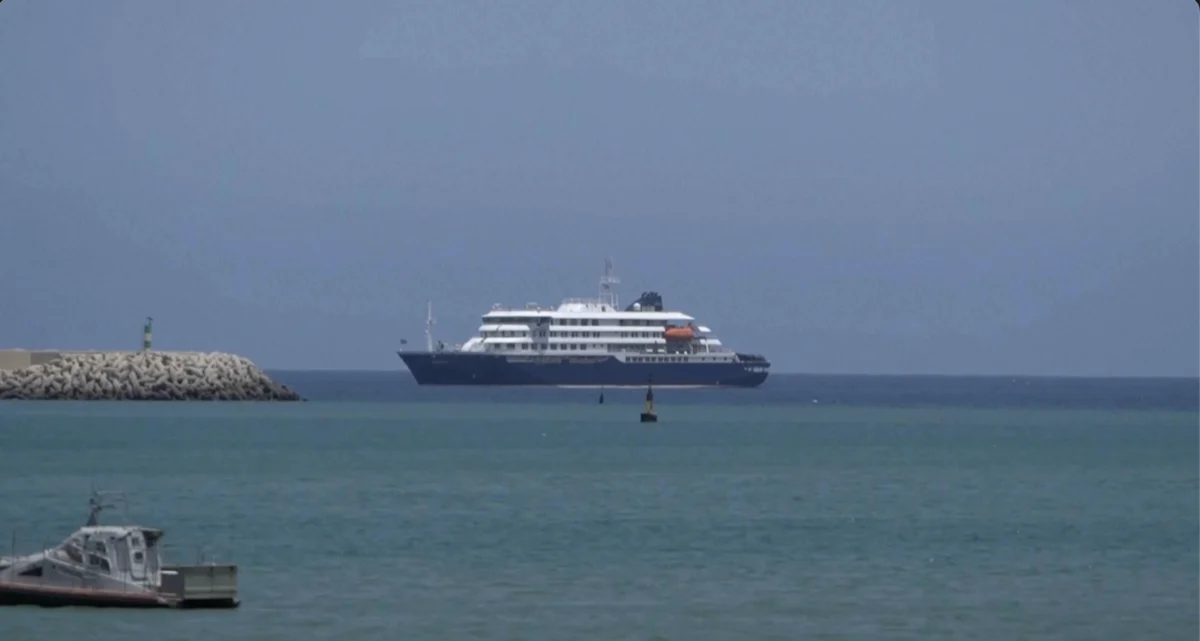
The European Union has declared it is maintaining close surveillance over suspected cases of hantavirus detected aboard the Dutch-flagged expedition cruise ship MV Hondius. This proactive measure, announced on May 7, 2026, involves intensive coordination with member states and relevant health authorities to ensure a swift and effective response should further action be deemed necessary. The situation underscores the complex challenges of managing infectious disease threats within international travel contexts, particularly concerning zoonotic pathogens.
Understanding Hantavirus: A Zoonotic Threat
Hantaviruses are a group of single-stranded, negative-sense RNA viruses belonging to the family Hantaviridae, which primarily circulate in various rodent populations without causing apparent disease in their natural hosts. These viruses are zoonotic, meaning they can be transmitted from animals to humans. Human infection typically occurs through inhalation of aerosolized particles from rodent urine, feces, or saliva, or less commonly, through direct contact with infected rodents or their bites. Crucially, hantaviruses are generally not transmitted from person to person, which differentiates their public health management from many other viral outbreaks.
Upon human infection, hantaviruses can manifest in two main clinical syndromes: Hantavirus Pulmonary Syndrome (HPS) and Hemorrhagic Fever with Renal Syndrome (HFRS). HPS, predominantly found in the Americas, is characterized by a rapid onset of respiratory distress, fluid accumulation in the lungs, and can have a fatality rate as high as 30-50%. Key symptoms include fever, muscle aches, severe headache, and gastrointestinal issues, progressing to cough and shortness of breath. The most well-known causative agent of HPS is the Sin Nombre virus.
In contrast, HFRS is more prevalent in Europe and Asia. Its symptoms include fever, intense headaches, back and abdominal pain, nausea, blurred vision, and can progress to kidney failure. The severity of HFRS varies depending on the specific hantavirus strain involved; for instance, Puumala virus (PUUV), common in Northern Europe, typically causes a milder form known as nephropathia epidemica with a fatality rate of less than 1%, while Dobrava virus (DOBV) and Hantaan virus (HTNV) can lead to more severe disease with fatality rates ranging from 5% to 15%. There is currently no specific antiviral treatment or vaccine available for general use against hantavirus infections, making supportive care the cornerstone of management. The incubation period typically ranges from one to five weeks after exposure, making early detection and contact tracing for potential exposure sources critical.
The MV Hondius: A Cruise Ship at the Centre
The MV Hondius is an expedition cruise ship operated by Oceanwide Expeditions, renowned for its voyages to polar regions such as the Arctic and Antarctic. These ships are designed to navigate challenging waters and often facilitate shore excursions in remote, natural environments where human interaction with wildlife, including rodents, might be higher than in typical urban settings or conventional cruise itineraries. The nature of these expeditions, combining travel across international waters with land-based exploration, introduces unique epidemiological considerations.
A cruise ship environment presents a distinct set of challenges for infectious disease control. While hantavirus is not typically human-to-human transmissible, the enclosed nature of a vessel, shared ventilation systems, and close proximity of passengers and crew demand rigorous protocols. The primary concern would be identifying the source of exposure – whether it occurred on board the vessel through infected rodents or their droppings, or during shore excursions in specific geographic locations where hantaviruses are endemic. Such investigations require meticulous epidemiological work, including reviewing the ship’s recent itinerary, analyzing sanitation records, and interviewing potentially exposed individuals.
Upon the identification of suspected cases, cruise ships are typically equipped with medical facilities and staff capable of providing initial care and implementing isolation measures. However, a confirmed outbreak requires coordination with port health authorities at the next port of call, the flag state’s health ministry (in this case, the Netherlands), and international bodies. The logistical complexities involve not only managing ill individuals but also implementing enhanced disinfection protocols, potentially rerouting the ship, and facilitating the safe disembarkation and repatriation of passengers and crew, all while adhering to international health regulations. The MV Hondius, carrying passengers from multiple nations, exemplifies the cross-border implications of such an event.
Coordinated European Response: A Multi-Agency Effort
The European Union’s involvement in monitoring the suspected hantavirus cases on the MV Hondius underscores its commitment to public health security, particularly concerning cross-border health threats. While primary responsibility for public health lies with individual member states, the EU plays a crucial coordinating role, especially when an incident involves international travel, multiple nationalities, or potential widespread impact.
Several key EU bodies are instrumental in this coordinated response:
- European Centre for Disease Prevention and Control (ECDC): The ECDC is the primary EU agency providing independent scientific advice and support to member states on infectious disease prevention and control. In a situation like the MV Hondius, the ECDC would conduct a rapid risk assessment, gather epidemiological intelligence, and issue guidance on surveillance, case definition, laboratory diagnostics, and public health measures. Their expertise is vital in understanding the potential scope and severity of the outbreak and informing evidence-based responses.
- European Commission’s Directorate-General for Health and Food Safety (DG SANTE): DG SANTE is responsible for EU policy on public health, food safety, and animal health. It facilitates coordination among member states and ensures the legal and operational frameworks for health security are robust. In this context, DG SANTE would likely lead the overall political and administrative coordination, ensuring that member states are informed, resources are available, and a unified approach is maintained.
- Health Security Committee (HSC): This committee brings together representatives from EU member states’ health ministries to coordinate responses to serious cross-border health threats. It serves as a platform for information exchange, joint risk assessment, and decision-making on common measures. The MV Hondius situation would undoubtedly be a key agenda item for the HSC, allowing member states to share information on passenger nationalities, potential exposure pathways, and national response plans.
The EU’s "close monitoring" and "coordination with member states and health authorities" would involve several specific actions. This includes establishing communication channels to ensure real-time information flow regarding confirmed cases, diagnostic results, and the ship’s itinerary. Contact tracing, while less critical for hantavirus due to its non-human-to-human transmission, would focus on identifying individuals who might have shared exposure environments (e.g., specific shore excursions, cabins, or common areas with rodent presence). Furthermore, the EU would assist in preparing for medical support arrangements for affected individuals, including potential hospitalization in appropriate facilities in member states, and ensuring that port health authorities at anticipated disembarkation points are fully briefed and prepared to implement necessary screening and follow-up protocols. The framework of the International Health Regulations (IHR) 2005, to which all EU member states are party, provides the overarching legal and operational guidance for such international public health events.
A Timeline of Emergence and Reaction (Inferred)
While the EU’s announcement was made on May 7, 2026, the events leading up to this statement would have unfolded over a preceding period, given the typical incubation period of hantavirus and the time required for diagnosis and reporting.
- Early April 2026: Passengers or crew on the MV Hondius likely experienced initial symptoms consistent with hantavirus infection. Given the incubation period of 1-5 weeks, exposure could have occurred anytime from early March onwards during previous legs of the voyage or specific shore excursions.
- Mid-April 2026: The ship’s medical staff would have identified a cluster of unexplained illnesses or severe cases, prompting suspicion of an infectious agent. Initial diagnostic tests might have been performed on board or samples collected for later laboratory analysis.
- Late April 2026: As the ship approached a port, or after disembarkation in a port in a member state, national health authorities would have been notified. Laboratory confirmation of hantavirus in one or more cases would have triggered alarm due to its severity.
- Early May 2026: The national health authority of the affected member state (likely the Netherlands, as the flag state, or the country where cases were first confirmed on land) would have notified the EU Health Security Committee and the ECDC, recognizing the cross-border implications for other EU citizens and international travel.
- May 7, 2026: The European Union officially announced its close monitoring of the situation, indicating that a coordinated surveillance and response mechanism had been activated. This public statement aims to inform stakeholders and reassure the public about the ongoing efforts to contain and manage the threat.
- Post-May 7, 2026: Ongoing epidemiological investigations would be initiated, including detailed interviews with affected individuals, environmental assessments on the ship, and potentially testing of rodents if found. Public health advisories might be updated, and follow-up with all passengers and crew from recent voyages would be a priority.
Hantavirus in Europe: A Seasonal and Ecological Phenomenon
Hantavirus infections are not uncommon in Europe, although specific strains and incidence rates vary by region. The Puumala virus (PUUV), carried by bank voles (Myodes glareolus), is the most common cause of HFRS (specifically, nephropathia epidemica) in Western and Northern Europe, with endemic foci in countries like Finland, Sweden, Germany, France, Belgium, and Russia. Dobrava virus (DOBV) and Saaremaa virus (SAAV), carried by yellow-necked mice (Apodemus flavicollis) and striped field mice (Apodemus agrarius), respectively, also contribute to HFRS cases in Southeastern Europe.
The incidence of hantavirus infections in Europe exhibits significant year-to-year variation, often linked to ecological factors, particularly rodent population dynamics. "Mast years," characterized by abundant seed production from trees like beech and oak, lead to increased food availability for rodents. This, in turn, results in a boom in rodent populations, which can then lead to a surge in human hantavirus cases approximately 1-2 years later. Climate change is also considered a potential factor influencing the geographical distribution and seasonal patterns of hantavirus by altering rodent habitats and reproductive cycles. Annually, Europe typically reports several hundred to a few thousand cases of HFRS, with peaks occurring during rodent population surges. The presence of suspected hantavirus cases on a cruise ship, therefore, necessitates an understanding of the typical prevalence and ecological drivers in the regions the MV Hondius has traversed.
Statements from Key Stakeholders (Logically Inferred)
While specific statements have not been detailed beyond the EU’s monitoring stance, journalistic inference allows for the likely positions of various parties involved:
A Spokesperson for the European Commission’s DG SANTE would likely have reiterated the EU’s commitment to public health. "The European Union is taking this matter with utmost seriousness. Our primary concern is the health and safety of all individuals involved, and we are working tirelessly with national health authorities to monitor the situation, assess the risk, and coordinate any necessary response measures. This incident highlights the critical importance of our cross-border health security frameworks."
The European Centre for Disease Prevention and Control (ECDC) would likely have provided a scientific perspective. "Our experts are conducting a thorough risk assessment based on the available epidemiological data. While hantavirus is not typically transmitted human-to-human, the identification of cases on an international vessel requires careful investigation to identify the source of exposure and prevent further infections. We are providing technical guidance to member states and supporting their efforts in surveillance and laboratory diagnostics."
Dutch Health Authorities (RIVM), as the health agency of the MV Hondius’ flag state, would be central to the national response. "The Netherlands’ National Institute for Public Health and the Environment (RIVM) is in close contact with the ship’s operators and relevant international health bodies. We are actively involved in the investigation and are prepared to provide all necessary support to Dutch citizens and coordinate with other nations whose citizens may have been affected. Public health measures are being implemented in accordance with national and international guidelines."
Oceanwide Expeditions, the operator of MV Hondius, would likely have issued a statement prioritizing passenger and crew safety. "Oceanwide Expeditions confirms its full cooperation with all relevant health authorities concerning the suspected hantavirus cases on board the MV Hondius. The health and safety of our guests and crew remain our highest priority. We have implemented enhanced sanitation protocols across the vessel and are providing full support to those affected, while working closely with health experts to understand and manage the situation."
The World Health Organization (WHO), from a global perspective, would likely emphasize international collaboration. "The WHO continues to monitor emerging infectious disease threats globally and supports international collaboration in public health emergencies. The swift action and coordination demonstrated by the EU and its member states in this instance are vital examples of effective global health security."
Broader Implications for Public Health and Travel
The suspected hantavirus outbreak on the MV Hondius carries several broader implications for public health, the cruise industry, and international policy.
For Public Health:
This event underscores the persistent threat of zoonotic diseases and the need for robust surveillance systems, especially in environments involving international travel and exposure to diverse ecological settings. It reinforces the importance of the "One Health" approach, recognizing that human health is intricately connected to animal health and environmental health. Public health campaigns might be enhanced to educate travelers, particularly those engaging in outdoor or expedition-style tourism, about the risks of hantavirus and preventative measures, such as avoiding contact with rodents and their habitats. The incident also highlights the complexities of diagnosing rare or geographically specific pathogens, which may not be immediately recognized by healthcare providers unfamiliar with their presentation.
For the Cruise Industry:
The cruise industry, having faced significant challenges with infectious disease outbreaks in the past (e.g., norovirus, COVID-19), will likely review and potentially strengthen its health and safety protocols. This could include more stringent rodent control measures, enhanced environmental monitoring, and detailed pre-screening or post-voyage health declarations. Expedition cruise lines, in particular, might re-evaluate the risk assessments for shore excursions in areas known to be hantavirus endemic, potentially adjusting itineraries or implementing specific protective gear requirements for passengers and crew during land activities. The reputational and economic impacts of such an outbreak can be substantial, leading to potential cancellations or a decline in bookings, necessitating transparent communication and demonstrable action from cruise operators.
For Policy and International Cooperation:
The EU’s coordinated response serves as a practical example of its established health security frameworks in action. It demonstrates the necessity of seamless information sharing and collaborative decision-making between member states and international bodies like the ECDC and WHO. This incident may prompt further discussions on standardizing health protocols across international transport sectors and reinforcing the legal mandates for reporting and responding to infectious disease threats that cross national borders. It also highlights the ongoing need for investment in research and development for diagnostics, treatments, and vaccines against emerging and re-emerging zoonotic pathogens, ensuring preparedness for future health crises.
Lessons Learned and Future Preparedness
The ongoing situation with the MV Hondius provides valuable lessons. It emphasizes that even with diseases not traditionally known for human-to-human transmission, the interconnectedness of global travel means that localized outbreaks can quickly become international concerns. Preparedness involves not only rapid response mechanisms but also a continuous effort to understand ecological shifts that influence disease patterns, robust laboratory capacities for accurate diagnosis, and clear communication strategies to manage public perception and prevent misinformation. As global travel continues to expand into diverse and sometimes remote environments, the imperative for vigilance, international cooperation, and a comprehensive "One Health" approach to public health security remains paramount.
