

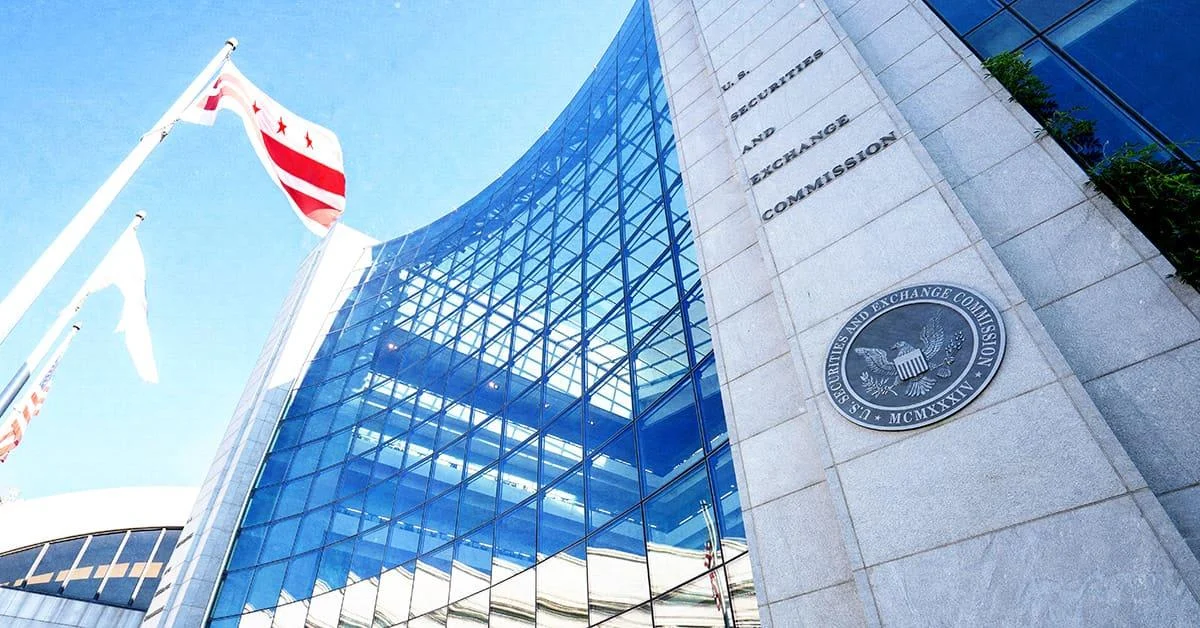
In a move that could fundamentally alter the landscape of corporate disclosure in the United States, the Securities and Exchange Commission (SEC) has formally proposed amendments to permit public companies to file earnings reports on a semiannual basis, rather than the current quarterly mandate. This proposal, the most significant departure from U.S. public company disclosure requirements since 1970, has been the subject of anticipation for weeks and represents a potential recalibration of the balance between corporate reporting burdens and investor information needs. While the prospect of reduced reporting frequency might appear straightforward, a deeper examination of the SEC’s actual proposal, expert opinions, and potential implications reveals a complex interplay of factors that corporate leaders must carefully consider.
The SEC’s proposal, which cleared White House review last week, would render quarterly reporting voluntary for domestic public companies that currently file Form 10-Q. Following its publication in the Federal Register, a 60-day public comment period will commence, meaning any final approval, if granted, is likely months away. This deliberative process underscores the gravity of the proposed change and the SEC’s commitment to gathering broad input before enacting such a significant shift.
A Fragmentation of Disclosure: Experts Weigh In
The optional nature of the proposal has immediately raised concerns about a potentially fragmented disclosure landscape. Jay Dubow, a partner and co-lead of Troutman Pepper Locke’s securities investigations and enforcement practice group, and a former branch chief of the SEC’s Enforcement Division, pointed out a significant structural consequence: "The optional nature of the proposal could result in some companies switching to semiannual reporting while others maintain the quarterly format. It is unusual to have two different disclosure calendars." This divergence could create complexities for investors, analysts, and other market participants who rely on a consistent reporting cadence for comparative analysis and informed decision-making.
Proponents of the shift argue that the relentless quarterly earnings report cycle imposes significant costs on companies and can foster a myopic focus on short-term results, potentially at the expense of long-term strategic planning and innovation. Kunal Kapoor, CEO of Morningstar, articulated this perspective in a Fortune op-ed published shortly after the SEC’s announcement. He suggested that the current “status quo” of quarterly reporting acts as a barrier to broader public market participation. “The cost of doing all this four times per year instead of twice is real,” Kapoor wrote, “and it falls hardest on the smaller, younger companies shaping the economy’s future.” This viewpoint highlights the potential benefits for emerging companies, which often operate with leaner resources and may find the administrative and financial burden of quarterly reporting particularly onerous.
However, critics express significant reservations, often centering on the interests of shareholders and the principle of corporate accountability. Tyler Gellasch, a former SEC official and executive director of the institutional investor advocacy group Healthy Markets Association, voiced these concerns in an interview with Politico in March. "Boards fire CEOs when investors get mad, and that often happens around quarterly filings and earnings calls," Gellasch stated. "Reducing the opportunities for that type of accountability may sound good to executives, but it’s a bad deal for most investors." This perspective emphasizes the role of quarterly reporting as a critical mechanism for holding corporate leadership accountable to their investors, providing regular opportunities for scrutiny and potential intervention.
Understanding the Mechanics of the Proposed Rule
At its core, the SEC’s proposal outlines a voluntary opt-in system for domestic public companies. Those choosing to transition to semiannual reporting would indicate their decision by checking a box on the cover page of their annual Form 10-K. This election would remain in effect for the subsequent fiscal year, requiring companies to reaffirm their choice annually. Companies that do not check the box will continue with their current quarterly filing obligations on Form 10-Q.
Crucially, companies electing semiannual reporting will file their interim reports on a new form, designated as Form 10-S, rather than the existing Form 10-Q. The SEC has explicitly stated that the content requirements for Form 10-S would not be lightened. This means that the new form will necessitate the same narrative disclosures and financial information as the current Form 10-Q, albeit covering a six-month period instead of a single quarter. This includes the same independent auditor review, the same Sarbanes-Oxley (SOX) certifications from the CEO and CFO regarding controls and disclosures, the same legal review of Management’s Discussion and Analysis (MD&A) and risk factor language, and the same level of audit committee involvement.
Other existing disclosure obligations are slated to remain largely unaffected. Form 8-K filing requirements, which mandate the disclosure of material events within four business days, and Regulation FD (Fair Disclosure) rules, which govern the selective disclosure of material non-public information, will continue to apply. Companies opting for semiannual reporting will still be obligated to promptly disclose significant developments as they occur.
A potentially welcome, albeit less discussed, aspect of the proposal is the simplification of rules governing the "age of financial statements" in registration statements. Troy Harder, a corporate and securities partner at Bracewell, described this as a "welcome surprise," noting that the existing rules are "notoriously complex."
However, the timing of the annual election for semiannual reporting presents a potential unintended consequence, according to Barry Fischer, a partner at Thompson Coburn. He explained that because the Form 10-K can be filed as few as 40 days before the first quarterly report would typically be due, a company could theoretically elect semiannual reporting specifically to avoid disclosing poor first-quarter results. "If the market equates the election to change to semiannual reporting with an attempt to avoid disclosing bad financial news," Fischer cautioned, "the issuer’s stock price is likely to decline on the making of the election, which could dis-incentivize companies from making the election." This dynamic could create a market signal that undermines the intended cost-saving benefits if perceived negatively by investors.
Historical Precedents and International Comparisons
The concept of semiannual interim reporting is not entirely new to the U.S. market. The United States previously operated under a semiannual interim reporting system from 1955 to 1970, when companies filed on Form 9-K. However, that historical form was considerably less robust than the proposed Form 10-S, capturing only basic income statement items and omitting balance sheets, cash flow statements, and narrative disclosures. The current proposal’s Form 10-S would therefore be substantially more comprehensive than its historical predecessor.
Internationally, both the European Union and the United Kingdom have transitioned from quarterly to semiannual reporting systems. The EU implemented quarterly reporting from 2004 to 2013, while the UK did so from 2007 to 2014. The UK’s experience offers particularly instructive insights into potential adoption rates. A study examining the impact of reporting frequency on UK public companies found that after quarterly reporting became optional in 2014, fewer than 10% of UK companies ceased issuing quarterly reports by the end of the following year. This suggests that even if the option is available, many companies may continue with quarterly reporting due to existing market expectations and established practices.
Identifying the Target Audience: Who Stands to Benefit Most?
While the SEC’s proposed rule is technically available to all domestic public companies that currently file Form 10-Q, the commission’s release specifically singles out emerging growth companies (EGCs) and smaller reporting companies (SRCs) by name. This suggests that the rule’s practical appeal may be narrower than its formal scope.
Fischer posits that emerging companies, lacking an extensive reporting history, are likely to face fewer external pressures to maintain quarterly reporting. Investors may also have fewer concerns about the financial performance of companies that are not yet consistently profitable, making these firms natural early adopters. Harder concurs, noting that the costs associated with reporting are relatively greater for smaller companies, and the transition is easier for those without a deeply ingrained quarterly reporting history.
Larger companies could also elect semiannual reporting, according to Harder and Dubow. However, Dubow flags a specific risk for smaller filers that counteracts the cost-saving argument: companies with less rigorous internal control environments might find that problems fester and grow larger before they surface compared to a quarterly filing schedule.
It is important to note that the primary cost of quarterly reporting often lies not in the collection of financial data, which is increasingly automated and aided by AI-powered tools, but in the formal compliance processes attached to each filing. These include independent auditor reviews, SOX certifications, legal review of disclosures, disclosure committee meetings, and board sign-offs. Eliminating two full cycles of this process by switching from three Form 10-Qs to one Form 10-S could yield significant savings.
However, if companies are still expected by investors to issue quarterly earnings releases and if lenders require quarterly financials under credit agreements, they may find themselves undertaking much of the substantive work anyway, albeit without the formal SEC filing. "If companies are expected to continue to report earnings on a quarterly basis and to have their external accountants review their quarterly financial statements, how much would they really save?" Harder questioned.
An often-overlooked category of potential early adopters includes foreign private issuers (FPIs). Leland Benton, a partner at Morgan Lewis and a former SEC attorney, points out that FPIs are not currently subject to quarterly reporting requirements. If the SEC’s 2025 concept release on revising the FPI definition leads some companies to lose that status, semiannual reporting could present an attractive middle ground. It would allow them to comply with domestic reporting requirements without adopting the full quarterly cadence, serving as an alternative to deregistering their securities and exiting the SEC’s reporting regime entirely.
The Lingering Shareholder Question: Ensuring Adequate Information Flow
The SEC’s stated position is that the existing disclosure infrastructure, particularly Form 8-K and Regulation FD, is robust enough to bridge any information gaps created by semiannual reporting. However, some practitioners remain unconvinced.
Dubow observes that companies routinely disclose information in quarterly filings that would not trigger a mandatory 8-K, leaving a void that the 8-K framework does not adequately address. Furthermore, companies opting for semiannual reporting might face increased analyst inquiries, especially if their peers continue with quarterly reporting. This could intensify pressure regarding Regulation FD’s selective disclosure rules.
"There really is no substitute for the provision of periodic financial reports that is reviewed by outside accountants," stated Michele Kloeppel, a partner at Thompson Coburn. She warned that a reduction in formal disclosure could fuel market speculation based on less reliable alternative indicators.
Research from the UK’s transition further supports this concern. The same study that tracked the adoption of optional quarterly reporting also found that mandatory quarterly reporting had been associated with increased analyst coverage and improved accuracy of analyst earnings forecasts—benefits that diminished for companies that switched to semiannual reporting.
Navigating the Path Forward: Actions Companies Should Consider Now
Although a final rule is likely months away, companies should begin preparing for this potential shift. Harder advises companies interested in semiannual reporting to first scrutinize their financing agreements. Credit facilities, indentures, and other debt instruments may contain financial reporting covenants tied to the quarterly cadence. Switching without addressing these covenants could inadvertently lead to a technical default.
Dubow recommends that companies engage in proactive dialogue with peers, significant shareholders, and analysts before committing to any change. The structuring of trading windows will also require attention. Companies that typically align permissible insider trading periods with quarterly earnings announcements will need to re-evaluate how these windows are structured under a semiannual calendar.
Fischer emphasizes the need for a comprehensive assessment. Companies should evaluate whether a switch to semiannual reporting aligns with their competitive position, capital needs, governance costs, and obligations to lenders and counterparties. Crucially, input from a broad spectrum of stakeholders should be sought.
Kloeppel concludes that the decision transcends mere potential cost savings. "Whether that change makes sense for a company will depend on a host of factors, including investor pressures, peer elections, insider trading considerations, potential cost savings in financial reporting, potential litigation exposure due to delayed disclosures of bad news, and the impact on various public company programs," she stated. The SEC’s proposal opens the door to a new era of corporate disclosure, but navigating it will require careful strategic planning and a deep understanding of its multifaceted implications.
