

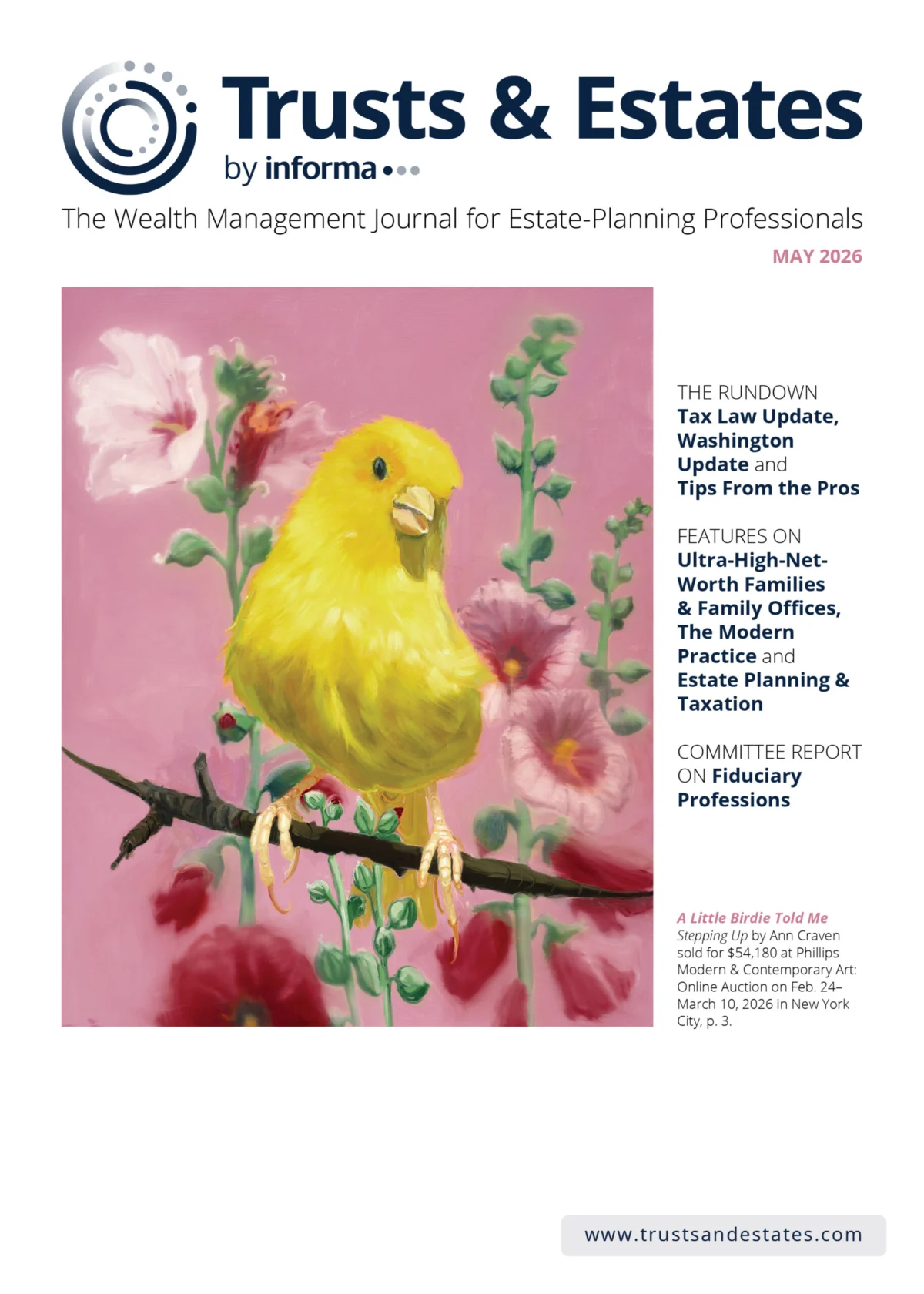
The May 2026 issue of Trusts & Estates magazine, released on May 5, 2026, delves into critical topics shaping the landscape of wealth management, estate planning, and fiduciary professions. This comprehensive edition features in-depth analyses of ultra-high-net-worth (UHNW) families and their family offices, the evolution of modern practice within the fiduciary sector, and crucial developments in estate planning and taxation. Complementing these core features are essential updates on tax law, Washington D.C. policy shifts, and practical advice from industry professionals.
Key Themes and Editorial Focus
The editorial team behind Trusts & Estates has curated a timely collection of articles addressing the complex needs and evolving strategies of the wealthiest individuals and families. The publication’s cover story, prominently displayed with an image of the May 2026 edition, signals a deep dive into the intricacies of managing and preserving generational wealth. The focus on UHNW families and their dedicated family offices underscores the growing sophistication and specialization required in this segment of wealth management.
Furthermore, the inclusion of "The Modern Practice" indicates a forward-looking perspective, likely exploring how technology, new service models, and changing client expectations are reshaping the fiduciary industry. This suggests a discussion on adapting to digital transformation, enhancing client experience, and ensuring compliance in an increasingly regulated environment. The perennial importance of "Estate Planning & Taxation" is addressed, promising insights into current legislative trends, judicial interpretations, and strategic approaches to minimize tax liabilities and ensure seamless wealth transfer.
Comprehensive Coverage: Beyond the Headlines
The "In This Issue" section reveals a multi-faceted approach, encompassing not only the headline features but also essential, timely updates. "The Rundown" section, comprising a Tax Law Update, a Washington Update, and Tips From the Pros, serves as a vital resource for practitioners seeking to stay abreast of the latest legal, regulatory, and practical developments.
The Tax Law Update is particularly significant, given the dynamic nature of fiscal policy and its profound impact on estate planning, trust administration, and investment strategies. For instance, recent years have seen ongoing discussions and potential adjustments to federal estate tax exemptions, gift tax regulations, and income tax implications for trusts. A thorough update would likely provide analysis of any new legislation, IRS guidance, or court decisions that could affect high-net-worth individuals and their advisors. This could include discussions on the potential sunsetting of certain tax provisions and the strategic planning required to navigate these changes.
The Washington Update is equally crucial, offering insights into the legislative and regulatory environment in the U.S. capital. This section would likely cover any proposed or enacted legislation impacting estate and gift taxes, fiduciary responsibilities, or financial markets. Given the political climate, these updates often provide early indicators of future policy directions, allowing professionals to proactively advise their clients. For example, any proposed changes to capital gains tax rates or the introduction of new wealth taxes would be of paramount interest to the readership.
"Tips From the Pros" suggests a practical, actionable component to the issue, offering distilled wisdom and best practices from experienced professionals in the field. This could range from innovative client engagement strategies to efficient operational processes or effective risk management techniques.
Deep Dive into UHNW Families and Family Offices
The dedicated features on Ultra-High-Net-Worth Families & Family Offices are poised to be a cornerstone of the May 2026 issue. Family offices, once the exclusive domain of the very richest dynasties, have become increasingly prevalent and sophisticated as wealth concentrates. These entities serve as highly personalized wealth management firms, often handling not only financial assets but also philanthropic endeavors, governance structures, lifestyle management, and even family education.
The May 2026 coverage likely explores the diverse structures of family offices, from single-family offices (SFOs) catering to one wealthy family to multi-family offices (MFOs) serving a select group of clients. Analysis may extend to the key considerations for establishing and operating a successful family office, including governance, investment strategy, risk management, cybersecurity, and the recruitment and retention of skilled professionals.
Data from industry reports consistently highlight the growth in UHNW wealth. For instance, analyses from sources like Knight Frank’s Wealth Report or Capgemini’s World Wealth Report often indicate a steady increase in the number of UHNW individuals (defined as those with $30 million or more in liquid net worth) and the total wealth they control. The May 2026 Trusts & Estates issue would likely contextualize these trends, exploring how family offices are adapting to manage this expanding asset base and the unique challenges associated with intergenerational wealth transfer within these families. This could involve discussions on preserving family values, fostering financial literacy among younger generations, and managing complex philanthropic legacies.
The Evolution of Modern Practice
The feature on "The Modern Practice" suggests a critical examination of how the fiduciary industry is evolving to meet contemporary demands. This could encompass a range of topics:
- Technological Integration: The adoption of digital tools for client onboarding, portfolio management, reporting, and communication. This might include discussions on artificial intelligence (AI) in financial analysis, blockchain for secure record-keeping, and advanced data analytics for personalized client service.
- Client-Centric Approaches: A shift from product-driven sales to holistic wealth planning, emphasizing personalized advice, behavioral finance, and understanding clients’ evolving life goals and risk appetites.
- Talent Development: Strategies for attracting, training, and retaining skilled professionals in an increasingly competitive market, with a focus on interdisciplinary expertise that combines financial acumen with legal, tax, and emotional intelligence.
- Regulatory Compliance: Navigating complex and ever-changing regulatory landscapes, including fiduciary duties, anti-money laundering (AML) regulations, and data privacy laws.
- ESG Investing: The growing demand for Environmental, Social, and Governance (ESG) considerations in investment portfolios and the role of fiduciaries in incorporating these principles.
The implications of these shifts are significant. Firms that embrace modernization are likely to gain a competitive edge, attract new clients, and enhance client loyalty. Conversely, those that lag behind risk becoming obsolete. The articles may offer case studies of firms that have successfully transformed their practices, providing actionable insights for others in the industry.
Estate Planning & Taxation: Navigating Complexity
The enduring relevance of "Estate Planning & Taxation" is a constant theme in Trusts & Estates. The May 2026 issue promises to shed light on the latest strategies and considerations for effective wealth transfer and tax minimization. This could involve:
- Changes in Estate Tax Laws: Analysis of current estate tax exemption levels, the potential impact of legislative changes on these thresholds, and strategies for utilizing exemptions effectively. For instance, if recent legislative proposals suggest a reduction in the estate tax exemption in the coming years, the articles would likely explore advanced planning techniques such as irrevocable trusts, grantor retained annuity trusts (GRATs), and charitable remainder trusts.
- Generation-Skipping Transfer (GST) Tax: Discussions on the intricacies of GST tax, its implications for multi-generational wealth transfer, and planning techniques to mitigate its impact.
- Income Taxation of Trusts and Estates: Updates on rules governing the taxation of income generated by trusts and estates, including changes to tax rates, deductions, and reporting requirements. This might also cover the increasing complexity of international tax implications for globally mobile clients.
- Dynasty Trusts and Asset Protection: Exploration of sophisticated trust structures designed to preserve wealth across multiple generations while providing robust asset protection against creditors, divorce, and other unforeseen events.
- Philanthropic Planning: Strategies for integrating charitable giving into estate plans, including the use of donor-advised funds, private foundations, and charitable trusts. The increasing focus on impact investing within philanthropic endeavors would also likely be a topic of discussion.
The complexity of estate planning is underscored by the significant wealth held by UHNW individuals. According to various wealth reports, the aggregate wealth of the top 1% of households continues to grow, making effective estate planning not just a matter of tax efficiency but also of family harmony and the perpetuation of legacies. The articles in Trusts & Estates aim to equip professionals with the knowledge to navigate these intricate legal and financial waters.
Committee Report: Fiduciary Professions
The inclusion of a "Committee Report: Fiduciary Professions" suggests an inward-looking perspective from Trusts & Estates, likely focusing on the standards, ethics, and professional development within the fiduciary community. This could involve:
- Ethical Guidelines: Discussions on upholding fiduciary duties, managing conflicts of interest, and maintaining the highest standards of integrity.
- Professional Standards and Best Practices: Recommendations for improving service delivery, client communication, and operational efficiency across various fiduciary roles, including trustees, executors, guardians, and financial advisors.
- Regulatory Oversight and Advocacy: An overview of the regulatory landscape affecting fiduciary professionals and any advocacy efforts by industry bodies to shape future legislation and regulations.
- Professional Education and Certification: The importance of ongoing education, professional development, and certification programs to ensure fiduciaries possess the requisite knowledge and skills.
This section serves to reinforce the commitment of Trusts & Estates to the integrity and advancement of the fiduciary professions, ensuring that practitioners are well-equipped to serve their clients with competence and ethical rigor.
Broader Impact and Implications
The May 2026 issue of Trusts & Estates is more than just a collection of articles; it represents a vital barometer of the financial and legal strategies employed by the nation’s wealthiest individuals and families. The insights provided have far-reaching implications, influencing not only the advisors and institutions serving these clients but also broader economic and societal trends.
The focus on UHNW families and their family offices highlights the increasing concentration of wealth and the sophisticated mechanisms being employed to manage and transfer it. This has implications for capital formation, investment patterns, and philanthropic contributions that shape communities and industries.
The exploration of "The Modern Practice" signals a necessary evolution within the fiduciary sector. As technology advances and client expectations shift, firms that embrace innovation and a client-centric approach will be best positioned for success, potentially leading to a more accessible and efficient wealth management ecosystem.
Finally, the in-depth coverage of estate planning and taxation directly impacts wealth preservation, intergenerational equity, and the broader fiscal health of governments. Effective planning can ensure that wealth continues to serve its intended purposes, whether for family well-being, business continuity, or philanthropic impact, while also contributing to public revenue through responsible tax strategies. The May 2026 issue of Trusts & Estates promises to be an indispensable resource for anyone involved in the stewardship and transfer of significant wealth.
