

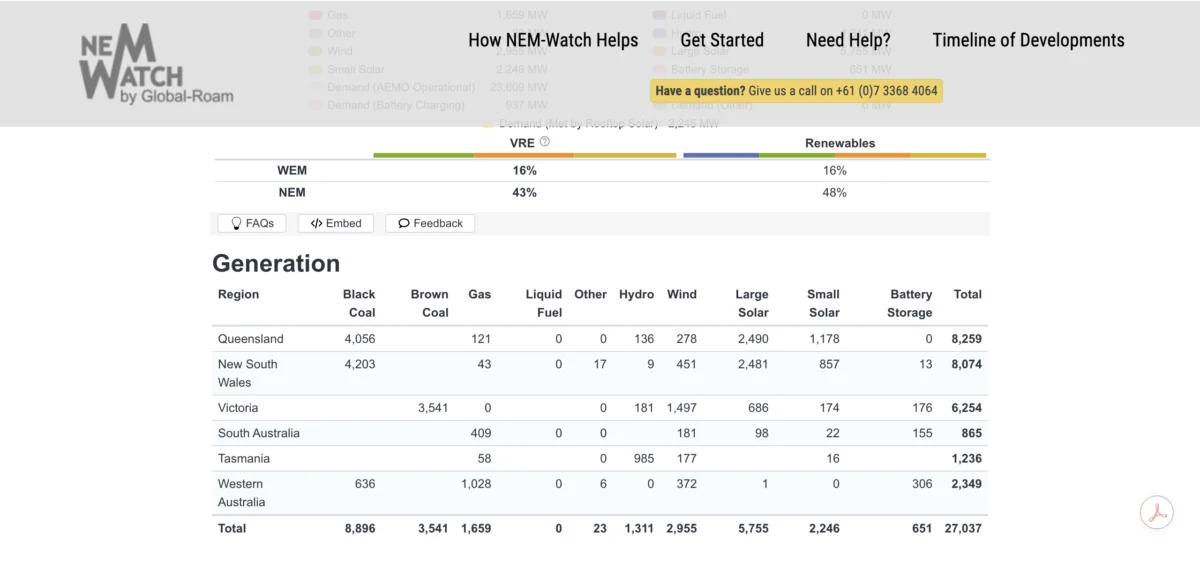
The Australian energy landscape underwent a seismic shift in the first quarter of 2026, as record-breaking renewable energy production coincided with a significant decline in fossil fuel reliance and a surge in domestic battery storage. Data released from the National Electricity Market (NEM) confirms that renewable sources supplied an unprecedented 46.5% of total generation during the quarter, marking a 4% increase from the same period in 2025. This transition is being driven by a combination of favorable climatic conditions, aggressive federal subsidies, and a world-leading rate of household solar and battery adoption.
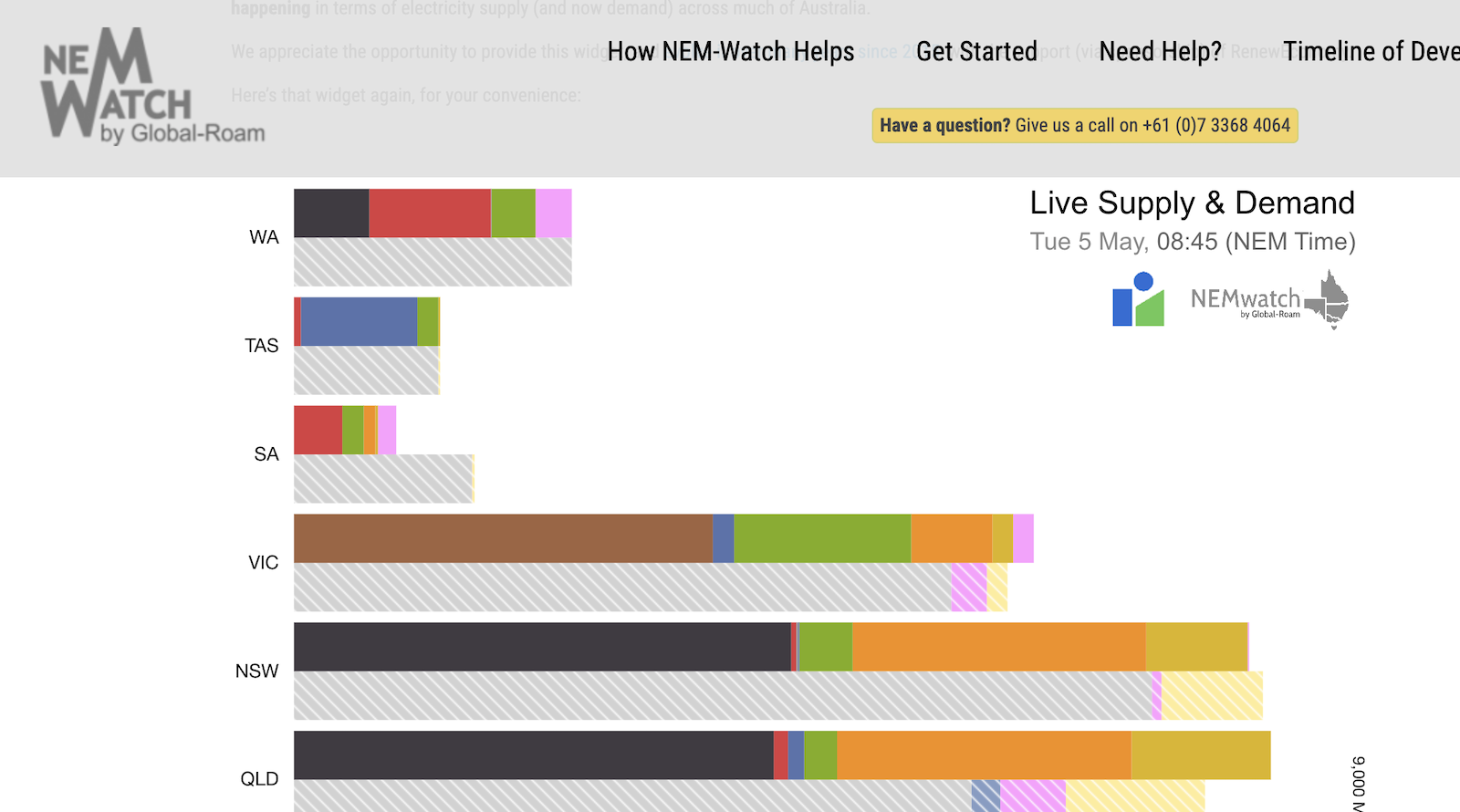
As the Eastern Seaboard—encompassing Queensland, New South Wales, and Victoria—experiences high solar yields, the grid is increasingly dominated by "gold and yellow" energy profiles during daylight hours. While South Australia and Western Australia continue to navigate early morning periods with gas-fired support due to their western longitudinal positions, the overall trajectory for the continent is one of rapid decarbonization. Tasmania continues to lead as a renewable stronghold, powered almost exclusively by its robust hydroelectric infrastructure.
Record-Breaking Quarterly Performance and the Decline of Fossil Fuels
According to the Q1 2026 report from Energy Source and Distribution (ESD), the Australian grid met record demand through a diversified mix of green energy. Of the total solar supply, one-sixth was generated by residential rooftop installations, which now contribute over 4 gigawatts (GW) to the national capacity. Wind energy has mirrored this growth, seeing a year-over-year increase of nearly 10%.
This surge in green generation has come at the direct expense of traditional thermal power. Total coal-fired generation plummeted to a new Q1 low of 13,102 MW, representing a 4.4% decrease from the previous year. Even more stark was the decline in gas-fired generation, which averaged just 712 MW—a 24% drop year-on-year and the lowest quarterly average recorded since the final quarter of 1999.
The displacement of coal and gas is not merely an environmental victory but an economic one for the wholesale market. Wholesale electricity prices have dropped by approximately 12%, driven by the low marginal cost of solar and wind. However, market analysts note a lag in these savings reaching the retail level, as utility providers navigate the costs of grid firming and infrastructure upgrades required to manage a more decentralized system.
The Residential Battery Revolution: Australia vs. The World
A defining feature of the 2026 energy transition is the "Cheaper Home Battery" revolution. Australia has emerged as a global outlier in residential storage, with more than 350,000 household batteries now operational nationwide. Collectively, these units represent over 10 gigawatt-hours (GWh) of storage capacity, allowing families to store excess solar energy generated during the day for use during the evening peak.
The scale of Australian household investment is remarkable when compared to global benchmarks. In March 2026 alone, Australian households and small businesses installed approximately 1.65 GWh of battery capacity. To put this in perspective, the entire European continent, including the United Kingdom, brought 3.4 GWh of grid-scale battery capacity online during the same month. Australian residential installations currently account for nearly 9% of the total battery capacity installed by power companies globally and roughly 19% of the total capacity brought online in China during the same period.
Minister for Climate Change and Energy Chris Bowen has emphasized that this decentralization is key to national energy security. "Our plan has two parts: more cheaper, cleaner energy and a better deal for households," Bowen stated during a recent policy briefing. "We have the best sun and wind in the world, and we are using our sovereign renewables to shield our grid from global energy volatility."
Federal Subsidy Expansion and the Path to 2030
To sustain this momentum, the Australian federal government has significantly expanded its financial commitment to domestic storage. The "Cheaper Home Batteries" program, which initially launched with an AU$2.3 billion fund, has been bolstered by an additional AU$5 billion in subsidies. This increase was prompted by a higher-than-expected uptake and a trend toward consumers installing larger-capacity systems (ranging from 10 kWh to 20 kWh).
The program offers a discount of approximately 30% on the upfront cost of small-scale battery systems (5 kWh to 100 kWh). The government’s revised projections suggest that by 2030, at least 2 million Australian homes will be equipped with a battery. New regulations have also been introduced to ensure system efficiency, encouraging homeowners to size their batteries appropriately to maximize grid stability rather than simply overbuilding capacity.
This massive deployment of "behind-the-meter" storage serves a dual purpose. For the individual, it provides energy independence and protection against fluctuating retail prices. For the grid, it reduces peak demand pressures, effectively acting as a "virtual power plant" that can provide frequency control and ancillary services during periods of high stress.
Agrivoltaics: Reconciling Solar Farms with Agriculture
As the physical footprint of large-scale solar farms expands into regional Australia, the concept of "agrivoltaics"—the co-location of agriculture and solar energy—has become a focal point for community acceptance. Despite skepticism from some political factions and local interest groups, real-world data from sites like the Wellington North Solar Farm in New South Wales demonstrate that solar infrastructure and livestock are not mutually exclusive.
Sheep farmer Tony Inder has been a vocal advocate for the benefits of grazing sheep under solar arrays. Recent video evidence from his property showed a muster of 4,200 sheep thriving within the solar farm. Inder noted that the panels provide essential shade for the animals, reducing heat stress and water consumption, while also creating a microclimate that promotes fodder growth even during drier periods.

"All those sheep do live under these panels constantly," Inder explained in a recent public statement. "You just don’t see them from the road because they are utilizing the shade. The panels actually help the grass stay greener longer."
This integration is vital for the "social license" of renewable projects. Organizations like RE-Alliance, an independent not-for-profit, are working to bridge the gap between regional communities and the energy industry. Their focus is on ensuring that the shift to renewables contributes to the economic strength of regional areas while respecting the heritage and land rights of First Nations peoples.
Chronology of the 2025–2026 Transition
The current record-breaking status of the Australian grid is the result of a series of strategic milestones reached over the past 18 months:
- January 2025: The Federal Government announces the first round of the Capacity Investment Scheme, targeting 32 GW of new renewable capacity and storage.
- May 2025: Wholesale prices begin a steady decline as several large-scale wind farms in Victoria and New South Wales reach full commercial operation.
- September 2025: Australia surpasses 300,000 residential battery installations, triggering the first expansion of the federal subsidy program.
- December 2025: A record summer heatwave is managed without grid instability, thanks largely to the contribution of home batteries and demand-response programs.
- March 2026: Monthly data reveals Australia is installing residential batteries at nearly half the rate of Europe’s total grid-scale installations.
- May 2026: Q1 data confirms a 46.5% renewable share in the NEM, setting a new benchmark for the nation’s energy transition.
Analysis: Implications for the Future
The rapid evolution of the Australian grid offers a blueprint for other sun-drenched nations, but it also presents unique challenges. The "duck curve"—a phenomenon where solar production exceeds demand during the day but creates a sharp ramp-up requirement in the evening—is being successfully mitigated by the mass adoption of batteries. However, the transition still faces hurdles, including the need for massive investment in high-voltage transmission lines to connect remote renewable zones to urban centers.
Furthermore, the political landscape remains divided. While the current administration emphasizes the cost-saving benefits of renewables, opposition figures continue to voice concerns regarding the reliability of the grid as coal plants are retired. The success of the 2026 Q1 period serves as a data-driven rebuttal to these concerns, demonstrating that a high-penetration renewable grid can meet record demand while simultaneously lowering wholesale costs.
As Australia moves toward its 2030 targets, the focus will likely shift from merely adding capacity to optimizing the "intelligence" of the grid. This includes the rollout of sophisticated software to manage distributed energy resources and the further integration of electric vehicles (EVs) as mobile storage units. For now, the "renewable energy lifestyle" is no longer a niche pursuit for early adopters; it is becoming the standard for millions of Australians, supported by a landscape where sheep graze under panels and the sun powers the nation.
