

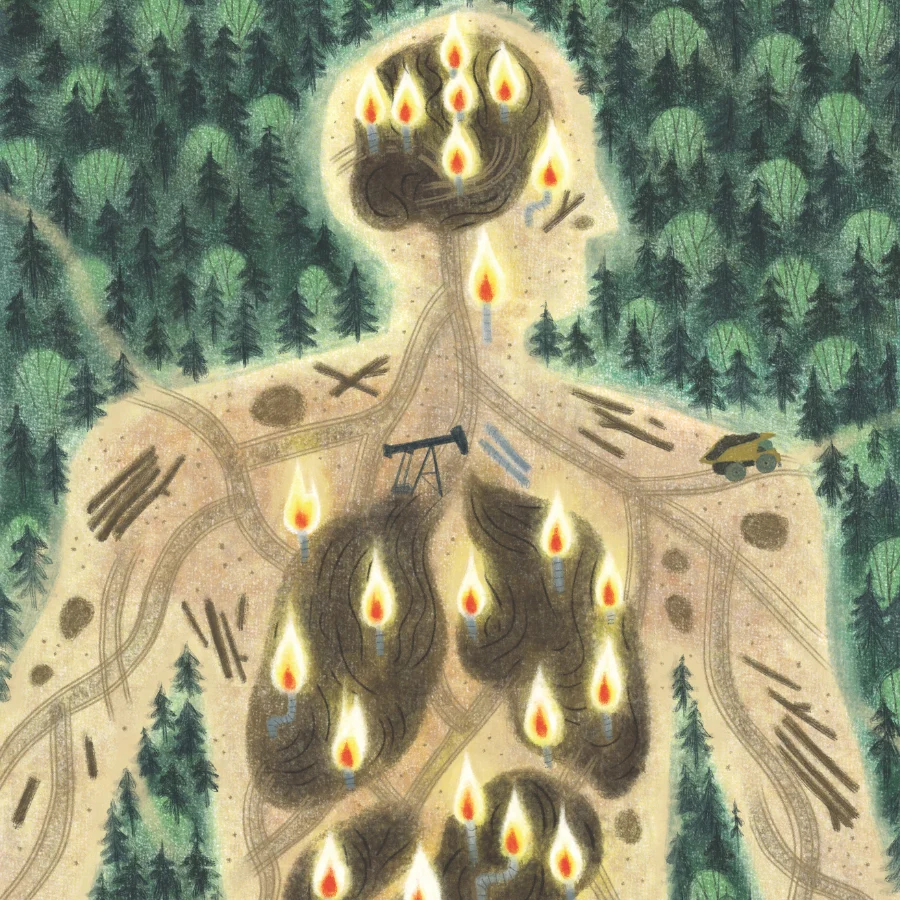
The vast landscape of Alberta is defined by its industrial prowess, a province where the skyline is often punctuated by the silhouettes of drilling rigs and the sprawling networks of the oil sands. Yet, beneath the surface of this economic powerhouse lies a burgeoning environmental and public health crisis that has been decades in the making. As of 2024, Alberta is home to approximately 275,000 marginal, inactive, or decommissioned but unreclaimed well sites. These "mature assets" represent a massive, aging infrastructure that physicians, environmental advocates, and Indigenous communities argue is a ticking time bomb for public health.
The concerns are not new, but they have reached a critical juncture. For twenty years, the residents of Fort Chipewyan, a remote community downstream from the Alberta oil sands, have reported alarming rates of rare cancers and environmental degradation. Today, the call for definitive monitoring is expanding beyond the oil sands to the thousands of rural communities living in the shadow of non-producing wells. As the provincial government under Premier Danielle Smith weighs the future of these aging assets, the gap between industrial regulation and public health protection has never been more apparent.
A Two-Decade Struggle for Recognition
The modern history of health concerns in Alberta’s oil country began in 2006 with Dr. John O’Connor, a family physician serving Fort Chipewyan. In a community of just 1,200 people, O’Connor identified three cases of cholangiocarcinoma—an exceptionally rare cancer of the bile duct. Given that Canada sees only about 600 such diagnoses annually across its entire population, the statistical probability of three cases in such a small cohort was staggering.
O’Connor’s observations were bolstered by the testimony of the local Indigenous population, who reported a "rainbow sheen" on Lake Athabasca, dwindling fish populations, and sickly wildlife. When O’Connor went public with his concerns, the response from the establishment was swift and punitive. Three physicians with Health Canada filed complaints against him with the Alberta College of Physicians and Surgeons, accusing him of causing "undue alarm." Although O’Connor was eventually cleared of all wrongdoing, the incident sent a chilling message to the medical community regarding the political sensitivity of linking health outcomes to the oil and gas industry.
Between 2006 and 2014, provincial health authorities conducted a series of small-scale studies. However, these investigations were frequently criticized for being too narrow in scope or hampered by insufficient data. The fundamental question—whether the upstream industrial activity was directly making the people of Fort Chipewyan sick—remained unanswered, caught in a cycle of scientific uncertainty and political inertia.
The Magnitude of Alberta’s Mature Assets
The scale of the infrastructure in question is immense. According to the Alberta government’s own "Mature Asset Strategy" report, the province contains 275,000 wells that are either marginal (producing very little), inactive (not producing but not closed), or decommissioned but not yet reclaimed. Many of these wells exist in a state of regulatory limbo. Because there is no immediate economic incentive to declare a well inactive or to complete the expensive process of restoration, these sites often sit for years with minimal oversight.
Under the "polluter pays" principle, the companies that profited from these wells are legally responsible for their cleanup. However, the reality of the industry is often different. Many companies responsible for older wells have since gone bankrupt or dissolved, leaving the burden to the Orphan Well Association (OWA). The OWA is a non-profit organization funded by industry levies, but the funding gap is cavernous. For the 2025/2026 fiscal year, the Alberta Energy Regulator (AER) set the industry levy at $144.45 million. In contrast, the OWA estimates that the total cost to clean up the sites currently under its management exceeds $1.12 billion.
This financial shortfall means that tens of thousands of wells remain unmonitored. Unlike active wells, which are subject to regular inspections for methane leaks and structural integrity, non-producing wells are often ignored. Paul Belanger, an environmental engineer and science adviser to Keepers of the Water, warns that these sites are "leaking legacies." He notes that as wells age, they produce more saltwater, leading to internal corrosion. "Rust never sleeps," Belanger says, pointing out that 30,000 wells are currently in various stages of corrosion, potentially leaching contaminants into groundwater and soil that may not be detected for years.
The Emerging Scientific Consensus on Health Risks
While definitive Canadian studies have been slow to emerge, the body of evidence linking oil and gas infrastructure to adverse health outcomes is growing. In 2021, a landmark study published in Frontiers in Oncology analyzed the incidence of solid tumor cancers in Alberta. The researchers found a significant correlation between living in areas with dense oil and gas infrastructure—including both active and orphan sites—and an increased risk of cancer. Notably, living near just one to three orphan sites was associated with a higher risk of solid tumors, suggesting that the lack of maintenance at these sites poses a specific environmental hazard.
Other research has focused on respiratory and cardiovascular impacts. A 2020 study in JAMA Pediatrics conducted by Calgary researchers found that pregnant individuals living within 10 kilometers of at least one hydraulic fracturing (fracking) site were more likely to have children born small for their gestational age or with major congenital anomalies.
Furthermore, a study published in 2023 revealed that 13% of Albertans live within 1.5 kilometers of an active well. These residents face a 9% to 21% higher risk of cardiovascular and respiratory issues compared to the rest of the province. The risk profile increases the closer a person lives to a well or a flare site. Martin Lavoie, a research scientist at FluxLab, notes that the lack of accurate data on well locations often hampers this research. "Sometimes the industry doesn’t know exactly where the well is," Lavoie explains, making it difficult for epidemiologists to draw precise connections between a specific gas well and a patient’s health.
Methane and Volatile Organic Compounds
One of the most significant environmental risks posed by non-producing wells is the emission of methane and volatile organic compounds (VOCs). A study from McGill University published in Environmental Science & Technology found that methane emissions from non-producing wells across Canada are approximately seven times higher than government estimates.
Methane is a potent greenhouse gas, but the gases that often accompany it, such as benzene, are direct human carcinogens. In the United States, research in Pennsylvania has documented harmful VOCs leaking from abandoned wells, yet similar comprehensive data for Alberta’s 275,000 sites remains largely non-existent. Amanda Bryant of the Pembina Institute argues that the province is flying blind. "I would be skeptical that we currently have enough data to be making the judgment that these wells are not posing a health risk," she says, advocating for a mandatory, province-wide data collection effort.
The Turning Point: The Kearl Lake Incident
The impetus for renewed investigation into these health risks often comes from crisis rather than proactive policy. In 2022 and 2023, the Kearl Lake oil sands project, operated by Imperial Oil, experienced a massive seepage of industrial wastewater. The tailings, containing arsenic, hydrocarbons, and dissolved metals, entered the local watershed.
Critically, both Imperial Oil and the Alberta Energy Regulator failed to notify the downstream communities, including Fort Chipewyan, for several months. This breach of trust reignited the fury and fear that had been simmering since Dr. O’Connor’s initial warnings in 2006. The incident served as a stark reminder that the regulatory systems designed to protect the public were failing to provide even basic transparency.
In response to the Kearl Lake scandal and decades of advocacy, the federal government announced nearly $12 million in funding in 2024 for a 10-year Fort Chipewyan Health Study. This community-led initiative, involving the Athabasca Chipewyan First Nation, the Mikisew Cree First Nation, and the Fort Chipewyan Métis Nation, marks the first large-scale, long-term study of its kind in Canada. It aims to move beyond the "correlation vs. causation" debate by conducting deep, longitudinal analysis of how oil sands exposure affects human biology.
Implications for the Future of Alberta
The Alberta government is expected to take formal action on its Mature Asset Strategy later this year. However, the current recommendations focus largely on the economic management of these assets rather than the implementation of rigorous health monitoring. Critics argue that the "precautionary principle"—a staple of public health that suggests taking protective action even before full scientific certainty is reached—is being ignored in favor of industrial expediency.
Stephen Wilton, a cardiologist and associate professor at the University of Calgary, emphasizes that the lack of a "smoking gun" study is not an excuse for inaction. "In my mind, there’s enough evidence that we should be concerned," Wilton asserts. He argues that the plausible risk of harm from 275,000 aging sites warrants a massive shift in how the province manages its environmental legacy.
As Alberta moves forward, the challenge will be balancing its identity as an energy leader with its responsibility to protect the health of its citizens. The upcoming Fort Chipewyan Health Study may provide the data needed to force a reckoning. For the residents of rural Alberta and Indigenous communities downstream, the hope is that it will not take another twenty years to turn scientific concern into meaningful protection. The legacy of the oil and gas industry is written in the soil and water of the province; whether that legacy includes a commitment to public health remains the defining question for the Smith government and the generations to come.
