

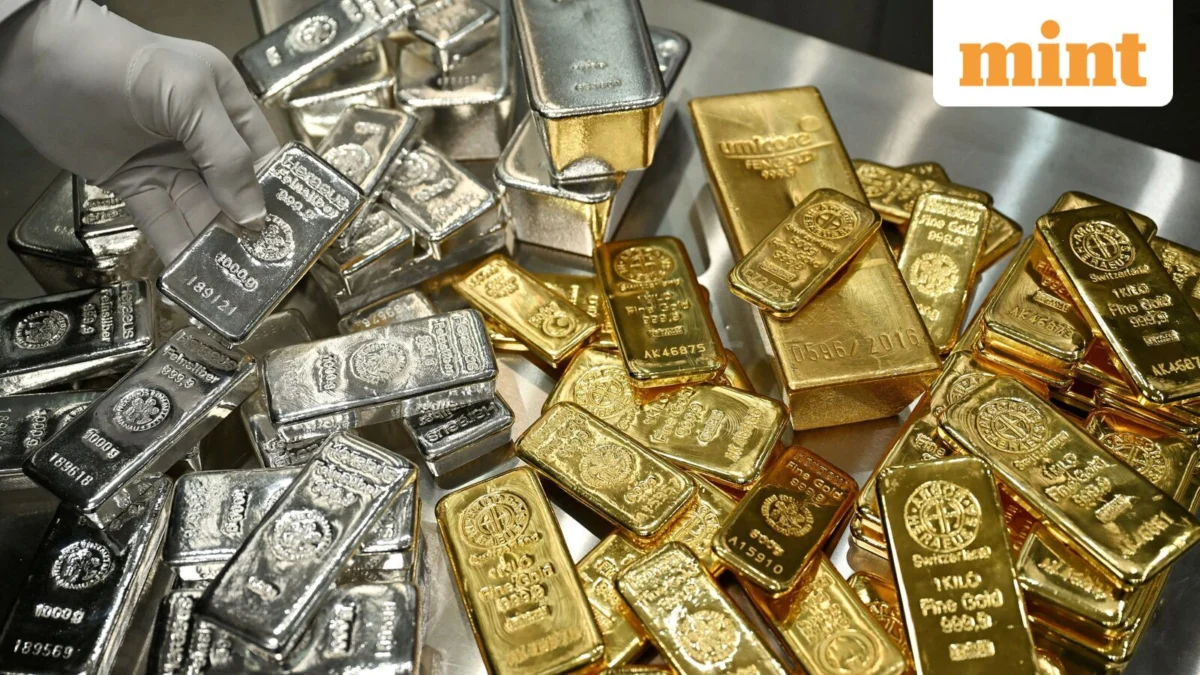
The domestic bullion market experienced a period of relative calm as trading concluded for the week on April 11, with both gold and silver prices maintaining steady positions on the Multi Commodity Exchange (MCX). This stability comes on the heels of a volatile week characterized by shifting geopolitical landscapes and evolving macroeconomic indicators. While the immediate price action remained flat as the weekend approached, the underlying narrative for the week was one of recovery and strategic "value buying." Investors and market participants have been closely monitoring the diplomatic developments in Islamabad, where high-stakes ceasefire talks between the United States and Iran have reportedly commenced, significantly altering the risk profile of global assets.
On the MCX, gold futures for the latest delivery closed at ₹1,52,690 per 10 grams. This closing figure represents a notable weekly appreciation of approximately 2%, recovering from the previous Friday’s close of ₹1,49,650 per 10 grams. Silver followed a similar trajectory of consolidation, holding steady at ₹2,43,300 per kilogram at the close of the Friday session. The stabilization of prices suggests that the market is currently in a "wait-and-see" mode, digesting the implications of potential peace in the Middle East and its subsequent impact on inflationary pressures and currency strengths.
Geopolitical De-escalation and the Trump Announcement
The primary driver behind the recent cooling of the "war premium" in precious metals has been the diplomatic breakthrough involving the United States and Iran. Former President Donald Trump’s announcement regarding a potential ceasefire and a restructured US-Iran deal has acted as a catalyst for a shift in investor sentiment. Historically, gold and silver serve as primary hedges against geopolitical instability. When tensions rise, especially in oil-rich regions like the Middle East, investors flee to the safety of bullion. Conversely, when a credible path to peace emerges, the "safe-haven" demand diminishes.
The commencement of talks in Islamabad marks a significant pivot. Traders who had previously hedged against a full-scale conflict are now liquidating those positions and reallocating capital into riskier assets, most notably the stock markets. This transition explains why, despite the weekly gain driven by earlier value buying, the momentum for gold has faced headwinds in the latter half of the week. The easing of inflation fears, often tied to energy price spikes during Middle Eastern conflicts, has further dampened the immediate urgency for gold as an inflation hedge.
Analysis of Weekly Value Buying and Market Sentiment
Despite the recent downward pressure caused by the peace talks, the 2% weekly gain in gold indicates that institutional and retail investors still view the current price levels as attractive for long-term holding. "Value buying" occurs when an asset’s price drops to a level that investors perceive as below its intrinsic value or its long-term trend line. Following a period of aggressive selling triggered by the initial ceasefire buzz, gold found a floor near the ₹1,49,000 mark, prompting a wave of purchases that pushed it back above ₹1,52,000.
Market analysts suggest that while the geopolitical risk is receding, structural economic factors continue to support gold. These include central bank diversification—where institutions like the Reserve Bank of India (RBI) continue to bolster their gold reserves—and the ongoing fluctuations in the US Dollar Index. As the dollar stabilizes against a basket of global currencies, the price of gold in local denominations like the Rupee reflects a complex interplay of international spot prices and domestic demand-supply dynamics.
Detailed Gold Rates Across Major Indian Cities
The retail price of gold in India varies across different metropolitan areas due to factors such as local taxes, transportation costs, and regional demand. Below is a comprehensive breakdown of the gold rates as of April 11 for 24-karat (99.9% purity), 22-karat (91.6% purity), and 18-karat gold.
North India: Delhi and Jaipur
In the national capital, Delhi, the gold rate for 24-karat stood at ₹1,52,340 per 10 grams. For those looking at jewelry-grade gold, 22-karat was priced at ₹1,39,645, while 18-karat gold, often used for diamond-studded ornaments, was quoted at ₹1,14,255. In Jaipur, the "Pink City," prices were slightly higher, with 24-karat gold reaching ₹1,52,580 per 10 grams and 22-karat at ₹1,39,865.
West India: Mumbai, Pune, and Nashik
The financial capital, Mumbai, saw 24-karat gold trading at ₹1,52,610. The 22-karat and 18-karat variants were priced at ₹1,39,893 and ₹1,14,458, respectively. These rates were largely mirrored in Pune and Nashik, with minor variations. In Pune, 24-karat gold was slightly lower at ₹1,52,600, while Nashik matched the Mumbai rates exactly. Rajkot, a major hub for jewelry manufacturing in Gujarat, saw 22-karat gold at ₹1,40,131, reflecting strong local demand for hallmarked jewelry.
South India: Chennai, Bengaluru, and Hyderabad
Chennai traditionally maintains some of the highest gold rates in the country due to immense retail demand. On April 11, 24-karat gold in Chennai was priced at ₹1,53,000 per 10 grams, while 22-karat stood at ₹1,40,250. Bengaluru and Hyderabad followed closely, with 24-karat prices at ₹1,52,680 and ₹1,52,800, respectively. The South Indian market remains a critical pillar for the bullion industry, often dictating the momentum for physical gold sales in India.
East India: Kolkata
In Kolkata, the 24-karat gold rate was recorded at ₹1,52,380 per 10 grams. The 22-karat price was ₹1,39,682, making it one of the more competitive markets in the country during this period of consolidation.
Silver Market Performance and Industrial Outlook
Silver has remained remarkably resilient, holding its ground at the ₹2,43,000 per kg level on the MCX. Unlike gold, which is primarily an investment and jewelry asset, silver’s value is heavily tied to industrial applications, including electronics, solar panels, and electric vehicle components.
City-wise Silver Rates
The retail price for silver 999 (fine silver) showed high consistency across the country:
- Delhi: ₹2,43,350 per kg (₹2,434 per 10 gm)
- Mumbai: ₹2,43,770 per kg (₹2,438 per 10 gm)
- Kolkata: ₹2,42,370 per kg (₹2,424 per 10 gm)
- Chennai: ₹2,43,550 per kg (₹2,436 per 10 gm)
- Bengaluru: ₹2,43,040 per kg (₹2,430 per 10 gm)
- Hyderabad: ₹2,37,500 per kg (Note: Hyderabad showed a significant divergence, potentially due to local supply surpluses or specific regional market adjustments).
The stability in silver prices suggests that while the "precious metal" aspect of silver is reacting to the US-Iran peace talks, the "industrial metal" aspect is being supported by steady manufacturing data and the global push toward green energy.
The Shift to Equities: Impact on Bullion
One of the most significant observations from the week ending April 11 was the migration of capital from the bullion market to the equity market. As Donald Trump signaled a move toward a ceasefire, the perceived risk in the global economy dropped. In financial terms, this is known as a "risk-on" environment.
When investors feel confident about the future, they seek higher returns in stocks and corporate bonds. During this week, major indices such as the Nifty 50 and the Sensex in India, alongside the S&P 500 in the US, saw renewed interest. This shift acts as a natural ceiling for gold prices. For gold to break past its current resistance levels, there would likely need to be a breakdown in the Islamabad talks or a new, unforeseen economic shock, such as a surprise inflation print or a change in central bank interest rate policies.
Chronology of the Week’s Market Events
To understand the current stability, it is essential to look at the timeline of events that shaped the week:
- Monday-Tuesday: Gold prices hovered near the ₹1,50,000 mark as markets awaited news on the US-Iran diplomatic front. Initial skepticism kept prices buoyant.
- Wednesday: Reports of the Islamabad venue for ceasefire talks emerged. Value buying intensified as investors sought to enter positions before any potential price surge or stabilization.
- Thursday: Donald Trump’s official statement regarding the ceasefire was released. This led to an immediate cooling of the market, with gold and silver prices retreating from their intra-week highs.
- Friday: Prices stabilized on the MCX. Trading volumes thinned out as the market moved into a consolidation phase ahead of the weekend. The final closing reflected a 2% weekly gain for gold, primarily due to the strength seen early in the week.
Broader Economic Implications and Future Outlook
The current price of gold at approximately ₹1.52 lakh per 10 grams represents a historically high valuation. For the Indian consumer, these prices pose a challenge for the upcoming wedding and festive seasons. Jewelers report that while the volume of gold sold (in terms of weight) may see a slight dip, the value of transactions remains high. Many consumers are opting for "gold recycling"—trading in old jewelry for new designs—to mitigate the impact of high prices.
From a macroeconomic perspective, the stability of gold and silver is a positive sign for the Reserve Bank of India. Lower volatility in commodity prices helps stabilize the Rupee and provides a clearer path for monetary policy. If the US-Iran ceasefire holds, the resulting drop in crude oil prices could further ease domestic inflation, potentially allowing for a more accommodative interest rate environment later in the year.
As we look toward the next trading week, all eyes will remain on Islamabad. Any official communiqué regarding the progress of the US-Iran deal will be the primary driver of volatility. If the talks succeed, gold may test lower support levels around ₹1,48,000. However, if the talks stall, a rapid return to "safe-haven" buying could see gold testing the ₹1,55,000 resistance level. For now, the bullion market remains in a state of watchful equilibrium, reflecting a world that is cautiously optimistic about peace but remains wary of the underlying economic complexities.
