

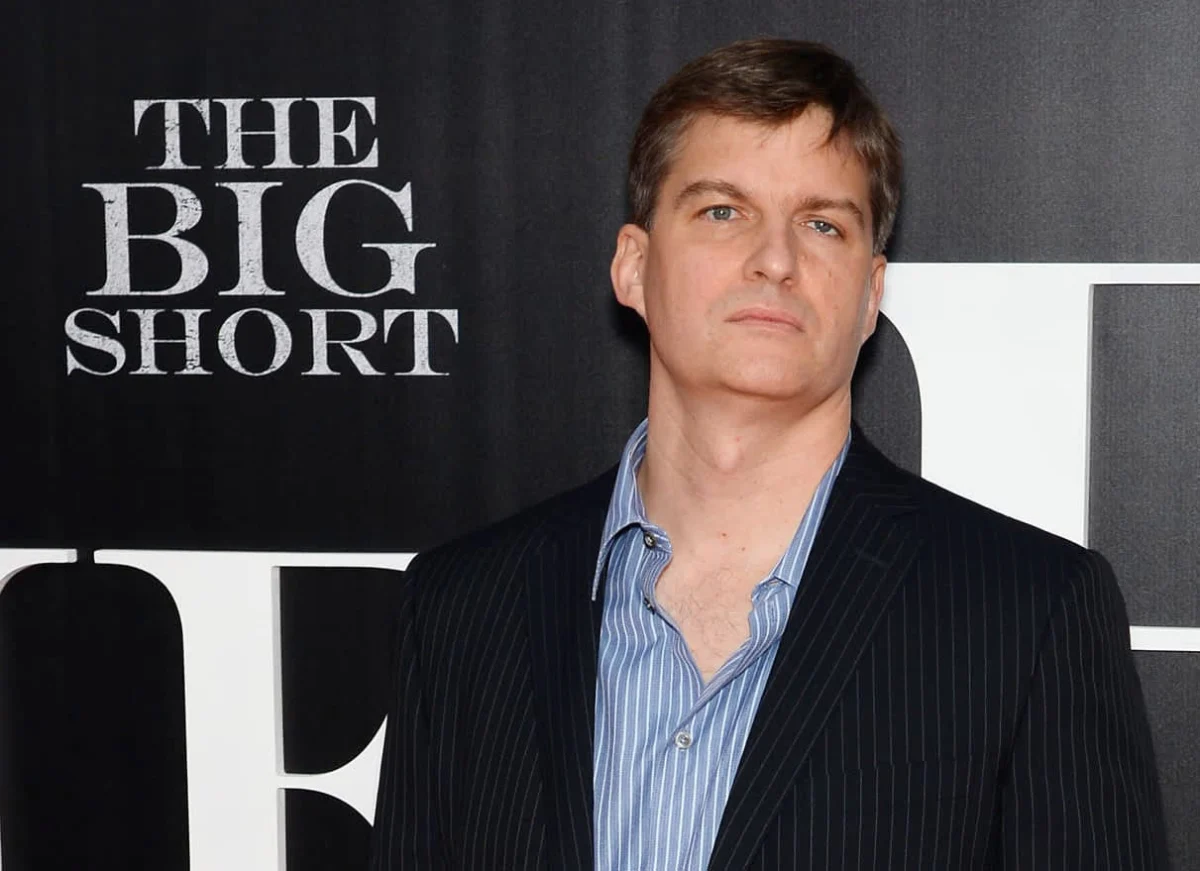
Celebrated investor Michael Burry, famously chronicled in "The Big Short" for his prescient bet against the U.S. housing market collapse, has reaffirmed and even amplified his bearish positions against Palantir Technologies and Nvidia, two prominent names in the artificial intelligence and software sectors. This move comes despite a public endorsement of Palantir by former President Donald Trump, which provided a temporary lift to the stock amidst a broader weekly decline. Burry’s latest disclosures underscore his deep-seated conviction that these companies remain significantly overvalued, signaling a potential market correction in the high-flying tech sector.
Michael Burry’s Persistent Bearish Stance on Palantir
In a recent Substack post, Burry confirmed his continued holding of long-dated put options on Palantir Technologies (PLTR), the data analytics software firm known for its work with government intelligence agencies and defense sectors. Burry revealed he initiated his bearish wager against Palantir in the fall of 2025 and has systematically rolled over his position, indicating a long-term conviction in his thesis.
Specifically, Burry stated, "I now own the June 17 2027 Strike Price 50 Puts and the Decembers 19, 2026 Strike Price 100 Puts. I am not selling these today." This declaration highlights his belief that Palantir’s share price will decline significantly below current levels by the specified expiration dates. A put option grants the holder the right, but not the obligation, to sell a stock at a predetermined price (the strike price) on or before a certain date. If the stock price falls below the strike price, the put option gains value, allowing Burry to profit from a downward movement. Conversely, if the stock rises or stays above the strike, these options could expire worthless, resulting in a loss for Burry. His target of "well under $50/share" for Palantir’s fundamental value stands in stark contrast to its closing price of $128.06 per share on the day of his comments, suggesting he anticipates a substantial revaluation.
Burry’s rationale for his bearish stance on Palantir centers on what he perceives as a "wildly overvalued" stock. While acknowledging the possibility of short-term rallies, especially in response to external factors, he maintains that the company’s intrinsic value is less than half of its current market capitalization. "Trump’s post rallied the stock after the stock had fallen 18% the last three days. The stock may catch a wind here. It has been selling off with software stocks. As mentioned, I continue to hold the puts, as I believe the fundamental value of this company is well under $50/share," Burry elaborated. This assessment reflects his value-oriented investment philosophy, which often leads him to identify discrepancies between market price and underlying asset value.
The Trump Effect: A Brief Rally Amidst Broader Decline
Burry’s latest comments on Palantir were notably made in the immediate aftermath of a high-profile endorsement from former President Donald Trump. On Friday, Trump took to his Truth Social platform to praise Palantir, stating, "Palantir Technologies (PLTR) has proven to have great warfighting capabilities and equipment. Just ask our enemies!!!" This unexpected public statement provided a temporary boost to Palantir’s shares, helping to lift the stock off its intraday lows.
However, the "Trump bump" proved ephemeral in the broader context of the week’s trading. Despite the former president’s commendation, Palantir’s shares ultimately suffered a significant 13.7% weekly drop. This decline contributed to a year-to-date loss of approximately 28% for Palantir in 2026, indicating a challenging period for the stock even with its strategic importance and political backing. The market’s subdued reaction to Trump’s endorsement, viewed against the backdrop of an ongoing sell-off in software stocks, suggests that fundamental concerns about valuation and market sentiment may be outweighing political rhetoric for many investors.
The relationship between Palantir and the Trump administration has been complex yet increasingly symbiotic. During Trump’s previous term, Palantir, under the leadership of CEO Alex Karp, actively pursued and secured numerous government contracts, deepening its engagement with the Pentagon and various U.S. intelligence agencies. This alignment positions Palantir as a key beneficiary of increased defense spending and geopolitical tensions, such as the potential for escalation in the Middle East, often referenced as the "Iran war" scenario in market discourse. Karp has reportedly maintained regular engagement with the administration, indicating a strategic effort to solidify Palantir’s position as a vital national security asset, regardless of the political climate.
Understanding Palantir Technologies: A Deep Dive
Founded in 2003 by Peter Thiel, Alex Karp, and others, Palantir Technologies has carved out a unique niche in the data analytics and software industry. The company’s origins are deeply rooted in intelligence and defense, with initial funding from the CIA’s venture capital arm, In-Q-Tel. Palantir’s core mission is to integrate, manage, and secure complex data sets, enabling organizations to make data-driven decisions. Its flagship platforms include Gotham, primarily used by government agencies for counter-terrorism and defense operations, and Foundry, designed for commercial enterprises to optimize supply chains, manage finances, and enhance operational efficiency. More recently, Palantir has launched its Artificial Intelligence Platform (AIP), aiming to bring the power of large language models and other AI capabilities to its clients in a secure, operational context.
Palantir’s business model relies heavily on long-term, high-value contracts, particularly with government entities. Its client roster includes the U.S. Army, Navy, Air Force, and intelligence communities, as well as allied nations. In the commercial sector, it serves clients in healthcare, manufacturing, automotive, and financial services. This dual-pronged approach provides a relatively stable revenue base, particularly from its government segment, which is less susceptible to economic cycles than some commercial markets.
Financially, Palantir has experienced significant revenue growth, often touted by its proponents as evidence of its expanding market penetration and the critical need for its services. However, profitability has historically been a point of contention. The company famously operated at a loss for many years, prioritizing growth and product development. More recently, Palantir has announced GAAP profitability, a significant milestone that has been welcomed by investors seeking a clearer path to sustainable earnings. Yet, its valuation metrics, such as price-to-sales ratios, often remain elevated compared to more established software companies, fueling debates about its long-term growth prospects versus its current market price. Proponents argue that Palantir’s unique technology, deep government ties, and burgeoning AI capabilities justify its premium valuation, positioning it as a critical player in the future of data and defense. Critics, like Burry, contend that the market’s enthusiasm has outpaced the company’s fundamental financial performance and current addressable market.
Michael Burry: The Oracle of Doom or a Contrarian Genius?
Michael Burry’s investment philosophy is characterized by deep value research, contrarian thinking, and a willingness to take significant, often unpopular, positions against prevailing market sentiment. He gained widespread public recognition through Michael Lewis’s book "The Big Short" and its subsequent film adaptation, which chronicled his foresight in identifying and betting against the subprime mortgage market bubble in the mid-2000s. Operating from his hedge fund, Scion Capital, Burry correctly predicted the housing market collapse, generating immense profits for his investors even as the global financial system teetered on the brink.
Since then, Burry has maintained a high profile, often signaling his market views through cryptic tweets or detailed posts. His track record includes identifying other potential bubbles, such as the dot-com bust of the early 2000s and, more recently, expressing concerns about passive investing, meme stocks, and the broader market’s over-reliance on low interest rates. His approach involves meticulously sifting through financial data, balance sheets, and market trends to uncover mispricings and undervalued or overvalued assets. He is known for his patience, holding positions for extended periods until his thesis plays out, even in the face of significant short-term losses or market skepticism.
Burry’s bearish bets are not always immediately profitable, and he has faced criticism and even ridicule for some of his calls. However, his willingness to stand against the crowd, coupled with his historical successes, lends weight to his pronouncements, often prompting a closer look at the sectors he targets. His current focus on Palantir and Nvidia indicates a belief that the exuberance surrounding artificial intelligence and high-growth software stocks may be leading to unsustainable valuations, reminiscent of previous market bubbles he has identified.
Nvidia: Another Target in Burry’s Sights
Beyond Palantir, Burry also revealed on Friday that he has increased his bearish position on Nvidia (NVDA), another AI darling that has seen unprecedented growth and market capitalization in recent years. Nvidia, a semiconductor giant, dominates the market for graphics processing units (GPUs), which are essential for AI training and data centers. Its stock has been a primary beneficiary of the AI boom, experiencing exponential growth that has propelled its market cap into the trillions.
Burry’s updated position on Nvidia involves specific put options: "I added to my NVDA puts, this time buying the January 27 Strike 115 puts at 3.30. Implied Volatility is high, so I thought about shorting it outright," he wrote. "Still, I like the maximum loss being limited, and time decay – also known as theta decay – won’t be significant until 2 months out. I would consider rolling before that if necessary."
This description offers insight into Burry’s strategic use of options. While he might consider a direct short sale (borrowing and selling shares, hoping to buy them back cheaper), the use of put options limits his maximum potential loss to the premium paid for the options. This is a critical risk management technique, especially when betting against high-momentum stocks like Nvidia, which can experience rapid and unpredictable surges. Burry’s mention of "implied volatility" suggests he is aware of the market’s expectation of future price swings, which impacts options pricing. His consideration of "time decay" (theta decay) indicates his awareness that options lose value as they approach expiration, a factor he plans to manage by potentially rolling the position before significant decay sets in.
Nvidia’s meteoric rise has been driven by insatiable demand for its H100 and upcoming B200 chips, which are the backbone of AI development and deployment. The company’s financial performance has been extraordinary, consistently beating analyst expectations and projecting robust future growth. However, its valuation has also soared to historic levels, leading some analysts and investors to question its sustainability. Concerns include potential competition from custom AI chips (ASICs) developed by tech giants, the cyclical nature of semiconductor demand, and the possibility of a slowdown in AI spending if the economic environment shifts. Burry’s bet suggests he sees these underlying risks as significant enough to warrant a substantial short position, believing that the market has become overly optimistic about Nvidia’s long-term growth trajectory at its current valuation.
Market Reactions and Expert Perspectives
Michael Burry’s bearish wagers on Palantir and Nvidia have not gone unnoticed. Last year, when his former hedge fund, Scion Asset Management, first disclosed these positions, Palantir CEO Alex Karp reacted sharply, publicly dismissing Burry’s wagers as "super weird" and "bats— crazy." Karp’s strong retort underscored the deep conviction held by Palantir’s leadership in the company’s value and future prospects, contrasting sharply with Burry’s skepticism.
The broader market and analyst community remain divided on the valuations of both Palantir and Nvidia. For Palantir, bullish arguments often highlight its unique technology, its critical role in national security, expanding commercial footprint, and the potential for its AIP platform to revolutionize enterprise AI. Analysts supporting Palantir often point to its improving profitability and strong customer retention as signs of a maturing and resilient business. Conversely, skeptics echo Burry’s concerns about its high valuation relative to its revenue and earnings, questioning the scalability of its highly customized solutions and the pace of its commercial adoption outside of government contracts.
Nvidia, on the other hand, commands near-universal respect for its technological prowess and market dominance in AI hardware. However, the debate around its valuation often revolves around whether its current stock price has already priced in several years of future growth. Some analysts maintain that Nvidia’s innovation pipeline, ecosystem lock-in, and continued demand for AI infrastructure justify its premium. Others warn of potential headwinds, including the aforementioned competition, supply chain risks, and the possibility of a broader tech market correction that could disproportionately affect high-growth, high-valuation stocks. Burry’s decision to increase his short position on Nvidia suggests he firmly aligns with the latter perspective, viewing the current enthusiasm as potentially unsustainable.
The Mechanics of a Bearish Bet: Explaining Put Options
Understanding Michael Burry’s strategy requires a basic grasp of put options. A put option is a financial contract that gives the buyer the right, but not the obligation, to sell an underlying asset (in this case, shares of Palantir or Nvidia) at a specified price (the "strike price") on or before a certain date (the "expiration date").
- Strike Price: This is the price at which the option holder can sell the underlying stock. For Burry’s Palantir puts, strike prices are $50 and $100. For Nvidia, it’s $115. If the stock price falls below the strike price by expiration, the put option becomes "in-the-money" and gains value.
- Expiration Date: This is the date after which the option contract becomes void. Burry’s Palantir puts expire in June 2027 and December 2026, indicating a long-term outlook. His Nvidia puts expire in January 2027.
- Premium: The buyer of a put option pays a premium to the seller. This premium is the maximum amount the buyer can lose if the stock price does not fall below the strike price. Burry noted paying $3.30 for his Nvidia puts, meaning he spent $330 per contract (each contract typically represents 100 shares).
- Implied Volatility (IV): This is the market’s expectation of how much the stock price will fluctuate in the future. High IV makes options more expensive because there’s a greater perceived chance of a large price movement. Burry acknowledged high IV for Nvidia, implying the options were costly but reflective of the stock’s potential for significant swings.
- Time Decay (Theta Decay): Options lose value as they approach their expiration date, even if the underlying stock price remains constant. This is known as time decay or theta decay. Burry’s choice of long-dated options (e.g., June 2027) minimizes immediate time decay, allowing more time for his thesis to play out before the option value erodes significantly. He explicitly mentioned considering "rolling" the position, which means closing out the existing option and opening a new one with a later expiration date, to mitigate the effects of time decay.
Burry’s use of put options limits his downside risk to the premium paid, unlike shorting the stock outright, where potential losses are theoretically unlimited if the stock rises indefinitely. This strategy allows him to express a strong bearish view while managing his exposure.
Broader Implications and Future Outlook
Michael Burry’s continued and amplified bearish bets on Palantir and Nvidia carry significant implications for the broader market, investor sentiment, and the companies themselves. As a figure with a proven track record of identifying market excesses, his actions often serve as a bellwether, prompting other investors to re-evaluate their positions.
For Palantir, Burry’s bet highlights the ongoing debate about its valuation and the sustainability of its growth, particularly in its commercial segment. While its government contracts provide a solid foundation, the company’s ability to scale profitability and penetrate diverse commercial markets remains under scrutiny. The interplay of geopolitical events, government spending, and the broader adoption of AI will significantly influence Palantir’s trajectory. If Burry’s thesis proves correct, it could signal a significant re-rating for the company, potentially affecting investor confidence in other government-adjacent tech firms.
Nvidia’s situation is arguably more critical for the overall market. As a dominant force in the AI revolution, its performance is often seen as a proxy for the health and direction of the entire tech sector. A significant downturn in Nvidia’s stock, particularly if driven by a re-evaluation of its fundamental value rather than a temporary market correction, could trigger broader selling pressure across high-growth AI and semiconductor stocks. This could signal a potential cooling of the intense enthusiasm that has characterized the AI investment landscape, leading to a more sober assessment of future growth prospects and valuations.
Burry’s position also underscores the inherent risks and rewards of contrarian investing. If Palantir and Nvidia continue their upward trajectories, Burry’s puts could expire worthless, resulting in substantial losses. However, if his predictions materialize, he stands to reap considerable profits, further solidifying his reputation as a shrewd market prognosticator. The coming months and years will reveal whether the market’s current bullishness on AI giants is justified or if Michael Burry has once again identified an impending "Big Short" in the making. The high stakes involved ensure that his latest moves will be closely watched by investors across the globe.
