

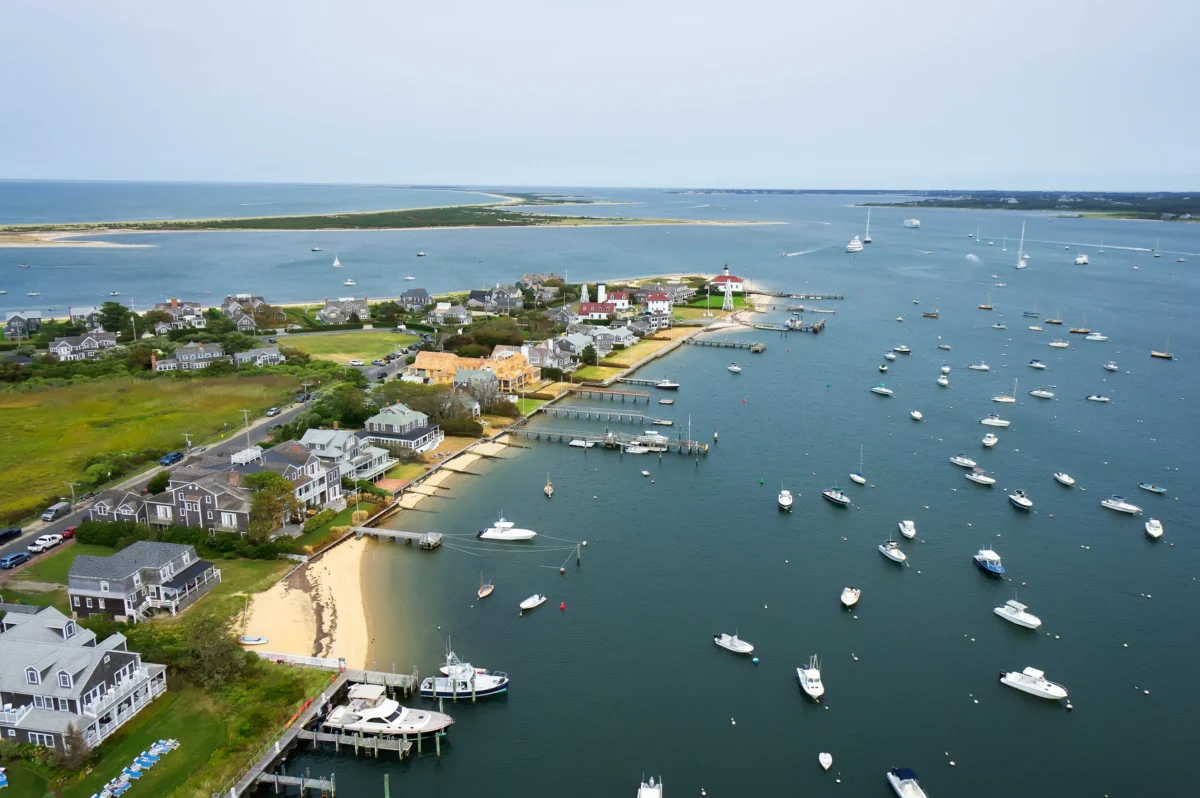
The quaint, windswept island of Nantucket, Massachusetts, a historical haven of whaling and maritime heritage, has solidified its reputation as the pinnacle of America’s luxury housing market. A recent analysis by real estate platform Realtor.com reveals that for anyone aspiring to join the island’s approximately 14,000 year-round residents, the entry fee for a property stands at a staggering minimum of $1 million. This finding places Nantucket at the undisputed top of a new list identifying the nation’s most exclusive real estate enclaves, where multi-million dollar transactions are not the exception, but the prevailing standard.
According to the comprehensive report, a remarkable nearly 100% of Nantucket’s active real estate listings are priced at or above the $1 million mark. The median listing price on the island soars to an astonishing $4.08 million, underscoring the extraordinary value placed on its finite land and unique lifestyle. On average, the island witnesses 138 million-dollar listings annually, a testament to the persistent demand from an affluent buyer pool seeking unparalleled exclusivity and a distinct coastal charm.
Defining "Pure Luxury": Realtor.com’s Methodology
Realtor.com’s research aimed to isolate "pure luxury" markets, differentiating them from regions where high overall housing costs might inadvertently push a significant number of homes into the million-dollar bracket. To achieve this, the analysis focused on U.S. housing markets where at least half of the active listings were priced above $1 million, but crucially, had fewer than 500 such listings. This specific filter ensures that the identified locations are not merely expensive urban centers, but rather distinct, often geographically constrained, destinations where luxury is deeply embedded in the market’s very fabric. Anthony Smith, a senior economist at Realtor.com, highlighted this methodology, stating that the list was designed to illuminate markets defined by genuine scarcity and unique desirability rather than broad regional economic trends.
The methodology yielded 13 such markets scattered across the United States, each possessing a distinctive allure that commands premium prices. Following Nantucket in terms of concentration of million-dollar listings is Vineyard Haven, a picturesque community nestled within the neighboring Martha’s Vineyard, Massachusetts. Here, 90% of active listings breach the million-dollar threshold, with a median listing price of $2.4 million, further solidifying the exclusivity of the Massachusetts island chain. Jackson, the principal town in Wyoming’s iconic Jackson Hole valley, secures the third-highest median price on the list at $1.75 million, representing a different, yet equally coveted, brand of luxury rooted in mountain grandeur and vast open spaces.
The Immutable Power of Scarcity: Island Enclaves and Conservation Lands
The defining characteristic underpinning the stratospheric prices in these elite markets, as underscored by Smith, is scarcity. Nantucket and Vineyard Haven serve as prime examples, their island geography inherently limiting the supply of developable land. This natural constraint is further amplified by stringent building and preservation codes designed to maintain the islands’ historic character and environmental integrity. "You have finite land, strict building and preservation codes, and that combination sets a real premium on what’s available," Smith explained, encapsulating the fundamental economic principle at play. These regulatory frameworks, while vital for conservation and cultural preservation, effectively create an inelastic supply of housing, driving prices upward as demand from wealthy buyers remains robust.
This principle of scarcity extends beyond coastal havens to non-coastal hubs like Jackson, Wyoming. While the Teton County region boasts expansive landscapes, a significant portion of the land is designated for conservation. A striking statistic reveals that only 3% of the land in the broader Jackson Hole valley is privately owned. The vast majority is managed by federal and state entities as national parks, national forests, and wildlife refuges, severely restricting private development. This combination of natural beauty, protected wilderness, and limited private acreage creates an extraordinary demand for the few available properties, attracting buyers who value privacy, unparalleled access to nature, and a unique mountain lifestyle, often accompanied by favorable state tax laws in Wyoming.
A Diverse Tapestry of Luxury: From Hawaiian Shores to Michigan Lakes
While five of the identified luxury hubs are located in California, a state renowned for its affluent communities and high cost of living, the remaining markets showcase a remarkable geographical diversity. This distribution highlights the varied appeals that draw high-net-worth individuals to specific locales across the nation. The list includes tropical paradises like Kapaa, Hawaii, where volcanic landscapes meet pristine beaches, and serene mountain retreats such as Hailey, Idaho, a gateway to the upscale Sun Valley ski resort.
A particularly notable inclusion is Petoskey, Michigan, a town that might not possess the immediate global recognition of a Nantucket or a Napa Valley, but nonetheless punches above its weight in the luxury real estate sector. In Petoskey, 53% of active listings are priced over $1 million. Smith noted that Petoskey checks numerous boxes for deep-pocketed buyers, offering a comprehensive luxury experience. "When you look at what defines a luxury market, it’s all there: waterfront views on Little Traverse Bay, ski access in the winter, resort-style living," he elaborated. The town offers stunning vistas of Lake Michigan, proximity to premier ski resorts like Boyne Highlands and Boyne Mountain, and a vibrant community atmosphere, all contributing to its growing appeal.
Petoskey also presents a relatively more "affordable" entry point within this exclusive list, with a median listing price of $1.1 million. However, the definition of "affordable" remains relative. The ultra-luxury segment of Petoskey’s market, representing the top 1% of homes, begins at just under $8 million. This figure, while substantial, pales in comparison to the ultra-luxury threshold in Rifle, Colorado, another market on Realtor.com’s list. Located approximately 70 miles from the world-renowned ski resort of Aspen, the top 1% of homes in Rifle start at nearly $59.2 million, illustrating the vast disparities even within the luxury market itself, often driven by proximity to iconic destinations and the depth of wealth in a region.
Broader Market Dynamics: Softness and Resurgence
The luxury housing market, while often exhibiting resilience, is not entirely immune to broader economic fluctuations. Anthony Smith observed that despite high-income consumers generally propping up spending in sectors like travel, the luxury housing market has shown intermittent signs of softness, mirroring trends in the overall housing market. In March, the national luxury threshold, defined as the 90th percentile of homes by price, stood at $1.25 million, representing a 2.9% year-over-year decrease. This decline was slightly steeper than the 2.2% annual drop observed in the overall national median home price, suggesting that even the affluent segment felt some pressure.
However, the housing market, including its luxury component, demonstrated a notable firming up as spring approached. From February to March, the luxury threshold saw a robust 3.7% increase, while the overall market rose by 3%. This resurgence indicates a seasonal uptick in buyer activity and confidence, possibly fueled by an improving economic outlook, stabilization in interest rates, or a renewed sense of urgency among buyers. The luxury market often serves as an indicator of economic sentiment among the wealthiest demographics, and its recent trajectory suggests a cautious but growing optimism.
Historical Context and Evolution of Luxury Enclaves
The evolution of these luxury markets is rooted in a blend of history, geography, and socioeconomic trends. Nantucket, for instance, transitioned from a global whaling capital in the 18th and 19th centuries to a fashionable summer resort in the late 19th and early 20th centuries, attracting industrialists and artists. Strict historical preservation efforts, especially after a devastating fire in 1846, ensured the island’s unique architectural character was maintained, enhancing its appeal as an exclusive retreat. Martha’s Vineyard followed a similar trajectory, moving from a fishing and farming community to a favored destination for affluent vacationers, including presidents and celebrities, drawn by its diverse landscape and charming towns.
Jackson Hole’s transformation is more recent, driven by the post-war appreciation for wilderness and outdoor recreation. Its proximity to Grand Teton National Park and Yellowstone National Park, coupled with a lack of state income tax in Wyoming, began attracting wealthy individuals seeking both adventure and financial advantages. Over decades, it has solidified its status as a premier destination for those valuing privacy, expansive natural beauty, and a high-end, active lifestyle. Petoskey, Michigan, on the other hand, leveraged its natural assets – the stunning shores of Little Traverse Bay, a part of Lake Michigan, and its position in Michigan’s "Up North" vacation region. Its appeal grew steadily as a summer and winter resort, capitalizing on its scenic beauty and recreational opportunities.
The Broader Implications: Economic, Social, and Environmental
The concentration of wealth and luxury housing in these specific markets carries profound implications.
Economic Implications:
- Boost to Local Economies: The influx of wealth stimulates local economies through property taxes, spending on high-end retail, dining, and specialized services (landscaping, construction, domestic staff).
- Service Sector Growth: These markets often see a boom in the service sector, catering to the needs and desires of affluent residents.
- Investment Opportunities: Luxury properties often serve as stable, appreciating assets for ultra-high-net-worth individuals, contributing to wealth preservation and growth.
Social Implications:
- Affordability Crisis for Workforce: Perhaps the most significant social challenge is the exacerbation of the affordable housing crisis for year-round residents and essential workers. Teachers, nurses, first responders, and service industry employees struggle immensely to afford housing in these communities, often leading to long commutes or forced relocation.
- Demographic Shift: The rising cost of living can lead to a demographic shift, pushing out younger families and professionals, threatening the social fabric and diversity of these communities.
- "Ghost Town" Effect: In some highly seasonal luxury markets, many properties remain vacant for much of the year, contributing to a "ghost town" feel during off-seasons and impacting the vibrancy of local businesses that rely on year-round patronage.
Environmental Implications:
- Development Pressure: Despite strict codes, the immense value of land can create pressure for development, challenging conservation efforts and potentially impacting fragile ecosystems.
- Infrastructure Strain: Seasonal population surges can strain existing infrastructure, including water, waste management, and transportation systems, requiring significant investment and careful planning.
- Climate Change Vulnerability: Coastal luxury markets like Nantucket and Martha’s Vineyard face increasing threats from rising sea levels, coastal erosion, and more intense storms, posing long-term risks to property values and community resilience.
Stakeholder Perspectives and Future Outlook
Local real estate agents in these markets consistently highlight the unique lifestyle, investment potential, and unparalleled beauty that draw buyers. They often emphasize the limited inventory and strong demand as key drivers of price appreciation. Town officials, while appreciative of the robust tax base generated by high-value properties, grapple with the immense challenge of providing affordable housing for their workforce. Initiatives such as deed-restricted housing programs, inclusionary zoning, and land banks are often explored, though finding sustainable solutions remains an uphill battle against market forces. Environmental groups advocate fiercely for the preservation codes and conservation efforts that protect the natural landscapes, often pushing back against any proposals for increased density or development in sensitive areas.
Looking ahead, the demand for exclusive, scarcity-driven luxury markets is likely to persist, fueled by global wealth accumulation and a continued desire for privacy, unique experiences, and investment stability. However, the long-term sustainability of these communities will depend on their ability to balance the economic benefits of luxury tourism and residency with the critical need to maintain a diverse, functioning year-round community. Policy interventions, innovative housing solutions, and continued conservation efforts will be crucial in navigating the complex dynamics of these ultra-exclusive enclaves. As the overall housing market continues to find its footing, these pure luxury markets, defined by their immutable scarcity, will likely remain distinct and highly coveted bastions of affluence.
