

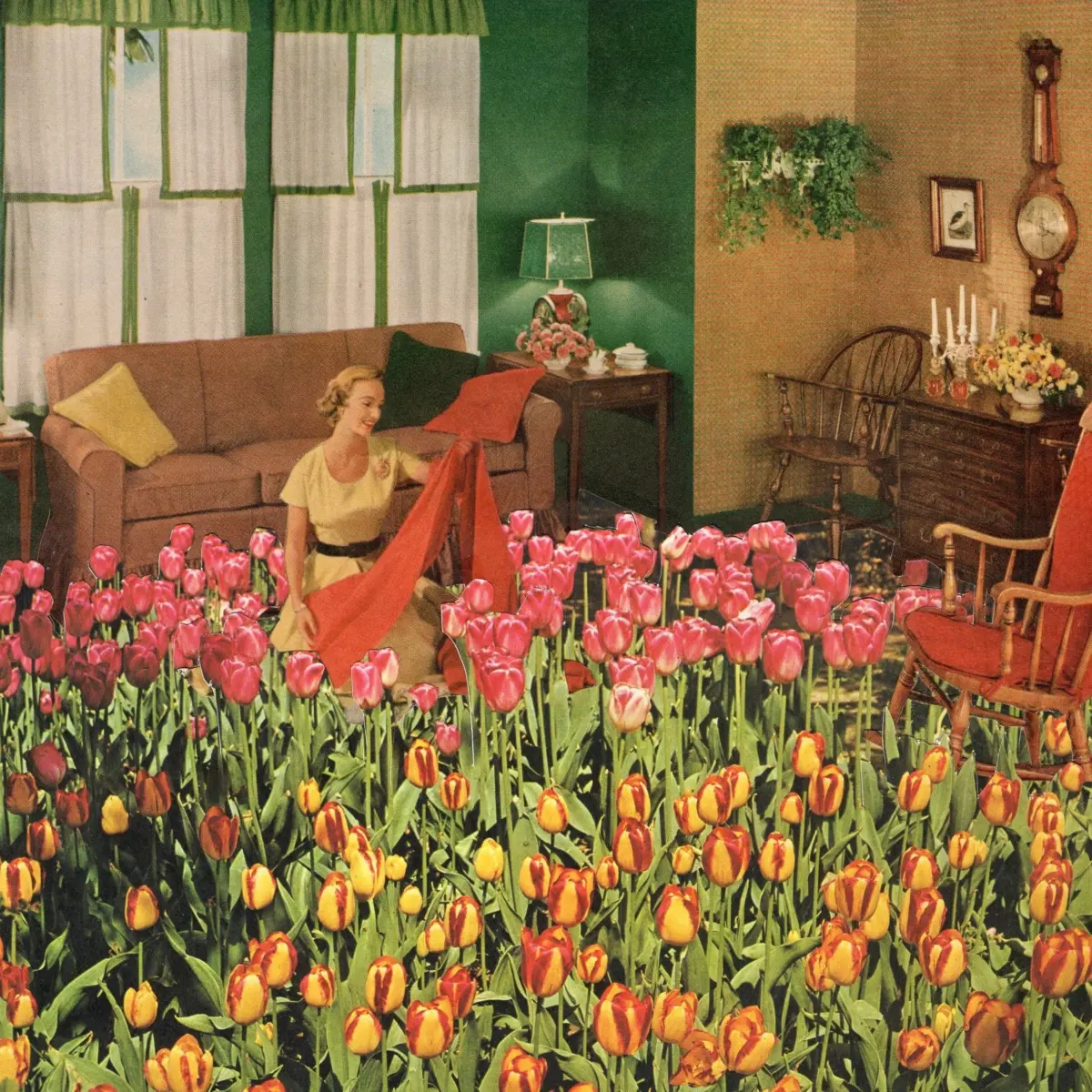
The rapid proliferation of generative artificial intelligence has introduced a new lexicon into the world of luxury design and architecture: "slopjects" and "slopspaces." These terms describe hyperrealistic yet physically impossible objects and environments that populate digital feeds on platforms like Instagram, Pinterest, and TikTok. From autonomous sauna rideshares and "conversation pit cars" to Rick Rubin-shaped Magic 8 Balls and plates designed for a single almond, these digital artifacts represent a Dadaist fantasy world that exists entirely outside the constraints of production budgets, market demand, or the fundamental laws of physics. While initially dismissed as harmless internet oddities, these AI-generated visions are now creating significant friction in the professional design industry, as clients increasingly mistake digital hallucinations for executable architectural plans.
The Emergence of the Slopject Phenomenon
The term "slopject," coined by digital creators to describe AI-rendered items that lack a basis in physical reality, has become a symbol of a broader shift in visual consumption. These objects are often rendered with such high fidelity that they appear indistinguishable from professional product photography. However, a closer inspection reveals their absurdity: a toilet turntable, a luxury car interior that functions as a sunken living room, or "slopspaces"—full-scale interior schemes where garage apartments lack ladders to reach lofted beds.
This trend is not merely an aesthetic curiosity; it represents a fundamental shift in how consumers seek inspiration. According to Stanford University’s 2026 AI Index Report, more than half of the global population has engaged with generative AI tools within the past three years. This rate of adoption outpaces the historical rollout of both the personal computer and the internet. As tools like Midjourney, DALL-E, and Claude become ubiquitous, the barrier between a professional architectural rendering and a layperson’s "prompt-to-image" fantasy has effectively vanished.
A Chronology of Visual Communication in Design
To understand the current disruption, it is necessary to examine the evolution of how design ideas have been communicated over the last century.

- The Hand-Drawn Era (Pre-1980s): Designers relied on sketches, blueprints, and physical mood boards. These were understood to be interpretations of a vision, requiring a high degree of trust between the client and the practitioner.
- The CAD and 3D Rendering Revolution (1990s–2010s): Computer-Aided Design (CAD) and professional rendering software allowed for precise technical drawings. While these images became more realistic, they remained rooted in mathematical reality and structural engineering.
- The Photoshop and "Comping" Era (2010s–2020): Designers began using "comps"—composite images—to show clients a "vibe." These were often lo-fi and clearly edited, maintaining the understanding that the final result would differ from the digital mock-up.
- The Generative AI Era (2021–Present): With the arrival of high-powered LLMs and diffusion models, anyone can generate a photorealistic image of a "Tropical Tudor Fantasy." This has eliminated the "lo-fi" buffer, leading clients to expect an exact 1:1 replica of a digital hallucination.
The Reality Gap: Physics vs. Prompts
Professional architects and interior designers report a growing trend of clients presenting AI-generated images as "blueprints" for their homes. Kevin Greenberg, founder of the design firm Space Exploration Design, notes that clients are increasingly bringing in solutions that are not rooted in the reality of the built environment. "We do it diplomatically," Greenberg explains, noting the difficulty of explaining to a client that a "stone ceiling" featured in an AI image is structurally improbable and prohibitively expensive.
The "uncanny valley" of AI design often masks technical failures that a human designer would never overlook. Genevieve Carter of Carter Design points out that AI-generated spaces often suffer from "dead air"—a lack of subtle textures like plaster that don’t register in digital renders. Furthermore, AI struggles with organic materials. Jake Shapiro, owner of the millwork studio Slabrock, highlights that AI cannot predict the unique characteristics of wood. While an AI might render a perfectly uniform grain across a 20-foot span, the physical reality of lumber involves knots, grain variations, and structural limitations that a machine cannot simulate.
The Economic Impact of Digital Fantasies
The discrepancy between AI imagery and physical reality also extends to budgeting. Tyler Polich, co-founder of Years Studio, describes instances where clients use AI to "tweak" a designer’s proposal, only to generate elements that are financially ruinous. In one case, a client presented an AI-modified version of a project that featured a structure fully clad in copper. While the image was compelling, the real-world cost of materials and specialized labor would have instantly exhausted the project’s entire budget.
This "budget-blind" nature of generative AI creates a secondary problem: it devalues the expertise of the professional. When a client sees a "perfect" AI image that their designer claims is impossible or too expensive, it creates a trust deficit. Designers are increasingly forced to defend their professional integrity against a machine that does not understand the price of a square foot of marble or the hourly rate of a master carpenter.
The Flattening of Taste and the Algorithmic Echo Chamber
Beyond the technical hurdles, there is a growing concern regarding the "flattening of taste." Long before AI, social media algorithms began rewarding a specific, homogenized aesthetic. This phenomenon, often referred to as "AirSpace," led to a global standardization of interior design, where coffee shops in Tokyo, Brooklyn, and Berlin all began to look identical.

AI exacerbates this by training on existing data. Because the vast majority of visual information online is "relatively mediocre"—consisting of real estate listings, DIY blogs, and mass-market e-commerce—AI models tend to gravitate toward the average. This results in a feedback loop where innovative design is sidelined in favor of "crowd-pleasing" visuals.
Designers like those at Space Exploration Design are now encouraging clients to go "analog" to find true inspiration. By looking at vintage automotive design, classical paintings, or old magazines, clients can find references that haven’t been processed through a digital filter. This human-centric approach aims to reclaim the "vulnerability" of design—something AI cannot replicate because its foundation is built on remixing what has already been done.
Professional Adaptations and the Future of the Industry
Despite the challenges, some professionals are finding ways to integrate AI as a constructive tool rather than a competitor. Lucca Zeray, creator of Lucca House modular shelving, has implemented an AI "configurator" that allows clients to manipulate straightforward options within a set of real-world constraints. By limiting the AI’s parameters to what can actually be manufactured, the tool closes the communication gap without creating false expectations.
The consensus among industry leaders is that while AI can generate a "compelling image," it cannot execute a "built design." The real work of architecture involves navigating personal relationships, sourcing fabricators, and negotiating the "give and take" of material reality.
Broader Implications and Industry Analysis
The "slopject" era highlights a significant cultural shift in how we perceive truth in media. As subreddits like r/isthisAI grow in popularity, it is clear that the public is becoming more skeptical of digital imagery. However, in the realm of high-stakes investments like home renovation and construction, the stakes are much higher than a "liked" photo on Instagram.

Key Implications for the Design Industry:
- Legal and Ethical Disclosures: There is a growing call for mandatory "AI-generated" watermarks on architectural visualizations to prevent consumer misinformation in real estate and design services.
- The Premium of Expertise: As AI makes basic rendering accessible to everyone, the value of a professional designer will shift from "image-maker" to "technical navigator" and "curator of reality."
- Structural Risks: The proliferation of "slopspaces" that ignore safety standards (like the ladderless loft) poses a risk if amateur builders attempt to replicate these designs without professional oversight.
In conclusion, while the Rick Rubin Magic 8 Ball or the autonomous sauna may be amusing digital diversions, they represent a complex challenge for the professionals tasked with building the world we actually live in. The future of design likely lies in a hybrid model: using AI to spark the initial imagination while relying on human expertise to ensure that the "Tropical Tudor Fantasy" doesn’t collapse under the weight of its own digital impossibility. As the industry moves forward, the most valuable tool in a designer’s kit may not be a new software prompt, but the ability to guide a client back from the digital ether into the tangible, beautiful, and sometimes "painfully real" world of physical architecture.
