

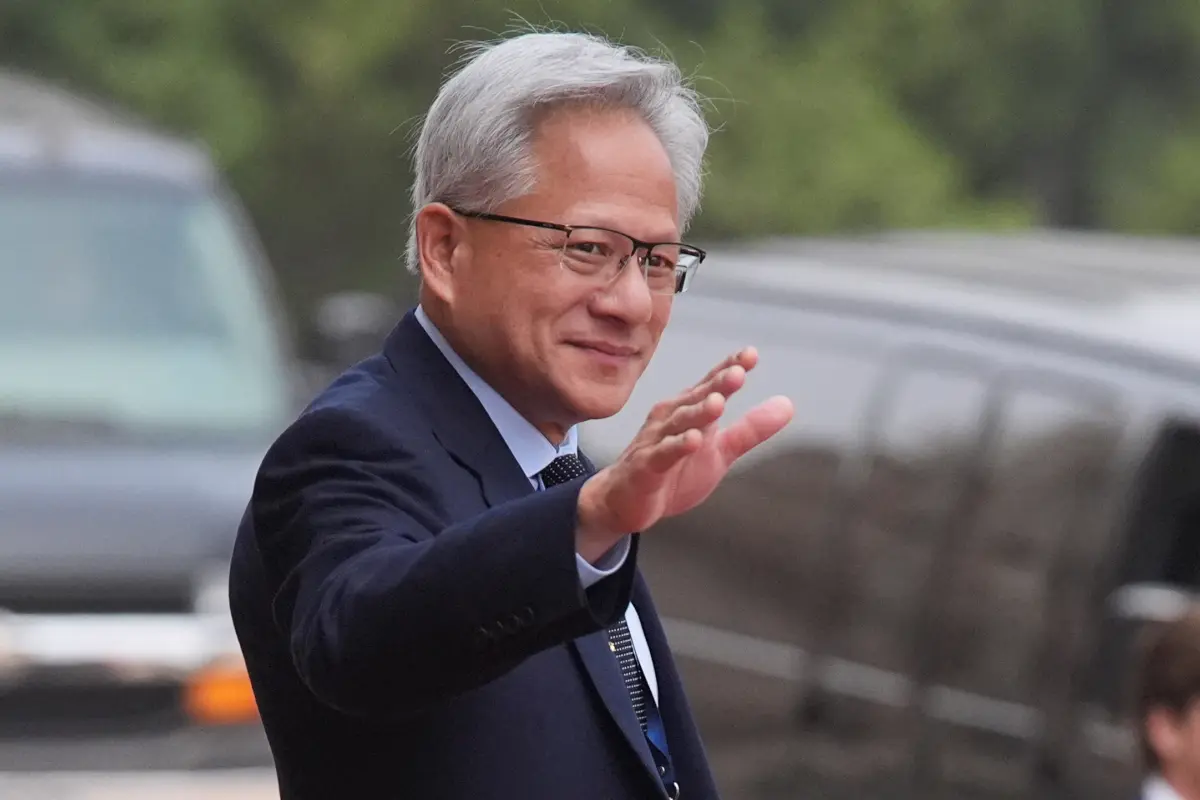
Jensen Huang has been reinstated as the chief executive officer of Nvidia, a little over a week after his resignation following revelations of extramarital affairs, including one with a suspected Chinese spy. The swift reversal, announced on Monday, sees Huang returning to lead one of the world’s most critical technology companies at a pivotal moment for the artificial intelligence (AI) and semiconductor industries. The decision has sent Nvidia’s stock soaring and drawn a public endorsement from United States President Donald Trump, even as multiple federal investigations into the chip giant remain ongoing.
A Rapid Reversal: The Chronology of Events
The events leading to Huang’s brief departure and rapid return unfolded with unusual speed, highlighting the immense influence and perceived indispensability of the company’s founder.
On November 12, Jensen Huang, a co-founder of Nvidia and its CEO since 1993, tendered his resignation. The departure was prompted by an internal review that uncovered at least two extramarital affairs. Crucially, one of these relationships was with an individual later identified by intelligence sources as a suspected spy for a foreign adversary, widely understood to be China. This revelation immediately escalated the matter beyond corporate governance into the realm of national security, given Nvidia’s central role in advanced computing and AI.
The initial announcement of Huang’s departure sent shockwaves through Silicon Valley and global financial markets. Nvidia, with its market capitalization having surged to over $1 trillion earlier this year, is not just a leading chipmaker but a foundational enabler of the AI revolution, a technology deemed critical for national competitiveness and defense. Colette Kress, Nvidia’s chief financial officer, was appointed interim CEO during this turbulent period, providing a steady hand amidst the uncertainty.
However, the vacuum created by Huang’s absence was quickly met with significant pushback. Within days, a powerful groundswell of support for his return emerged. A petition calling for his reinstatement garnered more than 180,000 signatures, reflecting strong sentiment from across the tech industry. High-profile figures, including SpaceX and Tesla CEO Elon Musk, publicly backed the campaign, emphasizing the unique vision and leadership Huang brings to Nvidia. The argument frequently put forth was that founders like Huang possess an irreplaceable blend of technical insight, strategic foresight, and execution capability that is vital for driving innovation, particularly in a fast-evolving sector like AI.
Less than ten days after his initial resignation, on Monday, November 20, Nvidia’s Board of Directors announced Huang’s immediate reinstatement as president, CEO, and as a member of the board. Colette Kress will resume her role as chief financial officer.
In a statement announcing his return, Huang expressed humility and renewed commitment. "I am honored to return to NVIDIA and lead one of the most consequential technology companies in the world at the beginning of a new industrial revolution," Huang said. "I take this responsibility with the greatest humility and renewed commitment. I want to thank the NVIDIA Board for its confidence and deliberation through this process."
National Security Concerns and Geopolitical Context
The revelation of an affair with a suspected spy adds a grave dimension to Huang’s temporary departure, intertwining corporate governance with urgent national security concerns. Nvidia’s technology, particularly its advanced Graphics Processing Units (GPUs) and CUDA software platform, are foundational to cutting-edge AI development, high-performance computing, and critical military applications. The United States government has explicitly identified semiconductor leadership as a strategic imperative in its technological competition with China, placing companies like Nvidia at the forefront of this geopolitical struggle.
The allegations raise serious questions about potential vulnerabilities in corporate security, access to sensitive intellectual property, and the personal conduct of executives leading companies deemed vital to national interests. While specific details of the alleged espionage have not been publicly disclosed, the mere suspicion at such a high level within a strategically important company has undoubtedly triggered alarm bells within intelligence and national security agencies. The U.S. has been increasingly vigilant about industrial espionage and intellectual property theft, particularly from state-sponsored actors. The Department of Justice (DOJ) and the Federal Bureau of Investigation (FBI) have intensified efforts to counter such threats, often prosecuting individuals for economic espionage or theft of trade secrets.
President Donald Trump’s immediate public backing of Huang’s return, delivered via social media, attempted to assuage these concerns. "The NVIDIA Board of Directors has made the correct and proper decision to return Jensen Huang to the position of CEO," Trump stated. "The United States Government has no reason to believe that Jensen’s return to NVIDIA poses any risk to National Security." This statement from a former president, known for his hawkish stance on China, suggests a significant level of confidence from certain political circles, or at least a strategic decision to project stability concerning a critical U.S. tech leader. However, it remains to be seen how other government bodies, including the intelligence community and relevant congressional committees, might view the situation and the ongoing investigations. The implications for vetting high-level executives in sensitive industries could become a significant policy discussion.
Wall Street’s Enthusiastic Response and Analyst Insights
The financial markets reacted with overwhelming positivity to Huang’s reinstatement, underscoring the perceived irreplaceable value of his leadership. Nvidia shares surged by more than 33 percent as U.S. markets opened on Monday, adding hundreds of billions to its market capitalization. This immediate bounce back highlights the deep confidence investors place in Huang’s vision and execution, especially given Nvidia’s dominant position in the burgeoning AI market.
Analysts were quick to praise the decision. Michael Monaghan, portfolio manager of Founders 100 ETF, told Al Jazeera that Huang’s return is a "huge positive." Monaghan elaborated, "Founders like Jensen are irreplaceable. They bring unparalleled vision, execution, and grit. Hard to overstate how important this is for America winning the AI race, Nvidia, and innovation in general." His comments reflect a widespread belief within investment circles that the strategic direction and innovative drive of a company like Nvidia are inextricably linked to its founder’s presence.
Dan Ives, senior managing director at Yorkville Ives, echoed this sentiment in a note to clients on Monday. "At the end of the day, despite this Jensen saga, the Board knew it had no choice but to bring him back, and for the U.S. technology sector, this was the move it had to make," Ives stated. He had previously warned that Nvidia could lose as much as 30 percent of its value without Huang at the helm, a prediction that now appears to have been validated by the market’s initial reaction to his departure and subsequent rebound. The market’s immediate relief signals that, for investors, Huang’s continued leadership outweighs the controversies surrounding his personal conduct and the national security implications.
Nvidia’s Strategic Importance and the AI Landscape
Nvidia’s significance in the current technological paradigm cannot be overstated. The company, founded in 1993, pioneered the Graphics Processing Unit (GPU) and has since transformed it from a gaming component into the indispensable engine of modern artificial intelligence. Its CUDA computing platform has become the de facto standard for AI development, creating a powerful ecosystem that gives Nvidia a formidable competitive moat. From training large language models to powering autonomous vehicles and scientific research, Nvidia’s hardware and software are at the core of the "new industrial revolution" that Huang referenced.
The company’s market dominance is particularly pronounced in the AI chip sector, where it holds an estimated 80-90% market share for data center GPUs. Its H100 and A100 Tensor Core GPUs are highly sought after, with demand far outstripping supply. Nvidia’s strategic initiatives also extend into cloud computing (Nvidia AI Enterprise), robotics (Isaac), and the metaverse (Omniverse), solidifying its position as a multifaceted technology powerhouse. Its projected revenue for the current fiscal year is expected to exceed $60 billion, driven largely by the insatiable demand for AI infrastructure.
This decision comes amid a period of heightened scrutiny and volatility for the broader AI sector. Recent midterm elections saw Democrats, many of whom express greater skepticism about artificial intelligence’s unchecked growth, gain control of both the House and Senate. This shift could foreshadow increased regulatory oversight and legislative action concerning AI development, data privacy, and ethical implications. Furthermore, ballot measures aimed at restricting data center development, often driven by environmental concerns and resource consumption, passed in all but one election, signaling potential headwinds for the foundational infrastructure of AI.
The interconnectedness of the AI ecosystem is further highlighted by Nvidia’s close ties to other key players. Last week, Anthropic, a prominent AI startup and competitor to OpenAI, made its blockbuster Wall Street debut, with shares surging 34 percent from its IPO price of $83 to $111.50. However, the stock has since fallen more than 16 percent, illustrating the inherent volatility and speculative nature of the nascent AI market. Nvidia has committed significant financial resources to Anthropic, including a $10 billion investment in its IPO, in addition to a separate $10 billion investment announced for 2025, underscoring Nvidia’s strategy to invest in and foster the growth of the broader AI application layer. This makes the stability of Nvidia’s leadership even more critical for the entire sector.
Ongoing Investigations and Corporate Governance Implications
Despite Huang’s reinstatement, the cloud of federal investigations continues to hang over Nvidia. Both the U.S. Securities and Exchange Commission (SEC) and the Department of Justice (DOJ) are reportedly conducting inquiries into the chip giant. While the specific scope of these investigations has not been fully disclosed, they are likely to encompass several areas.
The SEC, responsible for protecting investors and maintaining fair and orderly markets, could be investigating potential issues related to corporate governance, disclosure practices, or even insider trading related to the events surrounding Huang’s departure and return. Public companies are obligated to disclose material information that could affect investor decisions, and the circumstances of a CEO’s sudden resignation and rapid reinstatement, particularly when involving national security concerns, would undoubtedly fall under intense scrutiny.
The DOJ’s involvement suggests a more serious line of inquiry, potentially focusing on the national security implications of the alleged affair with a suspected spy. This could include investigations into potential breaches of classified information, corporate espionage, or other violations related to the protection of critical technology and intellectual property. The DOJ could also be examining whether there were any attempts to obstruct justice or mislead investigators during the initial review process.
These ongoing investigations present a complex challenge for Nvidia’s board and management. While the market has celebrated Huang’s return, the specter of potential regulatory fines, legal challenges, or even criminal charges for individuals involved could still emerge. The board’s decision to reinstate Huang, therefore, represents a calculated risk, balancing the perceived indispensable leadership of its founder against potential legal and reputational ramifications. It also raises broader questions about corporate governance standards, particularly how boards manage the personal conduct of powerful founders when it intersects with national security interests. The balance between protecting shareholder value through strong leadership and upholding stringent ethical and security standards will continue to be a focal point for Nvidia and the broader tech industry.
Conclusion and Outlook
Jensen Huang’s unprecedented swift return to Nvidia’s helm underscores the unique dynamics of founder-led companies in the modern tech landscape. It highlights the immense influence of visionary leaders, the market’s unwavering confidence in their ability to drive innovation and value, and the complex interplay between corporate governance, national security, and geopolitical competition. While Wall Street has cheered the decision, the ongoing federal investigations and the lingering questions surrounding the national security implications of the alleged affair ensure that Nvidia, and Huang himself, will remain under intense scrutiny.
As Nvidia navigates this challenging period, its role in the global AI race will only grow. The company’s future trajectory, its ability to maintain its technological leadership, and its capacity to address the ethical and security concerns inherent in its critical technologies will depend not only on Huang’s renewed commitment but also on the board’s diligent oversight and the outcomes of the federal inquiries. The saga of Jensen Huang’s temporary departure and rapid reinstatement serves as a powerful reminder of the high stakes involved in leading a company at the very frontier of a new industrial revolution.
