

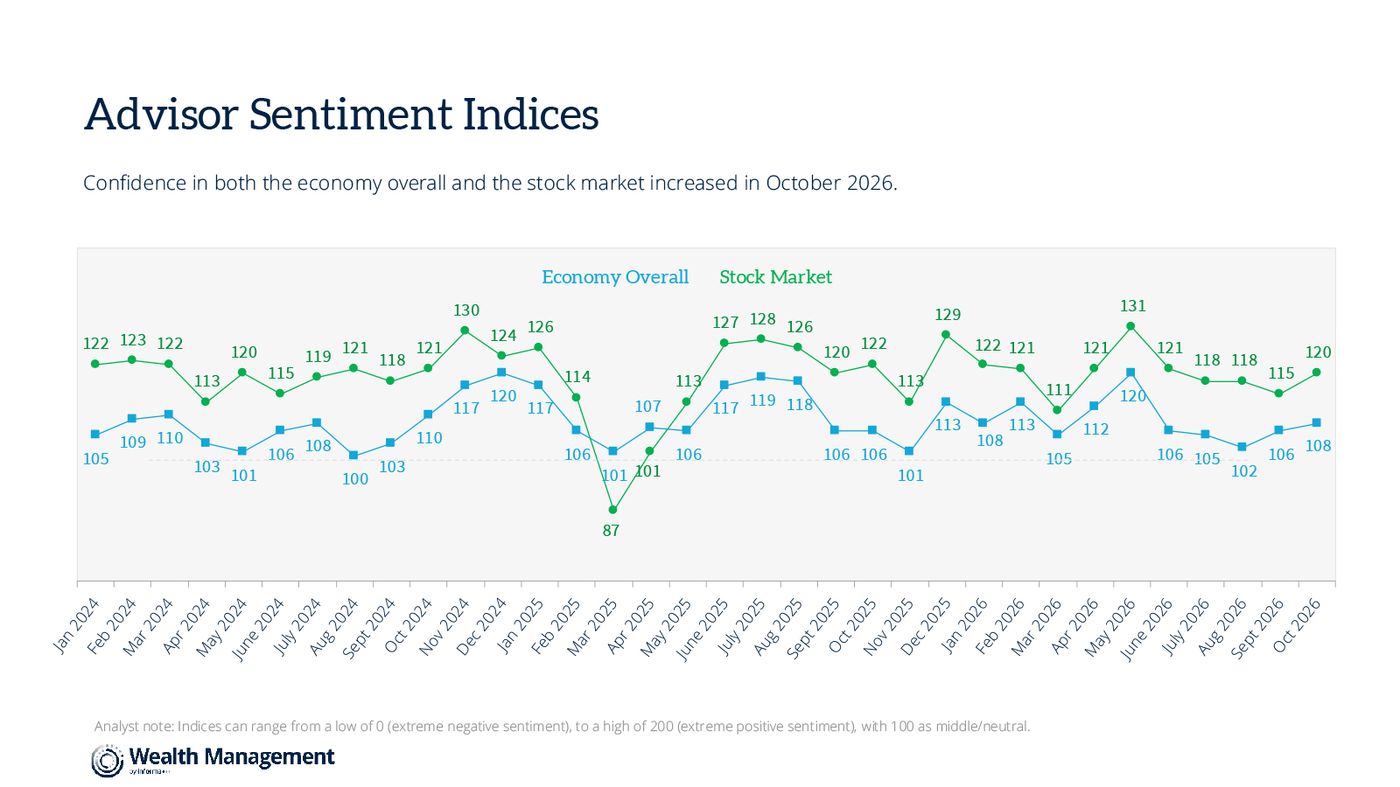
Financial advisors demonstrated a notable uptick in confidence regarding both the stock market and the broader economy in October, with sentiment indices reaching their highest levels in the preceding four months. The Advisor Sentiment Index (ASI) measuring market outlook registered 120, a five-point increase from September’s figure. Concurrently, sentiment concerning the economy saw a two-point rise, reaching 108. While these figures indicate a positive trajectory, they remain largely stable when compared to the same period one year ago. Crucially, these survey results were collected prior to the recent market turbulence, particularly within the technology sector, which has introduced fresh volatility in recent weeks.
Understanding the Advisor Sentiment Index
The WMIQ Advisor Sentiment Index serves as a barometer for the perspectives of financial advisors on the current and anticipated trajectories of the economy and the stock market. A reading above the neutral baseline of 100 signifies positive sentiment, indicating that more advisors hold optimistic views than pessimistic ones. Conversely, a score below 100 suggests negative sentiment. The methodology, developed by Wealth Management and Informa Engage, involves collecting data from financial advisors between October 1st and October 31st, 2026. Responses are weighted to create an index that provides a directional sentiment of retail-facing financial advisors over time. This comprehensive approach aims to capture the nuanced views of professionals directly engaging with investors.
Economic Outlook: A Polarized Landscape
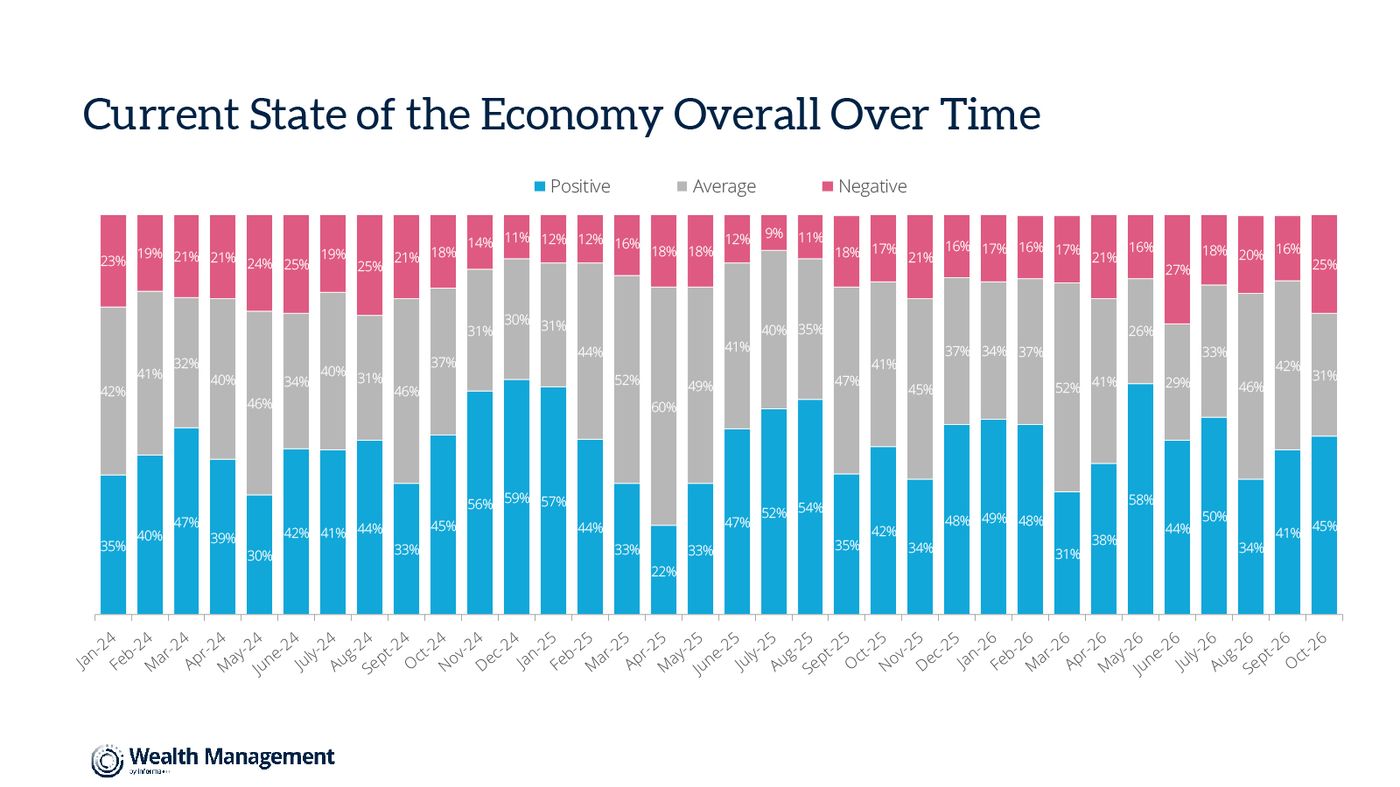
In October, the economic outlook among financial advisors presented a nuanced picture. A significant 45% of advisors expressed a positive view on the current state of the economy. However, this optimism was tempered by a substantial portion of advisors, one in four (25%), holding a negative perspective. This divergence highlights a growing polarization in the sentiment surrounding the economy. Over the past three months, both positive and negative outlooks have seen an increase, while the proportion of advisors holding a neutral stance has concurrently declined. This trend suggests that advisors are increasingly taking definitive positions, either leaning towards optimism or pessimism, rather than maintaining a middle-ground perspective.

Short-Term Economic Projections
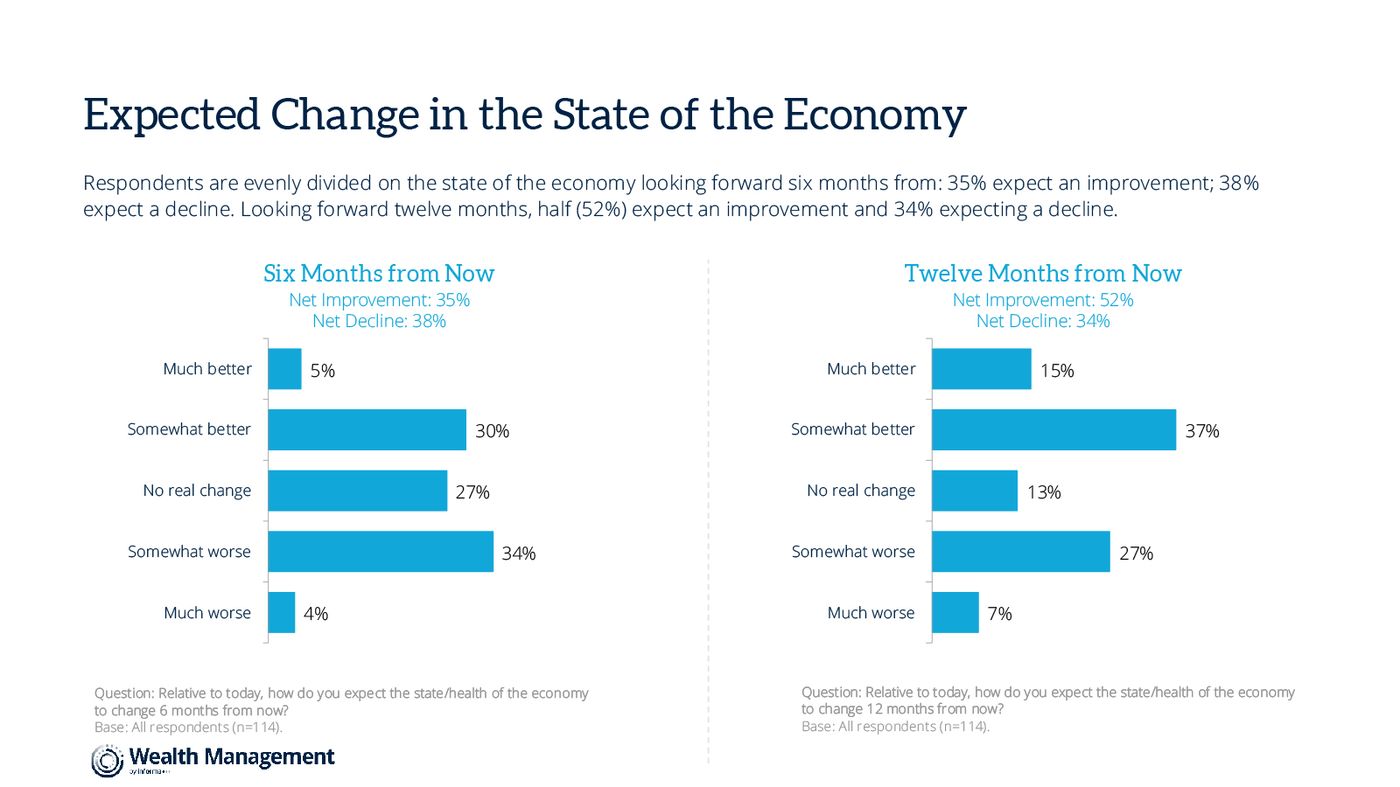
Looking ahead six months, the sentiment regarding the economy is nearly evenly divided. Thirty-five percent of advisors anticipate an improvement in economic conditions, while a slightly larger group, 38%, foresee a decline. This near parity suggests a cautious outlook for the immediate future, with no clear consensus emerging on the direction of economic growth.
Long-Term Economic Expectations
The sentiment shifts considerably when advisors consider the economy over a 12-month horizon. A clear majority, 52%, expect economic improvement, indicating a more optimistic long-term view. This contrasts with 34% who anticipate a decline, suggesting that while short-term uncertainties persist, many advisors believe the economy will find its footing and experience growth in the longer term. This divergence between short-term caution and long-term optimism could reflect expectations of monetary policy adjustments, the resolution of current inflationary pressures, or the winding down of geopolitical tensions.
Stock Market Sentiment: A Stronger Bullish Current
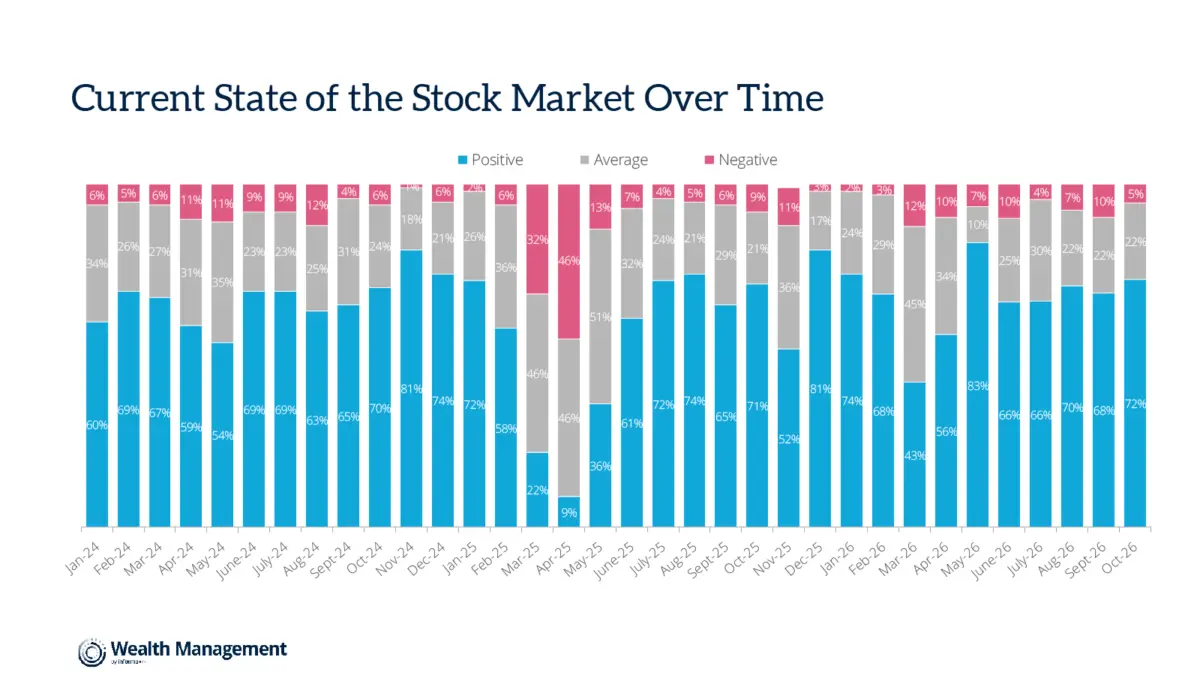
In stark contrast to the more divided economic outlook, advisor sentiment towards the stock market in October revealed a decidedly bullish trend. A remarkably low 5% of advisors held a negative view of the markets. Conversely, a robust 72% expressed a positive outlook, a figure that represents the highest level observed in the past four months. This significant positive sentiment suggests a strong conviction among financial advisors in the resilience and potential of the equity markets.
Disconnect Between Economic and Market Views
The survey results highlight a notable disconnect between advisors’ views on the economy and their sentiment towards the stock market. While economic indicators might present a more complex and uncertain picture, the stock market appears to be viewed with greater optimism. This divergence could be attributed to several factors, including the perceived ability of corporations to adapt to economic challenges, the potential for technological innovation to drive market growth, or the belief that current market valuations, despite potential economic headwinds, still offer attractive opportunities.
Short-Term Market Projections
Looking ahead six months, the outlook for the stock market becomes more divided, though still leaning positive. Thirty-six percent of advisors expect an improvement in market conditions. However, a larger proportion, 43%, anticipate a decline. This suggests that while the current sentiment is optimistic, there is an awareness of potential near-term risks that could impact market performance.
Long-Term Market Expectations
Over a 12-month horizon, advisor optimism for the stock market strengthens. Fifty-one percent of advisors expect the market to improve, a significant increase from the six-month outlook. Only 36% anticipate a decline, indicating a growing confidence in the market’s ability to recover and advance over the longer term. This long-term bullishness might be underpinned by expectations of a resolution to current economic challenges, a sustained period of corporate earnings growth, or a more favorable interest rate environment.
Key Concerns and Potential Catalysts
The open-response section of the survey provided valuable qualitative insights into the factors influencing advisor sentiment. Persistent inflation, elevated energy prices, and uncertainty surrounding interest rate policies were identified as significant threats to economic stability. These factors collectively contribute to a complex and often unpredictable economic environment, creating headwinds for both businesses and investors.
However, advisors also pointed to potential catalysts that could mitigate these challenges. Easing geopolitical conflicts, particularly in regions like Iran, and declining oil prices were cited as factors that could help moderate inflationary pressures and contribute to a more stable economic landscape. The interconnectedness of global events means that shifts in geopolitical arenas and commodity markets can have a profound impact on economic sentiment and market performance.
The Impact of Recent Volatility
It is crucial to note that the survey data reflects sentiment prior to the recent market volatility, which has been particularly pronounced in the technology sector. The fallout from this sector-specific turbulence, driven by factors such as shifting investor sentiment towards growth stocks, interest rate sensitivity, and regulatory scrutiny, will likely influence future sentiment readings. The coming months will be critical in determining whether this October optimism can withstand the current market headwinds and how advisors adjust their outlook in light of these developments.
Broader Economic Context and Historical Perspective
The sentiment expressed by financial advisors in October can be viewed within the context of the broader economic landscape of 2026. Throughout the year, economies globally have grappled with the lingering effects of supply chain disruptions, evolving inflation dynamics, and the recalibration of monetary policy by central banks. The Federal Reserve, in particular, has been navigating a delicate balance between taming inflation and avoiding a significant economic downturn. Interest rate hikes, implemented to curb rising prices, have had a ripple effect across financial markets, increasing borrowing costs for businesses and consumers and influencing investment decisions.
The period leading up to October 2026 saw fluctuating market performance. While some sectors demonstrated resilience, others, including technology, experienced significant corrections. This backdrop of economic uncertainty and market volatility makes the uptick in advisor sentiment in October particularly noteworthy. It suggests a potential shift in perception, with advisors perhaps beginning to see signs of stabilization or anticipating a more favorable economic environment in the near to medium term.
Comparative Analysis: Year-Over-Year Trends
While the October 2026 figures represent a positive month-over-month increase, the report highlights that both market and economic sentiment readings were "relatively flat compared to one year ago." This suggests that the current optimism, while welcome, may not represent a fundamental departure from the sentiment observed in late 2025. This could indicate a period of sustained, albeit fluctuating, confidence among advisors, or it might point to underlying economic conditions that have remained relatively consistent despite short-term market movements.
A deeper dive into year-over-year trends would provide further clarity. For instance, if sentiment in October 2025 was also at a four-month high, it would suggest a cyclical pattern of optimism. Conversely, if sentiment was significantly lower in October 2025, the current rise would represent a more substantial positive shift. Without this comparative data, it is difficult to definitively assess the magnitude of the change in advisor confidence.
Implications for Investors and Market Strategy
The heightened optimism among financial advisors, particularly regarding the stock market, carries several implications for investors and their strategic approaches.
- Increased Risk Appetite: A more optimistic sentiment among advisors could translate into a greater willingness to take on risk. This might lead to increased allocations to equities, including growth-oriented sectors, and a potential reduction in holdings of safer assets like bonds.
- Focus on Long-Term Growth: The stronger long-term outlook for both the economy and the market suggests that advisors may be encouraging clients to adopt a longer-term investment horizon, riding out short-term volatility in pursuit of greater gains.
- Sectoral Allocation Shifts: While the survey doesn’t detail specific sector preferences, a general bullishness could lead to increased interest in sectors perceived to be more resilient or poised for growth, even amidst economic uncertainties.
- Navigating Economic Headwinds: Despite market optimism, the identified economic concerns (inflation, interest rates) will likely necessitate careful portfolio construction. Advisors may be focusing on strategies that offer protection against inflation, such as value stocks or real assets, alongside growth opportunities.
- Importance of Professional Guidance: The nuanced sentiments and the disconnect between economic and market views underscore the value of professional financial advice. Advisors play a critical role in interpreting these signals, managing client expectations, and tailoring investment strategies to individual risk tolerances and financial goals.
The Road Ahead: Monitoring Evolving Sentiment
The WMIQ Advisor Sentiment Index serves as a valuable, albeit lagging, indicator of the professional investment community’s outlook. The October data, reflecting a period before recent tech sector turmoil, paints a picture of cautious optimism for the economy and a more robust bullishness for the stock market. However, the dynamic nature of financial markets and the global economy means that this sentiment is subject to constant revision.
The coming months will be crucial for observing how the recent market volatility, particularly in technology, impacts advisor sentiment. Will the optimism wane, leading to a more cautious stance? Or will advisors view the recent corrections as buying opportunities, reinforcing their long-term bullish outlook? The interplay of inflation data, central bank policy decisions, geopolitical developments, and corporate earnings reports will all play a significant role in shaping the future trajectory of financial advisor sentiment. Continued monitoring of this index, alongside other economic indicators, will be essential for understanding the evolving landscape of investment confidence. The ability of financial advisors to adapt their strategies and guidance in response to these shifts will be paramount in navigating the complexities of the financial markets for their clients.
