

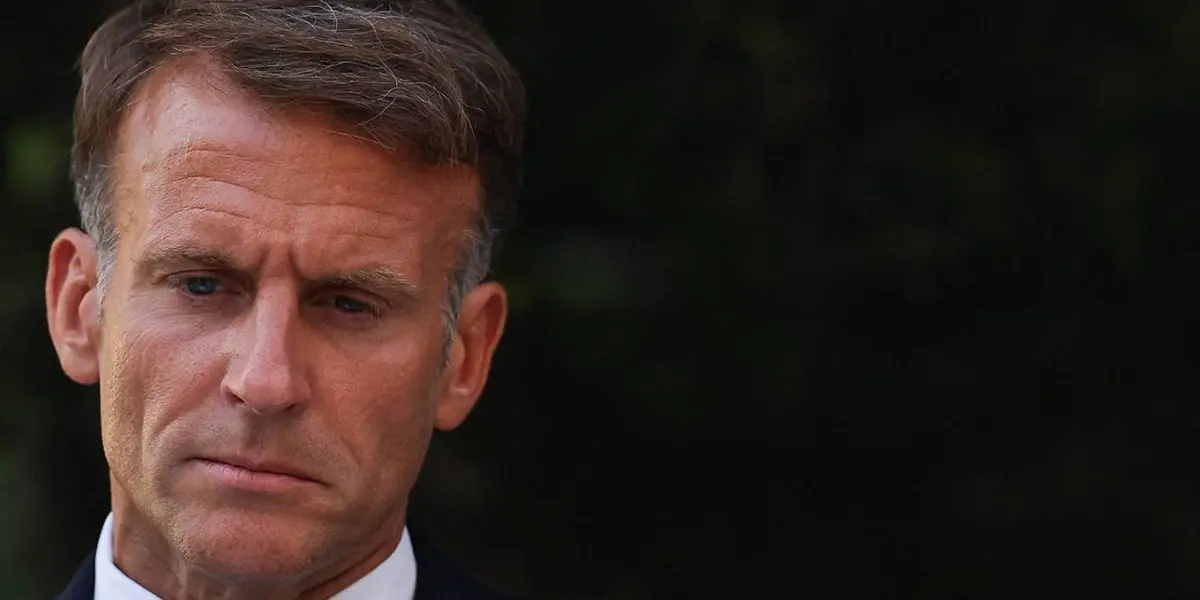
For over a month, France has been consumed by an acute social and political crisis that President Emmanuel Macron can no longer stem. Worse, the crisis comes when the country is less than six months away from a presidential election that looks likely to pit Marine Le Pen’s far right against Jean-Luc Mélenchon’s far left. While President Macron has certainly made mistakes, his troubled presidency is symptomatic of a deeper problem. In the end, he failed to build something truly enduring because he was seduced by the same monarchical impulse that is a recurring feature of French political culture.
The Deepening Crisis in France
The current wave of unrest, which has seen widespread protests, strikes, and acts of civil disobedience, is the most significant challenge to President Macron’s authority since his first term began in 2017. The immediate trigger for the latest escalation was a series of highly unpopular government decisions, particularly concerning economic reforms and social policies. However, the underlying discontent is a complex tapestry woven from years of perceived neglect, growing inequality, and a sense of disenfranchisement among significant segments of the French population.
The protests, initially focused on specific grievances such as pension reforms and the cost of living, have broadened into a more generalized expression of anger towards the established political order. The iconic "Gilets Jaunes" (Yellow Vests) movement, which erupted in late 2018, serves as a potent reminder of the deep-seated resentments that can be mobilized in France. While the current protests may not mirror the exact dynamics of the Yellow Vests, they share a common thread of frustration with a perceived elite disconnected from the realities faced by ordinary citizens.
A Presidential Election Looming on the Horizon
The timing of this crisis is particularly precarious, occurring less than six months before France is scheduled to hold its next presidential election in April 2022. The political landscape is already highly polarized, with projections indicating a potential rerun of the 2017 presidential election, this time pitting Marine Le Pen, the leader of the Rassemblement National (National Rally), against Jean-Luc Mélenchon, the candidate for La France Insoumise (France Unbowed).
This stark choice between the far-right and the far-left presents a deeply troubling prospect for many in the center of French politics and for the European Union. Macron, who positioned himself as a bulwark against both extremes, now finds his own political capital significantly diminished. His ability to rally support and present a compelling vision for the future is hampered by the ongoing domestic turmoil.
- Marine Le Pen: Her party has steadily gained traction by capitalizing on anxieties about immigration, national identity, and economic insecurity. She has sought to present a more moderate image in recent years, attempting to shed the overtly xenophobic associations of her party’s past.
- Jean-Luc Mélenchon: A veteran of French left-wing politics, Mélenchon advocates for a more radical redistribution of wealth, increased public spending, and a fundamental reorientation of France’s role in international affairs. He has successfully mobilized a younger, more progressive electorate.
The current crisis risks further fragmenting the political landscape and potentially empowering these extremist voices, making a centrist victory increasingly challenging.
The "Monarchical Impulse" in French Politics
The article suggests that President Macron’s struggles are rooted in a susceptibility to what it terms the "monarchical impulse" within French political culture. This concept refers to a historical tendency in France to gravitate towards strong, centralized leadership, often embodied by a powerful executive figure. From the absolute monarchs of the Ancien Régime to Charles de Gaulle’s Fifth Republic, French history is replete with examples of leaders who have wielded significant personal authority.
Macron, a former investment banker and protégé of François Hollande, was elected in 2017 as an outsider promising to break with traditional left-right divides and revitalize French democracy. His presidential style, characterized by a direct and often assertive approach, can be seen as embodying this historical inclination towards a powerful presidency. He often speaks of the need for decisive action and a clear direction, which, while appealing to some, can also be perceived as an unwillingness to engage in genuine dialogue and compromise.
This "monarchical impulse" can manifest in several ways:
- Centralization of Power: A tendency for decision-making to be concentrated within the presidency and a small circle of advisors, bypassing parliamentary debate and public consultation.
- Cult of Personality: An emphasis on the leader’s charisma and vision, potentially overshadowing the importance of institutions and collective decision-making.
- Perceived Elitism: A disconnect between the leader and the everyday concerns of the populace, leading to a sense that the government is out of touch.
While a strong executive can be effective in driving reforms and providing stability, an overreliance on this model, without sufficient checks and balances or genuine participatory mechanisms, can breed resentment and ultimately lead to the kind of crisis France is currently experiencing.
Background and Context of the Crisis
The current unrest is not an isolated incident but rather the culmination of several years of growing public discontent. Macron’s first term was marked by significant policy initiatives, including labor reforms aimed at increasing flexibility in the job market and a controversial tax on wealth (ISF), which was later modified. While proponents argued these measures were necessary to boost economic growth and competitiveness, critics decried them as favoring the wealthy and exacerbating inequality.
The Yellow Vests movement, which began in November 2018, was a direct response to a proposed increase in fuel taxes, which disproportionately affected rural and lower-income populations. The movement quickly evolved into a broader protest against the cost of living, social injustice, and what was perceived as Macron’s aloof and condescending leadership style. The protests were often marked by violence and clashes with police, leading to hundreds of injuries on both sides and a significant number of arrests.
Timeline of Key Events Leading to the Current Crisis (Illustrative):
- 2017: Emmanuel Macron elected president, promising a renewal of French politics and a more dynamic economy.
- Late 2018 – Early 2019: The Yellow Vest movement erupts, fueled by fuel tax increases and broader socio-economic grievances. Protests spread across France, some turning violent.
- 2019-2020: Macron attempts to address public anger through initiatives like the "Grand Débat National" (Great National Debate), but these efforts are seen by many as insufficient to address the root causes of discontent. The COVID-19 pandemic shifts national focus but does not erase underlying frustrations.
- 2021: As France begins to recover from the pandemic, simmering discontent over economic policies, social inequalities, and the perceived top-down nature of governance begins to resurface. Specific government proposals, such as pension reform plans, become flashpoints.
- Present: Widespread protests and strikes gain momentum, fueled by a combination of economic hardship, a perceived lack of governmental responsiveness, and deep-seated political disillusionment.
Supporting Data and Economic Indicators
To understand the depth of public frustration, it is crucial to examine relevant economic and social data:
- Income Inequality: France, like many developed nations, grapples with income inequality. While official statistics from INSEE (Institut national de la statistique et des études économiques) show a gradual improvement in overall living standards, the perception of a widening gap between the rich and the poor remains a significant concern. The Gini coefficient, a measure of income distribution, while not at extreme levels, reflects persistent disparities.
- Cost of Living: Inflationary pressures, particularly in recent months, have exacerbated concerns about the cost of living. Rising energy prices, food costs, and housing expenses place a strain on household budgets, especially for those with lower and middle incomes. Data from Eurostat and national statistical agencies highlight these trends.
- Unemployment Rates: While Macron’s reforms aimed to reduce unemployment, which has seen some decline, regional disparities persist. Certain areas, particularly in deindustrialized regions, continue to face high unemployment rates, contributing to a sense of marginalization.
- Public Debt: France carries a significant national debt, which can constrain the government’s ability to fund social programs and public services, leading to difficult policy choices and potential austerity measures that can further inflame public opinion.
These indicators provide a factual basis for understanding the economic anxieties that underpin the current social unrest.
Official Responses and Political Reactions
The Macron administration has responded to the ongoing crisis with a mix of conciliation and firmness. President Macron has, at times, acknowledged the legitimacy of public anger and expressed a desire for dialogue. However, his government has also been criticized for a perceived inflexibility in its policy approach and a reliance on technocratic solutions that fail to resonate with the broader population.
- Government Statements: Ministers have repeatedly called for calm and urged protesters to engage in dialogue through established channels. They have also defended the government’s reform agenda as necessary for France’s long-term economic health.
- Police Response: Law enforcement agencies have been deployed to manage protests, and while the government has emphasized the need to protect public order, there have been numerous reports of excessive force and police brutality, which have further fueled anger and mistrust.
- Parliamentary Debate: Debates within the National Assembly and the Senate have been heated, with opposition parties fiercely criticizing the government’s handling of the crisis and its policy decisions.
- European Union Context: The crisis in France is being closely watched across the European Union. Leaders of other member states are concerned about the potential for instability in one of the EU’s core economies and the implications for the bloc’s political cohesion, especially with the rise of populist movements elsewhere.
Broader Impact and Implications
The current crisis has profound implications for France’s domestic political landscape, its international standing, and the future of European integration.
- Erosion of Trust: The prolonged period of unrest and the perception of a government out of touch have significantly eroded public trust in political institutions and leaders. This can have long-lasting consequences for democratic engagement and social cohesion.
- Strengthening of Extremes: The polarization of French politics, amplified by the current crisis, creates fertile ground for extremist parties on the far-right and far-left. Their platforms, often offering simplistic solutions to complex problems, can gain traction among disillusioned voters.
- Economic Repercussions: Widespread strikes and protests disrupt economic activity, impacting businesses, supply chains, and investor confidence. This can lead to economic slowdowns and further strain public finances.
- Impact on European Union: A weakened and internally divided France could have significant ramifications for the European Union. France plays a crucial role in shaping EU policy, and its instability could hinder the bloc’s ability to address major challenges, from economic recovery to geopolitical security. The rise of eurosceptic sentiments, potentially fueled by internal turmoil, could also pose a threat to the EU’s cohesion.
- The Future of Macron’s Presidency: The current crisis poses a severe test to Macron’s legacy. His ability to navigate this turbulent period will determine whether he can regain public confidence and effectively lead France into the final years of his second term, or if his presidency will be defined by this deep and enduring social and political fracture. The "monarchical impulse," if unchecked by genuine democratic engagement, has proven to be a precarious foundation for enduring leadership in a modern democracy.
