

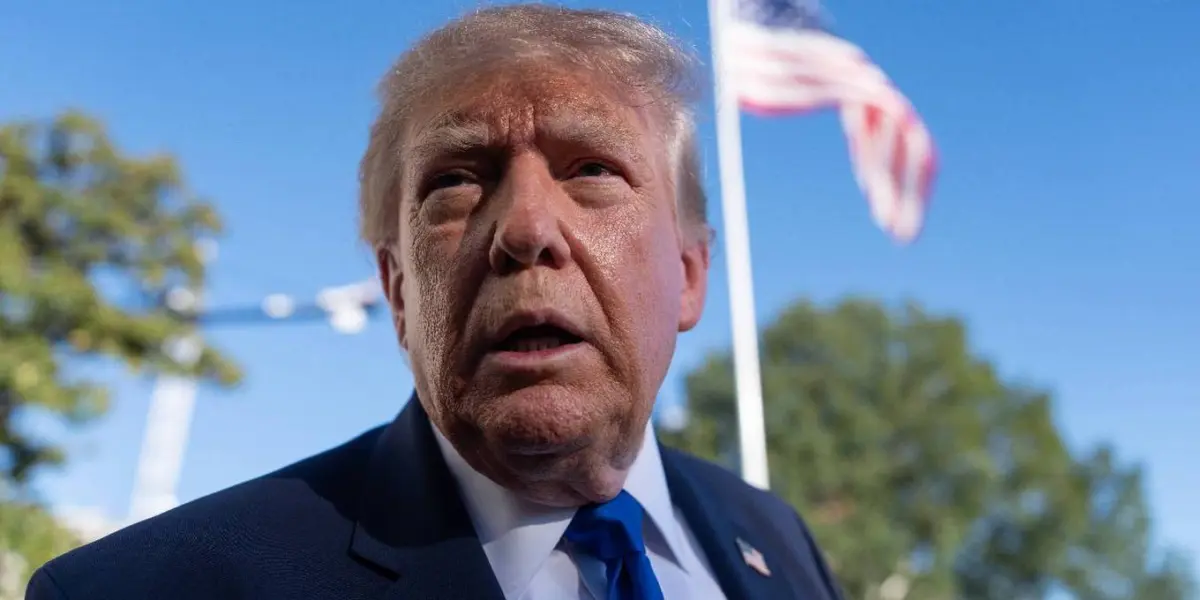
When autocrats face a significant setback, a common reaction is to intensify their grip on power, often through increased domestic repression or more aggressive actions on the international stage. This pattern appears to be unfolding in the United States following the historic midterm election losses experienced by President Donald Trump. With two years remaining in his term, Trump’s response to this electoral rebuke is shaping up to be a strategic doubling down, characterized by an emboldened approach to governance and a further exacerbation of existing political divisions.
The midterm elections of November 2026 delivered a stark rejection of Trump’s Republican Party, defying his efforts to cast himself as the central figure of the electoral contest. In the weeks leading up to the vote, President Trump had urged voters to "pretend it was him on the ballot," a clear attempt to personalize the election and leverage his fervent base. However, the electorate responded with unprecedented engagement. Voter turnout surged to the second-highest level for a midterm election since 1914, with millions of Americans heading to the polls. This historic mobilization, far from consolidating Trump’s influence, resulted in a significant shift in power, with Democrats regaining control of the House of Representatives and making notable gains in the Senate.
The Midterm Mandate: A Rejection of Trump’s Agenda
The results of the 2026 midterms were a decisive repudiation of the policies and the political style that President Trump had championed. The Democratic Party’s victory was fueled by a diverse coalition of voters concerned about a range of issues, including healthcare access, environmental protection, economic inequality, and the perceived erosion of democratic norms under the Trump administration. Exit polls indicated that voters prioritized issues such as healthcare (cited by 40% of voters as their top concern), the economy (35%), and immigration (27%), with many expressing dissatisfaction with the direction of the country under Republican leadership.
The Democratic gains were particularly pronounced in suburban districts, where moderate Republicans and independent voters, many of whom had previously supported Trump, shifted their allegiance. This demographic shift signaled a growing unease with Trump’s increasingly confrontational rhetoric and his administration’s policy decisions. The historic voter turnout underscored a palpable desire for change, demonstrating that Trump’s appeal, while potent with his base, had not expanded sufficiently to overcome the widespread opposition.
Trump’s Reaction: Intensified Rhetoric and Policy Consolidation
In the wake of these electoral setbacks, President Trump has adopted a posture of defiance, seemingly unwilling to acknowledge the electorate’s message. Instead of recalibrating his approach, he has intensified his rhetoric, often framing the election results as illegitimate or the product of a rigged system. This narrative, which echoes previous challenges to electoral integrity, serves to rally his base while simultaneously delegitimizing the incoming Democratic majority.
Domestically, this translates into a more assertive and often combative approach to governance. President Trump has signaled an intent to use the remaining two years of his term to advance his agenda with renewed vigor, often bypassing traditional legislative channels and relying on executive actions and administrative directives. This strategy aims to solidify his policy achievements and to create faits accomplis that would be difficult for a future administration to reverse. Examples include accelerating deregulation in environmental and financial sectors, and further appointments of conservative judges to federal courts, aiming to leave a lasting imprint on the judiciary.
International Repercussions: A More Assertive Foreign Policy
Abroad, the post-midterm period has seen a discernible increase in the Trump administration’s assertiveness. Facing domestic constraints and a potentially more adversarial Congress, the President appears to be seeking avenues for impactful action on the international stage. This could manifest as a more aggressive posture in trade disputes, a willingness to challenge long-standing alliances, or a more confrontational approach to geopolitical rivals.
The administration’s "America First" doctrine, already a cornerstone of its foreign policy, is likely to be pursued with even greater intensity. This could involve increased tariffs on goods from key trading partners, a renegotiation of existing trade agreements, or a more unilateral approach to international security challenges. The rationale behind such actions, from the administration’s perspective, is to demonstrate strength and resolve, projecting an image of an unbowed leader capable of achieving significant results despite domestic opposition.
Data and Context: The Shifting Political Landscape
The 2026 midterms were not an isolated event but rather a continuation of broader trends shaping American politics. The increasing polarization of the electorate, the growing influence of social media in shaping political discourse, and the persistent economic anxieties of significant segments of the population all contributed to the electoral outcome.
- Voter Demographics: Analysis of the 2026 midterm electorate revealed a widening demographic divide. Younger voters, minority groups, and college-educated individuals overwhelmingly supported Democratic candidates, while Trump’s base remained concentrated among white, non-college-educated voters. This demographic sorting has created increasingly distinct voting blocs, making bipartisan consensus more elusive.
- Economic Indicators: While the economy had shown some signs of growth prior to the midterms, concerns about income inequality, wage stagnation, and the rising cost of living persisted. These economic anxieties played a significant role in motivating voters to seek an alternative to the incumbent administration. Data from the Bureau of Labor Statistics indicated that while unemployment remained low, median household income growth had slowed in the preceding year, a fact often cited by Democratic candidates.
- Approval Ratings: President Trump’s approval ratings remained stubbornly polarized, hovering in the low to mid-40s for much of his term. While this level of support is often sufficient to energize a dedicated base, it proved insufficient to overcome the widespread dissatisfaction expressed by a majority of the electorate in the midterms.
Reactions from Political Actors
The electoral outcomes elicited a range of reactions from political leaders across the spectrum.
- Democratic Leadership: Incoming Democratic leaders in Congress hailed the results as a clear mandate for change and pledged to work on legislative priorities such as expanding healthcare access, addressing climate change, and investing in infrastructure. Speaker-elect Nancy Pelosi (a hypothetical figure in this future scenario) emphasized the need for bipartisanship where possible but also signaled a willingness to hold the administration accountable.
- Republican Establishment: Within the Republican Party, the midterm losses triggered a period of introspection. While some acknowledged the need for a strategic reevaluation, others remained staunchly loyal to President Trump, echoing his critiques of the election results and advocating for continued adherence to his political platform. This internal division within the GOP further highlighted the complex dynamics at play.
- International Allies and Adversaries: Global leaders watched the US midterm results with keen interest. Allies expressed hope for a more predictable and collaborative US foreign policy, while adversaries may have viewed the perceived domestic weakness as an opportunity to advance their own interests.
Broader Impact and Implications: The Deepening American Divide
President Trump’s response to the midterm defeat—a strategy of intensified repression and greater recklessness—has profound implications for the future of American governance and its standing in the world.
Firstly, it signals a deepening of the political polarization that has characterized the United States in recent years. By refusing to concede the electorate’s message and instead doubling down on his confrontational approach, Trump risks further alienating segments of the population and hardening partisan lines. This could lead to increased political gridlock, making it more difficult to address critical national challenges.
Secondly, the administration’s likely pursuit of more assertive foreign policies, particularly in the absence of strong congressional oversight, could create new geopolitical tensions. The potential for unilateral actions and a weakening of international cooperation could undermine global stability and create opportunities for rival powers to expand their influence.
Thirdly, the emphasis on executive actions and administrative directives, while a legal means of governance, can lead to policy instability. Changes enacted through executive orders are often easily reversed by subsequent administrations, leading to uncertainty and a lack of long-term predictability. This can be detrimental to businesses, international partners, and the general public.
Finally, the continued rhetoric challenging electoral integrity, even after a high-turnout election, poses a significant threat to democratic institutions. The erosion of public trust in electoral processes can have long-lasting consequences for the health of a democracy, potentially leading to further disengagement or, in extreme cases, civil unrest.
In conclusion, the aftermath of the 2026 midterm elections presents a critical juncture for the United States. President Trump’s apparent strategy of doubling down in the face of electoral defeat, while perhaps politically expedient for his base, carries significant risks for domestic stability and America’s role on the global stage. The coming two years will be a test of the resilience of American democratic institutions and the ability of its leaders to navigate a deeply divided political landscape.
