

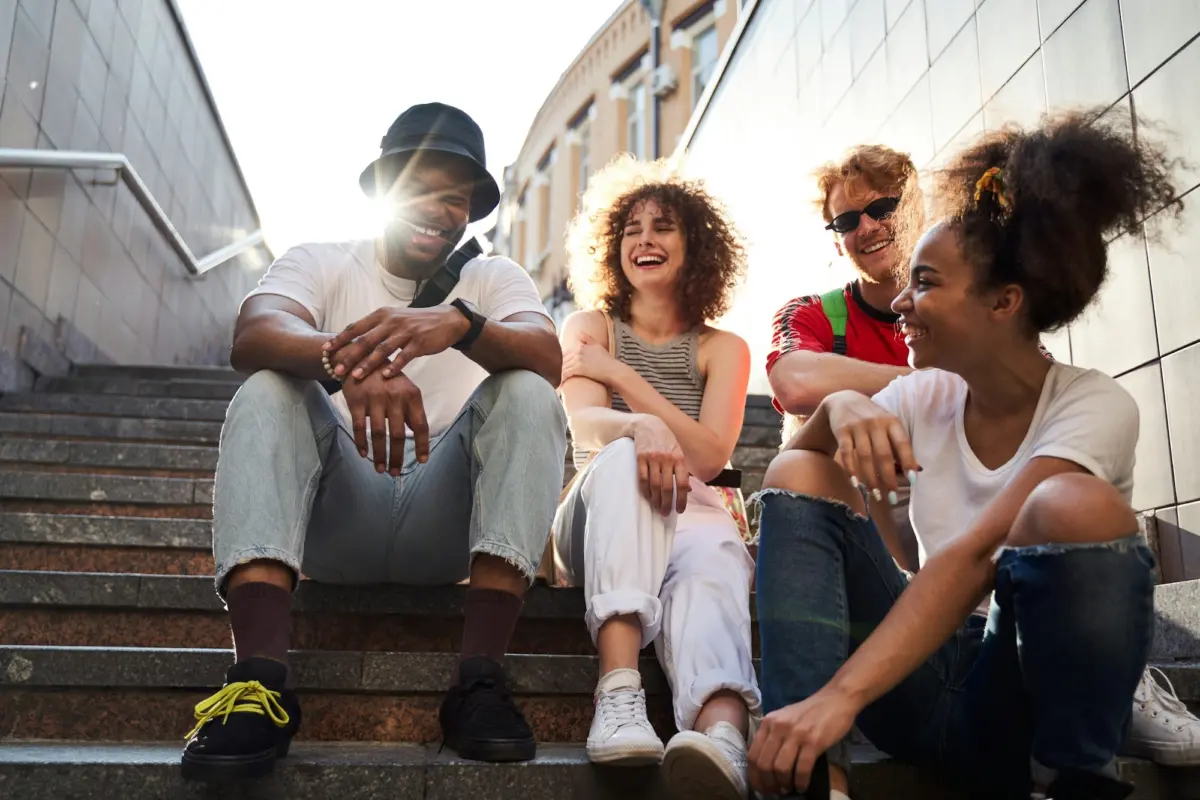
As the United States approaches the 2026 midterm elections, political analysts and grassroots organizers are focusing their attention on Generation Z, a demographic that has become one of the most significant yet unpredictable forces in the American electorate. Comprising approximately 50 million eligible voters aged 18 to 29, this cohort represents a massive potential shift in political power. However, the influence of this group remains a subject of intense debate, as high levels of political engagement and stated intent to vote often collide with systemic barriers and a deep-seated sense of disillusionment regarding the efficacy of the democratic process.
Historically, the youth vote has been characterized by lower participation rates compared to older demographics. While the 2024 presidential election saw a notable shift in youth alignment—with some analysts crediting young voters for contributing to Donald Trump’s return to the White House—more than half of eligible voters under 30 did not participate in that cycle. Even more striking was the 2022 midterm turnout, where less than one-third of the age group cast a ballot. As the 2026 cycle looms, new data suggests a potential break from these historical trends, driven by a volatile economic climate and a series of high-stakes social issues.
Structural and Logistical Barriers to the Ballot Box
The narrative of "youth apathy" is increasingly being challenged by voting rights advocates who argue that the primary obstacle to youth participation is not a lack of interest, but rather a series of logistical hurdles that disproportionately affect younger citizens. One of the most significant factors is the inherent transience of early adulthood. Data from the U.S. Census Bureau indicates that the average American moves residences roughly 12 times throughout their life, with the majority of these moves occurring before the age of 45.
For a young voter, every change in residence—whether for college, a new job, or military service—necessitates a re-registration process. This process varies wildly from state to state, creating a confusing patchwork of requirements. Students who move away for university often maintain their childhood home as their permanent legal address for documents like driver’s licenses, which can complicate their ability to register in the municipality where they actually reside and attend classes.
Compounding these issues is the tightening of voter identification laws. Currently, 36 states require some form of photo identification at the polls. Approximately two dozen of these states refuse to accept out-of-state driver’s licenses as valid identification for voting. Furthermore, states such as New Hampshire and Florida have recently moved to ban or severely restrict the use of student IDs at polling stations. Legal challenges, such as those led by the NAACP Youth Chapters in Florida, argue that these measures are specifically designed to disenfranchise younger, more mobile populations.
Research from the University of Maryland’s Center for Democracy and Civic Engagement (CDCE) further highlights the "documentation gap." Young people are statistically the least likely to have immediate access to secondary documents such as birth certificates or passports, which are increasingly required for registration in several jurisdictions. This barrier is even more pronounced for specific subgroups, including veterans, young people of color, those from low-income backgrounds, and individuals aging out of the foster care system, who may lack the familial support or financial resources to navigate complex bureaucratic requirements.
Case Study in Disenfranchisement: North Carolina A&T
The physical accessibility of polling places has also become a flashpoint for youth activism. In October 2026, students at North Carolina Agricultural and Technical State University (A&T), a historically Black university, drew national attention when they organized a mass march to the polls. The demonstration was sparked by the denial of an early-voting site on the campus.
Hundreds of students were forced to march for over 40 minutes to reach the nearest polling location. Advocates argue that such decisions by local election boards are not coincidental but are part of a broader trend of closing polling sites in areas with high concentrations of low-income residents and students. Jonathan Becker, a voting rights scholar and acting president of Bard College, has noted that the tactics used to exclude African Americans during the Jim Crow era—such as gerrymandering and stringent registration hurdles—are increasingly being adapted to target the youth vote during periods of intense political competition.
The 2026 Policy Landscape: Cost of Living and Social Discontent
Despite these obstacles, the 2026 electorate appears more motivated than in previous midterm cycles. A 2026 poll conducted by Unite for Reproductive & Gender Equity in collaboration with HIT Strategies revealed that 83 percent of Gen Z voters are "dissatisfied with the direction of the country." This dissatisfaction is not merely ideological; it is rooted in tangible economic anxiety.
The survey found that 81 percent of respondents are "very" or "somewhat motivated" to vote specifically due to concerns over economic stability and the rising cost of basic needs, such as housing and healthcare. Furthermore, nearly half of the respondents (49 percent) cited the "outsized influence of corporations and the ultra-wealthy" as a primary reason for their skepticism toward the government, suggesting a growing populist sentiment within the generation.
Social issues also remain a powerful catalyst for mobilization. According to the data:
- Reproductive Rights: 83 percent of Gen Z voters expressed concern over abortion restrictions, with 77 percent fearing personal impact from limits on reproductive care.
- Immigration: 80 percent expressed concern regarding federal immigration tactics and 79 percent cited discrimination against immigrants as a major worry.
- Civil Rights: 78 percent are concerned about the dismantling of Diversity, Equity, and Inclusion (DEI) policies and rising discrimination against transgender individuals.
The Disconnect Between Intent and Optimism
One of the most peculiar aspects of the 2026 youth electorate is the gap between their desire to vote and their belief in the system’s efficacy. A September 2026 report from UNICEF USA found that roughly two-thirds of young people aged 18 to 22 believe their opinions "don’t matter" to elected officials. This suggests a generation that feels ignored by the political establishment on both sides of the aisle.
However, this pessimism has not translated into total withdrawal. The same UNICEF poll found that more than 60 percent of eligible young voters plan to cast a ballot in the midterms—a 15-point increase compared to the lead-up to the 2024 presidential election. Similarly, research from Tufts University’s CIRCLE (Center for Information & Research on Civic Learning and Engagement) found that 56 percent of voters under 30 were "extremely likely" to vote in 2026, a significantly higher figure than the actual turnout in the 2022 midterms.
Analysts describe this phenomenon as Gen Z being "unconvinced but not disengaged." They are willing to participate in the process but remain highly skeptical of the promises made by candidates. This skepticism is reflected in the rapidly shifting approval ratings for the current administration. After a brief period of increased support for President Trump in early 2025, his approval among Gen Z plummeted by 42 points by the start of 2026, dropping from a +10 net approval to a -32.
Broader Implications for the American Political Future
The behavior of Gen Z in the 2026 midterms will likely serve as a bellwether for the 2028 presidential cycle and beyond. If the projected surge in turnout materializes, it will force political parties to radically rethink their outreach strategies. For Republicans, the challenge lies in maintaining the inroads made with young men and economic-focused voters while navigating deep unpopularity regarding social restrictions. For Democrats, the challenge is overcoming the "enthusiasm gap" and convincing a skeptical generation that the party can deliver on systemic changes rather than incremental shifts.
Moreover, the ongoing legal battles over campus polling sites and voter ID laws will have long-term consequences for how elections are conducted in the U.S. If Gen Z continues to overcome these barriers through grassroots organizing and mass demonstrations, it may lead to a renewed national conversation regarding the 26th Amendment and the fundamental right of young citizens to access the ballot.
As the 2026 midterm election approaches, the central question remains whether the logistical and systemic barriers designed to limit youth participation will hold, or if the sheer weight of 50 million voters—driven by economic necessity and social conviction—will fundamentally alter the American political landscape. For now, Gen Z stands as a demographic that is deeply dissatisfied, highly motivated, and increasingly aware of the power they hold, even as they remain unconvinced that the political class is truly listening.
