

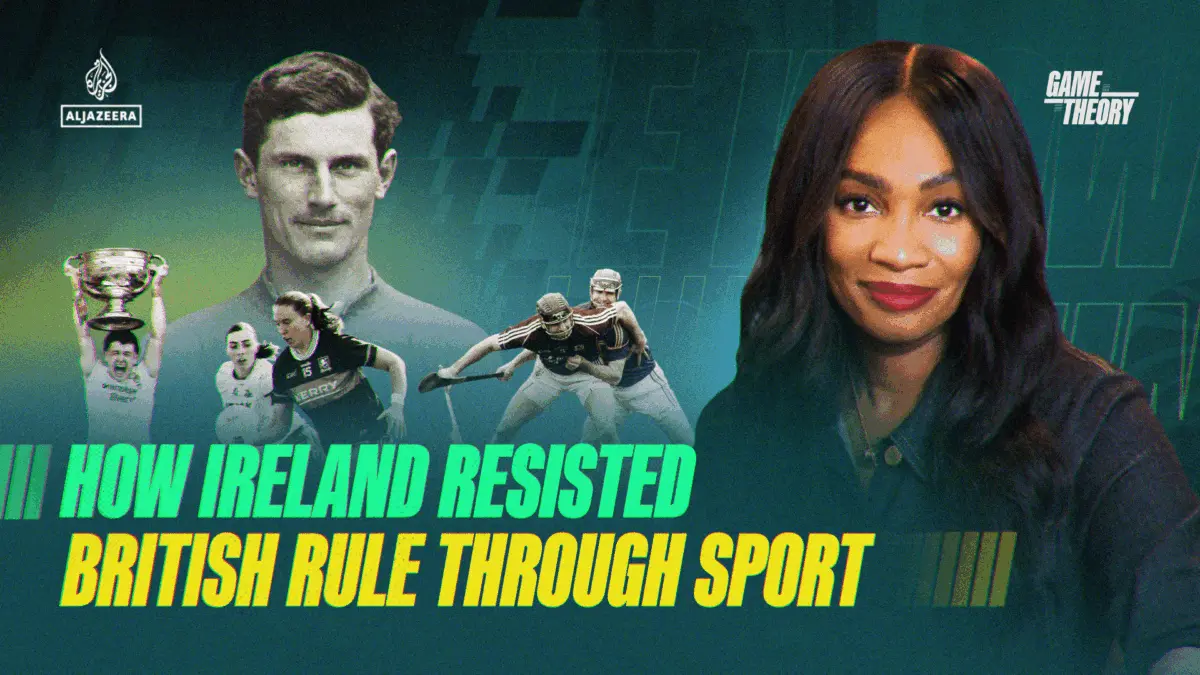
Al Jazeera’s Samantha Johnson, in her recent exploration, delves into the profound and often overlooked role of traditional Irish sport in safeguarding the nation’s culture and identity amidst centuries of British rule. From the pivotal founding of the Gaelic Athletic Association (GAA) in 1884 to the tragic events at Croke Park in 1920, her analysis highlights how sport transcended mere recreation to become an integral component of a much larger, more arduous struggle to protect Irish heritage and national identity against systematic cultural erosion. This narrative unveils a unique facet of resistance, demonstrating how the seemingly simple act of playing a game became a powerful assertion of selfhood for a people striving to retain their distinct character.
The Historical Crucible: British Rule and Cultural Suppression
For over 700 years, Ireland endured varying degrees of British control, a period marked by significant attempts to assimilate the Irish into British culture. Following the Norman invasion in the 12th century, and intensified particularly from the 16th century onwards with the Tudor conquest and subsequent plantations, British policy sought to dismantle indigenous Irish institutions, language, and customs. The Penal Laws of the 17th and 18th centuries, for instance, severely restricted the rights of Catholics, who constituted the vast majority of the Irish population, in areas such as land ownership, education, and political participation. This legal framework was not merely economic or political; it was a deliberate strategy to marginalize and ultimately extinguish a distinct Irish identity.
By the 19th century, particularly after the Act of Union in 1801, which formally incorporated Ireland into the United Kingdom, the cultural landscape of Ireland was under severe pressure. The Great Famine (1845-1849) decimated the population and further weakened traditional social structures, accelerating the decline of the Irish language, already challenged by the rise of English as the language of commerce, education, and government. English sports like rugby, soccer, and cricket gained prominence, especially among the Anglo-Irish gentry and in urban areas, further threatening the survival of traditional Irish pastimes such as hurling and Gaelic football, which were often played informally and without unified rules. This cultural vacuum and the pervasive influence of foreign customs created a palpable anxiety among Irish nationalists and cultural revivalists who feared the complete anglicisation of their nation.
The Genesis of the Gaelic Athletic Association (GAA): A Cultural Revolution
It was against this backdrop of cultural attrition that the Gaelic Athletic Association emerged as a beacon of resistance. On November 1, 1884, in the billiard room of Hayes’s Hotel in Thurles, County Tipperary, a group of visionary Irish nationalists and cultural enthusiasts convened to address the dire state of traditional Irish sports. Spearheaded by Michael Cusack, a passionate language revivalist and sports administrator from County Clare, the meeting saw the formal establishment of the GAA. Other key figures included Maurice Davin, a renowned athlete who became its first president, and crucially, the patronage of Archbishop Thomas Croke of Cashel and Emly, whose influential letter of support provided the nascent organization with immense moral and social authority.
The motivations behind the GAA’s founding were multifaceted but intrinsically linked to the broader nationalist movement. Cusack and his contemporaries observed with alarm the dwindling participation in traditional Irish games and the increasing popularity of "foreign" sports. They recognized that sport was not merely physical activity but a powerful cultural signifier. To lose control over one’s games was, in their view, to surrender a vital aspect of national distinctiveness. The GAA’s primary objectives were clear: to promote and preserve indigenous Irish games – Gaelic football, hurling, handball, and rounders – and to foster a sense of national pride and cultural self-respect through their practice.
The Association quickly established standardized rules for Gaelic football and hurling, bringing order to previously informal and localized variations. This standardization was critical for organizing inter-county competitions, which rapidly captured the imagination of the Irish public. From its inception, the GAA was more than a sporting body; it was a nationalist organization deeply intertwined with the cultural and political aspirations of the Irish people. Its constitution famously included a ban on "foreign games" (initially Rule 2, later Rule 21 and then Rule 27, though eventually rescinded in 1971), prohibiting members from playing or attending games like soccer, rugby, and cricket. This "Ban" was controversial even within nationalist circles, but it powerfully underscored the GAA’s commitment to cultural purity and its role in defining Irish identity through sport.
Growth and Consolidation: A National Movement Takes Root
The GAA experienced rapid and exponential growth, quickly establishing clubs in almost every parish across Ireland and extending its reach into the burgeoning Irish diaspora in Britain, America, and beyond. This grassroots structure made it an unparalleled social and organizational force. By the early 20th century, the GAA boasted hundreds of thousands of members, making it arguably the largest native Irish organization. The acquisition and development of Croke Park in Dublin, which became the principal stadium for Gaelic games and the spiritual home of the GAA, further cemented its status as a national institution.
GAA clubs served as vital community hubs, fostering not only athletic prowess but also social cohesion, local identity, and political awareness. They became informal meeting places for nationalists, where the Irish language was often spoken and where ideas about self-determination could be openly discussed away from the direct gaze of British authorities. This unique blend of sport, culture, and covert political activity made the GAA a formidable force in the burgeoning Irish independence movement. The organization consciously positioned itself as a guardian of Irish traditions, promoting Irish music, dance, and language alongside its games. The ethos of amateurism, deeply ingrained in the GAA’s philosophy, further distinguished it from professional English sports and reinforced its connection to community values rather than commercial interests.
Sport as a Catalyst for Nationalism and Resistance
The GAA’s role in the nationalist struggle was undeniable. Its clubs often acted as recruiting grounds for organizations like the Irish Republican Brotherhood (IRB) and later the Irish Volunteers, the paramilitary organization that would play a central role in the 1916 Easter Rising and the War of Independence. Many prominent figures in the nationalist movement were active GAA members, understanding the power of physical culture and organized sport to instill discipline, loyalty, and a sense of shared purpose among young Irish men. The idea that Gaelic games were preparing men for a different kind of struggle – a struggle for national liberation – was a potent undercurrent.
The very act of playing Gaelic football or hurling, wearing team colours, and cheering for local and county teams became a symbolic assertion of Irish nationhood. In a context where Irish identity was constantly undermined, participating in and supporting these games was a defiant act of cultural reclamation. It provided a common language, a shared ritual, and a collective experience that transcended sectarian divides and united people under a distinctively Irish banner. The GAA was effectively building a parallel society, one governed by Irish rules and dedicated to Irish values, directly challenging the cultural hegemony of the British administration.
The Croke Park Tragedy: Bloody Sunday, 1920
The intertwining of sport and political struggle reached its most tragic and poignant expression on November 21, 1920, a day forever etched in Irish history as Bloody Sunday. Ireland was embroiled in the War of Independence (1919-1921), a brutal guerrilla conflict between the Irish Republican Army (IRA) and British forces, including the Royal Irish Constabulary (RIC) and its auxiliary divisions, the Black and Tans and Auxiliaries.
On the morning of November 21st, IRA intelligence units, acting under the command of Michael Collins, carried out a coordinated operation to assassinate British intelligence agents operating in Dublin. Fourteen British agents and informers were killed, and six others were wounded. The British response was swift and savage. That afternoon, British forces, primarily Auxiliaries and RIC, descended upon Croke Park, where a Gaelic football challenge match between Dublin and Tipperary was underway. Approximately 10,000 spectators had gathered for the highly anticipated game.
Without warning, British troops burst into the stadium, opening fire indiscriminindiscriminately into the crowd from the perimeter and the Hogan Stand side. Panic ensued as spectators scrambled for cover, many attempting to escape over the walls. The firing lasted for about 90 seconds, but the impact was devastating. Fourteen civilians were killed, including one player, Michael Hogan of the Tipperary team, who was shot dead on the field. Among the dead were a 10-year-old boy, a pregnant woman, and several elderly individuals. Dozens more were injured.
The Croke Park massacre was a turning point in the War of Independence. It immediately galvanized public opinion both in Ireland and internationally against British rule. The brutality of the unprovoked attack on unarmed civilians at a sporting event shocked the world and exposed the ruthless tactics employed by British forces. For the Irish, it transformed the GAA from a symbol of cultural pride into a symbol of national martyrdom and resistance. The stadium itself, and specifically the Hogan Stand, which was later named in honour of the slain Tipperary player, became hallowed ground, a powerful reminder of the sacrifices made in the pursuit of independence.
Supporting Data and Enduring Legacy
The GAA’s impact can be quantified and observed through various metrics. By the time of the War of Independence, the GAA boasted an estimated 200,000 members across thousands of clubs. Today, it remains the largest amateur sporting organization in the world, with over 2,200 clubs in Ireland and more than 400 abroad, serving a global Irish diaspora numbering in the millions. Its annual All-Ireland finals in hurling and Gaelic football attract tens of thousands of spectators to Croke Park and millions more tune in via broadcast, making them among the most watched sporting events in Ireland.
The GAA’s commitment to the Irish language has also been significant. Through its clubs and cultural activities, it has provided a supportive environment for the preservation and promotion of Gaeilge, working in tandem with organizations like Conradh na Gaeilge (The Gaelic League). While precise statistics are challenging to isolate, anecdotal and historical evidence suggests a strong correlation between GAA involvement and a greater appreciation and use of the Irish language, particularly in Gaeltacht (Irish-speaking) areas and during cultural events hosted by clubs.
The legacy of the GAA extends far beyond sports. It instilled in generations of Irish people a sense of self-worth, community responsibility, and national identity that survived the most concerted efforts at cultural suppression. Post-independence, the GAA continued to play a crucial role in nation-building, fostering community spirit, and providing a healthy outlet for amateur sport. Its non-sectarian and non-political stance (after independence) ensured its broad appeal and allowed it to become a unifying force in a sometimes-divided society.
Official Responses and Broader Implications
From the perspective of the British administration, the initial response to the GAA was often dismissive, viewing it as a quaint local pastime. However, as its nationalist leanings became undeniable, particularly its ties to the IRB and later the Volunteers, British authorities grew increasingly wary. Attempts were made to suppress meetings or control activities, but the decentralized nature of the GAA and its deep community roots made direct suppression difficult without risking further alienation of the populace. The Croke Park massacre, however, was a direct and devastating act of state violence intended to intimidate and break the spirit of resistance, but it spectacularly backfired, hardening resolve and fueling international outrage.
For Irish nationalists, the GAA was an unambiguous triumph. Its existence and resilience validated the belief that Irish culture could not be extinguished. After Croke Park, the GAA became a powerful symbol of defiance, providing tangible proof of British barbarity and a rallying cry for independence. Its leaders, though devastated by the loss of life, used the tragedy to reinforce the organization’s national mission, framing the victims as martyrs in the cause of Irish freedom.
Today, the GAA is celebrated as one of Ireland’s most cherished institutions. Commemorations of Bloody Sunday and other historical events linked to the GAA serve as powerful reminders of the organization’s profound historical role. The very fabric of Irish society, particularly in rural areas, is often woven around the local GAA club, which acts as a focal point for social, cultural, and sporting life.
In conclusion, Samantha Johnson’s examination of the GAA’s historical significance underscores a powerful truth: that culture, even in its seemingly innocuous forms like sport, can be a formidable weapon against oppression. The journey of the GAA, from a small gathering in Thurles to a global institution, is a testament to the resilience of the Irish spirit and the unique way in which hurling, Gaelic football, and other traditional games became cornerstones in the enduring struggle to preserve and assert Irish identity against formidable odds. The tragic events at Croke Park in 1920 did not diminish this spirit but rather forged it into an unshakeable resolve, solidifying the GAA’s indelible place in the narrative of Irish independence and nationhood.
